Last Updated on February 4, 2026
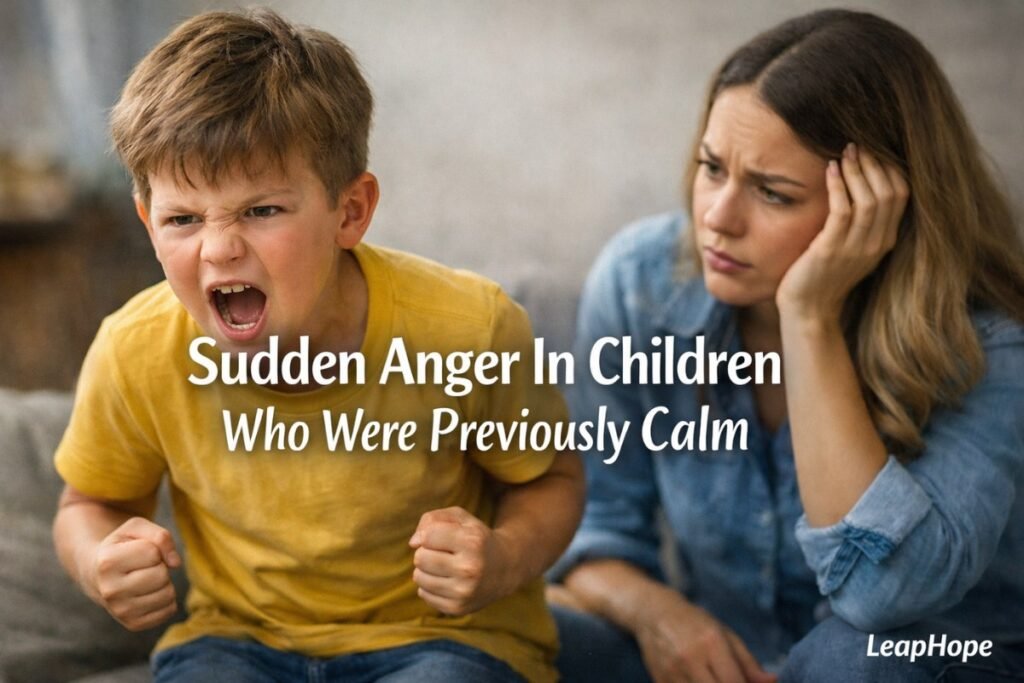
Your child used to be calm.
Not perfect, but steady. Easy to talk to. Rarely angry.
Then something changed.
Now they snap over small things. Raise their voice. Slam doors. Get irritated in ways that feel unfamiliar. When you look back, you can’t point to one moment where it all shifted. It just… started happening.
That’s what makes it unsettling. This doesn’t feel like a phase you recognise. It feels out of character. And in a time where children are under quiet pressure from school, social expectations, screens, and constant comparison, many parents are seeing this change without knowing what to make of it.
Most sudden anger isn’t random. It’s usually a sign that something has been building beneath the surface long before it shows up as anger.
This article looks at why previously calm children can develop sudden anger, what that anger often carries underneath, and how parents can respond without making things worse for either of you.
Why Is My Child Suddenly So Angry?
When a calm child starts showing anger, parents often replay recent weeks in their head, trying to find the reason. A fight, a change at school, something they missed. But most of the time, there isn’t one clear cause.
Why this change feels scary to parents
Anger feels louder than sadness. It feels sharp. When it shows up suddenly, it can feel like you’re losing the child you knew. Parents worry this is the start of something they won’t be able to control.
Why the anger feels out of character
Because it is. Your child isn’t suddenly a different person. What’s changed is how much they can hold inside. When coping runs out, anger is often the emotion that breaks through first.
Why there’s often no clear trigger
Many children don’t explode at the moment something hurts. They keep going. They stay quiet. By the time anger appears, the original cause may feel small or invisible.
Why parents start overthinking every interaction
Once anger shows up, parents question everything. Did I say the wrong thing? Was I too strict? Too soft? That constant self-checking can make the home feel tense without anyone meaning it to.
Why anger feels harder to handle than sadness
Sadness invites comfort. Anger feels personal. Even when it isn’t directed at you, it can feel that way. That emotional hit makes it harder to respond calmly.
Has Something Been Building Up Beneath the Surface?
When anger shows up suddenly, it’s easy to believe it came out of nowhere. But for many children, anger is the last thing to appear, not the first.
Why children don’t always show stress early
Many children keep going even when things feel hard. They don’t want to complain. They don’t always know that what they’re feeling matters. So they carry on, quietly. Many children hold themselves together outside and release everything once they feel safe. We’ve explored this pattern in why some children behave well outside but break down at home.
Why emotions build without obvious signs
Stress doesn’t always look like stress. It can look like tiredness, distraction, or being unusually quiet. These signs are easy to miss, especially in children who usually cope well.
Why small changes often go unnoticed
A heavier school workload, friendship tension, social pressure, or constant comparison online can all add up. None of these feel dramatic on their own, but together they take a toll.
Why anger is often the final release
When sadness, worry, or frustration don’t have space to come out, anger does it for them. It’s stronger, faster, and harder to ignore. That’s why it seems sudden.
Why the explosion feels unexpected but isn’t
The outburst feels sharp because you didn’t see the build-up. But inside your child, the pressure has been growing for a while. Anger is just the moment it finally spills over.
What Sudden Anger Is Often Hiding
Anger is rarely the full story. For many children, it’s the only emotion strong enough to come out when other feelings feel too confusing or unsafe to show.
When anger is covering overwhelm
Some children are simply carrying too much. Too many expectations. Too many decisions. Too many demands on their attention. Overwhelm doesn’t always look like panic. Sometimes it looks like snapping.
When anger is covering hurt feelings
Feeling left out, criticised, or unnoticed can sting deeply. If a child doesn’t feel able to say “that hurt,” anger may step in and speak for them instead.
When anger is covering fear or anxiety
Fear doesn’t always look scared. For some children, it looks defensive. Control slips, uncertainty rises, and anger becomes a way to push the feeling away.
When anger is covering pressure to perform
Children who try hard to do things right often put pressure on themselves. When that pressure builds without relief, anger can come out suddenly and intensely.
When anger is covering feeling misunderstood
Repeatedly feeling unheard or misunderstood can turn into frustration. Over time, that frustration can harden into anger, especially if the child doesn’t know how else to express it.
Why Calm Children Sometimes Explode Instead of Struggling Slowly
It can feel confusing when a child who has always seemed easygoing suddenly shows intense anger. But calm children often struggle in quieter ways before anything becomes visible.

Why “easy” children hold things in
Children who are seen as calm often learn early that staying quiet keeps things smooth. They don’t want to add to stress or cause trouble, so they keep feelings to themselves. For some children, overload comes out as tears; for others, it comes out as anger. We’ve shared more on this in why some children cry easily without clear reasons.
Why calm children avoid showing distress
Some children believe showing upset will disappoint adults or make situations worse. They learn to manage on their own, even when it’s hard.
Why they try to cope silently
Being calm becomes part of who they are. Asking for help or showing struggle can feel uncomfortable or unfamiliar, so they keep pushing through.
Why anger appears once coping runs out
Holding everything in takes energy. When that energy runs out, emotions don’t leak out gently, they burst. Anger is often the first thing that breaks through.
Why the release looks intense
Because the feelings didn’t come out slowly. What you’re seeing is not just the moment, it’s everything that’s been building underneath for a while.
How Sudden Anger Looks at Different Ages
Sudden anger doesn’t look the same at every stage. What changes is how it comes out, not what’s underneath it.
How anger shows up in young children
In younger children, anger is often physical. They may throw things, yell, hit, or melt down quickly. Their body reacts before their thinking catches up, and they don’t yet know how to slow it down.
How anger shows up in school-age children
School-age children often show anger through words. Backtalk, arguing, irritability, or refusal can appear suddenly. They may seem “moody” or easily annoyed, especially at home.
How anger shows up in teenagers
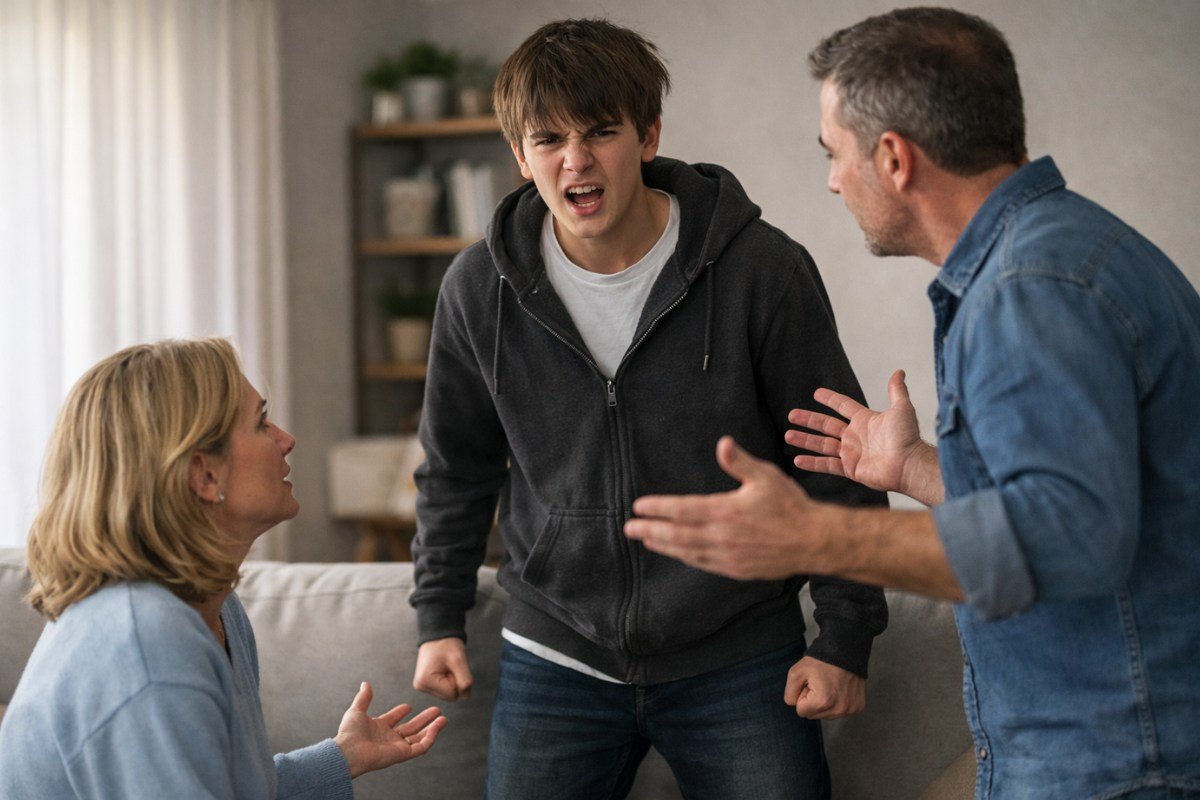
For teens, anger can swing between intensity and distance. Snapping, sharp comments, door slamming, or complete withdrawal are common. They may look angry one moment and shut down the next.
Why age changes how anger looks
As children grow, their language and awareness change, but emotional regulation doesn’t always keep pace. Anger finds the path that fits their stage.
Why the emotion underneath is often the same
Across ages, the core feeling is usually similar, overwhelm, pressure, hurt, or fear. Only the expression changes.
What Parents Often Misread About Sudden Anger
When a calm child becomes angry, parents naturally try to make sense of it. In that process, some understandable misreads can add more tension than clarity.
“This came out of nowhere”
It feels sudden because the build-up was quiet. Many children don’t show stress in obvious ways, so the first visible sign parents see is the anger itself. When children don’t yet understand or name their feelings, anger can speak for them. We’ve looked at this more in when a child says “I don’t know” about their feelings.
“My child is becoming aggressive”
Anger can look intense without being aggression. Explosive emotions don’t automatically mean a child is turning hostile or unsafe, they often mean they’re overwhelmed.
“They’re doing this on purpose”
Most children aren’t choosing anger as a strategy. In the moment, it’s not planned or controlled. It’s what happens when emotions spill out faster than thinking can catch up.
“I must have caused this”
Parents often turn the blame inward. While parenting matters, sudden anger usually has many layers. Blame rarely helps anyone understand what’s really going on.
“This means something is seriously wrong”
Anger can be part of emotional development, not a sign of failure or damage. What matters more than the anger itself is how often it happens and whether it settles over time.
Why Discipline Alone Often Makes Sudden Anger Worse
When anger appears, many parents do what feels responsible, they try to correct it. Rules, consequences, and reminders come from a place of care. But emotional anger doesn’t respond the same way as misbehaviour.
Why punishment doesn’t calm emotional anger
Anger driven by overwhelm doesn’t disappear because of consequences. The emotion is still there, even if the behaviour stops for a moment.
Why consequences miss what’s underneath
Discipline focuses on what happened on the outside. Sudden anger usually starts on the inside. When that part isn’t addressed, the reaction keeps returning.
Why anger repeats after discipline
If the child still feels pressured, unheard, or overwhelmed, the anger has nowhere else to go. It shows up again, often stronger.
Why power struggles increase anger
When a child already feels out of control, being pushed into a power struggle can make that feeling worse. Anger escalates instead of settling.
Why children feel more lost, not less
Repeated discipline without emotional understanding can leave a child feeling confused about their own reactions. They know something feels wrong but don’t know how to stop it.
When Sudden Anger Is Part of Development
Not all sudden anger means something is wrong. Sometimes, it’s part of how children grow emotionally, even when it looks messy.
When anger settles with understanding
In many cases, anger reduces once a child feels understood and supported. As pressure eases, the explosions become less intense or less frequent.
When anger decreases over time
Some phases pass as children adjust to new demands, new roles, or changes around them. With time, emotions find safer ways to come out. Anger is often emotional communication, not misbehaviour. We explain this more in why children express emotions through behaviour.
When emotional skills are still forming
Children don’t learn emotional control all at once. Anger can appear during periods when feelings grow faster than coping skills.
When growth brings emotional instability
Growth, whether emotional, social, or physical, can temporarily throw things off balance. Sudden anger can be part of that adjustment.
When patience makes a difference
Often, what helps most is not fixing or correcting, but allowing space for development to catch up. Patience doesn’t mean ignoring anger, it means responding without fear.
When Sudden Anger Starts Feeling Heavy or Concerning
There’s a difference between anger that comes and goes and anger that starts to weigh on everyone. Parents often sense this shift before they can explain it clearly.
When anger becomes more frequent
Outbursts start happening often, not just once in a while. The space between episodes gets shorter, and calm moments feel brief.
When anger becomes more intense
The reactions feel bigger than before. Voices get louder, words get sharper, and it takes longer for your child to settle afterward.
When anger affects daily life
You might notice changes in sleep, school, friendships, or routines at home. Anger begins to shape the day instead of being one part of it.
When recovery takes longer
Earlier, your child could calm down with time or comfort. Now, the anger lingers. They stay upset, withdrawn, or tense long after the moment has passed.
When parents feel constant worry
Many parents describe a quiet, ongoing concern. Not panic, but a sense that something isn’t easing the way it should. That feeling is worth listening to.
How Parents Can Respond Without Fueling the Anger
When anger shows up suddenly, parents often feel pulled in two directions, wanting to stop the behaviour and wanting to understand it. How you respond in these moments can either calm the situation or quietly add more pressure.
Staying steady when anger feels personal
Even when the anger is directed at you, it usually isn’t about you. Staying steady helps your child borrow your calm when they’ve lost their own. Sudden anger is easy to misread as aggression or defiance. We’ve explored these misinterpretations in how parents misread child emotional development.
Responding to emotion before behaviour
Before correcting what was said or done, the emotion underneath needs to settle. A child who feels overwhelmed can’t process lessons in the middle of anger.
Creating safety instead of control
Lowering your voice, giving space, and avoiding threats can help your child feel less trapped. Safety helps anger come down faster than control does.
Avoiding reactions that escalate anger
Arguing, lecturing, or matching your child’s intensity often pushes anger higher. Even well-meaning explanations can feel like pressure in that moment.
Why this is hard for parents
Parents have their own emotions too, fear, frustration, and exhaustion. Responding calmly doesn’t mean you’re weak, it means you’re choosing not to add fuel when things are already burning.
When Outside Support Can Help
Sometimes, even when you stay calm and try to understand what’s underneath the anger, things don’t ease. The outbursts keep coming back, and everyone at home feels on edge.
That doesn’t mean you’ve failed.

Why some children need help making sense of strong emotions
Some children feel emotions intensely but don’t yet know how to understand or manage them. Anger becomes the outlet because it’s the strongest feeling they can access.
Having support can help slow this down and make those emotions feel less confusing.
Why anger can feel safer than other feelings
For many children, anger feels easier to show than sadness, fear, or hurt. Those feelings can feel too vulnerable. Support helps children explore what’s underneath without feeling exposed.
Why a neutral space can make a difference
Outside the family, children don’t feel responsible for anyone’s feelings. They don’t worry about upsetting parents or making things harder at home. That often makes it easier for emotions to come out in calmer ways.
How support helps reduce explosive reactions
Support isn’t about stopping anger. It’s about helping children recognise what’s happening inside before it reaches a breaking point. Over time, anger doesn’t need to do all the work anymore.
When parents often feel relief too
Many parents say the biggest change is understanding. Knowing why the anger happens can reduce fear and self-blame, even before behaviour fully changes.
Looking into online child and teen counseling can be one gentle way to support a child when sudden anger starts feeling heavy for the whole family.
Questions Parents Often Ask
Why did my calm child suddenly become angry?
Most of the time, the anger isn’t sudden. It’s the first visible sign of feelings that have been building quietly for a while.
Is sudden anger a sign of anxiety or stress?
It can be. Stress, pressure, or worry often show up as anger in children who don’t know how to explain what they’re feeling.
Does this mean my child is becoming aggressive?
Not necessarily. Strong anger doesn’t automatically mean aggression. It often means overwhelm, not intent to hurt.
Can school or social pressure cause this change?
Yes. School demands, friendships, comparison, and expectations can all add pressure that children don’t talk about openly.
Why doesn’t punishment stop the anger?
Because punishment doesn’t address what’s underneath. The emotion stays, even if the behaviour pauses.
Is this just a phase my child will grow out of?
Some phases do pass. Others need more support. Patterns over time matter more than one stage.
Why does my child seem angrier at home than elsewhere?
Home feels safer. Many children hold things in outside and release emotions where they feel secure.
Should I worry if the anger keeps repeating?
Repeated, intense anger that affects daily life is worth paying attention to, even if it’s not extreme.
How can I respond without making things worse?
By staying calm, reducing pressure in the moment, and focusing on safety before correction.
When should I consider extra support?
When anger feels constant, draining, or doesn’t ease despite patience and understanding.
Final Thought
When a calm child suddenly becomes angry, it can feel unsettling and personal. But most of the time, that anger isn’t a sign that your child has changed, it’s a sign that something inside them has become too heavy to carry quietly.
You don’t need to solve everything at once or get it right every time. Staying steady, curious, and emotionally available matters more than quick fixes or perfect responses.
Anger is often a message, not the problem itself. And when it’s met with understanding rather than fear, it usually has less reason to shout.
FAQ’s
Why did my calm child suddenly become angry?
Most of the time, the anger isn’t sudden. It’s the first visible sign of stress or feelings that have been building quietly.
Is sudden anger normal in children?
It can be. Emotional growth isn’t smooth, and anger sometimes shows up before a child learns safer ways to release feelings.
Does sudden anger mean my child has behavioural problems?
Not necessarily. Anger often points to overwhelm, pressure, or confusion, not a behaviour disorder.
Can school or social pressure cause this kind of anger?
Yes. School demands, friendships, and expectations can build stress that children don’t talk about openly.
Why is my child angrier at home than outside?
Home feels safe. Many children hold emotions in elsewhere and release them where they feel secure.
Should I punish my child for angry outbursts?
Punishment alone usually doesn’t help emotional anger. Understanding what’s underneath matters more.
Will my child grow out of this phase?
Some children do. Others need time and support. Watching patterns over time is more helpful than waiting it out blindly.
Is sudden anger a sign of anxiety or stress?
It can be. Anxiety doesn’t always look like worry, it often looks like irritability or anger in children.
How can I respond without making the anger worse?
By staying calm, lowering pressure in the moment, and focusing on safety before correction.
When should I seek extra support?
When anger is frequent, intense, or affecting daily life and doesn’t ease with understanding.