
Last Updated on October 3, 2026
Your child loses a game and starts crying. Their sibling takes something, a teacher corrects them, plans change, or something small goes wrong and the tears come almost immediately. Sometimes you ask what happened and they cannot even tell you.
Parents often describe this as “crying for no reason” or “crying over everything.” But usually, there is a reason. It may simply be difficult for you to see, difficult for your child to explain, or much smaller than the size of the reaction would suggest.
Children also differ in how quickly emotions become intense. For some, frustration stays manageable for quite a while. For another child, the same frustration can reach tears within seconds. What matters is not only how often your child cries, but what triggers it, how intensely they react, how long it takes them to recover, whether the pattern has changed, and whether it is affecting everyday life.
Why Does My Child Cry So Easily?
Some Children React More Strongly to Emotions
Children do not all have the same emotional temperament.
Some naturally react more strongly to frustration, disappointment, criticism, uncertainty or change. Their emotions may rise quickly, and crying becomes one of the first visible signs that they have reached their limit.
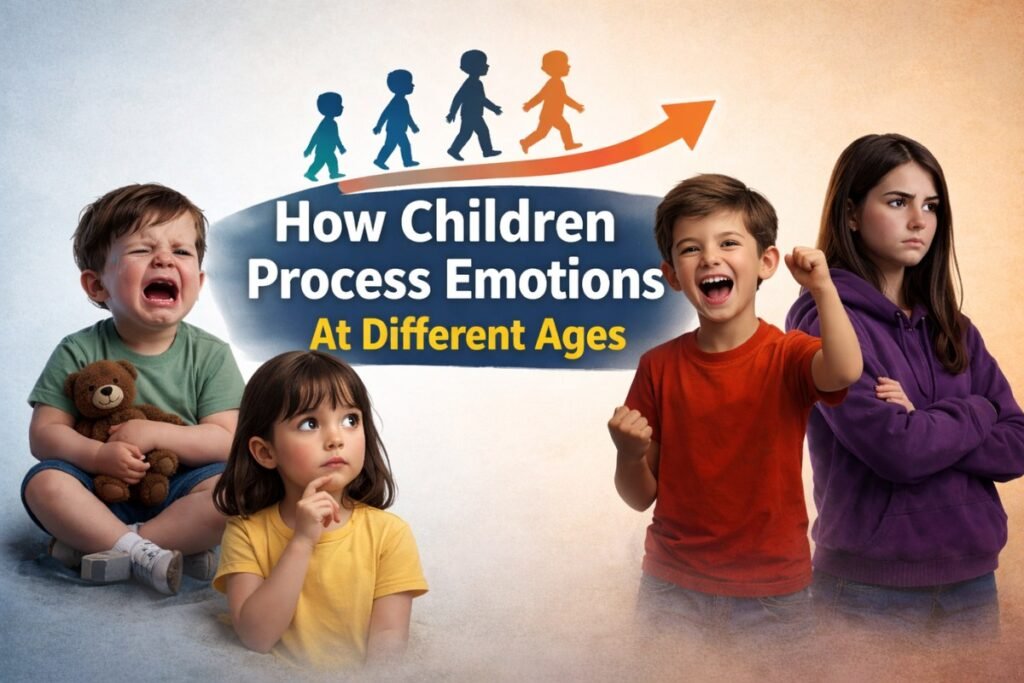
This does not automatically mean something is wrong. Emotional regulation develops gradually, and there can be considerable differences between children of the same age. If you are unsure what is typical at different stages, our guide to emotional development in children by age explains how emotional understanding and regulation change through childhood.
A child who cries more easily than a sibling or classmate is therefore not necessarily less mature or deliberately dramatic. Their emotional threshold may simply be different.
Something That Looks Small to You May Not Feel Small to Them
Parents often become concerned because the reaction seems much larger than the event.
Perhaps your child starts crying because their drawing did not look right, they made a mistake in homework, someone laughed at them, they lost a game, or you said no to something they wanted.
The visible trigger may be small, but the emotion underneath it may involve frustration, embarrassment, disappointment, fear of failure or feeling out of control.
This distinction matters. If we look only at the broken pencil or lost game, the crying can appear unreasonable. If we look at what that event represented to the child, the intensity can sometimes make more sense.
The Feeling May Arrive Faster Than Their Ability to Regulate It
Experiencing an emotion and regulating that emotion are not the same thing.
A child can become upset very quickly while still needing time to develop the attention, language, impulse control and coping skills required to settle themselves. The American Psychological Association notes that emotional regulation depends on several developing abilities, including attention, planning, cognitive development and language.
This is why one child can feel disappointed and continue with what they were doing, while another child experiencing the same disappointment begins crying immediately.
The clinically useful question is not simply, “Why are they crying?” It is also, “How easily does this child become overwhelmed, and how difficult is it for them to recover?”
Tiredness, Hunger and an Overwhelming Day Can Lower the Threshold
Parents sometimes notice that their child can cope with something easily in the morning but cry over the same thing later in the day.
That can happen because regulation is not constant. Being tired, hungry, overstimulated or already stressed can make it harder for a child to manage another frustration.
This can be particularly noticeable after school. A child may function well in a structured classroom and then become much more emotional once home. We explain that pattern separately in why some children are well behaved at school but not at home.
The final event before the crying may therefore not be the whole story. It may simply be the point at which your child no longer has enough capacity to manage another demand.
Sometimes Your Child Does Not Know Why They Are Crying
A parent may ask:
“Why are you crying?”
“What happened?”
“Are you sad?”
And the child genuinely answers, “I don’t know.”
Children can experience an emotion before they fully understand what it is or what caused it. Several smaller experiences may also have accumulated, making it impossible for the child to identify one simple reason.
This is especially important when parents assume that the child must be hiding something. Sometimes they are reluctant to talk, but sometimes they genuinely cannot give a better answer. We look at this distinction more closely in why children say “I don’t know” when asked how they feel.
Some children also understand that they are upset but find it difficult to put the experience into words. That is slightly different from frequent crying itself and is covered in our guide to why children struggle to express their emotions.
Frequent Crying Can Sometimes Be Part of a Bigger Emotional Difficulty
Crying easily does not by itself mean a child has anxiety, depression, ADHD or another psychological condition.
However, crying can sometimes appear alongside a broader difficulty. Children experiencing anxiety, for example, may show increased crying together with excessive worry, avoidance, irritability, physical complaints or difficulty sleeping.
The pattern matters more than the tears alone.
A child who has always been emotionally reactive but otherwise functions well is different from a child who suddenly starts crying frequently, stops enjoying usual activities, withdraws from friends, struggles at school or becomes persistently worried or irritable.
That change from the child’s usual behaviour deserves more attention.
When Should You Speak to a Psychologist?
You do not need to seek psychological support simply because your child cries more easily than another child.
It is worth looking more closely when the crying is frequent, intense, difficult to recover from, increasing over time or beginning to interfere with normal life.
Consider speaking with a psychologist if your child:
- cries very frequently across many different situations
- takes a long time to settle after relatively ordinary frustrations
- has recently started crying much more than before
- regularly becomes overwhelmed at school, home or around other children
- begins avoiding activities because they expect to become upset
- shows persistent worry, irritability, withdrawal or physical complaints
- has significant changes in sleep, appetite, friendships or school functioning
- struggles to explain what is upsetting them even once they are calm
Our broader guide on when parents should worry about a child’s emotional struggles explains why duration, intensity, change and impact on daily functioning usually tell us more than one behaviour in isolation.
A psychologist would not assess a child simply as someone who “cries too much.” They would look at the pattern around the crying: what usually happens beforehand, how quickly the emotion escalates, how the child recovers, whether particular situations consistently trigger it, how the child understands their own feelings, and whether there are signs of anxiety, developmental difficulties or other emotional concerns.
If frequent crying is becoming difficult for your child or family to understand, online child and teen counselling can help identify what may be driving the pattern and whether further support is needed.
Final Thoughts
A child who cries easily is not automatically oversensitive, manipulative or emotionally unhealthy. Some children simply experience emotions more intensely, and their ability to regulate those emotions may still be developing.
At the same time, parents do not need to dismiss every episode as “just being sensitive.” Pay attention to the pattern. Has the crying always been part of your child’s temperament, or is it new? Can they recover and continue with their day, or does every small difficulty become overwhelming? Is the crying isolated, or are other parts of their life changing too?
Instead of asking only “Why is my child crying over something so small?”, it can be more useful to ask “What is making this situation so difficult for my child to manage?”
That question gives you much more information than the tears alone.