
Last Updated on February 20, 2026
How can you tell if what you’re feeling is sexual frustration?
For many people, it doesn’t feel obvious. It’s not always about wanting sex more. It often shows up as feeling irritated for no clear reason, staying tense even when things are fine, or not being able to relax properly.
A lot of adults go through long phases where their sexual needs are unmet, especially in long-term relationships. Most don’t talk about it. Instead, the frustration shows up in daily life, short temper, low patience, trouble sleeping, or feeling restless in your own body.
This gets confusing because it’s easy to blame work stress, routine, or tiredness. But when those things settle and the feeling doesn’t, something else is usually going on.
This article breaks down 13 simple signs of sexual frustration that people notice in real life. It also looks at what actually helps, without exaggeration, pressure, or unrealistic advice.
What Is Sexual Frustration, Really?
What does sexual frustration actually mean?
It doesn’t mean you have a “high sex drive” or that something is wrong with you. Sexual frustration is what happens when desire, closeness, or expression stays blocked for too long.
For some people, it’s about not having sex. For others, it’s about not feeling wanted, touched, or connected, even if sex is happening. The frustration comes from the gap between what your body or emotions want and what’s actually possible in your life or relationship.
This is why sexual frustration often shows up indirectly. The body stays tense. The mind feels restless. Small things start to irritate you more than they should. You may not even think about sex much, but the unease is still there.
Sexual frustration isn’t a failure. It’s a signal. It’s the body reacting to something that hasn’t had space, safety, or expression for a while.
Why Sexual Frustration Is Often Misunderstood

Why do so many people miss what’s actually going on?
Because sexual frustration rarely looks the way people expect it to. Most imagine it means thinking about sex all the time. In real life, it often looks like irritation, distance, or low energy.
Many people tell themselves, “I’m just stressed,” or “I’m tired, that’s all.” Sometimes that’s true. But when the tension stays even after rest or time off, the cause is usually deeper. Sexual needs don’t disappear just because life is busy. They stay in the background and show up in other ways.
Common advice doesn’t help much either. Being told to “just have sex,” distract yourself, or ignore it often makes things worse. Pressure increases frustration. Avoidance doesn’t release it. And porn or quick fixes usually calm the body for a moment, then leave the same feeling behind.
Sexual frustration is misunderstood because it’s easier to label it as mood or personality. It takes more honesty to see it as an unmet need that hasn’t had a safe place yet.
Common Causes of Sexual Frustration
Sexual frustration does not appear randomly. It usually builds slowly when emotional or physical needs go unmet for a long time. Here are some of the most common causes.
Mismatched Libido in a Relationship
Mismatched libido is one of the most common reasons for sexual frustration in relationships. When one partner wants intimacy more often than the other, it can create pressure, guilt, rejection, or resentment on both sides.
Over time, this mismatch can feel personal, even when it isn’t.
Emotional Disconnection
Sex often reflects emotional closeness. If there has been unresolved conflict, distance, or hurt, desire can naturally decline. Many people think they are sexually frustrated when they are actually emotionally disconnected.
Stress, Exhaustion, and Mental Load
Chronic stress lowers libido. Work pressure, parenting, financial worries, and burnout can all reduce desire. When your nervous system is in survival mode, pleasure becomes secondary.
Body Image or Self-Esteem Struggles
Feeling insecure about your body can create hesitation around intimacy. You may want connection but feel uncomfortable being seen or touched. This inner conflict often turns into frustration.
Hormonal or Health Changes
Hormonal shifts, medications, sleep problems, or medical conditions can influence libido. Sometimes frustration is biological, not relational.
Lack of Communication About Desire
If partners never openly discuss their needs, preferences, or disappointments, misunderstandings build silently. Sexual frustration often grows in silence.
13 Signs of Sexual Frustration In Men & Women
Below are signs people notice in daily life. None of them means something is “wrong” with you. They are ways the body and mind react when a need stays unmet for too long.
1. Irritability That Feels Bigger Than the Situation
Why am I getting annoyed so easily lately?
This is often one of the first signs people notice. Small things start to irritate you more than they should. A delay, a comment, a minor mistake, suddenly your reaction feels sharp, even to you.
This happens because sexual frustration creates background tension in the body. When that tension has nowhere to go, it leaks out through irritation. You’re not angry about the small thing itself. The small thing just becomes the outlet.
Many people blame their mood or personality here. In reality, it’s often unexpressed energy and unmet closeness building pressure. Once that pressure is acknowledged, this kind of irritability usually softens on its own.
Sexual frustration often builds when desire feels one-sided or unclear. If you’ve been wondering why intimacy has changed, this article on why a partner may stop wanting sex explains common emotional and relational reasons.
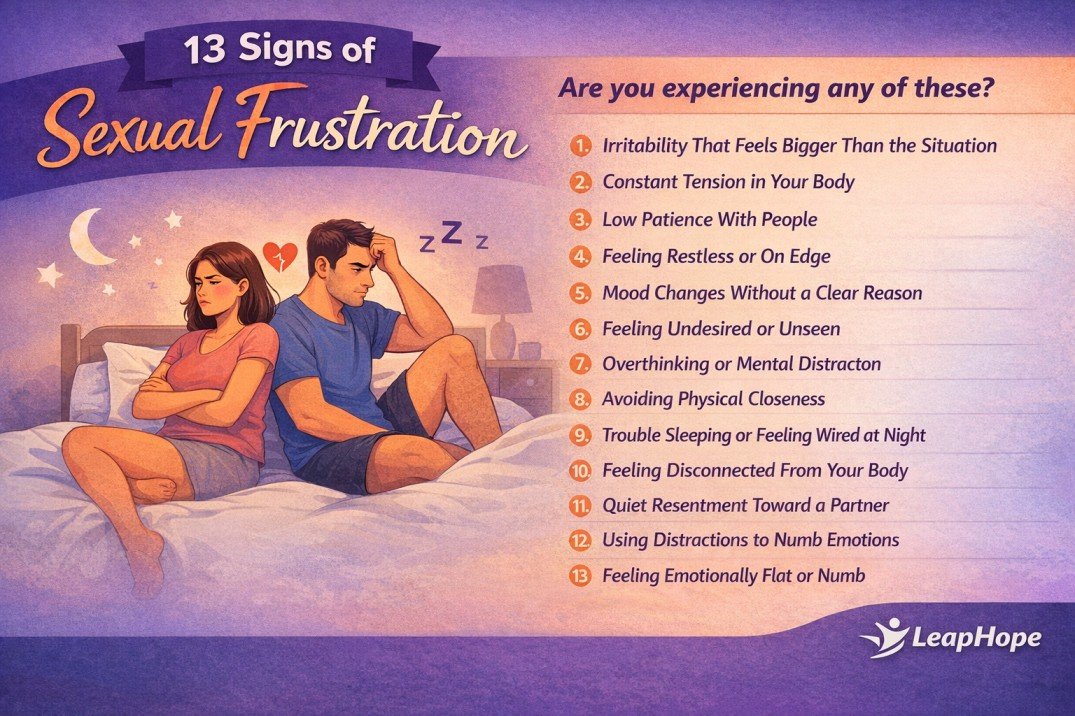
2. Constant Tension in Your Body
Why does my body feel tight even when I’m resting?
You might notice your shoulders stay raised, your jaw feels clenched, or your stomach never fully relaxes. Even when you sit down to rest, your body feels alert instead of calm.
This kind of tension builds when desire or closeness has nowhere to move. The body stays slightly “on,” as if it’s waiting for release or expression that never comes. Over time, this becomes your new normal.
It’s easy to miss because it doesn’t feel dramatic. It just feels uncomfortable and tiring. When sexual frustration is addressed, this background tension often eases without effort.
3. Low Patience With People
Why do interactions feel more draining than before?
You may notice that conversations take more effort. Waiting, explaining, or listening feels heavier than it used to. You get tired of people faster, even those you care about.
This happens because frustration reduces emotional capacity. When part of you feels unmet, there’s less energy left for patience. It’s not that people changed. Your tolerance level did.
Many people assume they’ve become rude or distant. More often, it’s a sign that something important hasn’t been getting enough space or attention.
4. Feeling Restless Without Knowing Why
Why can’t I feel settled even when things are fine?
You may feel an urge to move, scroll, distract yourself, or stay busy, even when there’s no real reason to. Sitting still feels uncomfortable, and quiet moments don’t feel restful.
This restlessness comes from unexpressed energy. When sexual or emotional needs aren’t met, the body looks for release in other ways. It doesn’t always know where to put that energy, so it keeps you slightly unsettled.
People often mistake this for anxiety or boredom. Sometimes it is. But when restlessness stays even during calm periods, sexual frustration is often part of the picture.
Frustration isn’t always about sex itself. Sometimes it’s about the absence of everyday closeness. This piece on why a partner stops touching looks at how emotional distance affects physical connection.
5. Mood Changes Without a Clear Reason
Why does my mood shift even when nothing happened?
You might feel okay one moment and irritated, low, or flat the next. There’s no obvious trigger, and that can feel confusing.
Sexual frustration affects emotional balance. When desire or closeness stays unmet, the nervous system stays slightly dysregulated. That makes moods less steady and reactions less predictable.
This doesn’t mean you’re emotionally unstable. It means your system is reacting to something it hasn’t been able to resolve. When that need is acknowledged, mood swings often become less intense.
6. Feeling Undesired or Unseen
Why do I feel unwanted even if no one rejected me?
This feeling often comes quietly. No one may have said no to you. Nothing dramatic may have happened. Yet you feel less noticed, less desired, or less important.
Sexual frustration isn’t only about sex itself. It’s also about feeling chosen, wanted, or responded to. When that sense fades, the body and emotions register the absence.
People often dismiss this as insecurity. In reality, it’s usually a response to a real lack of connection or affirmation over time, not a flaw in self-esteem.
Ongoing sexual frustration often develops when intimacy drops for long periods. This is discussed in more detail in this article on lack of sex in a relationship.
7. Overthinking or Mental Distraction
Why does my mind keep wandering lately?
You may notice your thoughts jump around more than usual. It’s harder to stay present. Quiet moments turn into overthinking, especially at night or when you’re alone.
When sexual frustration builds, the mind often tries to compensate. It looks for stimulation, fantasy, or distraction because the body feels unsettled. This isn’t a lack of focus, it’s unspent mental and physical energy.
Many people blame screens or stress for this. Sometimes that’s true. But when distraction feels constant and restless, unmet desire or closeness is often part of what’s driving it.
8. Avoiding Physical Closeness
Why do I pull away from touch instead of wanting it?
This surprises many people. Sexual frustration doesn’t always show up as craving. Sometimes it shows up as avoidance.
When closeness has felt unsatisfying, pressured, or emotionally disconnected for a while, the body learns to protect itself. Pulling away feels safer than staying open to something that hasn’t felt good.
People often think avoidance means they don’t want closeness at all. More often, it means the way closeness has been happening no longer feels right.
9. Trouble Sleeping or Feeling Wired at Night
Why am I tired but still unable to rest properly?
You may feel exhausted, yet when it’s time to sleep, your body stays alert. Thoughts keep running. Your body doesn’t fully settle.
Sexual frustration keeps the nervous system slightly activated. There’s energy that hasn’t been released or expressed, so the body doesn’t shift easily into rest mode.
Many people blame this on stress or screens. Those can play a role. But when sleep trouble comes with ongoing tension or irritability, sexual frustration is often part of the picture.
Frustration eases when closeness feels safe and mutual. These habits of couples having great sex show what supports connection long-term.
10. Feeling Disconnected From Your Body
Why do I feel distant from my own body lately?
You might feel numb, flat, or slightly detached from physical sensations. Things that used to feel grounding don’t register the same way.
This happens when the body has learned to dial things down. If desire, touch, or closeness has felt blocked or uncomfortable for a while, the system reduces awareness as a form of protection.
People often describe this as feeling “not fully present.” It’s not a permanent state. When sexual frustration is acknowledged and given space, this sense of disconnection usually eases.
11. Quiet Resentment Toward a Partner or Situation
Why do I feel annoyed without knowing exactly why?
This kind of resentment is subtle. You’re not actively angry, but there’s a low-level irritation that keeps showing up. Small things your partner does start to bother you more than they used to.
When sexual frustration stays unspoken, it often turns into resentment. Not because someone did something wrong in one moment, but because a need has been ignored or postponed for too long. The frustration has nowhere to go, so it settles into quiet annoyance.
Many people feel guilty about this feeling and try to push it down. But resentment usually fades only after the underlying frustration is recognised, not ignored.
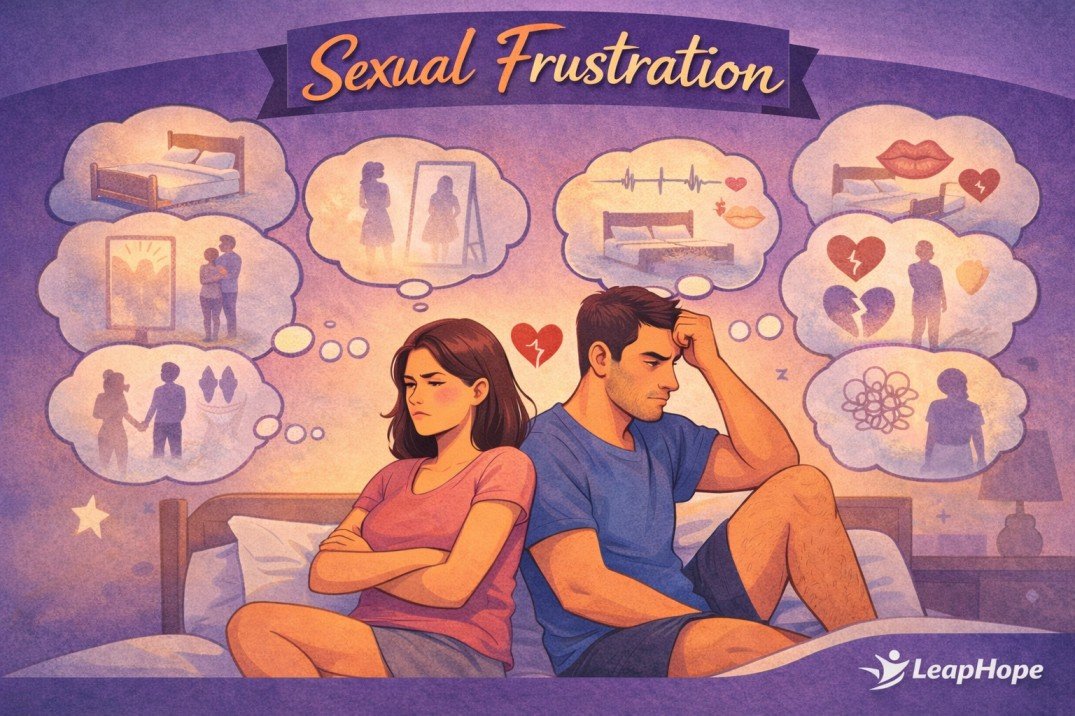
12. Using Distractions to Avoid How You Feel
Why do I keep keeping myself busy?
You may notice you’re always scrolling, working, watching something, or staying occupied. Quiet moments feel uncomfortable, so you avoid them.
This happens when sexual frustration sits underneath the surface. Distraction becomes a way to not feel the tension in your body. It’s not laziness or addiction, it’s avoidance of an unsettled feeling that hasn’t been named yet.
When the frustration is acknowledged, the need to constantly distract yourself often reduces on its own.
13. Feeling Emotionally Flat or Numb
Why do I feel blank instead of frustrated?
Some people don’t feel irritation or restlessness. They feel nothing much at all. Emotions feel muted. Pleasure feels distant.
This usually happens after frustration has gone on for a long time. The body stops pushing for release and starts shutting things down instead. Numbness becomes easier than wanting something that hasn’t been met.
This isn’t a permanent state. It’s often the body’s last way of coping before something needs to change.
Rebuilding closeness doesn’t mean forcing desire. These marriage romance tips focus on easing tension rather than creating pressure.
How Sexual Frustration Affects Relationships
Sexual frustration rarely stays contained. It slowly spills into the relationship in subtle ways.
You may notice:
- Increased arguments over small issues
- Avoiding physical affection
- Feeling rejected or undesirable
- Growing resentment
- Emotional distance
Over time, partners can start interpreting normal stress as personal rejection.
When frustration is not addressed, it can create a cycle of pursuit and withdrawal, where one partner seeks closeness and the other pulls away.
When Sexual Frustration Becomes a Deeper Issue
Sexual frustration becomes more serious when it leads to:
- Chronic resentment
- Emotional shutdown
- Compulsive sexual behaviour
- Thoughts of infidelity
- Persistent anxiety or low mood
At this stage, the issue is no longer just about sex. It becomes about connection, safety, and unmet emotional needs.
What Actually Helps With Sexual Frustration
What helps beyond “just having sex”?
Relief usually comes from changing the pattern, not forcing an outcome. Here’s what tends to make a real difference.
- Name it privately first.
Before involving anyone else, acknowledge what’s happening in your own body. When frustration stays unnamed, it leaks into mood and behaviour. - Reduce pressure before increasing closeness.
Pushing for sex often makes frustration worse. When pressure drops, the body relaxes, and desire has room to return on its own terms. - Separate desire from performance.
Frustration grows when closeness feels like a task. Shifting toward comfort, warmth, or simple touch can help the body feel safe again. - Create space for sensation, not distraction.
Constant busyness numbs awareness. Small moments of slowing down help you notice what your body actually wants. - Look at emotional blocks, not just frequency.
Feeling undesired, unheard, or disconnected can block desire even when sex is happening. Addressing that layer often eases the tension.
Does Therapy Help With Sexual Frustration?
Can therapy actually help with sexual frustration?
Sometimes, yes. But not in the way many people expect.
Therapy helps when sexual frustration is connected to confusion, emotional blocks, or patterns that keep repeating. It gives space to slow things down and understand what the frustration is really about, instead of trying to fix it quickly.

If sexual frustration is part of a bigger pattern you’re noticing, you can explore more grounded relationship topics in LeapHope’s relationship advice section.
Therapy is more useful when:
- You feel stuck in the same loop
- Frustration has turned into resentment or numbness
- You’re not sure what you need anymore
- Talking on your own keeps turning into arguments
Therapy helps less when:
- The goal is just to “increase sex”
- One person feels pushed or blamed
- There’s pressure to change quickly
- The frustration is being treated as a fault
Final Thoughts
Sexual frustration is often misunderstood because it doesn’t announce itself clearly. It hides behind irritability, restlessness, distance, or numbness. Many people spend a long time trying to fix their mood or their relationship without realising what their body has been reacting to.
This kind of frustration isn’t a failure or a weakness. It’s a signal that something important hasn’t had space, expression, or safety. When that signal is ignored, it tends to show up louder. When it’s recognised, even without immediate solutions, the tension often begins to ease.
Understanding sexual frustration is less about doing more and more about listening carefully to what your body and emotions have been trying to say all along.
FAQs
What causes sexual frustration?
Sexual frustration usually comes from unmet desire, lack of closeness, or blocked expression. It’s not only about sex itself, it’s often about feeling disconnected, undesired, or unable to express what your body needs.
Is sexual frustration normal in relationships?
Yes, short phases are common, especially during stress, health changes, or busy periods. It becomes a concern when it lasts for months and starts affecting mood, sleep, or connection.
Can sexual frustration affect mental health?
It can. Ongoing frustration often shows up as irritability, low patience, restlessness, or emotional numbness. These effects are indirect, which is why many people don’t link them back to frustration.
Does sexual frustration mean my relationship is failing?
Not always. It often means something important isn’t being expressed or addressed. Some relationships improve once the underlying issue is named and handled differently.
Can sexual frustration go away on its own?
Short-term frustration can ease with time or life changes. Long-term frustration usually doesn’t disappear without some form of acknowledgment or change in the pattern.