

Last Updated on February 18, 2026
As a psychologist, many of my clients ask me similar questions after divorce:
“Why does sex feel so different now?”
“Why do I suddenly want it more or not at all?”
“Am I ready, or just lonely?”
“Is it wrong to enjoy sex again?”
Divorce doesn’t just end a marriage. It shifts your confidence, your identity, and often your relationship with intimacy. Some people feel liberated. Others feel anxious or shut down. Many feel both.
There’s no single “normal” reaction. Your mind and body are adjusting after loss, change, and emotional upheaval. That adjustment can show up as heightened desire, fear, guilt, or numbness.
So I wrote this article to address what’s happening psychologically and how to move forward with clarity instead of confusion.
We’ll talk about why your sex drive may change, how to know if you’re ready, and how to build a sex life after divorce that feels confident and genuinely satisfying.
What Does Sex Feel Like the First Time After Divorce?
The first time you have sex after divorce often feels bigger than the moment itself.
Even if your marriage had been distant for a while, being intimate with someone new can stir up unexpected emotions. You might feel nervous, excited, awkward, or strangely emotional, sometimes all at once.
It’s common to overthink: Do I still know how to do this? Will it feel different? Am I ready? After a long relationship, your body and confidence can feel unfamiliar in a new setting.
You may also realise you missed more than sex. You missed touch, closeness, and the feeling of being wanted. That recognition can intensify the experience.
The first time doesn’t have to mean anything profound. It doesn’t define your future or measure your healing. It’s simply a new beginning and new beginnings often feel charged.
Are You in a No-Sex Phase After Divorce?
You’ve met someone new. You like them. But when things move toward sex, you feel tense, distant, or uninterested. You may even pull back without knowing why.
After a long, stressful divorce, arguments, legal battles, financial strain, emotional hurt, intimacy can become linked with pressure or conflict. Even if this new person is kind, your body may still be cautious.
You might notice you overthink during intimacy, compare it to your marriage, or feel emotionally flat afterward. That doesn’t mean you’re not attracted. It often means you’re still carrying stress or unresolved emotion.
What helps with sexual numbness?
- Slow the pace and build emotional comfort first.
- Be honest about needing patience.
- Process leftover anger or grief instead of pushing it aside.
- Focus on connection, not performance.
Desire after divorce often returns when you feel steady and safe again. If sex feels difficult right now, it may simply mean you’re still healing, not that something is wrong with you.
11 Tips for Really Good Sex After Divorce From a Psychologist
To have good sex after divorce, you need more than just attraction. Divorce can change how you feel about trust, desire, and closeness. As a psychologist, I’ve seen how these changes affect intimacy. The following 11 tips focus on helping you rebuild sex in a way that feels safe, confident, and real.
Rebuild Emotional Safety Before Getting Naked
Good sex after divorce does not begin in the bedroom. It begins in how safe you feel with the person sitting across from you. If your last relationship involved criticism, rejection, pressure, or betrayal, your body may tense up even if your mind wants intimacy.
Before you take your clothes off, notice whether you feel respected, listened to, and unhurried. Can you speak freely? Can you say no without fear of conflict? When emotional safety is present, your body relaxes naturally. Desire grows from feeling secure, not from rushing into physical intensity.
Get Comfortable Being Touched by Someone New
After years with one partner, being touched by someone new can feel unfamiliar, even if you’re attracted to them. Your body may need time to adjust to a different rhythm, scent, pace, and style of affection.
Instead of rushing past that adjustment, stay aware of how touch feels. Notice where you relax and where you tense. Let your partner learn you slowly, and allow yourself to respond honestly. Comfort grows through repetition and presence, not speed.
The more familiar safe touch becomes, the easier it is for desire to return naturally.
Take Time With Kissing and Foreplay
Invest in kissing and foreplay with intention. Slow the pace. Stay in a kiss longer than usual, vary the pressure, and let your hands move gradually, holding, tracing, pulling closer, then pausing. Kiss beyond the lips, exploring the neck, shoulders, and chest without rushing ahead.
Focus on building tension rather than reaching intercourse quickly. Notice breathing, subtle reactions, and adjust your touch. Tease gently, change rhythm, and stay present in the moment.
Be open to experimenting. Try different speeds or settings, and guide your partner toward what feels good for you. Introduce your preferences calmly and confidently. Foreplay works best when it’s patient, exploratory, and unhurried.
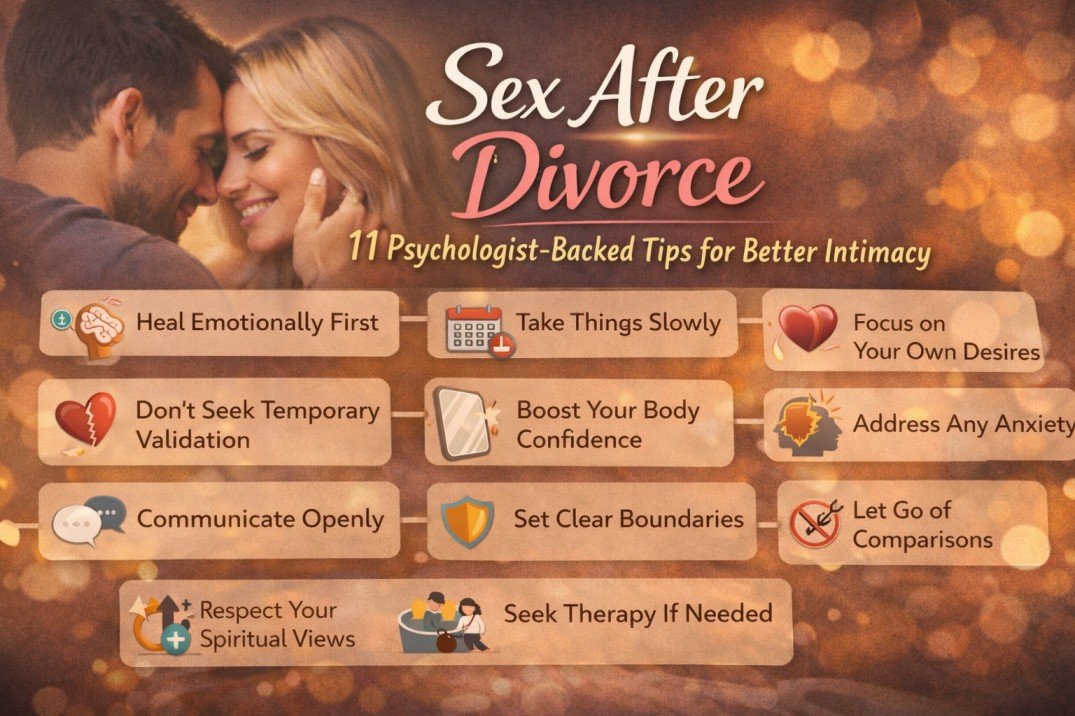
Stay Present Instead of Thinking About Your Ex
After divorce, it’s normal for memories to pop up, even during intimate moments. A touch or habit can trigger comparison, and that can pull you out of the experience.
When you notice your mind drifting, gently bring it back. Focus on your breathing. Pay attention to your partner’s touch, their voice, their warmth. Stay with what is happening now instead of replaying the past.
This connection is new. It deserves your full attention. Staying present helps you build intimacy based on today, not yesterday.
Talk About What You Like Now
You don’t have to wait for your partner to guess what feels good. Say it. If you prefer slower kissing, deeper pressure, lighter touch, more time on certain areas, or less focus on others, express that clearly. A simple “I like it when you…” or “Can we try…” is enough.
Your body may respond differently now than it did in your previous marriage. Maybe you enjoy longer foreplay, more body kissing, a gentler pace, or more verbal reassurance. Maybe you prefer more direct touch or more teasing first. Share those preferences without overthinking it.
Clear, calm guidance makes intimacy better for both of you. When you speak about what you enjoy now, you create connection, reduce awkwardness, and make the experience more satisfying and confident.
Don’t Rush Into Intense or Rough Sex Too Fast
It can feel exciting to go fast or be rough right away. But if your body isn’t ready, it can hurt, feel uncomfortable, or make you shut down emotionally.
Start slower than you think you need to. If movements become harder or faster, check that you’re both still comfortable. If something feels too strong, too deep, or too quick, say it clearly.
Rough or intense sex can feel good, but only when both people are ready for it. Going step by step makes it more enjoyable and avoids pain or regret later.
Be Clear About Whether This Is Casual or Emotional
Before getting deeply involved, be honest with yourself about what you actually want. Are you looking for something light and physical, or are you hoping for emotional closeness and a real relationship? Confusion here often leads to hurt later.
Say it clearly. If you want something casual, don’t act emotionally committed. If you want something serious, don’t pretend you’re fine keeping it casual. Mixed signals create misunderstandings, especially after divorce when feelings can be more sensitive.
Clarity protects both of you. When expectations are open and direct, intimacy feels safer, cleaner, and far less complicated.
Address Erection, Arousal, or Lubrication Changes Calmly
Changes in erection, arousal, or natural lubrication are common, especially after divorce, stress, or entering a new relationship. It doesn’t mean something is wrong with you or the connection. Bodies respond to emotions, pressure, fatigue, and anxiety.
If an erection softens or arousal drops, don’t panic or apologise repeatedly. Pause. Slow down. Shift focus instead of forcing it. If lubrication feels low, use a good-quality lubricant without embarrassment. These are normal adjustments, not failures.
Staying calm makes a big difference. The more relaxed you are, the easier it is for your body to respond naturally. Treat these moments as normal, practical situations, not personal flaws.
Practice Safe Sex Without Awkwardness
Don’t wait until the last second to talk about protection. Bring it up early and say it plainly: “Let’s use a condom,” or “When was your last STI test?” This includes protection against sexually transmitted infections like chlamydia, gonorrhoea, herpes, HPV, and HIV, not just pregnancy. Clear questions are better than silent assumptions.
Keep condoms or other protection nearby so there’s no scrambling in the moment. If you’ve both been tested, say so. If you haven’t, suggest getting tested together. These conversations may feel slightly uncomfortable for a minute, but they prevent much bigger stress later.
Safe sex is not distrust. It’s responsibility. Handling it calmly shows confidence, maturity, and care for both your health and your partner’s.
Focus on Enjoying Each Other, And Feel Sex
Stop trying to make sex perfect. Don’t focus on how long it lasts, how you look, or whether you’re “doing it right.” Pay attention to the warmth of skin, the rhythm of movement, the sounds, the breathing. Stay inside the experience instead of analysing it.
Let yourself feel pleasure without rushing to the finish. Slow your breathing. Notice what feels good in your body. If something feels especially enjoyable, stay there a little longer instead of changing positions quickly.
Sex becomes more satisfying when you treat it as something to feel, not something to complete. When both of you are present and relaxed, enjoyment happens naturally.
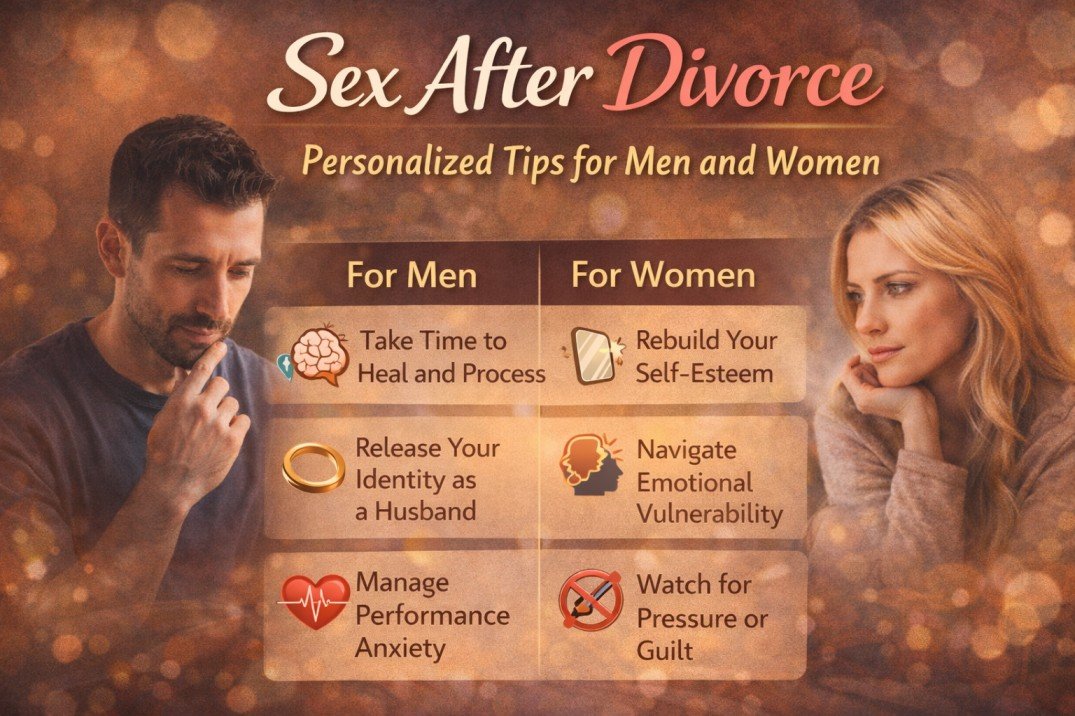
Sex After Divorce as a Woman: What Changes and How to Navigate It
If you’re having sex after divorce, expect some shifts. Your sex drive may increase because you feel freer, or decrease because stress and emotional recovery are still present. Female sex drive changes after divorce are normal. Nothing is “wrong” with you.
If you’re in your 40s or 50s, arousal may take longer and lubrication may reduce. That’s hormonal, not personal. Use lubricant. Ask for direct stimulation. Give your body time instead of judging it.
Body confidence may feel fragile at first. You might compare yourself to younger women or to your past body. Confidence now comes from knowing what feels good and not apologising for it. Comfort increases pleasure.
Notice your emotional attachment patterns. You may bond quickly through sex because you miss closeness, or detach to protect yourself. Be honest with yourself about which pattern you fall into.
Post-divorce desire shifts are real. You may want different things now. That isn’t confusion, it’s growth. Let sex be something you choose and shape on your terms.
Sex After Divorce for Men: What You May Notice
If you’re having sex after divorce, expect some changes. Your sex drive may spike because attention feels validating. Or it may drop because stress, court issues, and emotional fatigue are still affecting you. Both are normal. Libido after divorce often reflects your mental state.
If you notice erectile dysfunction after divorce, don’t panic. It is often anxiety, not permanent damage. The more you try to “perform,” the more pressure you create. Focus on sensation instead of erection. If you lose it, slow down. Stay calm.
Watch for validation-driven libido. Wanting sex to prove you’re still desirable can push you to move too fast. Ask yourself if you want connection or just reassurance.
Also notice emotional detachment patterns. You may keep things purely physical to avoid getting hurt. That protects you short term, but it can delay real recovery.
Sex after divorce works best when you drop the performance mindset. Stay present. Let desire grow naturally instead of trying to prove something.
Are Your Religious Beliefs Causing Anxiety About Sex After Divorce?
If you grew up religious, sex after divorce can bring fear and confusion. You may ask what the Bible says about sex after divorce or whether it counts as adultery. Christian views differ. Some traditions are strict about remarriage and intimacy, while others focus on forgiveness and personal conscience.
In Islam, sex is generally allowed within remarriage after divorce, but premarital sex after divorce is still considered outside religious boundaries. Cultural expectations can make this feel heavier, especially for women.
Often the struggle is internal. Shame and guilt can show up even if you believe you have the right to move on. You might enjoy intimacy but feel anxious afterward.
It helps to separate faith from fear. Clarify what you truly believe versus what you were taught to fear. You deserve peace, not constant moral panic.
What to Do If Sex After Divorce Still Feels Difficult
If sex after divorce feels tense or scary, don’t dismiss it. Fear of sex after divorce is common, especially if your marriage involved emotional neglect or years in a dead bedroom. When desire was repeatedly rejected, your body may have learned to shut down. That pattern does not reverse instantly.
You might experience panic, freezing, or going emotionally blank during intimacy. That is often a trauma response. Trauma from marriage, including attachment wounds formed through criticism or rejection, can make your nervous system stay guarded even with a safe partner.
Some people swing in the opposite direction. After long deprivation, desire can spike sharply, sometimes looking like a sex addiction rebound. It may feel empowering, but it can also mask unresolved pain.
If anxiety keeps returning or intimacy consistently feels overwhelming, therapy helps. Processing trauma and repairing attachment patterns can separate past hurt from present connection. Sex should not feel like survival. With support, it can feel safe again.
Final Thoughts
Sex after divorce can feel confusing because everything may show up at once. Low libido. High libido. Guilt. Excitement. Some days you may feel completely uninterested. Other days you may feel more desire than you expected. All of it is normal.
You might move slowly. You might need time to trust again. Healing is rarely dramatic. It is gradual. It shows up in small moments, feeling a little more relaxed, a little less anxious, a little more open.
You are not starting from zero. You carry experience, self-awareness, and clearer boundaries. Pleasure after divorce is not about proving anything. It is about rediscovering what feels safe, satisfying, and true for you now.
That is not starting over. That is starting wiser.
If you’re feeling stuck or anxious about intimacy after divorce, online sex therapy can help you rebuild confidence and feel secure again.
FAQs
How long after divorce should I wait to have sex?
There is no fixed timeline for sex after divorce. You should wait until you feel emotionally ready, not pressured, and comfortable with intimacy again.
Is it normal to have no sex drive after divorce?
Yes, having no sex drive after divorce is normal. Stress, grief, and emotional recovery often reduce libido temporarily before it gradually returns.
Is sex after divorce a sin?
Sex after divorce being a sin depends on your religious beliefs. Christian and Islamic views vary, so personal faith interpretation matters.
Why do I feel nervous about sex after divorce?
Feeling nervous about sex after divorce is common due to performance anxiety, fear of comparison, rejection, or unresolved emotional hurt from the marriage.