Long-distance marriage is very common today, especially for couples in their late 20s and 30s.
Many were together for years before marriage. Some met in college. Some had arranged marriages that grew into love. But after marriage, work, visa problems, money issues, or family needs forced them to live apart, sometimes in different cities, sometimes in different countries.
On the outside, everything looks fine.
They talk every day. Messages, photos, video calls. There is love and regular contact. Nothing seems wrong.
But inside, things can feel very different.
One partner may wait for a reply that never comes. The message shows “seen.” The partner was online a minute ago. Active on WhatsApp or social media, but silent. Small moments start to hurt a lot.
Distance often brings back old fears. Fear of being left. Jealousy without clear reason. Anxiety, anger, and falling confidence. Nights feel lonely when there is no one there to hug or reassure you.
Living apart also creates two separate daily lives. One person may be handling everything at home. The other is building a routine somewhere else. Over time, it can feel less like one shared marriage.
What makes this confusing is that love is still there. Many people say, “Nothing is wrong with my partner, so why do I feel this way?”
If you feel anxious, insecure, or afraid of losing your partner while living apart, you are not alone. These feelings are common in long-distance marriage and do not mean your relationship is broken.
Why Even Strong Marriages Can Feel Unstable When You Start Living Apart
Living apart changes how a marriage feels, even when the love is still strong.
When couples live together, safety comes from everyday things, seeing each other, small talks, shared meals, touch, and knowing your partner is there. Distance removes these at once, so reassurance now depends on calls and messages.
Long gaps and silence can make the relationship feel uncertain.
Modern lifestyle can make this harder. New workplaces, new friend circles, late nights, office parties, or social outings become part of daily life. Each partner is building routines the other is not part of. This can trigger insecurity, jealousy, or fear of drifting apart, even without anything wrong happening.
Physical distance also means no quick comfort. No hug after a bad day. No simple presence to calm worries.
Over time, it can start to feel like two separate lives instead of one shared marriage.
This does not mean the relationship is weak. It means distance, uncertainty, and lifestyle changes are putting pressure on emotional security.
Common Psychological Challenges Couples Face in a Long-Distance Marriage
Living apart can trigger psychological challenges in both men and women, depending on the situation and environment you are in. Being alone, living with family, adjusting to a new place, or managing life in different cities or countries can all influence how the distance is experienced.
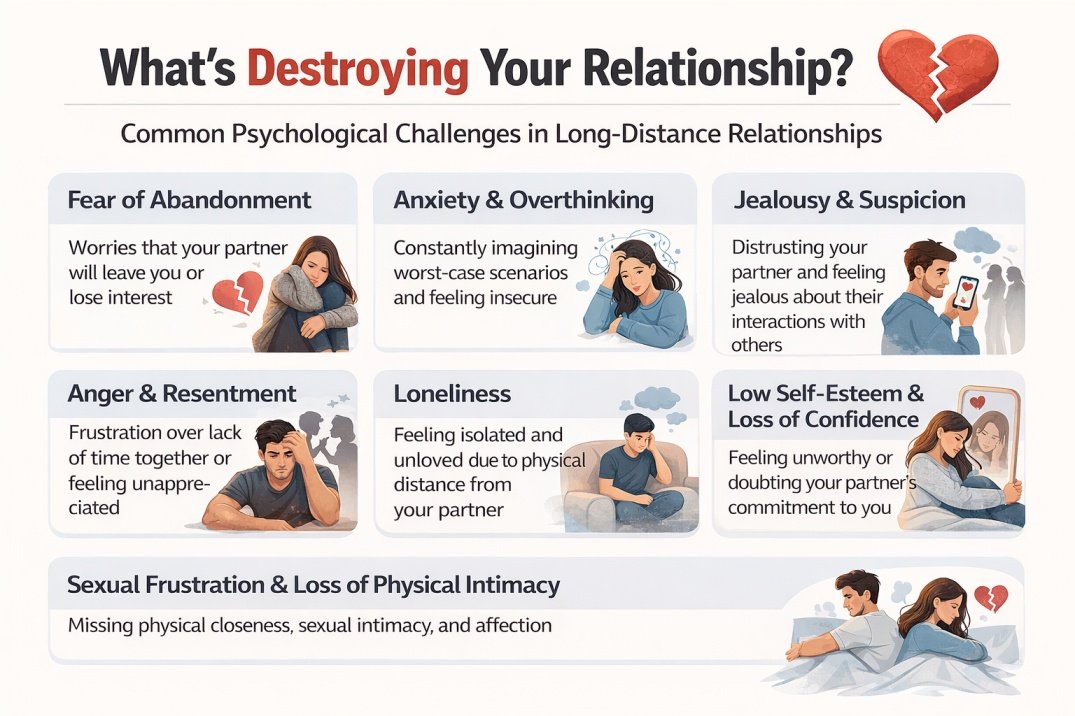
Let’s look at the most common challenges and what triggers them.
Fear of Abandonment
Fear of abandonment in long distance marriages is often triggered by past experiences, not just the distance itself. Childhood neglect, inconsistent caregiving, previous breakups, betrayal, or feeling emotionally unsafe in earlier relationships can resurface when physical closeness is gone.
Separation removes daily reassurance, so old fears of being left, replaced, or not being “enough” can come back strongly.
Anxiety and Overthinking
Anxiety and overthinking are often triggered by a partner’s behaviour when it feels uncertain or inconsistent. When you live apart, you may start monitoring small details without meaning to. If something feels unusual or unexplained, it can quickly create worry.
Late-night parties, new social plans, a friend visiting, sudden purchases, changes in routine, or suspicious online activity can all trigger anxious thoughts, especially when there is little context or explanation.
Jealousy and Suspicion
Jealousy and suspicion are often triggered by perceived threats to the relationship. New friendships, close colleagues, frequent outings, private conversations, or increased interaction with someone else can feel uncomfortable when you are not present.
Social media posts, photos, or seeing your partner spend time with others may intensify these feelings, especially if boundaries are unclear or reassurance is limited.
Anger and Resentment
Anger and resentment often build when one partner feels they are carrying most of the responsibility alone. One person may be managing the home, children, family duties, and daily stress, while the other, because of distance, offers limited practical support. Over time, this can feel deeply unfair.
It can become harder if the partner away appears to be adjusting to a new lifestyle, social life, or freedom, while the one at home feels stuck, sacrificing their own needs and routine for the family.
Unexplained decisions, missed commitments, or feeling left out of important choices can add to the frustration. These moments can slowly turn hurt into resentment.
Loneliness
Loneliness is triggered by the lack of physical presence and shared daily life. Coming home to an empty space, handling problems alone, eating alone, or having no one to talk to in real time can intensify the feeling of isolation.
Social media and friend circles can make this worse. Seeing other couples together, friends going out in pairs, or constant posts of shared moments can highlight what feels missing in your own life. Even social gatherings can feel lonely when you attend alone.
Age can also deepen this feeling psychologically. In the late 20s and 30s, many people expect to be settled into married life with daily companionship. Watching peers build homes, routines, or families while you are living apart can increase the sense of being left behind or emotionally alone.
Low Self-Esteem and Loss of Confidence
Low self-esteem can be triggered when you start feeling less important or less valued in your partner’s daily life. Limited attention, reduced compliments, fewer affectionate messages, or a partner becoming busy with new people and routines can create self-doubt.
Living apart may also lead to comparisons. Seeing your partner surrounded by new colleagues, friends, or socially active environments can make you question your own attractiveness, relevance, or place in their life.
Over time, feeling excluded from decisions, milestones, or everyday experiences can weaken confidence and create the sense that you no longer matter as much as before.
Sexual Frustration and Loss of Physical Intimacy
Physical intimacy is a normal part of married life and is usually expressed regularly through touch, closeness, and sexual connection. When couples live apart, this natural outlet suddenly disappears, while the need itself does not.
Over time, the lack of physical contact can build frustration, tension, and emotional distance. Calls, messages, or virtual intimacy may help temporarily, but they often cannot fully replace real touch, warmth, and physical presence. The body’s need for closeness does not simply switch off.
Being surrounded by couples, sexual cues in daily life, or long periods without intimacy can intensify the frustration. In some cases, this may lead to irritability, feelings of rejection, self-doubt about desirability, or fear that the partner’s needs are unmet.
For some individuals, prolonged unmet physical needs, combined with loneliness or opportunity, can increase vulnerability to boundary-crossing or infidelity, especially if communication about intimacy is limited or strained.
How Long-Distance Marriage Feels Different Depending on Your Situation
We touched on this earlier, but the experience can vary greatly depending on who stayed, who left, and what each person is handling daily.
When One Partner Is Away and One Manages Home or Children
The partner at home, often the woman, may carry full responsibility for children, household, finances, and family expectations alone. This can lead to exhaustion, loss of identity, money stress, difficult in-law dynamics, and fear of abandonment or infidelity. Even today, managing everything alone can feel overwhelming.
The partner living away faces loneliness, work pressure, and the pain of being far from loved ones. Irregular communication and time differences can trigger anxiety, overthinking, and fear of losing connection.
When Both Partners Are Working but Living Apart
When both partners live in different cities or countries, the situation may seem more balanced, but emotional strain still exists. Separate routines and social circles can slowly create distance.
Social media can intensify this, seeing your partner’s life from afar may trigger anxiety, jealousy, or insecurity. If past traumas or trust issues exist, even a normal relationship can feel mentally exhausting.
Does It Feel Different in Love Marriages vs Arranged Marriages?
Yes, the experience can feel different because the foundation of the relationship may be different.
Love Marriage
Couples in love marriages often share a deep emotional history. Living apart can feel like losing the closeness that once held the relationship together. Distance may trigger fear of drifting apart, jealousy, or anxiety about whether feelings will remain the same without daily connection.
If one partner had an active dating life before commitment or marriage, that knowledge can resurface as insecurity during separation. Thoughts about past relationships, comparisons, or fear of old patterns returning may become stronger, especially when combined with limited reassurance. Sexual frustration can intensify these fears, making the distance feel more threatening and emotionally charged.
Arranged Marriage
In arranged marriages, the emotional bond may still be developing, especially in the early years. Distance during this stage can slow down the process of building comfort, trust, and intimacy. Communication may remain polite but not deeply expressive, which can increase uncertainty.
Partners may worry about whether the relationship is progressing as expected or whether emotional closeness will form at all without living together. The lack of shared daily experiences can make it harder to move from formal partnership to genuine companionship.
Both types of marriages can struggle with distance, but for different reasons. Love marriages may fear losing an existing bond, while arranged marriages may struggle to build that bond in the first place.
Everyday Factors That Make Long-Distance Marriage Harder
Distance is not the only challenge. Daily life pressures can make the situation much harder, even when both partners are committed.
Job demands and long hours can leave little time or energy for meaningful conversations. Exhaustion often replaces emotional connection.
Financial pressure may increase due to maintaining two households, travel costs, childcare, or visa-related expenses.
Time zone differences make communication difficult. When one partner is free, the other may be working or sleeping, leading to irregular contact.
Parenting from afar places extra burden on the partner at home while the distant parent may feel guilt, helplessness, or emotional disconnection from the child.
Living arrangements, such as staying with in-laws or extended family, can reduce privacy and increase stress or expectations on the partner who stayed behind.
Lack of a clear reunion timeline creates ongoing uncertainty. Not knowing when you will live together again can make it hard to feel settled or secure.
How Social Media and Online Behaviour Can Intensify Anxiety
In long-distance marriage, much of the relationship exists through phones, making online activity emotionally loaded. Seeing a partner active but not replying, posting stories, or engaging online while messages go unanswered can quickly trigger hurt, fear, or overthinking because there is no physical reassurance.
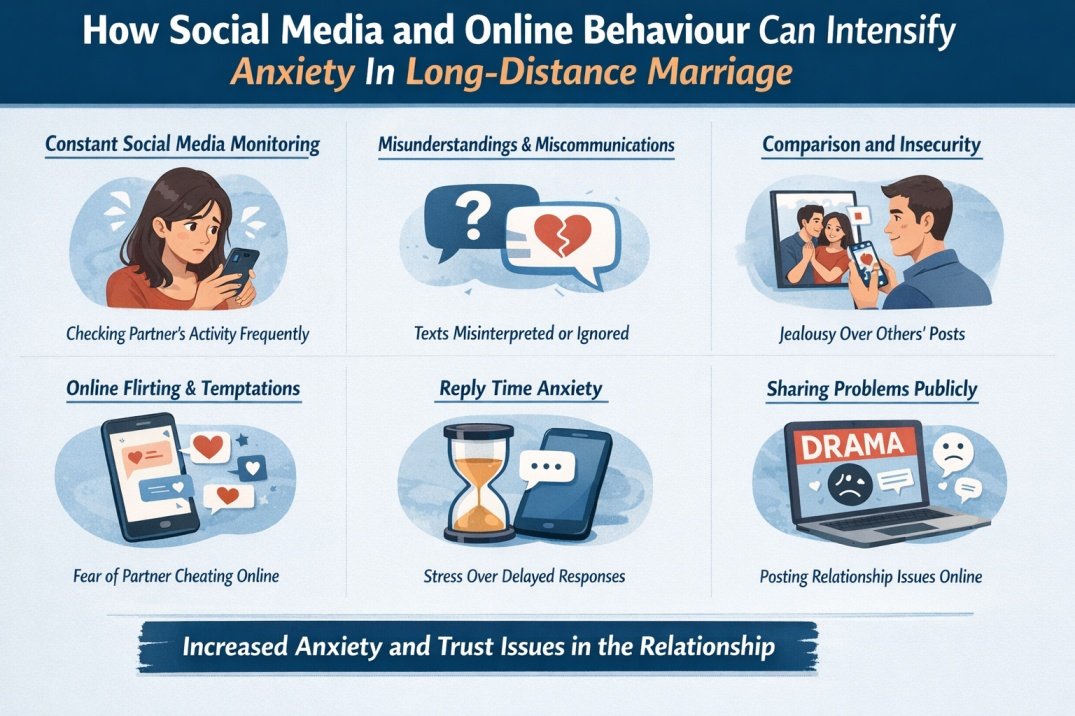
Today’s social media culture and algorithms amplify this. Feeds are filled with attractive people, ideal couples, nightlife, and curated lifestyles, which can fuel comparison, self-doubt, and fear of replacement. Reels and short videos repeatedly push similar content, making it feel like that world is constant and close to your partner.
Posting and interaction patterns can also trigger conflict. What is shared, what is hidden, who is liked, or new followers can become sources of suspicion when context is missing. Without real-life presence to balance perception, the mind may interpret normal online behaviour as emotional distance or changing priorities.
Is This Anxiety… or a Sign Something Is Wrong in the Marriage?
Distance can blur the line between normal fear and real relationship issues. It is important to look at patterns over time, not just isolated moments.
Signs It’s Mostly Anxiety
The partner remains caring, consistent, and responsive overall, even if busy at times. Plans for the future still exist, communication continues, and there is no clear evidence of dishonesty. Worries tend to rise during silence, stress, or overthinking rather than after concrete events.
Signs There May Be Real Relationship Problems
Communication becomes consistently distant, avoidant, or defensive. Important topics about the future are ignored, plans are repeatedly postponed, or effort to stay connected declines. Secrecy increases, boundaries change, or behaviour shifts without explanation. The relationship starts to feel one-sided or emotionally disconnected for a prolonged period.
How to Handle Fear of Abandonment, Anxiety, and Jealousy in a Long-Distance Marriage
Living apart can intensify emotions, so managing your internal reactions is key to protecting both your mental health and the relationship.
- Pause before reacting. When anxiety spikes, avoid sending impulsive messages or making accusations. Step away from the phone, breathe, or shift your attention until you feel calmer.
- Limit overthinking time. Focus on what you actually know instead of imagined scenarios. Staying busy, especially during evenings, can prevent your mind from spiraling.
- Reduce constant reassurance-seeking. Repeated checking, questioning, or monitoring may soothe you briefly but often increases insecurity and tension over time.
- Strengthen your identity outside the relationship. Invest in personal goals, friendships, hobbies, and self-care so your emotional stability does not depend only on your partner.
- Create a stable daily routine. Regular sleep, physical activity, social interaction, and meaningful tasks provide structure and reduce emotional volatility.
These steps do not remove the distance, but they can make your reactions more balanced and help you feel more in control.
How Couples Can Make a Long-Distance Marriage Work Today
Distance does not improve on its own. Couples who manage it well usually create clear systems, boundaries, and shared expectations rather than relying only on love or frequent chatting.
Predictable Communication Patterns
Instead of “talk whenever possible,” agree on realistic windows based on time zones and work schedules. Decide what counts as urgent, what can wait, and how to inform the other if plans change. Even a short heads-up message (“Busy today, will call at night”) can prevent hours of worry.
Quality Conversations Over Constant Texting
Daily life updates alone are not enough. Set aside distraction-free time for real conversations without multitasking, scrolling, or working simultaneously. Discuss decisions, plans, and concerns openly so one partner does not feel left out of the other’s life.
Shared Rituals or Virtual Time Together
Create routines that are hard to cancel, such as a fixed weekly video dinner, weekend morning call, or watching one episode together at the same time. Consistency matters more than creativity. These rituals rebuild the feeling of “us” instead of two separate lives.
Emotional Transparency
Share uncomfortable feelings before they turn into accusations. Saying “I felt anxious when I couldn’t reach you” is more helpful than staying silent or reacting angrily later. Honest updates about workload, social plans, or stress reduce misinterpretation.
Expressing Appreciation Regularly
Acknowledge the effort each person is making to sustain the relationship. Thank your partner for managing responsibilities, working hard, or adjusting schedules. Feeling seen reduces resentment and prevents the distance from feeling one-sided.
Planning Visits and Long-Term Reunion Goals
Random or uncertain plans increase frustration. Agree on tentative timelines, savings plans for travel, and steps toward eventually living together. Even if dates change, having a shared direction makes the separation feel purposeful rather than endless.
These practical steps do not remove the distance, but they help couples stay emotionally connected instead of slowly drifting into parallel lives.
When Professional Support Can Help
Sometimes the strain of long-distance marriage becomes too heavy to handle alone. Seeking help is not a sign of failure; it is a step toward protecting your mental health and relationship.
- Persistent anxiety or panic that interferes with daily life, work, or physical well-being
- Escalating conflict or repeated arguments that never get resolved
- Past trauma resurfacing, including abandonment wounds or trust issues
- Depression or sleep problems linked to loneliness, stress, or uncertainty
- Emotional exhaustion, feeling drained, hopeless, or unable to cope
Working with an online marriage therapist can help you process fears, improve communication, and rebuild emotional security. Online counselling is especially practical for couples living apart, as both partners can join from different locations.
If needed, you can explore support from an online marriage therapist at LeapHope, where sessions are designed specifically for modern long-distance relationships and can be attended privately from
Final Thoughts
Long-distance marriage can expose fears, insecurities, and pressures that may never have surfaced otherwise. Many couples struggle during separation, yet reconnect strongly once they are able to share life again.
Feeling anxious, jealous, or uncertain does not automatically mean the relationship is failing. These reactions often reflect the strain of distance, loneliness, and unmet emotional needs rather than lack of love.
With effort, honest communication, and the right support, emotional security can be rebuilt. This phase, however difficult, does not have to define your marriage or your future together.
FAQs
How does a long-distance marriage survive?
A long-distance marriage survives through consistent communication, trust, and a clear plan to live together again. Couples who stay emotionally involved in each other’s daily lives and maintain reliability are more likely to remain connected despite the distance.
I’m in a long-distance relationship with my husband for 2.5 years. I feel like we lost the spark and I’m very dissatisfied and bored all the time. Is this feeling common?
Yes, feeling bored, dissatisfied, or like the spark is gone after 2.5 years of long distance is common. Lack of physical closeness, routine conversations, and living separate lives can reduce excitement even when love is still present.
What should I do if my husband doesn’t call and text me in a long-distance marriage?
If your husband doesn’t call or text much in a long-distance marriage, discuss communication expectations directly. Agree on regular contact times so silence does not create anxiety or misunderstandings.
What kills long-distance relationships?
Long-distance relationships are often killed by loss of trust, inconsistent communication, emotional withdrawal, and no clear plan for reunion. Distance alone rarely ends relationships without these factors.
How to be mature in a long-distance relationship?
Being mature in a long-distance relationship means managing your emotions, communicating calmly, respecting your partner’s responsibilities, and maintaining your own independent life instead of reacting impulsively.
What are texting rules in a long-distance relationship?
Texting rules in a long-distance relationship should be based on mutual expectations. Consistency, clarity about busy periods, and predictable communication matter more than constant messaging.
How to be intimate in a long-distance relationship?
Being intimate in a long-distance relationship involves emotional closeness, honest communication, affection, and planned physical visits. Virtual connection can help, but in-person time remains important for maintaining intimacy.