

Psychologist-led CBT treatment with psychiatrist referral when required

Online Insomnia Treatment with Clinical Psychologists in India

LeapHope provides structured online treatment for persistent insomnia, repeated night waking, early waking, sleep anxiety and disrupted sleep patterns. Clinical psychologists assess the psychological, behavioural, relationship, lifestyle and psychiatric factors affecting sleep, then develop an individual treatment plan using CBT, CBT-I-informed methods and other evidence-based approaches. Online psychiatrist consultation is coordinated when medication assessment or combined psychological and psychiatric care is clinically required.

RCI-registered clinical psychologists available
CBT and CBT-I-informed insomnia treatment
Psychological, behavioural and lifestyle assessment
Psychiatrist referral for medication assessment
Private 50-minute online video sessions
₹1,799 or ₹2,799 per session
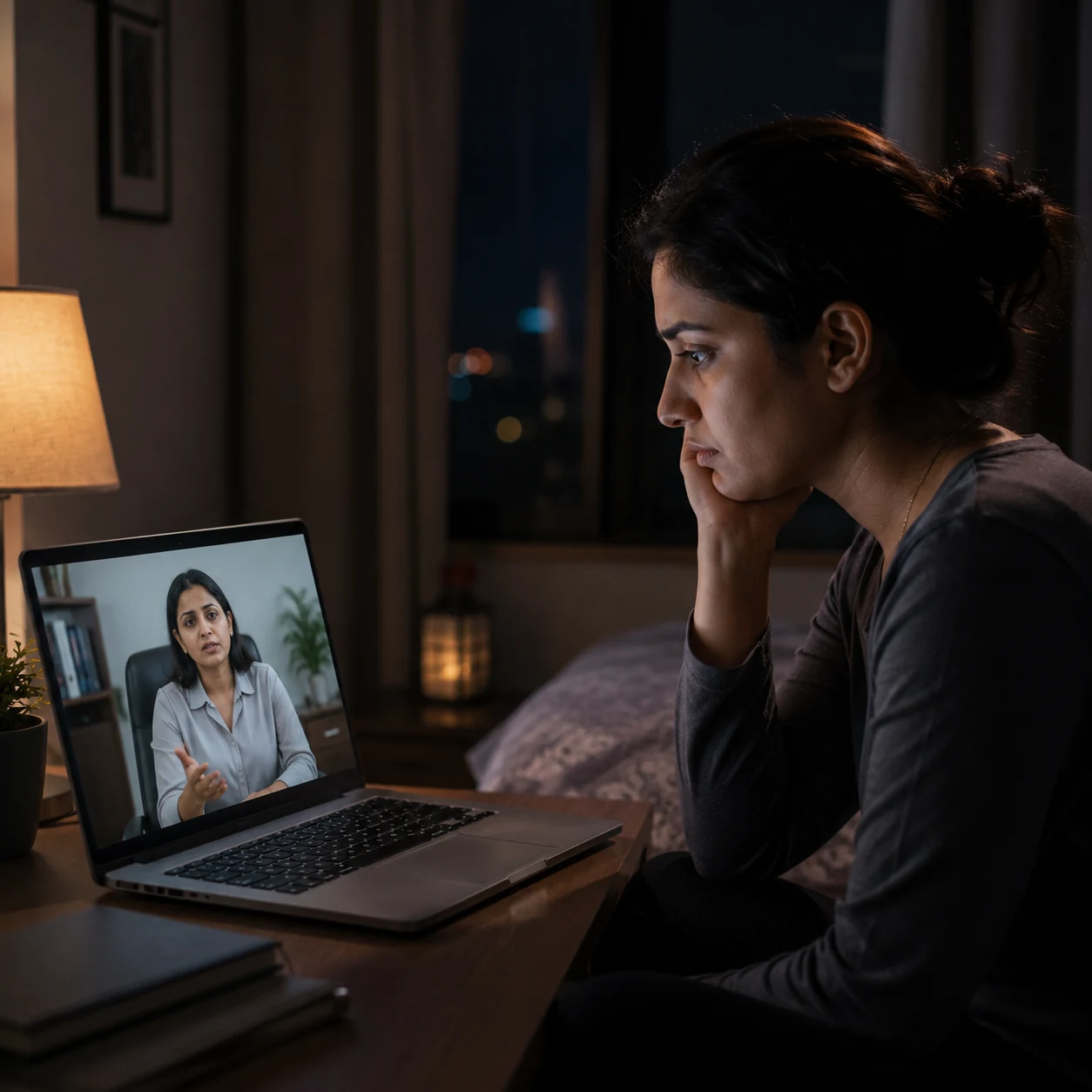
Indian adult attending online insomnia treatment with a clinical psychologist
Structured CBT-based insomnia treatment Assessment · formulation · targeted treatment · progress review
India, NRI and international time zones

Compare qualifications, languages and experience

Meet Our Insomnia Psychologists and Counsellors

Compare qualifications, experience, languages and areas of support before booking. LeapHope provides online counselling for adults whose sleep difficulties are connected with anxiety, overthinking, stress, emotional overwhelm, low mood or disrupted routines.

Mansi More Nopany, RCI-licensed clinical psychologist providing support for insomnia and sleep difficulties Available online

Mansi More Nopany

RCI-Licensed Clinical Psychologist · M.Phil. Clinical Psychology · PhD Scholar · 10+ Years

Languages: English & Hindi

Mansi works with adults when sleep problems are persistent or occur alongside anxiety, depression, trauma-related concerns, burnout, emotional distress or repeated overthinking. Her clinical work considers the wider psychological pattern, daytime functioning, emotional triggers, coping responses and other concerns that may be contributing to difficulty sleeping.

  • Persistent Sleep Difficulties
  • Anxiety & Overthinking
  • Low Mood & Burnout
  • Complex Concerns
50-minute online session ₹3,700 / $39
Book Appointment

Bipasha Sharma, counselling and developmental psychologist supporting sleep anxiety and overthinking Available online

Bipasha Sharma

Counselling & Developmental Psychologist · RCI-Registered Counsellor · PhD Scholar · 8+ Years

Languages: English & Hindi

Bipasha supports adults whose sleep is affected by rumination, emotional pressure, anxiety or difficulty mentally switching off at night. Her work helps clients understand recurring thought patterns, emotional reactions and coping responses that can keep the mind active long after the day has ended.

  • Bedtime Overthinking
  • Rumination
  • Sleep Anxiety
  • Emotional Stress
50-minute online session ₹3,700 / $39
Book Appointment

Mohit Yadav, RCI-licensed mental health and behavioural counsellor supporting insomnia Available online

Mohit Yadav

RCI-Licensed Mental Health & Behavioural Counsellor · 5+ Years

Languages: English & Hindi

Mohit supports adults and young adults whose sleep is being disrupted by stress, overthinking, irregular routines, anxiety or difficulty winding down. His work looks at behavioural patterns, emotional arousal and everyday routines that may be making sleep harder while supporting more workable habits around rest and daily functioning.

  • Irregular Sleep Routines
  • Bedtime Anxiety
  • Overthinking
  • Everyday Functioning
50-minute online session ₹1,799 / $19
Book Appointment
Amritha H, counselling psychologist and certified CBT practitioner supporting sleep difficulties Available online

Amritha H.

Counselling Psychologist · Mental Health Counsellor · Certified CBT Practitioner · 5+ Years

Languages: English, Malayalam, Tamil & Hindi

Amritha supports adults and young adults whose sleep is affected by overthinking, emotional overload, stress, irregular routines or difficulty shifting from daytime activity into rest. Her counselling can also consider communication, processing and sensory preferences where these affect stress, routine and sleep.

  • Overthinking
  • Emotional Overload
  • Sleep Transitions
  • Routine Difficulties
50-minute online session ₹1,799 / $19
Book Appointment
K S Veena, RCI-registered mental health counsellor supporting sleep difficulties Available online

K. S. Veena

RCI-Registered Mental Health Counsellor · 5+ Years

Languages: English, Tamil, Kannada, Telugu & Hindi

Veena supports adults whose sleep has become difficult during periods of work pressure, family stress, caregiving, adjustment or emotional overwhelm. Her counselling helps clients understand how everyday stress, thoughts and coping patterns may be affecting sleep while developing more manageable routines and responses.

  • Stress-Related Sleep Problems
  • Work & Family Pressure
  • Adjustment
  • Practical Coping
50-minute online session ₹1,799 / $19
Book Appointment

Psychologists and counsellors do not prescribe, change or discontinue medication. Medication decisions should be made by a qualified psychiatrist or medical doctor.

Online insomnia treatment experiences

What Clients Say About Insomnia Treatment at LeapHope

Adults in India, NRIs and international clients describe receiving structured psychological treatment for difficulty falling asleep, repeated night waking, sleep anxiety, irregular sleep patterns and insomnia occurring alongside stress, depression or relationship concerns.

Difficulty falling asleep
I felt tired during the day but became completely alert when I went to bed. My psychologist reviewed my sleep pattern and the thoughts that appeared each night. We used CBT-based exercises, sleep monitoring and behavioural changes rather than treating it as general stress. The time I spent awake in bed gradually reduced and bedtime stopped feeling like a daily test.
Working professional India · Anonymised feedback
Repeated night waking
I woke several times every night and immediately checked the time. Once awake, I became anxious about how I would manage work the next day. Treatment helped me understand how clock-checking, monitoring and trying to force sleep were maintaining the cycle. My psychologist gave me specific between-session work and reviewed the pattern with me each week.
NRI counselling client United Kingdom · Anonymised feedback
Sleep anxiety and overthinking
My mind became busiest when everything around me was quiet. I replayed conversations, planned the next day and worried about whether I would sleep. CBT helped me identify the predictions and mental habits increasing my alertness. We also worked on anxiety during the day instead of treating bedtime as the only problem.
Adult therapy client Canada · Anonymised feedback
Psychologist and psychiatrist care
My sleep had become severely disturbed alongside anxiety and low mood. The psychologist began structured treatment and recommended a separate psychiatrist consultation after reviewing the full picture. The psychiatrist handled the medication assessment while therapy continued to address the psychological and behavioural patterns affecting my sleep. The coordination made the treatment feel clear and properly managed.
Combined-care client India · Anonymised feedback
NRI work and time-zone disruption
Working with teams in India and the United States had made my schedule unpredictable. I slept at different times, remained mentally active after late calls and felt exhausted during the day. My psychologist helped me build a realistic treatment plan around my actual work demands rather than suggesting a routine I could not follow.
NRI technology professional United States · Anonymised feedback
Relationship stress and insomnia
Conflict with my partner continued in my mind long after our conversations ended. I would lie awake replaying what was said and preparing for the next disagreement. Therapy addressed the insomnia directly while also working on emotional regulation and the relationship pattern keeping me activated. Treating both areas together made more sense than focusing only on bedtime.
Online therapy client United Arab Emirates · Anonymised feedback
1 / 2

Use only verified client feedback before publishing. Client experiences should be anonymised and lightly edited only for privacy and readability. Individual assessments, treatment plans, medication needs and outcomes vary.

Thoughts, anxiety and mental alertness at night

What Persistent Insomnia Can Feel Like

Insomnia can leave your body exhausted while your mind remains active, watchful or anxious. These are some of the thoughts, sensations and worries people commonly experience at night.

How insomnia may feel inside your mind

I cannot sleep even after lying in bed for hours
My mind keeps overthinking and replaying things when I try to sleep
I keep thinking about conversations and what I should have said differently
My body feels exhausted, but my mind remains completely alert
The more I try to force myself to sleep, the more awake I feel
I regularly remain awake until two or three in the morning
I keep checking the time and calculating how little sleep is left
My heartbeat feels so loud at night that I cannot ignore it
I become aware of every sound, movement and sensation around me
I feel anxious as bedtime gets closer
I start fearing another sleepless night before I even get into bed
I worry that I will not function properly the next day
I fall asleep late, wake again and my mind immediately starts thinking
I wake too early and cannot stop my thoughts long enough to sleep again
I use alcohol, substances or sleeping tablets because I feel unable to sleep on my own
I feel anxious about whether I will sleep without medication or another substance
I feel frustrated and helpless while everyone around me is asleep
Sleep has started feeling stressful instead of restful

Structured psychological treatment adapted to your sleep pattern

Therapy Approaches Used in Online Insomnia Treatment

Treatment is selected after assessing your sleep pattern, nighttime thoughts, emotional state, daily routine, medication history and the psychological or behavioural factors maintaining insomnia.

Indian adult discussing persistent insomnia with a clinical psychologist online
Psychologist-led insomnia treatment Assessment, targeted intervention and progress review

Sleep Assessment and Formulation

Reviews difficulty falling asleep, repeated waking, early waking, sleep timing, daytime effects, emotional symptoms, medication use and the factors keeping the pattern active.

CBT and CBT-I-Informed Treatment

Identifies the thoughts, predictions and behaviours that increase nighttime alertness, sleep pressure and fear of another difficult night.

Sleep Diary and Pattern Monitoring

Tracks bedtime, estimated sleep time, nighttime waking, final waking and relevant daytime factors so treatment decisions are based on the actual pattern.

Stimulus Control

Helps rebuild the connection between bed and sleep when lying awake, worrying, clock-checking or repeatedly trying to force sleep has made the bedroom a place of alertness.

Sleep Scheduling and Consolidation

Uses a carefully planned sleep-and-wake schedule to reduce long periods spent awake in bed and gradually develop a more stable, consolidated sleep pattern.

Cognitive and Arousal Regulation

Addresses catastrophic sleep predictions, mental replay, heartbeat monitoring, physical tension and the pressure to make sleep happen immediately.

Treatment methods are selected individually and are not all used with every client. Psychologists do not prescribe, change or discontinue medication.

Indian adult attending online insomnia treatment with an experienced psychologist
Online insomnia treatment across countries and time zones

Psychologists for different sleep patterns and personal contexts

Online Insomnia Treatment for Indians, NRIs and Adults Worldwide

LeapHope provides structured psychologist-led treatment for persistent insomnia, repeated night waking, early waking, sleep anxiety and disrupted sleep patterns. Treatment considers your routine, work schedule, emotional health, relationships, cultural context and the psychological or behavioural factors affecting sleep.

01

For adults living in India

Treatment can consider late working hours, family responsibilities, relationship stress, exam or career pressure, irregular schedules and psychiatric concerns occurring alongside insomnia.

02

For NRIs and Indians living abroad

Sessions can address time-zone disruption, late calls with India, migration stress, travel, shift work and family or professional pressures affecting the ability to switch off and sleep.

03

For international and native English clients

Choose structured, direct treatment centred on sleep assessment, CBT-based methods, behavioural change, progress monitoring and clear clinical recommendations.

  • RCI-registered clinical psychologists available
  • CBT and CBT-I-informed treatment
  • Structured sleep assessment and treatment planning
  • Continue with the same psychologist
  • English and Indian language options
  • India and international scheduling
  • Psychiatrist consultation when clinically required
  • Private 50-minute online video sessions

Sleep tracking, treatment review and clinical adjustment

How Your Psychologist Tracks Insomnia Treatment Progress

Progress is reviewed through your actual sleep pattern: when you go to bed, how long sleep takes, how often you wake, how long you remain awake and what thoughts, emotions or behaviours keep the pattern active.

01

Your Sleep Pattern Is Mapped

Your psychologist reviews sleep timing, difficulty falling asleep, nighttime waking, early waking, daytime effects, medication or substance use and the psychological factors affecting sleep.

02

A Targeted Plan Is Applied

Treatment may address sleep-related thoughts, bedtime anxiety, excessive time awake in bed, inconsistent sleep timing, mental alertness and behaviours maintaining the cycle.

03

Changes Between Sessions Are Reviewed

Sessions examine what happened during the week, including sleep onset, waking, clock-checking, overthinking, fear of not sleeping and how consistently the treatment plan was followed.

04

Treatment Is Adjusted

Your psychologist reviews what is improving, where insomnia remains strong and whether the plan, therapeutic methods or level of clinical care needs to change.

Changes reviewed in treatment
  1. 1Less time awake in bed shorter sleep onset and reduced waking during the night
  2. 2Lower sleep anxiety less clock-checking, monitoring and fear before bedtime
  3. 3A more stable sleep pattern greater consistency in sleep timing and nighttime rest

Progress may also appear through reduced overthinking, fewer attempts to force sleep, improved daytime concentration and less dependence on alcohol, substances or unreviewed sleep medication. Where progress remains limited, the psychologist can review psychiatric, medical, relationship or lifestyle factors and recommend additional assessment when clinically required.

Direct clinical and practical answers before treatment

Frequently Asked Questions About Online Insomnia Treatment

Clear answers about chronic insomnia, CBT-I, sleep assessment, sleeping medication, psychiatrist involvement, sleep studies and psychologist-led treatment in India and worldwide.

What counts as insomnia, and when is it considered chronic?

Insomnia means repeatedly struggling to fall asleep, remain asleep or return to sleep despite having enough opportunity and a suitable environment for sleep. It also causes daytime impairment such as poor concentration, irritability, fatigue or difficulty functioning. Chronic insomnia generally occurs at least three nights a week and continues for three months or longer.

Is regularly sleeping at 2 or 3 a.m. always insomnia?

No. If you cannot sleep until 2 or 3 a.m. but sleep normally when allowed to follow that late schedule, the problem may involve a delayed circadian sleep pattern rather than insomnia alone. If you remain unable to sleep even at your naturally preferred time, or wake repeatedly after falling asleep, insomnia may also be present. The sleep pattern must be assessed before selecting treatment.

Do I need an insomnia diagnosis or doctor’s referral before booking?

No. Adults can begin online insomnia treatment without a previous diagnosis or referral. You can book because you are lying awake for hours, waking repeatedly, sleeping very late, fearing bedtime or struggling to function after poor sleep. The psychologist will review whether the presentation fits insomnia or requires medical, psychiatric or sleep-specialist assessment.

What happens in the first online insomnia treatment session?

The first appointment is a complete 50-minute clinical session. Your psychologist reviews when the problem began, sleep and waking times, time spent awake in bed, nighttime thoughts, daytime effects, work schedule, mental health symptoms, physical health, medication, caffeine, alcohol or substance use and previous treatment. This information is used to develop an individual insomnia formulation and treatment plan.

How does a psychologist identify what is maintaining my insomnia?

The psychologist examines the complete cycle rather than assuming one cause. This includes sleep timing, time awake in bed, clock-checking, attempts to force sleep, fear of the next day, overthinking, physical alertness, irregular schedules, relationship stress, anxiety, depression, trauma symptoms, medication and substance use. A sleep diary may be used to compare reported experiences with the actual pattern across several nights.

Why has sleep hygiene not fixed my chronic insomnia?

Sleep hygiene covers general habits such as caffeine timing, bedroom conditions and consistent schedules. These habits can support treatment, but they do not directly treat conditioned wakefulness, sleep anxiety, catastrophic predictions, repeated clock-checking or excessive time spent awake in bed. Chronic insomnia usually requires a structured psychological and behavioural treatment plan rather than sleep hygiene advice alone.

What is CBT-I, and is it different from general CBT?

Cognitive Behavioural Therapy for Insomnia, or CBT-I, is a sleep-specific treatment. It combines cognitive work with methods such as stimulus control, structured sleep scheduling, sleep monitoring and arousal regulation. General CBT may treat anxiety, depression or overthinking without directly changing the sleep pattern. LeapHope provides CBT and CBT-I-informed treatment according to the selected psychologist’s verified training and clinical scope.

Will insomnia treatment force me to remain awake or sleep less?

No treatment method should be applied blindly. Some CBT-I plans use a carefully calculated sleep window to reduce prolonged wakefulness in bed and consolidate sleep. This is not the same as arbitrarily depriving yourself of sleep. It requires screening and monitoring, especially for people with bipolar disorder, seizure disorders, severe daytime sleepiness or safety-sensitive work such as driving or operating machinery.

Can online CBT or online insomnia therapy work through video sessions?

Yes. Insomnia assessment, sleep-diary review, cognitive restructuring, stimulus-control planning, sleep scheduling and progress review can be completed through private video sessions. Online treatment also allows the psychologist to review changes from the client’s actual home and work routine rather than relying only on advice given in a clinic.

How many sessions does online insomnia treatment take?

There is no fixed number that applies to every client. Structured CBT-I programmes commonly run for approximately four to eight sessions, but treatment may be shorter or longer depending on the duration of insomnia, associated anxiety or depression, medication use, circadian disruption, medical concerns and how the sleep pattern responds. LeapHope does not promise improvement within a predetermined number of appointments.

Do I need a sleep study before starting insomnia counselling?

Not for typical insomnia symptoms. Insomnia is usually assessed through clinical history, sleep timing, daytime effects and a sleep diary. A sleep study may be required when symptoms suggest another sleep disorder, including breathing pauses, gasping, loud snoring, unusual movements, narcolepsy, unexplained extreme daytime sleepiness or a circadian rhythm disorder. A psychologist does not replace medical sleep testing.

When should insomnia be assessed by a sleep specialist or medical doctor?

Medical assessment is important when sleep problems include loud snoring, choking or gasping, witnessed breathing pauses, severe restless-leg symptoms, unexplained pain, sudden daytime sleep attacks, sleepwalking, unusual nighttime behaviour or possible thyroid, neurological, hormonal or respiratory causes. LeapHope can identify the need for referral but does not diagnose or treat these medical sleep disorders.

Should I see a psychologist, psychiatrist or sleep physician for insomnia?

A psychologist treats the thoughts, emotional responses and behaviours maintaining insomnia. A psychiatrist evaluates psychiatric conditions and decides whether medication is indicated. A sleep physician investigates sleep apnoea, movement disorders, narcolepsy, circadian disorders and other medical sleep conditions. Some clients need one professional; others need coordinated psychological, psychiatric and medical care.

Can I start insomnia therapy while taking sleeping tablets?

Yes. Tell the psychologist the medicine, dose, duration, prescribing doctor and what happens when you take or miss it. A psychologist cannot prescribe, reduce or discontinue sleeping medication. Medication changes must be handled by the prescribing doctor or a psychiatrist. Do not stop regularly used sleep medication suddenly because withdrawal or rebound insomnia may occur with some drugs.

What if I use alcohol, cannabis or another substance to fall asleep?

Report it directly during assessment, including what you use, how often and what happens during the night afterwards. Substance use can alter sleep timing, nighttime waking, anxiety, tolerance and treatment safety. The psychologist assesses the psychological dependence on the substance and whether addiction treatment, psychiatric review or medical supervision is required. Abrupt withdrawal should not be attempted without appropriate medical guidance.

Can insomnia treatment address anxiety, depression or trauma at the same time?

Yes, when these concerns are part of the same clinical formulation. Anxiety can create nighttime hyperarousal, depression can involve early waking, and trauma can produce vigilance, nightmares or fear of becoming less alert. Treatment may address insomnia directly while also treating the psychological condition maintaining it. Severe or complex psychiatric symptoms may require combined care with a psychiatrist.

Can a smartwatch, sleep tracker or mobile app diagnose insomnia?

No. Consumer sleep trackers estimate sleep from movement, heart rate or proprietary algorithms and cannot establish an insomnia diagnosis. Their data may be discussed during assessment, but it must be interpreted alongside your sleep history, daytime impairment and clinical evaluation. Repeatedly checking inaccurate sleep scores can also increase sleep monitoring and anxiety in some clients.

When does reduced sleep require urgent psychiatric or medical assessment?

Seek prompt assessment when very little sleep occurs with unusually high energy, racing thoughts, rapid speech, impulsive behaviour, agitation, hallucinations or feeling that sleep is unnecessary. These symptoms are different from being exhausted but unable to sleep and may indicate mania, substance effects or another acute condition. Immediate local emergency help is required when sleep disturbance occurs with suicidal intent, dangerous confusion or inability to remain safe.

Can pregnancy, menopause, pain, thyroid problems or medication cause insomnia?

Yes. Hormonal changes, chronic pain, thyroid conditions, respiratory illness and some prescribed or non-prescribed medicines can disturb sleep. Psychological treatment can address anxiety, conditioned wakefulness and behaviours that develop around the problem, but it cannot replace medical assessment of the underlying condition. Relevant health conditions and all medications should be disclosed during the first session.

Are LeapHope online insomnia treatment sessions confidential?

Sessions are conducted privately through video consultation. LeapHope psychologists follow professional confidentiality requirements, and sessions are not recorded without explicit consent. Standard legal and safety exceptions apply when disclosure is required to protect the client or another person from serious harm.

Scroll to Top