

Many couples come into marriage counseling saying things like:
“I feel like I carry all the financial pressure alone.”
“We both earn, but I still handle all the bills and future planning.”
“My partner says it’s their money, so they should spend it however they want.”
Money and financial responsibility have changed a lot in modern marriages. Older generations often saw marriage as a shared responsibility, even if one partner earned more or handled most of the finances. Today, many couples keep separate accounts, split bills, earn independently, and want financial freedom inside the relationship.
But this modern approach is also creating new relationship problems.
We now see couples fighting over:
- who should pay for what
- one partner saving while the other overspends
- “your bills vs my bills”
- refusing financial support during difficult times
- one partner carrying all the stress, planning, and responsibility alone
Some believe men suffer more from financial pressure in marriage, but in counseling, we also see many women feeling emotionally exhausted, unsupported, financially unsafe, or stuck in deeply one-sided relationships.
The truth is, unequal financial responsibility in marriage is not just about money anymore. It is about fairness, teamwork, emotional safety, and whether both people still feel they are building a future together.
What Is Unequal Financial Responsibility in Marriage?
Unequal financial responsibility in marriage happens when one partner feels they are carrying more of the financial stress, planning, or responsibility than the other.
This is not always about income. A couple can earn different amounts and still have a healthy relationship. The real problem starts when one person handles all the bills, savings, future planning, or financial pressure alone.
There is also a difference between:
- unequal income
- unequal effort
- unequal responsibility
A lower-earning partner can still be responsible, supportive, and fully invested in the marriage. But the imbalance becomes unhealthy when one partner avoids responsibility while the other carries all the stress and future planning alone.
Types of Couples Facing Unequal Financial Responsibility in Marriage
One Partner Earns More Than the Other
These couples often enter marriage believing income differences will not matter. But over time, money can slowly become connected to pressure, freedom, sacrifice, and emotional security.
The higher-earning partner may start feeling all the responsibility is falling on them. Some begin becoming protective of their income, wanting more personal spending freedom, or questioning why they are carrying most of the financial pressure alone.
At the same time, the lower-earning partner may feel burdened by bills, financially insecure, or left with little for personal needs after contributing their share. Some start feeling guilty, dependent, or emotionally uncomfortable around money.
Both partners often begin questioning the same thing in different ways:
“Marriage was supposed to feel supportive and secure, so why do I feel stressed, unsupported, or emotionally unequal?”
One Partner Handles All Financial Planning
In some marriages, one partner slowly becomes responsible for everything related to money, paying bills, managing savings, tracking expenses, handling debt, planning for emergencies, and constantly thinking about the future.
Psychologically, these couples often fall into a “manager and follower” dynamic. One partner carries the mental load of keeping life financially stable, while the other becomes less involved or emotionally disconnected from financial responsibility.
Over time, the responsible partner may start feeling mentally exhausted, unsupported, or alone in the marriage, while the other partner may feel controlled, constantly corrected, or pushed away from financial decisions altogether.
One Partner Overspends While the Other Saves
These couples usually have very different emotional relationships with money. One partner may see money as freedom, comfort, rewards, or enjoying the present, while the other sees money as security, stability, and future protection.
The saving partner often feels forced into the role of constantly fixing problems, controlling spending, or cleaning up financial mistakes. Meanwhile, the overspending partner may start feeling judged, restricted, or emotionally criticised every time money comes up.
Over time, the relationship can fall into a constant “spender vs saver” cycle where both partners stop feeling understood.
Stay-at-Home Parent vs Working Partner
These couples often struggle because one partner’s work brings income while the other’s work mostly stays invisible inside the home. The working partner may start associating financial contribution with pressure and responsibility, while the stay-at-home partner may quietly struggle with financial dependence or feeling less valued.
Many stay-at-home parents begin feeling guilty spending money on themselves because they are not directly earning, even though they may be carrying childcare, household responsibilities, emotional support, and family stability every day.
At the same time, some working partners start feeling all the financial pressure rests on them alone, especially during stressful periods, leading both partners to slowly feel emotionally misunderstood in different ways.
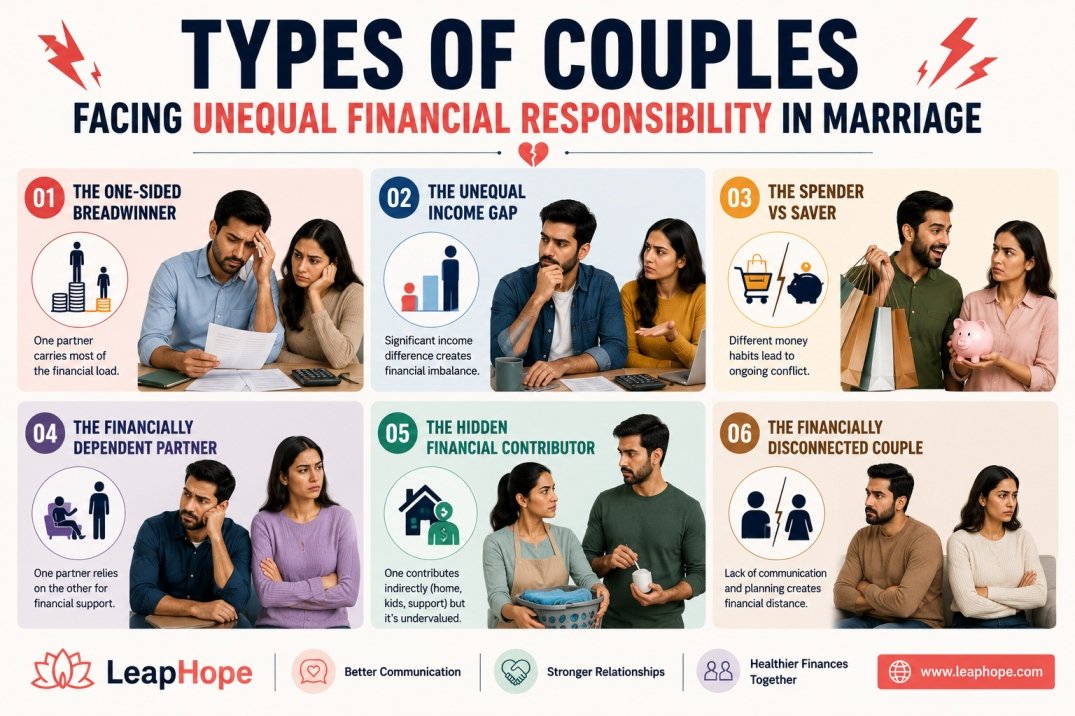
Ambitious Partner vs Financially Passive Partner
In these couples, one partner is usually focused on long-term stability, growth, savings, and future planning, while the other may avoid responsibility, delay difficult financial decisions, or live more casually around money.
The ambitious partner often starts feeling they are carrying the future of the relationship alone. Over time, this can slowly turn into frustration, emotional exhaustion, or even loss of respect.
The financially passive partner, on the other hand, may feel constantly pushed, judged, or emotionally pressured, creating a relationship dynamic where both people stop feeling emotionally aligned around goals, effort, and responsibility.
Couples With Separate Financial Values
Some couples are not financially incompatible because of income, but because they emotionally see money very differently. One partner may value saving, security, and long-term stability, while the other prioritises comfort, experiences, lifestyle, or enjoying the present.
Many of these differences come from upbringing, past financial experiences, family habits, or even financial trauma. One person may have grown up around financial stress and wants control and security, while the other may see money as something to enjoy freely.
These couples often struggle because they are not just arguing about spending, they are arguing about what money emotionally means to each of them.
What Modern Couples Complain About Unequal Financial Responsibility in Marriage
“I Feel Like the Only Adult in This Marriage”
This is one of the most common complaints modern couples bring into counseling. One partner slowly becomes responsible for everything, managing bills, planning savings, reminding about payments, thinking about emergencies, and constantly trying to keep life financially stable.
At the same time, the other partner may continue overspending, demanding a certain lifestyle, or expecting things the current income simply cannot support. The responsible partner often sacrifices their own needs, keeps adjusting the budget, or repeatedly brings up the same financial concerns, only to see the same patterns happen again later.
Over time, the relationship stops feeling emotionally equal. One partner starts feeling more like a parent managing responsibilities, while the other feels criticised or controlled every time money comes up. This parent-child dynamic slowly creates resentment, emotional exhaustion, and loss of emotional connection in the marriage.
“I Carry All the Financial Stress”
In these marriages, one partner often feels they can never fully relax because they are constantly thinking about bills, savings, debt, emergencies, children’s future, or financial stability. Even during normal daily life, their mind stays focused on “What if something goes wrong?”
Many describe feeling mentally exhausted from always being the one planning ahead while their partner seems emotionally disconnected from the pressure. Over time, this creates hypervigilance, future anxiety, and provider burnout where the relationship starts feeling less like a partnership and more like carrying the weight of the future alone.
“I Feel Controlled Every Time Money Comes Up”
Some partners start feeling emotionally tense every time money is discussed because conversations around spending slowly turn into correction, monitoring, or criticism. They may feel judged for what they buy, questioned about every expense, or made to feel irresponsible even over small decisions.
Over time, money stops feeling like a shared responsibility and starts feeling emotionally unsafe. Many partners in this situation quietly carry shame, hide purchases to avoid conflict, or emotionally withdraw because they no longer feel trusted or financially equal in the relationship.
“My Partner Don’t Want To Share Their Income”
Some couples struggle because one partner continues treating their income as completely personal even after marriage. In many relationships today, one partner, often the wife, may feel that paying major bills and handling financial pressure is mainly the husband’s responsibility, while their own income is saved or used more freely for personal needs.
At the same time, some women also go through this when they are earning well but still feel they are carrying too much financial responsibility alone.
Over time, this creates resentment because one partner starts feeling the marriage is no longer financially shared. Instead of feeling like a team, the relationship starts feeling emotionally unequal and one-sided.
“I’m Starting to Resent My Partner”
Resentment usually does not appear suddenly in marriage. It slowly builds when one partner keeps feeling unsupported, financially pressured, or taken for granted for a long time.
Many people reach a point where they stop feeling emotionally appreciated because they are constantly sacrificing, adjusting, planning ahead, or carrying responsibilities that should feel shared. At the same time, repeated overspending, lack of effort, or ignoring financial concerns can make the other partner feel unheard and emotionally alone.
Over time, couples stop communicating openly, become emotionally distant, and start withdrawing from each other instead of working together.
“Money Is Affecting Our Intimacy”
Financial imbalance can slowly change how couples emotionally see each other. When one partner constantly feels stressed, unsupported, irresponsible, controlled, or emotionally burdened, it becomes harder to feel relaxed, connected, or emotionally close in the relationship.
Over time, repeated money conflicts can affect respect, attraction, emotional safety, and even physical intimacy. Many couples stop feeling like partners and start feeling emotionally distant, misunderstood, or disconnected from each other.
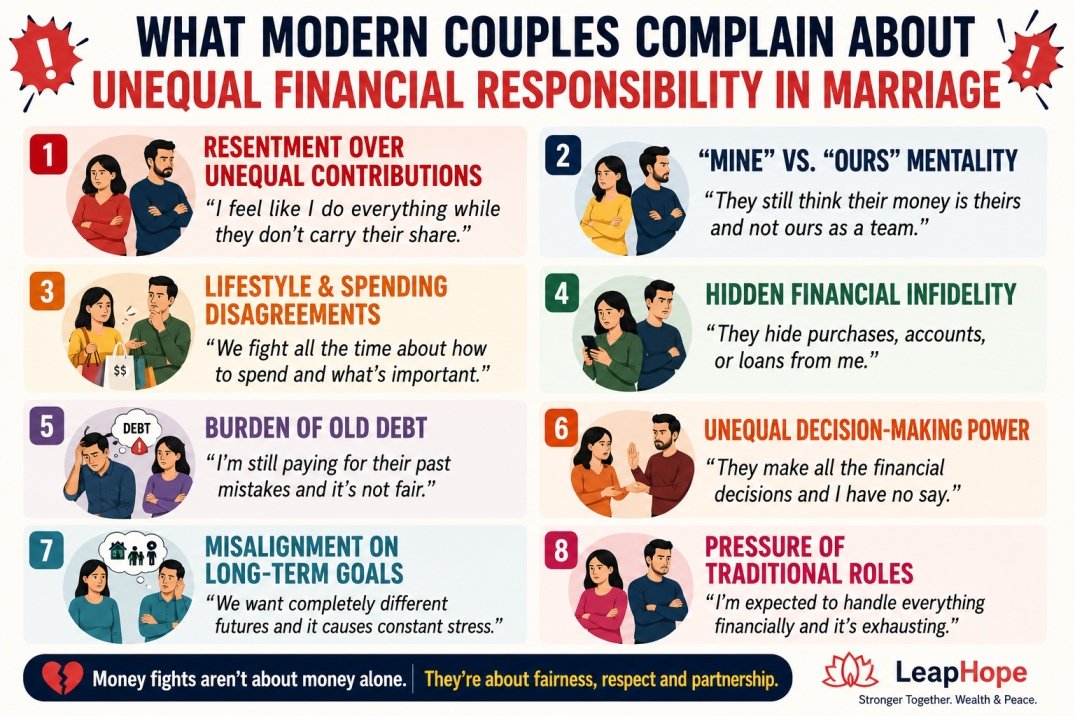
“I Feel Emotionally Alone Carrying Our Future”
Some partners feel like they are the only person constantly thinking about the future, savings, children, emergencies, debt, or long-term stability. Even when both people are earning, future planning can start feeling emotionally one-sided.
Over time, this creates fear, pressure, and emotional loneliness because one partner feels they are carrying the responsibility of keeping life stable while the other stays disconnected from those worries. Many people in this situation stop feeling emotionally supported in the marriage, even if they still love their partner.
How to Handle Unequal Financial Responsibility in Marriage
Stop Treating Money Conversations Like Attacks
Many couples only talk about money during stress, arguments, or after financial mistakes happen. Over time, these conversations start feeling more like criticism than teamwork.
Instead of blaming each other, couples need to approach money as a shared responsibility. The goal should not be proving who is right or wrong, but understanding why both partners are feeling stressed, pressured, or emotionally disconnected around finances.
Talk About Emotional Stress, Not Just Numbers
Most money fights are not really about numbers alone. Underneath the arguments, many couples are carrying fear, pressure, exhaustion, shame, or anxiety about the future.
Instead of only saying:
“You spend too much.”
Try explaining:
“I feel stressed handling all the financial pressure alone.”
When couples talk honestly about emotions instead of only budgets, conversations usually become less defensive and more productive.
Define What “Fair” Means for Your Marriage
Fair does not always mean 50/50. Every marriage has different incomes, responsibilities, lifestyles, and pressures.
In some relationships, one partner may contribute more financially while the other contributes more through childcare, household responsibilities, emotional support, or career sacrifices. Healthy couples focus more on shared effort and responsibility than perfect equality.
Create Shared Financial Goals
Couples usually feel more connected financially when they are working toward shared goals together instead of arguing over daily spending.
This can include:
- savings goals
- emergency funds
- paying debt
- buying a house
- children’s future
- travel or lifestyle plans
Shared goals help couples feel like they are building a future together instead of managing separate lives.
Stop Making One Person Carry All the Mental Load
In many marriages, one partner becomes responsible for remembering bills, planning savings, tracking expenses, and thinking about future security all the time.
Even if one partner handles finances better, both people should still stay involved and aware. Financial responsibility feels lighter when couples plan, discuss, and manage important decisions together.
Respect Non-Financial Contributions
Money is not the only contribution that keeps a marriage stable. Childcare, household work, emotional support, caregiving, and personal sacrifices also carry real value inside a relationship.
Many financial conflicts become less painful when both partners feel their effort and contribution are being recognised and respected.
Build Financial Trust Again
When resentment or financial imbalance already exists, trust usually cannot be repaired through promises alone. Couples rebuild financial trust through consistency, honesty, accountability, and small responsible actions repeated over time.
Feeling financially safe with each other is just as important as feeling emotionally safe.
Create Boundaries Around Overspending
Healthy financial freedom still needs healthy limits. Couples need open conversations about spending habits, priorities, savings, and what is realistically affordable for their current lifestyle.
Boundaries are not about control. They help prevent one partner from constantly carrying the consequences of impulsive spending or unrealistic financial expectations.
Decide What Financial System Works Best
There is no perfect financial system for every marriage. Some couples prefer joint accounts, some prefer separate accounts, and others use a “yours, mine, and ours” approach.
What matters most is not the account structure itself, but whether both partners feel:
- financially respected
- emotionally safe
- fairly supported
- included in important financial decisions
A healthy financial system should reduce stress and increase teamwork, not create emotional distance inside the marriage.
How to Talk About Money Without Fighting
Most couples do not handle money conversations well because they only talk when they are already angry, stressed, or emotionally overwhelmed. Timing matters a lot. Difficult conversations usually go better when both partners feel calm instead of emotionally defensive.
Try to avoid criticism, sarcasm, or bringing up old financial mistakes during the discussion. The goal is not to “win” the argument, but to understand what both people are feeling underneath the stress.
Using “I feel” language can make conversations feel less attacking.
Instead of:
“You are irresponsible with money.”
Try:
“I feel anxious when I think about our future finances alone.”
Instead of:
“You never help with bills.”
Try:
“Sometimes I feel emotionally unsupported carrying so much financial pressure by myself.”
It is also important to listen without interrupting or immediately defending yourself. Many partners are not only reacting to money itself, but to deeper feelings like fear, shame, pressure, insecurity, or feeling unappreciated.
For example:
- One partner may secretly fear financial instability and constantly think ahead.
- The other may feel judged every time spending is discussed and start emotionally shutting down.
- One may feel exhausted from carrying responsibility.
- The other may feel they are never “good enough” financially.
When couples start understanding each other’s emotional reality instead of only arguing about spending, conversations become healthier and more productive.
The healthiest money conversations usually focus on:
- solving problems together
- creating realistic expectations
- discussing shared goals
- reducing stress for both partners
instead of blaming each other for every financial mistake.
When to Seek Marriage Counseling
Marriage counseling can help when:
- money fights never get resolved
- one partner hides spending or debt
- financial control is becoming unhealthy
- resentment keeps growing
- one or both partners shut down emotionally
- overspending is affecting stability
- one partner refuses responsibility
- communication around money has completely broken down
In many marriages, the deeper issue is not just money, but the emotional stress and disconnection growing underneath it.
At LeapHope, our online marriage counselors help couples rebuild healthier communication, emotional safety, and shared responsibility around finances and relationships.
The Bottom Line
Healthy marriages are not always financially equal, but they should feel emotionally fair. Financial responsibility should not completely fall on one person while the other stays disconnected from the pressure, planning, or future concerns.
Strong relationships are built when both partners feel:
- respected
- heard
- emotionally safe
- involved in building the future together
Money problems usually become easier to handle when couples stop treating each other like opponents and start working like a team again. Honest conversations, shared effort, emotional understanding, and mutual responsibility can slowly rebuild trust and connection, even after financial resentment has already started affecting the marriage.
At LeapHope, we support couples facing relationship and financial stress across locations, including Fujairah, Ajman, Sharjah, and Umm Al Quwain.