
“Why does my partner keep lying about spending money?”
“Why do they hide purchases from me?”
“Why does my husband lie about money all the time?”
“Can a relationship survive constant lies about spending?”
These are some of the most common questions people ask after discovering hidden shopping, secret credit cards, strange bank transactions, borrowed money, or excuses that slowly stop making sense. In the beginning, most partners try to ignore it because they want to believe the issue is temporary.
But after repeated lies and hidden spending, the problem usually stops feeling like “just money.” Over time, many people start feeling emotionally exhausted, disconnected, and unsure if they can fully trust their partner anymore.
In this article, our therapists will explain why some partners lie about spending money, how this behaviour affects relationships psychologically, and what you can realistically do next.
Are Financial Secrets Always a Bad Thing?
No, not always. Your money, personal allowance, savings, or spending freedom is your choice, and not every private purchase or financial decision is automatically unhealthy in a relationship.
The problem usually starts when someone lies about where the money actually went. Even if it is your own money, repeated dishonesty can slowly create trust issues because the partner may start wondering what else is being hidden, gambling, drinking, affairs, hidden debt, or simply fear of judgement and criticism.
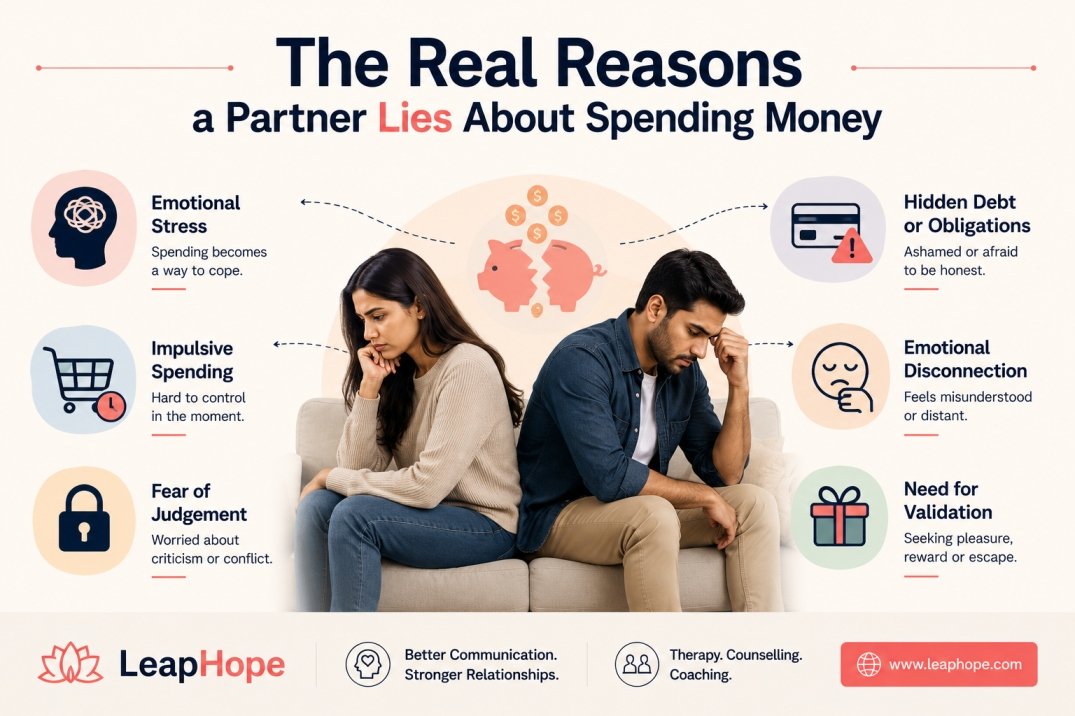
The Real Reasons a Partner Lies About Spending Money
Shame and Embarrassment Around Money
Many people do not lie about spending money because they are trying to hurt their partner. Sometimes they feel embarrassed about how much they spent, what they spent it on, or how irresponsible the decision looks afterwards. Instead of admitting the truth, they hide receipts, change stories, or give half-truths because they are afraid of judgement, criticism, or conflict.
This is especially common when someone already feels insecure about money, struggles with impulsive spending, or knows the purchase was unnecessary. The lie often becomes a way to avoid shame in the moment, even though it slowly creates bigger trust problems in the relationship later.
Fear of Conflict or Judgement
Some husbands or wives lie about spending money because they already know the purchase may lead to arguments, criticism, or disappointment. Instead of having an uncomfortable conversation, they hide the spending, give incomplete explanations, or pretend the money was used for something else.
In many relationships, this pattern slowly develops when one partner feels constantly judged, controlled, or afraid of upsetting the other person. A husband may hide an expensive purchase because he knows his wife will react strongly, while a wife may lie about shopping or spending because she fears being criticised or treated irresponsibly.
Even when the intention is to “avoid conflict,” repeated dishonesty usually creates much deeper trust problems over time.
Compulsive Spending and Emotional Spending
Some partners do not spend money just because they “want things.” For many people, shopping becomes emotional relief during stress, loneliness, anxiety, or emotional emptiness. Buying something new may create temporary comfort or escape during difficult emotional periods.
The problem is that emotional spending often comes with guilt afterwards. A partner may hide receipts, lie about prices, or avoid honest conversations because they already know the spending was impulsive or unnecessary. If this pattern is starting to affect your relationship emotionally, couples can also consider speaking with a therapist through LeapHope’s free couples therapy consultation.
Gambling, Betting, and Hidden Debt
Some husbands and wives slowly start lying about spending money because they are trying to cover gambling habits, online betting, shopping addiction, or growing debt. They may hide transactions, secretly borrow money, use credit cards without discussing it, or give false explanations to cover where the money actually went.
Over time, the lying usually becomes part of the pattern itself because the partner is trying to manage debt, avoid confrontation, or continue the habit without being questioned. This issue is becoming increasingly common in places like Dubai, Las Vegas, and Macau, where online betting and high-risk spending culture are growing rapidly.
Trying to Maintain a Certain Lifestyle Image
Some partners lie about spending money because they feel pressure to maintain a certain image, lifestyle, or standard of living. They may spend on expensive shopping, luxury items, social outings, travel, gadgets, or online appearances even when their finances cannot comfortably support it.
Instead of admitting financial stress or irresponsible spending, the partner may hide purchases, lie about prices, secretly use credit cards, or pretend the money was spent on something more reasonable. Over time, the pressure to “look successful” can slowly turn into repeated financial dishonesty inside the relationship.
Affairs and Secret Relationships
In some relationships, lying about spending money may be connected to emotional affairs, dating apps, secret relationships, or hidden communication with someone else. A partner may hide hotel bookings, gifts, travel expenses, online payments, or unexplained transactions because they do not want their husband, wife, or partner to question where the money is actually going.
Many people first become suspicious through strange spending patterns, hidden bank activity, or excuses that stop making sense over time. Even before the full truth comes out, repeated secrecy around money can already start damaging emotional trust in the relationship.
Emotional Avoidance and Escapism
Some partners lie about spending money because they use spending as a way to escape stress, emotional pressure, loneliness, frustration, or personal problems they do not know how to deal with properly. Shopping, online spending, gambling, gaming, or impulsive purchases may create temporary relief or distraction from emotional discomfort.
Instead of talking honestly about what they are struggling with, the partner may hide transactions, lie about purchases, or avoid financial conversations completely. Over time, the emotional avoidance usually creates even bigger trust and communication problems inside the relationship.
Wanting Financial Control or Independence
Some partners lie about spending money because they want more personal control, privacy, or financial independence in the relationship. They may feel uncomfortable discussing every purchase, explaining their spending habits, or depending too much on their partner financially.
In some relationships, this comes from fear of judgement or feeling emotionally controlled around money. But when the need for independence turns into repeated secrecy, hidden spending, or dishonest explanations, it can slowly create trust issues and emotional distance between partners.
Childhood Financial Trauma and Insecurity
Some partners grow up in homes where money was connected to stress, fear, instability, conflict, or emotional insecurity. As adults, they may develop unhealthy spending habits, secrecy around money, or anxiety-driven financial behaviour without fully realising how deeply those early experiences still affect them.
A partner who experienced financial instability in childhood may overspend for comfort, hide money out of fear, or lie about spending to avoid feeling vulnerable or judged. Over time, these unresolved insecurities can slowly turn into repeated dishonesty and emotional tension inside the relationship.
How a Partner Usually Takes It Psychologically After Discovering the Lies
At first, many husbands and wives try to minimise the situation because they want to believe the relationship is still okay. They accept the excuses, ignore the warning signs, or hope the lying will stop on its own. But after repeated dishonesty, the emotional impact usually becomes much deeper than “just money.”
Some of the most common psychological and relationship effects include:
- Replaying old money conversations again and again in their mind
- Constantly wondering if the full truth is still being hidden
- Feeling anxious whenever spending or finances are discussed
- Checking bank statements, transactions, or spending more often
- Feeling emotionally exhausted after repeated lies and excuses
- Slowly losing trust in the husband or wife’s explanations
- Feeling more like a parent than an equal partner in the relationship
- Becoming emotionally distant or disconnected over time
- Growing resentment after repeated broken promises
- Feeling uncomfortable giving financial freedom or trust again
- Starting to question the stability of the marriage or relationship
- Wondering if bigger secrets, debt, gambling, or affairs are also being hidden
- Quietly asking themselves, “What else are they lying about?”
Over time, many husbands and wives realise the biggest damage is not always the money itself, but the repeated dishonesty that slowly changes how safe, stable, and emotionally secure the relationship feels.
Stay or Leave?
Many husbands and wives start asking this question after repeated lies, hidden spending, and constant fights around money become hard to ignore. Some partners keep hoping things will change, while others slowly reach a point where the emotional trust feels too damaged.
At the same time, the decision is rarely simple. Children, family, finances, shared responsibilities, emotional attachment, and possible legal stress can all make people feel conflicted about leaving or staying.
Some relationships do recover when the partner becomes honest, accountable, and genuinely changes the behaviour over time. But if the lying and secrecy continue repeatedly, the trust usually keeps breaking down.
The decision is personal, but a therapist can help couples think more clearly about their options instead of making major decisions only through anger, hurt, or emotional exhaustion.
Can Marriage Counselling Help With Financial Infidelity?
Yes, marriage counselling can help when repeated lies about spending money start damaging trust, communication, and emotional safety in the relationship. It becomes especially important when couples are dealing with constant money fights, hidden debt, gambling, compulsive spending, or repeated broken promises.
In many relationships, financial dishonesty is also connected to deeper emotional or psychological struggles. Along with online therapy for these issues, couples may also benefit from professional marriage counselling focused on financial infidelity and trust problems.
At LeapHope, our therapists provide online marriage counselling and psychological support for couples struggling with hidden spending, financial secrecy, and repeated trust issues in relationships.
The Bottom Line
Modern relationships do give people more financial freedom, personal spending choices, and independence around money. But marriage and long-term relationships also come with responsibility, honesty, and emotional accountability toward each other.
A partner cannot continuously lie about spending money, hide debt, gamble secretly, or make dishonest financial decisions while still expecting the relationship to feel emotionally safe and trusting. Relationships are not built only on love, they are also built on trust, transparency, and responsibility over time.
Many people think infidelity only means physical cheating, but for some husbands, wives, and partners, financial infidelity can become just as emotionally damaging and relationship-breaking. When dishonesty around money becomes a repeated pattern, the emotional trust inside the relationship slowly starts breaking down.