
How Do I Know If My Partner Is Truly Sorry After Cheating?

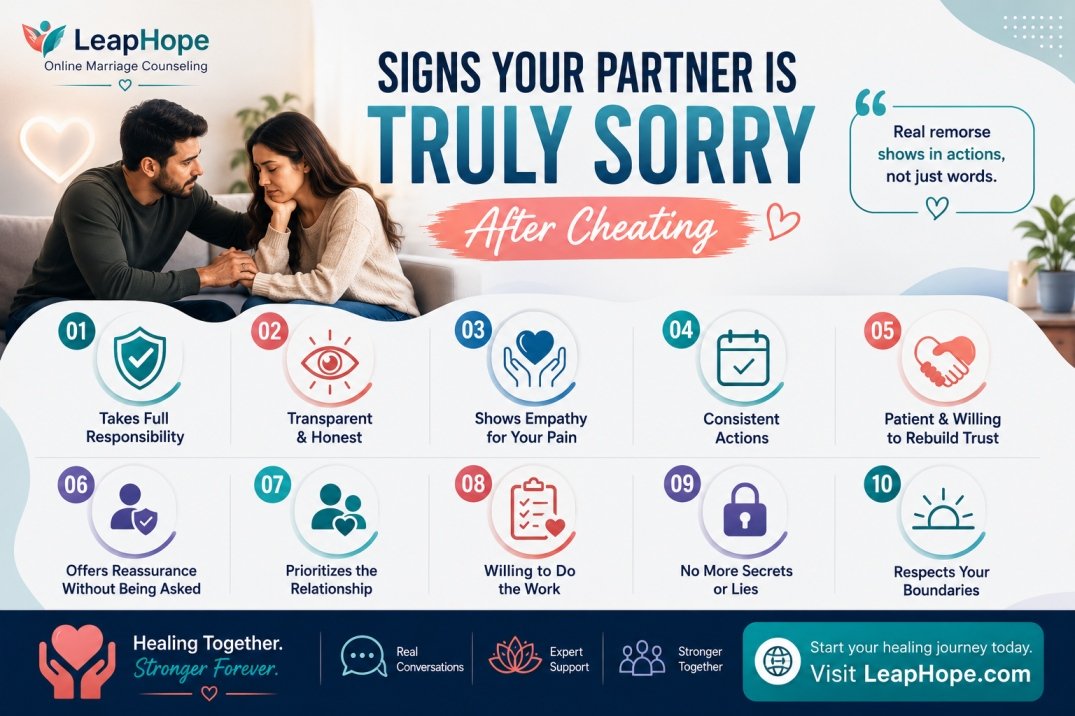
Man and woman sitting emotionally distant after infidelity with text about signs your partner is truly sorry after cheating and LeapHope marriage counseling branding
Rate this post

At LeapHope, one of the most painful questions we hear in relationship counseling is this:

“How do I know if my partner is truly sorry after cheating?”

Usually, the person asking is emotionally exhausted already. Their partner may be apologising constantly, crying, promising change, or suddenly trying much harder in the relationship. But despite all that, something inside still feels unsettled.

Many people tell us things like:

  • “I want to believe them, but I’m scared of getting hurt again.”
  • “What if I forgive them and they do this again later?”
  • “How do I know I’m not being fooled again?”
  • “Everyone is telling me to leave, but I still love them.”

And honestly, that is what makes this so painful.

Your subscription could not be saved. Please try again.
Your subscription has been successful.

Helpful Insights Delivered To Your Inbox

For many people, deciding whether to trust a partner again after cheating feels emotionally huge. It is not only about forgiveness anymore. It is about emotional safety, trust, attachment, and the fear of being broken twice by the same person.

In this article, we will talk about the deeper psychological and behavioural signs that may help you understand whether your partner is genuinely remorseful after cheating, or simply reacting to the consequences of being caught.

Why It Is So Hard to Trust an Apology After Infidelity

Trusting an apology after cheating is difficult because betrayal changes how emotionally safe the relationship feels. Even when a partner apologises repeatedly, many people still fear being lied to, manipulated, or hurt again.

After infidelity, people often become hyper-alert and start overthinking small things that never bothered them before. A changed tone, emotional distance, defensiveness, unusual behaviour, sudden affection, or even silence can suddenly feel suspicious.

Many people also feel emotionally confused because they still love their partner while struggling to trust them at the same time. One part of them wants closeness and reassurance, while another part wants to protect itself from being hurt again.

And honestly, that is what makes this situation so painful. You are not only trying to decide whether the apology is real. You are trying to decide whether trusting this person again feels emotionally safe enough to risk your heart another time.

Guilt vs Genuine Remorse After Cheating: What Is the Difference?

After cheating, guilt and genuine remorse can look very similar in the beginning. Both may involve crying, apologising, panic, or promises to change. But psychologically, they usually come from very different places.

What Guilt After Cheating Often Looks Like

Guilt is often focused on the consequences of getting caught. The person may fear losing the relationship, damaging their image, facing judgement, or dealing with the emotional fallout of their actions.

Because of this, they may:

  • become defensive quickly
  • feel sorry for themselves
  • want the topic to “move on”
  • get frustrated when the pain continues
  • focus more on ending the conflict than understanding the damage caused

In many cases, guilt is more about relieving personal discomfort than repairing emotional trust.

Man and woman emotionally distressed with broken heart graphic showing guilt vs genuine remorse after cheating and LeapHope counseling branding

What Genuine Remorse After Cheating Looks Like

Genuine remorse goes deeper than guilt. Instead of only reacting to consequences, the person begins understanding the emotional pain they caused their partner.

A genuinely remorseful partner usually:

  • takes responsibility without excuses
  • stays emotionally present during difficult conversations
  • shows patience with your healing process
  • makes consistent efforts to rebuild trust
  • accepts that forgiveness may take time

One of the biggest differences is emotional accountability. Real remorse is not only about feeling bad for cheating. It is about being willing to face the emotional damage honestly and work consistently toward repair.

15 Signs Your Partner Is Truly Sorry After Cheating

They Stop Defending Themselves and Start Focusing on Your Pain

One of the clearest signs of genuine remorse is when your partner becomes less focused on defending themselves and more focused on understanding your pain.

In the beginning, many people who cheat try to explain, minimise, or justify their actions. But when remorse is real, they become more willing to listen, acknowledge the emotional damage they caused, and stay present during uncomfortable conversations instead of turning themselves into the victim.

They No Longer Get Angry at Your Emotional Triggers

After cheating, emotional triggers are extremely common. A song, a late reply, a certain place, a changed tone, or even silence can suddenly bring back pain, anxiety, or suspicion.

A partner who is genuinely remorseful slowly starts understanding that these reactions are connected to betrayal trauma, not simply “overreacting.” Instead of becoming irritated, dismissive, or saying things like “You need to move on,” they become more patient and emotionally present during difficult moments.

That does not mean every conversation becomes perfect. But real remorse usually includes the ability to tolerate your emotional pain without constantly making it about their own frustration or discomfort.

They Become More Emotionally Available Instead of Avoidant

Many people emotionally disconnect before or during an affair. They avoid vulnerable conversations, hide their feelings, become distant, or emotionally shut down inside the relationship.

When remorse becomes genuine, that emotional avoidance often starts changing. Instead of withdrawing during uncomfortable conversations, they become more willing to communicate honestly, stay emotionally present, and engage with difficult emotions instead of escaping them.

You may notice them listening more carefully, opening up more honestly, or putting more emotional effort into the relationship instead of acting detached or unavailable.

They Stop Trying to Control the Narrative

One of the biggest signs of defensiveness after cheating is when a partner keeps trying to control how the betrayal is viewed or discussed. They may minimise details, change parts of the story, avoid certain conversations, or focus heavily on protecting their image.

But when remorse becomes genuine, the need to manage the narrative usually starts decreasing. Instead of focusing on looking innocent or avoiding discomfort, they become more willing to be honest, answer difficult questions, and acknowledge the reality of what happened.

A genuinely remorseful partner becomes more focused on rebuilding trust than controlling how the situation makes them look.

They Accept That Trust Will Take Time to Rebuild

One of the strongest signs of genuine remorse is emotional patience. A partner who is truly sorry understands that trust usually does not return quickly after betrayal.

Instead of pressuring you to “move on,” getting frustrated by your triggers, or expecting forgiveness because they apologised, they accept that healing may take time. They understand that rebuilding emotional safety after cheating often happens slowly and inconsistently.

A genuinely remorseful partner also realises that repeated reassurance, honesty, and consistency may be needed for a long time before trust starts feeling stable again.

Their Behaviour Stays Consistent Even After the Crisis Settles

In the beginning after getting caught, many people become extremely emotional, attentive, apologetic, or affectionate because they fear losing the relationship. But temporary panic and genuine change are not always the same thing.

One of the biggest signs of real remorse is consistency over time. Even after the emotional intensity reduces, arguments become less frequent, or daily life starts feeling normal again, their behaviour continues reflecting honesty, accountability, and emotional effort.

They do not only change when the relationship feels at risk. The changes remain visible even after the immediate crisis settles down.

They Start Examining Their Own Behaviour Patterns

A partner who is genuinely remorseful usually starts looking deeper into why the cheating happened instead of treating it like a one-time mistake that should simply be forgotten.

Instead of only saying “It meant nothing” or “I don’t know why I did it,” they begin reflecting on their own emotional patterns, choices, boundaries, dishonesty, need for validation, emotional avoidance, or unhealthy coping behaviours.

This kind of self-awareness matters because meaningful change usually happens when someone understands the deeper issues behind their actions, not just the consequences of getting caught.

They Become More Honest in Small Everyday Situations

After cheating, even small lies can feel emotionally triggering because trust has already been damaged. A genuinely remorseful partner usually starts understanding this very clearly.

You may notice them becoming more honest in everyday situations that they previously would have hidden, avoided, or casually lied about. Instead of only focusing on “big trust issues,” they begin paying attention to smaller behaviours that affect emotional safety and transparency inside the relationship.

This often happens because real remorse creates greater awareness of how repeated dishonesty, even in small moments, slowly damages trust over time.

They Do Not Pressure You to Forgive Them Quickly

A partner who is genuinely remorseful usually understands that emotional healing after betrayal does not happen on command. They do not expect trust to instantly return just because they apologised or promised to change.

Instead of saying things like “You need to move on” or becoming frustrated that you are still hurting, they show more patience with your emotional process. They understand that forgiveness, trust, and emotional safety often take much longer to rebuild after infidelity.

Real remorse is usually willing to sit with discomfort instead of rushing the relationship back to normal for emotional convenience.

They Show Empathy Without Making Themselves the Victim

One of the biggest differences between guilt and genuine remorse is emotional focus. A partner who is truly remorseful becomes more focused on your pain instead of constantly centering their own shame, stress, or regret.

Instead of turning every conversation into how terrible they feel, they become more willing to acknowledge what the betrayal emotionally did to you. They listen more carefully, validate your reactions, and avoid making themselves the victim whenever difficult emotions come up.

This matters because genuine empathy after cheating usually requires emotional maturity, accountability, and the ability to stay present with someone else’s pain without immediately shifting attention back toward themselves.

infographic showing signs your partner is truly sorry after cheating with emotional couple and trust rebuilding icons

They Become Naturally More Transparent Without Resentment

After cheating, secrecy becomes a major trigger. Things like hiding the phone screen, suddenly deleting chats, acting strange online, disappearing for hours, or becoming defensive about social media can quickly damage trust again.

A partner who is genuinely remorseful usually understands this. Instead of getting angry when you need reassurance, they become more open about their communication, routines, and online behaviour.

Most importantly, they do not act irritated every time transparency is needed. Their openness feels natural and consistent, not forced only to stop arguments temporarily.

They Stay Calm When You Ask Repetitive Questions

After cheating, many people keep replaying the betrayal in their mind and asking the same questions repeatedly. This usually happens because the brain is still trying to process what happened and feel emotionally safe again.

A partner who is genuinely remorseful may not enjoy these conversations, but they usually understand why they are happening. Instead of becoming angry, dismissive, or saying “We already talked about this,” they show more patience and emotional understanding during those moments.

That patience matters because rebuilding trust often requires repeated reassurance, honesty, and consistency over time.

They Focus on Rebuilding Emotional Intimacy, Not Just Physical Closeness

After cheating, some partners suddenly become more affectionate, sexual, or physically attentive. While that can sometimes come from guilt or fear of losing the relationship, genuine remorse usually goes deeper than physical closeness alone.

A truly remorseful partner often starts putting more effort into emotional intimacy too. They become more willing to communicate honestly, listen emotionally, spend meaningful time together, and reconnect in ways that rebuild emotional safety, not just physical attraction.

This matters because trust after infidelity is usually rebuilt more through emotional connection, consistency, and honesty than through temporary affection alone.

They Accept Consequences Without Complaining Constantly

Cheating usually changes the relationship for a long time. There may be less trust, more questions, emotional distance, therapy, boundaries, or difficult conversations that continue for months.

A partner who is genuinely remorseful understands that these consequences are part of the damage caused by the betrayal. Instead of constantly acting punished, controlled, or emotionally exhausted by your healing process, they show more willingness to stay accountable even when the situation feels uncomfortable.

That does not mean they never feel frustrated. But real remorse usually looks more patient, consistent, and emotionally responsible over time.

You Slowly Start Feeling Emotionally Safer Around Them

One of the deepest signs of genuine remorse is not only what your partner says, but how your mind and body slowly begin responding around them over time.

After betrayal, many people feel constantly anxious, emotionally alert, or unable to relax in the relationship. But when remorse is real and behaviour stays consistent, emotional safety often starts returning gradually.

You may notice yourself feeling slightly calmer, less suspicious, less emotionally tense, or less afraid around them compared to the beginning after discovery. Trust usually does not return all at once, but genuine consistency often starts reducing the constant feeling of emotional danger inside the relationship.

Signs Your Partner May Only Be Sorry They Got Caught

Sometimes a partner feels genuine remorse after cheating. Other times, they mainly react to the fear, consequences, or exposure of being caught. The difference usually becomes clearer through consistent behaviour over time.

Here are some common signs your partner may be more sorry about getting caught than truly remorseful:

  • They become defensive whenever the affair is discussed
  • They minimise the cheating by saying things like “It meant nothing” or “It was only texting”
  • They blame stress, relationship problems, loneliness, or alcohol instead of fully owning their choices
  • They expect trust to return quickly because they apologised
  • They get irritated when you ask questions or express pain repeatedly
  • They continue acting secretive with phones, messages, social media, or communication
  • They pressure you to “move on” before emotional trust is rebuilt
  • Their behaviour changes only temporarily after getting caught
  • They avoid deeper conversations about why the cheating happened
  • They focus more on protecting their image than understanding your emotional pain
  • They apologise emotionally but avoid making meaningful long-term changes
  • They still hide details, change parts of the story, or lie about smaller things

These behaviours do not automatically mean the relationship cannot recover. But they can be signs that the person is still more focused on consequences and discomfort than truly understanding the emotional impact of the betrayal.

Can Someone Truly Change After Cheating?

Yes, some people truly do change after cheating, but real change is usually shown through consistent behaviour over time, not emotional promises made immediately after getting caught.

People who genuinely change often become more emotionally honest, accountable, transparent, and willing to understand the deeper reasons behind their behaviour. They make long-term efforts to rebuild trust instead of only reacting out of guilt or fear of losing the relationship.

On the other hand, people who repeat cheating patterns often avoid accountability, continue dishonest behaviours, blame circumstances, or expect forgiveness without meaningful personal change.

How To Rebuild Trust After Infidelity If Your Partner Is Truly Sorry

Couple emotionally reconnecting after cheating with text about rebuilding trust after infidelity and LeapHope marriage counseling branding

In today’s relationships, rebuilding trust after cheating is not only about saying sorry or becoming more romantic for a few weeks. Most people now struggle with much deeper trust issues connected to secrecy, emotional distance, online behaviour, hidden communication, and repeated dishonesty.

What actually helps rebuild trust is consistent emotional safety over time, not temporary emotional intensity after getting caught.

Honest Digital Transparency

In many modern relationships, trust is deeply connected to phones, social media, messaging apps, deleted chats, hidden accounts, and online behaviour. A partner who is truly remorseful usually becomes more open instead of acting defensive or secretive online.

Consistency Instead of Emotional Speeches

Many people become extremely apologetic immediately after getting caught. But trust usually rebuilds through repeated honest behaviour over time, not dramatic promises, crying, or love-bombing for a few weeks.

Calm and Honest Communication

Rebuilding trust often requires difficult conversations repeatedly. What helps most is honest communication without constant defensiveness, manipulation, anger, or shutting down emotionally.

Understanding Emotional Triggers

After infidelity, even small things can trigger anxiety, suspicion, or emotional panic. A remorseful partner usually learns to respond with more patience and reassurance instead of acting irritated every time trust issues appear.

Healthy Boundaries Around Secrecy

In many relationships today, cheating is not always physical. Emotional affairs, hidden online relationships, flirting, secret messaging, or inappropriate emotional closeness can damage trust deeply. Rebuilding trust often requires clearer boundaries around these behaviours.

Long-Term Behavioural Change

Real trust usually starts rebuilding when the betrayed partner sees emotional honesty, accountability, and consistency continuing even after the immediate crisis settles down. That long-term stability matters much more than temporary guilt after being exposed.

How Long Does Real Remorse After Cheating Last?

Real remorse after cheating usually shows consistency over time, not just emotional reactions immediately after getting caught.

In the beginning, many people feel guilt, panic, fear, or regret. But genuine remorse continues even after the immediate crisis settles down. The person keeps showing honesty, accountability, patience, transparency, and emotional effort months later, not only during the first few weeks.

This is important because healing after infidelity often takes much longer than people expect. Rebuilding trust usually happens slowly through repeated honest behaviour, not temporary guilt or emotional promises.

Should You Forgive Someone Who Cheated?

Forgiving someone after cheating is deeply personal, and there is no single right answer. Some relationships rebuild after infidelity, while others never fully recover emotionally.

Staying does not make someone weak. Leaving does not make someone unforgiving. Every relationship and betrayal is different.

Before deciding, ask yourself:

  • Is my partner showing real long-term change or only temporary guilt?
  • Do I feel emotionally safer around them over time?
  • Can trust realistically be rebuilt here?
  • Am I staying out of love or fear of losing the relationship?

Forgiveness also does not always mean forgetting, trusting immediately, or staying together. Sometimes it is part of rebuilding the relationship, and sometimes it is part of emotionally moving forward separately.

When Couples Therapy May Help After Infidelity

Rebuilding trust after cheating can become difficult without outside support, especially when communication keeps breaking down or emotional pain remains unresolved.

Couples therapy may help when:

  • both partners genuinely want to repair the relationship
  • trust feels impossible to rebuild alone
  • repeated arguments, triggers, or emotional distance continue
  • emotional safety inside the relationship feels broken

Professional support can help couples communicate more honestly, rebuild trust gradually, and navigate the emotional impact of infidelity in a healthier way.

If you are struggling to rebuild trust after betrayal, LeapHope’s online marriage counseling offers professional support for couples dealing with infidelity, emotional disconnection, repeated conflict, and relationship trust issues.

Conclusion

Real remorse after cheating is usually not proved through tears, promises, or emotional speeches alone. Over time, it becomes visible through honesty, accountability, emotional patience, consistency, and the willingness to rebuild trust even when the process feels uncomfortable.

At the same time, you do not need to rush forgiveness, ignore your emotional pain, or force yourself to trust again before you feel ready. Healing after betrayal often takes much longer than people expect.

Most importantly, pay attention to consistent behaviour, not only words. Whether you eventually decide to rebuild the relationship or walk away from it, your emotional safety, peace, and wellbeing matter too.

FAQs

Can someone cheat and still genuinely love you?

Yes, some people do still love their partner while cheating, but love alone does not prevent betrayal. Cheating usually reflects unhealthy choices, emotional immaturity, avoidance, poor boundaries, or unresolved personal issues within the relationship or individual.

How do cheaters act when they feel guilty?

People who feel guilty after cheating may become overly apologetic, emotional, anxious, affectionate, defensive, or unusually attentive. However, guilt alone does not always mean genuine remorse or long-term change.

What is the difference between regret and remorse after cheating?

Regret is often about feeling bad for the consequences of getting caught or risking the relationship. Genuine remorse goes deeper and includes understanding the emotional pain caused, taking accountability, and making consistent efforts to rebuild trust.

Why do I still not trust my partner after they apologised?

Trust usually does not return immediately after betrayal because infidelity damages emotional safety. Even after apologies, many people continue feeling anxious, hyper-alert, or afraid of being hurt again.

Do people who cheat usually cheat again?

Some people repeat cheating patterns, while others genuinely change after taking accountability and addressing the deeper reasons behind their behaviour. Long-term behaviour and consistency matter more than emotional promises alone.

Should I stay after infidelity if I still love them?

Loving someone after betrayal is very common. The more important question is whether the relationship is becoming emotionally healthier, safer, and more trustworthy over time.

Can trust ever fully come back after cheating?

For some couples, trust can rebuild gradually through honesty, accountability, emotional transparency, and consistent behaviour over time. For others, the emotional damage may remain too difficult to fully repair.

Is crying after cheating a sign of real remorse?

Not always. Crying can come from guilt, fear, shame, emotional overwhelm, or fear of consequences. Real remorse is usually shown more through long-term behaviour and accountability than emotional reactions alone.

What if my partner refuses therapy after cheating?

Not every couple needs therapy, but refusing all accountability, emotional conversations, or outside support after serious trust damage can make healing much more difficult.

How long does it take to emotionally heal after infidelity?

Healing after infidelity is different for every person and relationship. For many people, rebuilding emotional safety and trust can take months or even years depending on the depth of the betrayal and the consistency of repair efforts.

Author

  • Happy Heads

    The LeapHope Editorial Team creates and reviews content on relationships, intimacy, sexual health, and emotional wellbeing. Articles are developed with input from licensed sexologists, psychologists, and relationship experts to ensure accuracy, clarity, and real-world relevance.

    View all posts
Scroll to Top