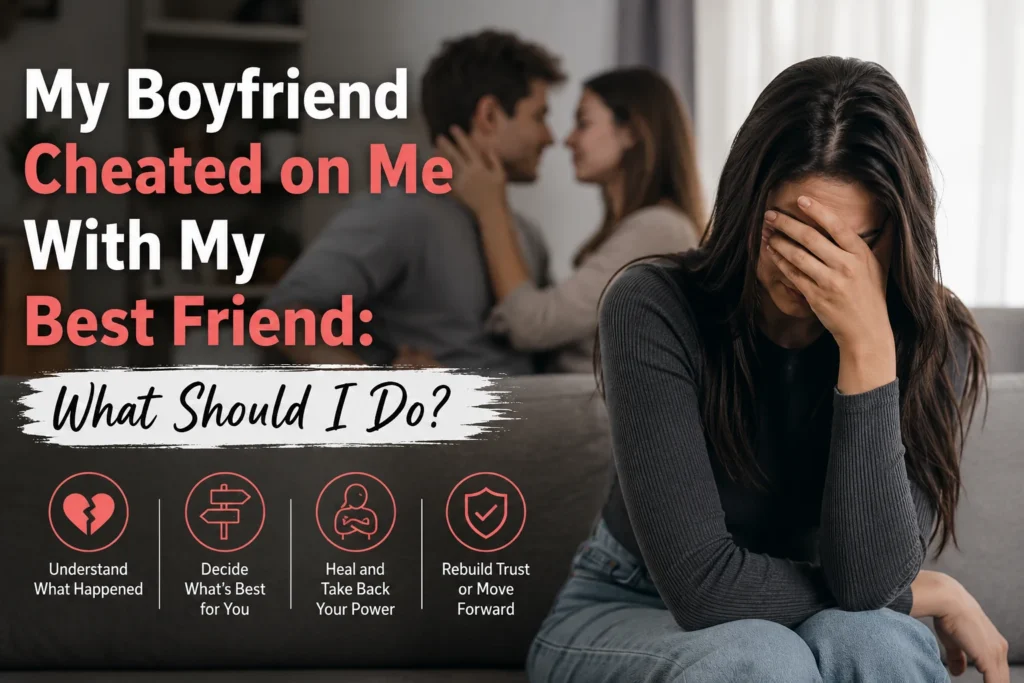
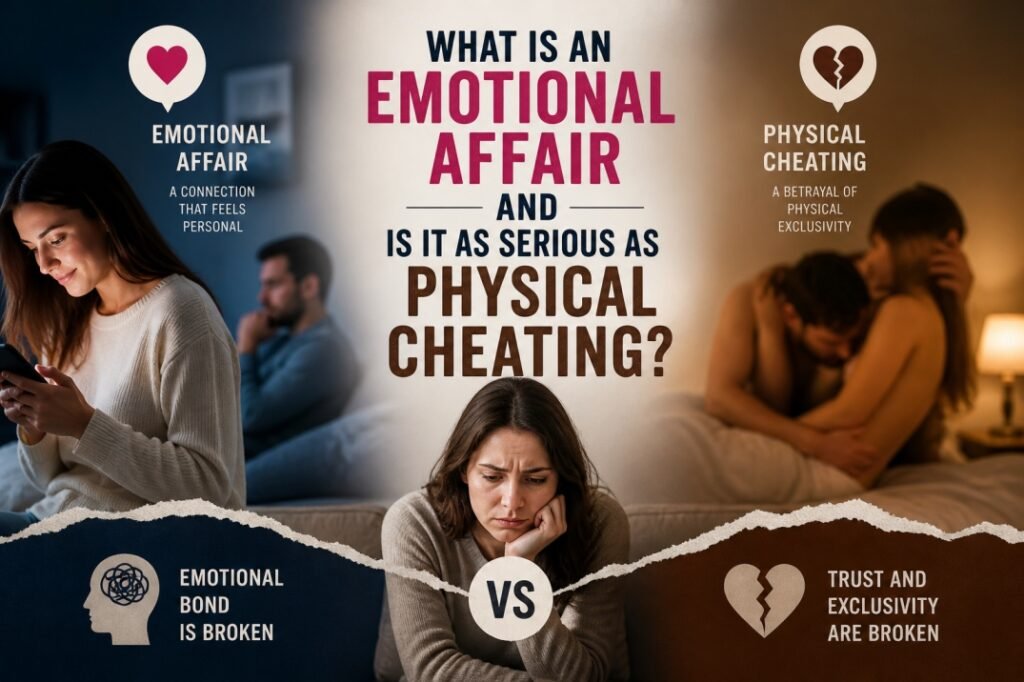
Is emotional cheating worse than physical cheating?
Or is sex with someone else the real betrayal?
The internet is divided but often in a misleading way. Emotional affairs are frequently labelled as more painful because they involve feelings and connection. But that doesn’t mean physical cheating becomes less serious.
So what actually matters more – emotional connection or physical exclusivity?
Are we starting to downplay sexual betrayal, or are these two forms of cheating simply different in what they break?
And why do men and women often react so differently to them?
In today’s world, crossing boundaries doesn’t take much. One message turns into regular conversations. It could be a coworker, an ex, or a friend. Over time, personal thoughts, stress, and emotions start getting shared outside the relationship.
This isn’t limited to marriage. Even in dating, people stay emotionally attached to one person while being physically involved with someone else. The lines are blurred, and most people don’t realise when they’ve crossed them.
In this article, we’ll break it down clearly, what an emotional affair actually is, how it develops, how it differs from physical cheating, and why both forms of betrayal can be deeply damaging in different ways.
What Is an Emotional Affair?
An emotional affair is when you form a deep emotional connection with someone outside your relationship.
It usually involves:
- sharing your thoughts, feelings, and personal struggles with them
- turning to them for support before your partner
- gradually investing emotional energy outside your relationship
Over time, this shift can weaken the emotional bond with your partner, even if nothing physical has happened.
Physical cheating, on the other hand, involves sexual intimacy with someone else. It is more visible, direct, and more clearly recognised as a breach of trust.
8 Stages of an Emotional Affair in Today’s Relationships
Emotional affairs rarely start as “cheating.”
They usually begin as a normal connection and slowly cross boundaries over time.
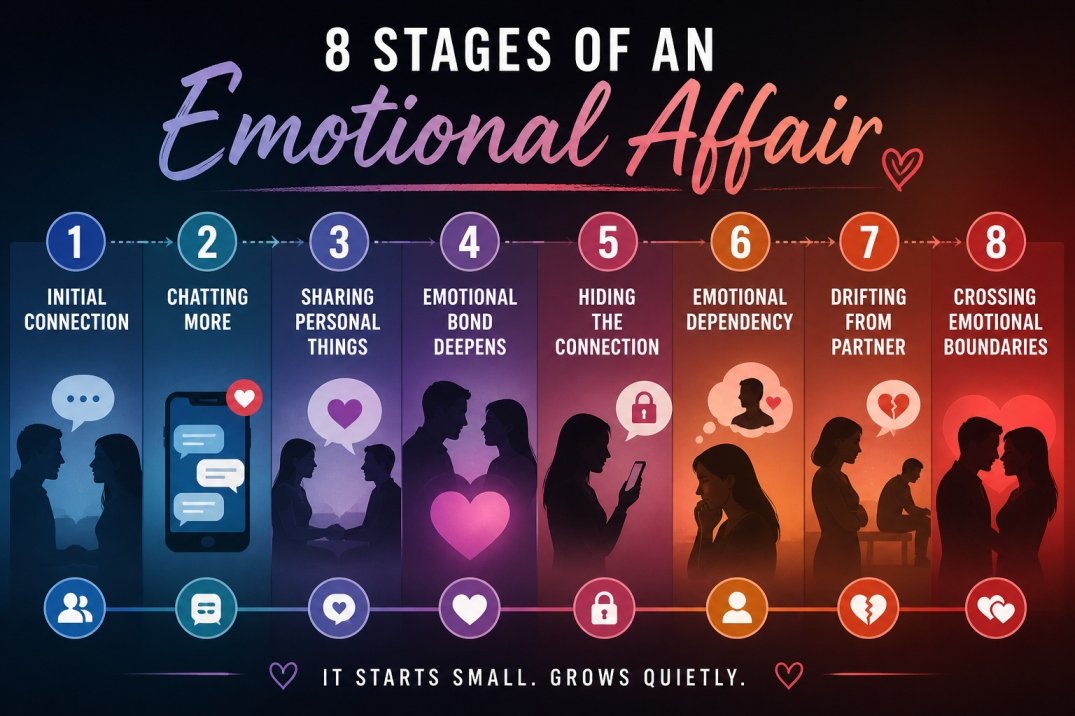
Here’s how it typically unfolds:
- Initial connection
Casual interaction, easy conversation, a sense of comfort. - Increased communication
More frequent texting or calls, looking forward to talking to them. - Personal sharing
Conversations become deeper, stress, problems, personal life. - Emotional bonding
Feeling understood, supported, and emotionally connected. - Secrecy
Hiding chats, deleting messages, or keeping conversations private. - Emotional dependency
Turning to them for support instead of your partner. - Distance from partner
Less communication, less emotional connection at home. - Realisation or confrontation
Either you recognise what’s happening, or your partner does.
By this stage, the connection has already crossed emotional boundaries, even without anything physical.
Signs of an Emotional Affair
Emotional affairs today don’t look obvious. They usually show up through small, repeated behaviours, mostly through phones, chats, and everyday interactions.
- Regularly texting or chatting with one specific person throughout the day
- Hiding messages, deleting chats, or turning your phone away
- Checking your phone often to see if they’ve replied
- Sharing personal updates or problems with them before your partner
- Having late-night or private conversations with them
- Mood getting affected by their replies or lack of response
- Comparing your partner with them in your mind
- Avoiding mentioning them in front of your partner
- Making time to talk to them even when you’re busy
- Feeling both excitement and guilt around the connection
These signs may seem small on their own, but when they repeat and build over time, they often indicate that the connection has crossed normal boundaries.
Real-Life Examples of Emotional Affairs
In today’s lifestyle, emotional affairs don’t look obvious. They grow through normal interactions with coworkers, exes, friends, or even people met online that slowly become more personal.
- Conversations with a coworker or regular contact slowly shifting from work or casual talk to discussing personal life, relationships, and daily frustrations
- Reconnecting with an ex and moving from a simple check-in to regular conversations about your current life, emotions, and relationship issues
- A friend becoming the person you vent to about everything, especially things you don’t feel like discussing at home
- Casual chats with someone online turning into daily conversations, late-night talks, and ongoing emotional sharing
- Talking to one specific person more openly and honestly than your partner, especially about how you feel and what’s missing
- Waiting for their messages, checking your phone for them, and feeling more engaged in those conversations than at home
- Sharing updates, decisions, or emotional moments with them first, instead of your partner
- A connection growing across any setting, work, past relationships, friendships, or online, where the interaction becomes personal, consistent, and emotionally important
Which Is Worse – Emotional or Physical Cheating?
Both emotional and physical cheating are serious.
Both break trust and damage the relationship in different ways.
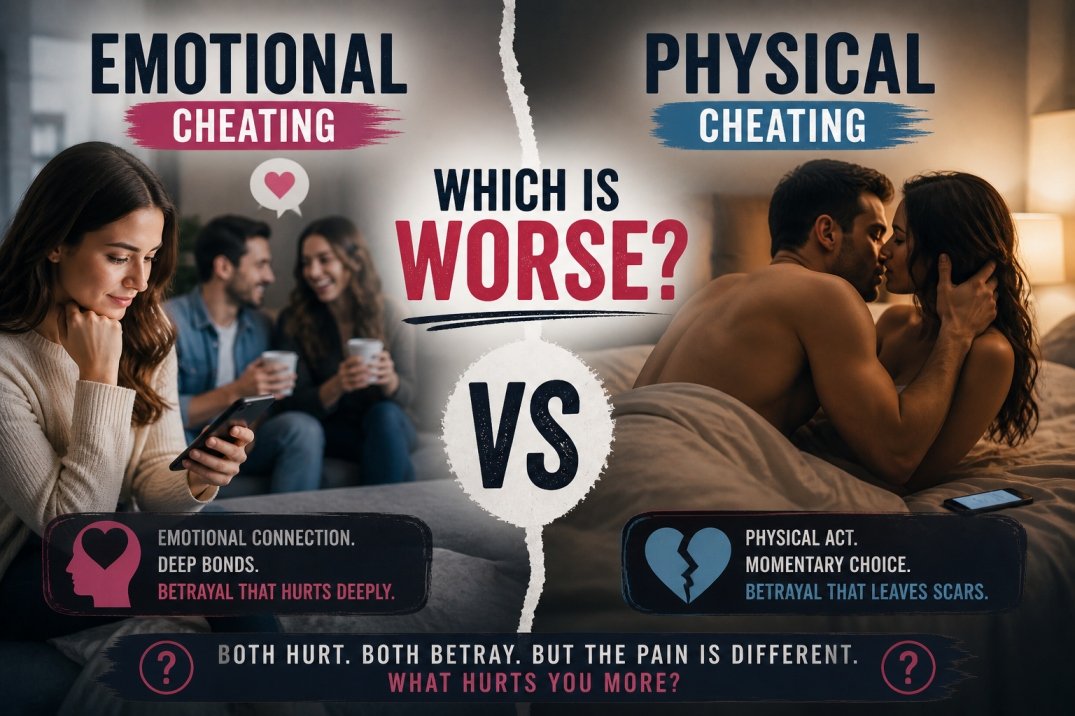
Many men experience physical cheating as more serious because:
- it breaks sexual exclusivity
- it creates comparison and insecurity
- it feels like something private and sacred was shared
- once physical intimacy is given away, emotional words may lose value
Emotional cheating is also serious because:
- it breaks emotional connection
- it creates a feeling of being replaced
- it involves sharing thoughts and feelings meant for the relationship with someone else
Some people often women, but not always feel emotional cheating hurts as much as, or even more than, physical betrayal because it breaks emotional exclusivity and connection.
At the same time, calling emotional cheating “worse” can feel like minimising physical cheating. Both are different forms of betrayal, and neither should be downplayed.
What feels worse usually depends on personal values, attachment patterns, and what someone sees as the core of their relationship: emotional connection, physical exclusivity, or both.
Emotional Affair vs Physical Affair: The Attachment Perspective
People experience cheating differently because they attach differently in relationships. These patterns influence what feels more threatening: emotional loss or physical betrayal. But this doesn’t mean any form of cheating becomes acceptable or easier to forgive.
Anxious attachment
- Strong need for closeness and reassurance
- Emotional cheating often feels like being replaced or abandoned
- Physical cheating is still deeply hurtful and can break trust completely
Avoidant attachment
- Values independence and personal space
- Physical cheating often feels like a clear boundary violation
- Emotional cheating may be overlooked at first, but still creates distance and damage
Secure attachment
- Values both emotional connection and loyalty
- Sees both emotional and physical cheating as serious breaches
- Focuses on trust, honesty, and whether repair is possible
Disorganised (fearful-avoidant) attachment
- Mixed need for closeness and fear of it
- Strong reactions to both emotional and physical betrayal
- Experiences confusion, instability, and emotional overwhelm
Attachment patterns shape how people experience betrayal, but they don’t make it acceptable. Emotional and physical cheating are both serious, and whether they are forgivable depends more on the individual, their values, beliefs, and what they consider non-negotiable in a relationship.
According to the American Psychological Association, relationship dynamics and trust are deeply influenced by communication, attachment, and individual expectations.
Can Emotional Affairs Turn Physical?
Yes, especially when there is regular proximity.
Emotional affairs lower boundaries over time. When you’re already emotionally close and see or talk to the person often, it becomes easier for things to move beyond just conversation.
- Regular proximity (workplace, shared circles, frequent meetups) increases comfort and opportunity
- Emotional closeness makes physical attraction feel more natural over time
- Time spent together without boundaries slowly reduces hesitation
- Many physical affairs begin from ongoing emotional connection, not sudden decisions
- The more frequent the interaction, the higher the chance it crosses into physical
This shift usually isn’t planned. It builds gradually, connection first, then comfort, then boundary crossing.
What To Do If You’re in an Emotional Affair
Be honest with yourself, this isn’t “just talking.” Once you recognise it, stop the connection completely. Don’t stay in touch or keep it going in any form.
Stop seeking what’s missing outside the relationship. Whatever the gap is, it needs to be addressed within your relationship, not with someone else.
Focus on your partner, improve communication, be present, and deal with what’s not working.
Then decide clearly: either work on the relationship or step back. Staying in between only causes more damage.
What To Do If Your Partner Is Emotionally Cheating
Start with a calm and clear conversation. Say what you’ve noticed and how it has affected you, without turning it into blame or repeated arguments. Focus on the impact, not just the details.
Set clear boundaries about what is not acceptable and what needs to change. This should include ending the outside connection, not managing it.
Then watch their actions, not just their words. If they take responsibility and make real changes, the relationship can be worked on. If nothing changes, be prepared to step away, staying in the same situation will only continue the damage.
Can a Relationship Recover After Emotional Cheating?
Yes, most of the time it can but it depends on how seriously both people take it.
Many men may initially see it as a lapse, emotional fluctuation, or even reflect on their own role in the relationship, especially if it was short. But if it continues longer, it often becomes a deeper hit to respect, ego, and the foundation of the relationship.
Women, on the other hand, often experience it more intensely at an emotional level. But if they see genuine regret, consistent effort, and real change, they can choose to forgive. The difference is that trust doesn’t come back quickly; it can take months or even years of reassurance.
Recovery requires honesty, accountability, and completely cutting off the outside connection. Trust has to be rebuilt slowly, and both partners need to work on the relationship consistently.
It’s possible to recover but it’s not something that can be taken lightly.
When To Seek Professional Help
- When trust feels deeply broken and you’re unable to rebuild it on your own
- When communication keeps turning into arguments or complete silence
- When emotional distress becomes overwhelming, constant anxiety, overthinking, or confusion
- When repeated conflict is damaging the relationship and affecting daily life
If you’re facing these challenges, seeking online marriage counselling at LeapHope can help you work through the situation with the right guidance and support.
The Bottom Line
Emotional and physical cheating are both serious. Both damage trust, connection, and the stability of a relationship.
One breaks the emotional bond, the other breaks physical exclusivity but both can deeply hurt and shake the foundation of what you share.
It’s not about deciding which is worse. It’s about understanding what was broken, why it hurts, and whether it can be rebuilt.
Frequently Asked Questions
Is texting someone else considered emotional cheating?
Texting someone else is considered emotional cheating when the conversations become personal, frequent, and hidden from your partner. If you are sharing thoughts, feelings, or attention that should stay within your relationship, it crosses the line.
Is it emotional cheating if there is no physical contact?
It is cheating even if there is no physical contact when emotional involvement with someone else replaces connection with your partner. Cheating is about broken trust, not just physical actions.
Can you love your partner and still cheat emotionally?
You can love your partner and still cheat emotionally, but that doesn’t reduce the impact. Emotional cheating often happens alongside love, but it still breaks trust and damages the relationship.
Do emotional affairs always turn physical?
Emotional affairs do not always turn physical, but they can. The more time, emotional closeness, and interaction involved, the higher the chances of it becoming physical.
Is emotional cheating a reason to end a relationship?
Emotional cheating can be a reason to end a relationship if trust is deeply broken and not repaired. It depends on the situation, the level of involvement, and whether both partners are willing to rebuild.
How long does it take to recover from emotional cheating?
Recovering from emotional cheating takes time, often months or even years. The timeline depends on honesty, consistent effort, and how trust is rebuilt over time.