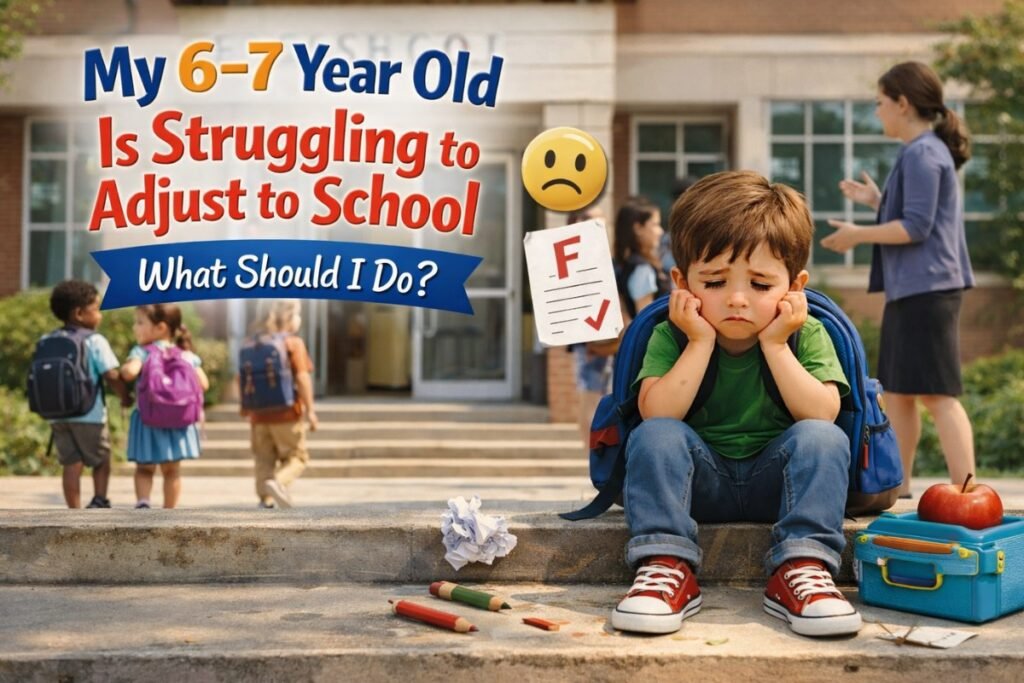
A lot of parents say the same thing, “Everything was fine… and then school started feeling like a daily struggle.”
Your 6-year-old suddenly slows down in the morning, complains of small aches, or holds on a little longer before going in. Your 7-year-old comes back home quiet, irritated, or says they don’t like school anymore, but can’t really explain why.
It’s confusing because nothing obvious has gone wrong. There’s no clear incident, no big change. But something has shifted in how your child is experiencing school.
At this age, school stops feeling like a place you just go to, and starts feeling like a place where you are expected to cope, perform, follow, and fit in. A 6-year-old is still getting used to structure and expectations. A 7-year-old starts noticing how they compare with others, whether they are doing things “right,” and how they are being seen.
Children don’t usually say, “I feel overwhelmed” or “I’m struggling to adjust.” Instead, it shows up in behaviour, resistance, anger, tiredness, or just a quiet loss of interest.
When you look at it this way, the struggle starts to make more sense. And more importantly, it becomes something you can respond to, instead of just trying to fix.
Why the Transition to Grade 1 Feels Overwhelming at Age 6 and 7
The shift into Grade 1 often looks small from the outside, but for a child, it changes a lot at once.
A 6-year-old moves from a more flexible, guided environment into one where they are expected to sit longer, follow instructions more closely, and manage tasks with less help. There is less room for slowing down, more expectation to keep up.
A 7-year-old experiences this differently. By this age, the pressure is not just about following rules, it becomes about doing things correctly. A 7-year-old starts noticing who finishes faster, who answers right, who gets praised. School begins to feel less like an activity and more like a place where they are being evaluated.
At the same time, the day itself becomes heavier. Longer hours, more transitions, more social interaction, and less downtime. Even if your child is managing during school hours, it takes a lot of effort internally.
This is why a 6-year-old or 7-year-old may not say “I’m overwhelmed,” but you’ll see it in other ways, hesitation in the morning, resistance, emotional reactions, or sudden changes in behaviour.
From the child’s side, the experience often feels like this:
“I have to manage more, but I’m not fully ready yet.”
Why Anger, Crying, or Emotional Outbursts Increase After Starting School
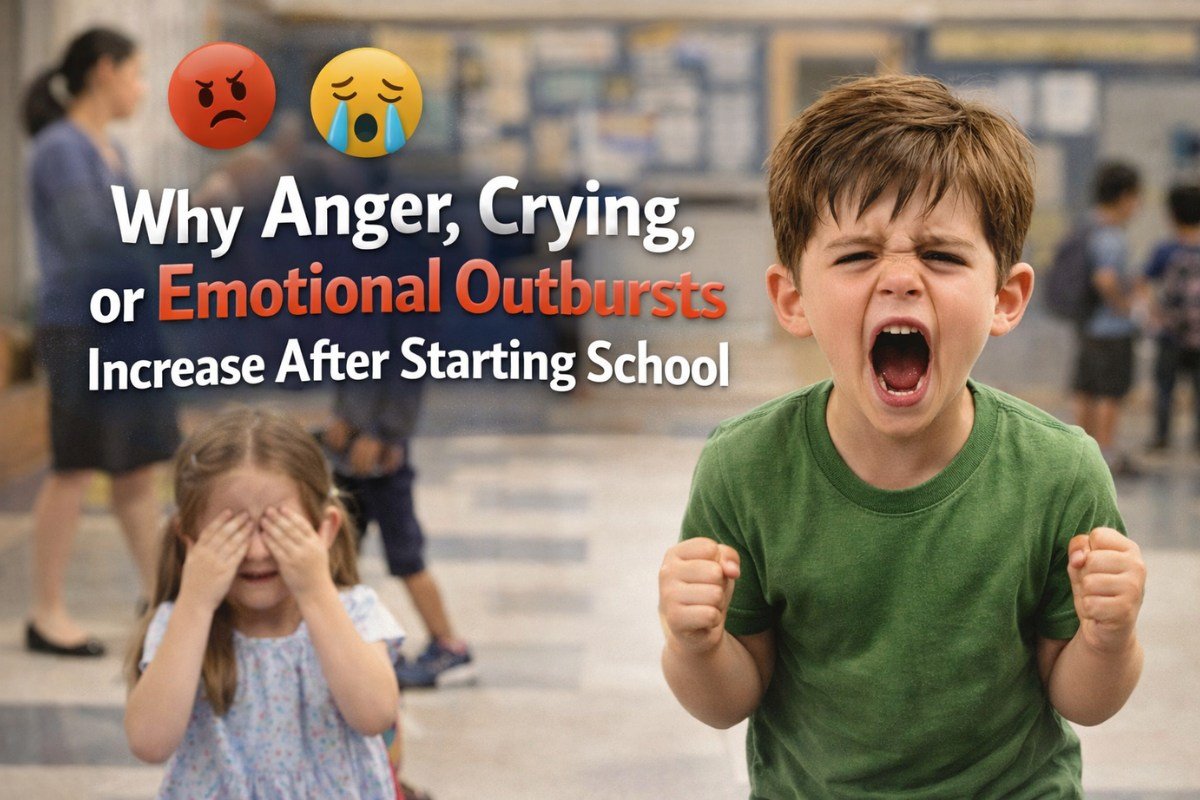
Many parents notice this pattern clearly, their 6-year-old or 7-year-old holds it together at school, but once they come home, the emotions come out all at once.
This happens because school requires constant control. A 6-year-old is trying to sit still, listen, follow instructions, and manage new situations for hours. A 7-year-old is not only doing that, but also trying to keep up, avoid mistakes, and handle social dynamics.
All of this takes effort.
During the day, your child is managing that effort quietly. But by the time they come home, the mental and emotional load is high, and there is finally a safe space to release it.
So instead of saying, “I’m tired” or “Today felt too much,” it shows up as:
- sudden anger over small things
- crying without a clear reason
- irritability or refusal to cooperate
- emotional reactions that feel bigger than the situation
This is often called an “after-school release,” but what matters is understanding what it represents.
A 6-year-old or 7-year-old is not losing control randomly. They are releasing what they have been holding in all day.
Why Regression Happens (Clinginess, Bedwetting, Needing More Reassurance)
One of the more confusing changes parents notice is this, a 6-year-old or 7-year-old suddenly starts behaving in ways that feel younger than before.
A child who was independent may become clingy again. A 6-year-old may start needing more help with things they could do earlier. A 7-year-old may ask for more reassurance, want you closer, or show changes in sleep or habits like bedwetting.
This is not a step backward in development.
At this age, when something feels overwhelming, children don’t always move forward, they return to what feels safe. That can look like needing more closeness, more guidance, or more comfort than before.
For a 6-year-old, this often shows up as wanting more physical reassurance, staying close, or hesitating to do things alone.
For a 7-year-old, it may be less obvious but still present, increased sensitivity, dependence, or needing constant confirmation that they are doing things right.
From the child’s side, the feeling is simple:
“Things feel harder right now, I need more support.”
Why Your 6–7 Year Old Struggles to Follow Instructions or Transition Between Tasks
This is another pattern that often gets misunderstood.
A 6-year-old may seem distracted, slow to respond, or unable to follow simple instructions. A 7-year-old may resist, get frustrated, or leave tasks incomplete. It can look like they are not listening or not trying.
In most cases, it’s not defiance.
At this age, children are managing multiple demands at once, listening, processing, remembering, and acting, all within a structured environment. By the time they reach the later part of the day, their mental energy is already low.
For a 6-year-old, following instructions requires effort because attention and working memory are still developing. If instructions come quickly or in multiple steps, they can feel lost without showing it directly.
For a 7-year-old, the difficulty often shows up during transitions, moving from one task to another, stopping something they are doing, or starting something new. If they are already tired or feeling pressure, even small transitions can trigger resistance.
From the child’s perspective, it often feels like:
“There’s too much to keep track of, and I can’t keep up.”
So instead of completing tasks smoothly, they pause, avoid, or react. This shift is closely linked to how children understand emotions by age, where a 6-year-old and 7-year-old begin to process expectations and reactions more deeply.
The Solution: How to Help Your 6–7 Year Old Adjust to School
At this stage, your 6-year-old or 7-year-old does not need more pressure to “adjust faster.” What helps is reducing the load they are already carrying.

Keep Mornings Simple and Predictable
A rushed or emotional start makes the day feel heavier before it even begins. Keep the routine the same each day, limit instructions, and avoid last-minute pressure. A 6-year-old especially benefits from knowing exactly what comes next without too many changes.
Give Space After School Instead of Asking Too Many Questions
Many children need time to decompress. When a 7-year-old comes home and goes quiet or irritable, it often means they are mentally tired. Instead of asking multiple questions about school, give them space first, then connect later when they feel settled.
Focus on Effort, Not Performance
At this age, children begin linking school with “doing well.” If the focus stays only on results, it increases pressure. For a 6-year-old or 7-year-old, noticing effort, trying, and small progress helps reduce fear of getting things wrong.
Complaints like stomach aches before school can be linked to physical symptoms in children with emotional causes rather than a medical issue.
Break Tasks Into Smaller, Manageable Steps
If your child struggles with instructions or homework, reduce the load. Give one step at a time instead of multiple directions. This makes it easier for a 6-year-old to follow through and reduces frustration for a 7-year-old.
Stay Calm During Emotional Reactions
After-school anger or crying is often a release, not misbehaviour. Responding with calm consistency helps your 6-year-old or 7-year-old feel safe enough to settle, rather than needing to push the emotion further.
These reactions are not random, they often reflect why children express emotions through behaviour when they cannot clearly explain what they feel.
Stay Connected Without Increasing Dependence
Your child still needs closeness, but not constant reassurance. Small moments of connection, sitting together, listening without correcting, help your 6-year-old or 7-year-old feel supported without becoming more dependent.
When Should You Seek Professional Support?
For many children, this phase settles as they adjust. But if the difficulty stays the same or increases, it needs closer attention.
You should consider support if your 6-year-old or 7-year-old:
- Regularly refuses to go to school or becomes highly distressed in the morning
- Shows daily emotional breakdowns after school that do not reduce over time
- Continues to complain of physical symptoms like stomach aches before school
- Becomes increasingly withdrawn, irritable, or loses interest in normal activities
- Shows regression or dependence that does not improve
Also look at the duration. If these patterns continue for several weeks without any sign of settling, it is less likely to resolve on its own.
At this point, the focus is not on labelling your child, but on understanding what is making school feel difficult for them. Early support helps your 6-year-old or 7-year-old feel more stable, rather than letting the stress build over time.
Final Thought
What you’re seeing in your 6-year-old or 7-year-old is not a sudden problem, it’s a sign that something about school currently feels harder than they can manage comfortably.
At this age, children are learning how to handle structure, expectations, and social pressure all at once. A 6-year-old is still getting used to the demands. A 7-year-old is starting to feel them more deeply.
So instead of saying it clearly, it comes out in behaviour, resistance, emotional reactions, or quiet withdrawal.
This does not mean your child is not adjusting. It means they are in the middle of adjusting.
When your response stays steady, less pressure, more understanding, clear routines, your 6-year-old or 7-year-old gradually finds their footing. And once that internal pressure reduces, the same child often begins to manage school in a much more settled way.
Understanding when to be concerned about a child’s emotional health can help you decide if your 6-year-old or 7-year-old needs additional support.
FAQs
Why is my 6-year-old struggling to adjust to school?
A 6-year-old may struggle because school suddenly requires more structure, longer focus, and following instructions without constant support. This adjustment can feel overwhelming, even if the child cannot explain it directly.
Why is my 7-year-old suddenly unhappy at school?
A 7-year-old becomes more aware of performance, comparison, and expectations. Feeling behind, unsure, or pressured can lead to frustration, withdrawal, or loss of interest.
Is it normal for a 6 or 7-year-old to cry after school?
Yes, many 6-year-olds and 7-year-olds release emotions after holding them in all day. Occasional crying or irritability is common, but frequent or intense reactions may need attention.
Why has my child become more clingy after starting school?
A 6-year-old or 7-year-old may become clingy when school feels overwhelming. Closeness helps them feel safe again, especially during periods of adjustment.
When should I worry about my child’s school adjustment?
You should be concerned if your 6-year-old or 7-year-old shows persistent distress, refuses school, has physical symptoms, or struggles to function normally over time.