
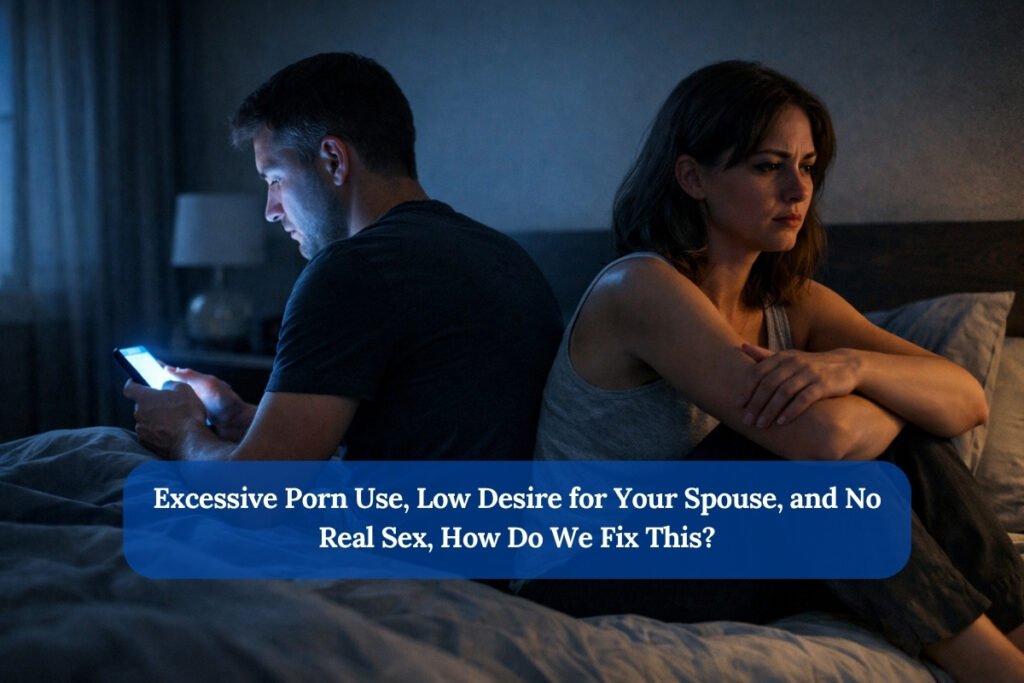
We often hear this from couples in counseling:
“Why would a man rather watch porn than have sex with his willing wife?”
“He says he loves me, but he masturbates to porn instead of being with me.”
“My husband watches porn… but never wants sex with me.”
“I’m right here… so why am I not enough?”
Most of these couples are in their 30s. They are not fighting all the time. There is no affair. They still care about each other and share a life together. But their sex life has quietly faded or stopped. One partner may still be sexually active alone, while intimacy as a couple feels distant, awkward, or gone.
This is confusing and deeply painful. The partner who feels rejected often starts to question their attractiveness, worth, or the future of the marriage. The partner using porn may feel pressure, guilt, or simply a lack of desire they cannot explain. Both end up feeling alone, even while living under the same roof.
If this sounds familiar, you are not the only couple going through it, and it does not automatically mean your marriage is over. But it does signal that something important has shifted in desire, connection, or both. Understanding why this happens is the first step toward rebuilding intimacy and finding your way back to each other.
When Porn Has Replaced Intimacy in Marriage
In some marriages, porn does not just exist alongside the relationship; it starts taking the place of real intimacy. Sex between partners becomes rare, brief, or stops altogether, while porn use and masturbation continue. Sexual energy is still there, but it is directed toward a screen instead of a spouse.
Many couples report that physical closeness begins to fade. Touching, flirting, and initiating slow down because attempts either get rejected or feel uncomfortable. Over time, both partners may stop trying. The bedroom becomes a place for sleep, not connection.
Even when sex does happen, it may feel distant or one-sided. Some partners need porn playing to stay aroused, focus more on the screen than each other, or seem mentally elsewhere. The experience can feel mechanical, rushed, or empty rather than warm and mutual.
This shift often creates emotional distance as well. The partner who wants connection feels unwanted or replaced. The partner using porn may feel pressure, low desire for real sex, or difficulty engaging without visual stimulation. Both can end up frustrated and lonely despite sharing the same space.
The core problem is not simply that porn exists. It is that shared intimacy, desire, and connection between partners have gradually disappeared.
How Porn Which Seems Harmless, Replaces Sexual Desire for a Partner
Porn usually does not remove sexual desire; it changes what the body responds to. In the 30s, when life is busy and tiring, porn can become a quick private release. Over time, a person may still feel sexual urges and masturbate, but not feel the same intense desire for sex with their spouse.
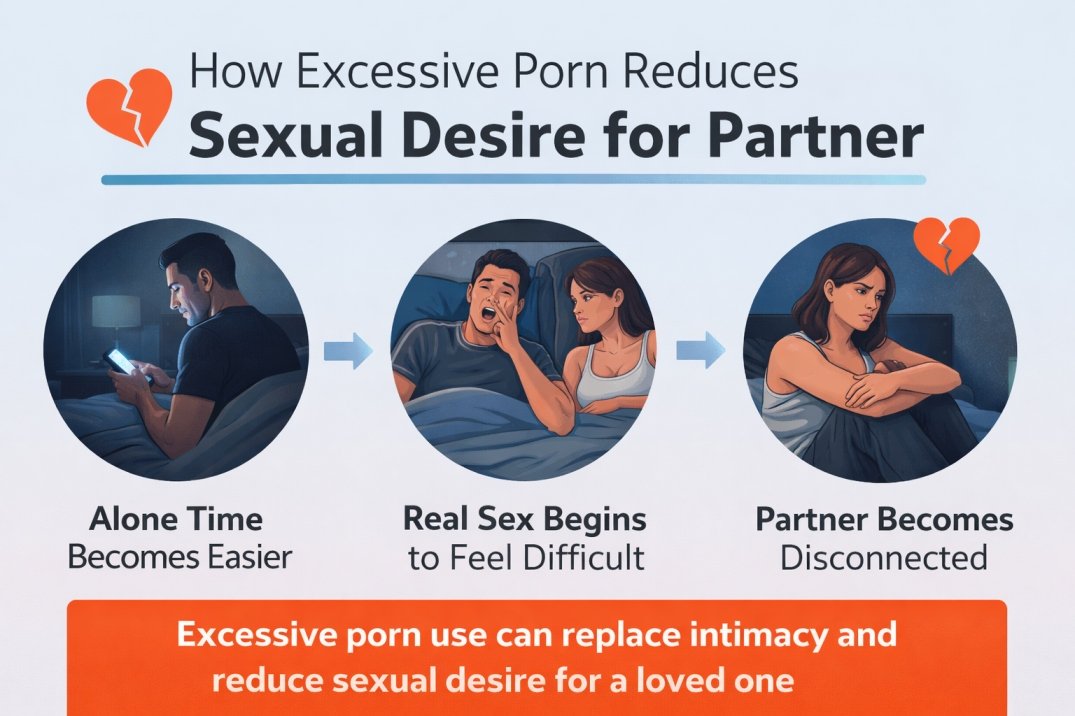
Clear reasons this happens:
- Arousal becomes tied to porn itself, so desire does not activate without it
- The brain gets used to instant stimulation, making normal intimacy feel slow or unexciting
- Sexual release alone trains the body to respond to privacy, not to another person
- A familiar partner does not provide the novelty that porn constantly delivers
- Solo sex requires no effort, timing, or emotional engagement, unlike partnered sex
- Stress and fatigue make quick release appealing while reducing interest in effortful intimacy
- Repeated solo satisfaction lowers urgency to seek sex within the relationship
As a result, the person may continue masturbating regularly while avoiding or lacking desire for real sex. Sexual energy still exists, but it is no longer directed toward the spouse, which leads to a gradual decline in intimacy within the marriage.
How Porn Turns a Marriage Into a “No Real Sex” Relationship
In many marriages in the 30s, one partner begins releasing sexual tension privately through porn. Because the physical need is already satisfied, there is little desire left for real sex with a spouse. The natural buildup that usually leads to intimacy simply never happens.
When the other partner initiates, it can feel irritating or pressured rather than welcome. Excuses become routine: tired, stressed, not in the mood, too busy. Some people start avoiding situations that could lead to sex, such as going to bed together or being physically close.
After repeated rejection, the initiating partner often stops trying to avoid more hurt. Sex becomes rare and eventually stops, even though one partner may still be sexually active alone.
For the partner who wants intimacy, this feels deeply personal and confusing. They may feel unwanted or replaced, especially knowing sexual release is happening privately. In the 30s, when life is already demanding, this pattern can settle in quickly, turning a marriage into one that functions in every way except physically.
How Porn-Driven Disconnection Damages a Marriage
In the 30s, sexual need is usually still active, and sex often serves as a key way to feel close, reassured, and connected despite stress. When one partner repeatedly chooses porn instead of shared intimacy, the damage is not only sexual, it reshapes how both people experience the relationship.
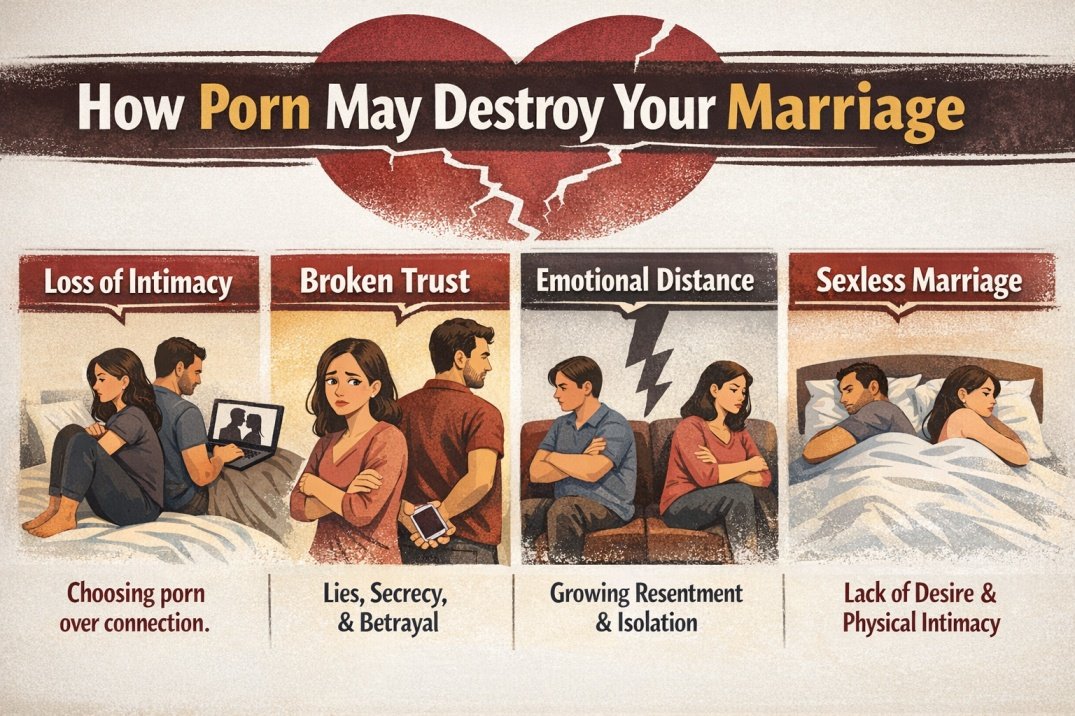
Emotional Impact
When a partner discovers porn use after being turned down, it often feels personal, not neutral. Being refused while knowing sexual desire exists elsewhere can create deep hurt and humiliation.
Many begin to question their attractiveness, desirability, or place in the relationship. Trust can weaken, especially if excuses or denials were involved. Over time, anger and resentment may replace warmth, and emotional safety declines.
Sexual Impact
Sex stops feeling mutual. The partner who still wants intimacy may hesitate to initiate, expecting rejection or a half-hearted response. The other partner may feel pressure rather than desire when approached, which further reduces genuine arousal.
When intercourse does happen, it may feel disconnected, routine, or unsatisfying, reinforcing the sense that something is wrong. Eventually, desire drops on both sides because the experience no longer feels positive.
Relationship Impact
The gap created in the bedroom spreads into daily life. Conversations become cautious or avoidant around sensitive topics. One partner may withdraw to protect themselves, while the other keeps emotional distance to avoid conflict.
Although the couple may continue functioning well in practical areas, work, parenting, and household responsibilities, the sense of partnership weakens. Loneliness increases inside the relationship, and the bond begins to feel more functional than intimate.
Over time, porn-driven disconnection erodes not just sex but the feeling of being wanted, valued, and emotionally close, which are central to a healthy marriage at this stage of life.
When Rejection and Hurt Kill the Other Spouse’s Sexual Desire
This stage is common. At first, one partner keeps trying for intimacy. After repeated rejection or discovering private porn use, desire can fade. Many people move from wanting sex → to avoiding it → to feeling completely turned off.
This is usually a protective response, not true loss of libido.
- Repeated rejection makes initiation feel painful or humiliating
- Knowing your spouse has sexual desire but not for you creates resentment
- Emotional hurt shuts down physical openness
- Trust in intimacy weakens, so the body stops responding
Over time, sex stops feeling comforting and starts feeling unsafe or unwanted. Even if the other partner later initiates, the reaction may be numbness, anxiety, or irritation.
Feeling undesired at home can also increase vulnerability to outside attention. In today’s culture, validation and connection are easily available, which raises the risk of emotional or physical infidelity.
Many people worry this means the marriage is over. More often, it means the relationship has been deeply hurt, and desire cannot return until trust and closeness are rebuilt.
Can Attraction and Intimacy Come Back After Excessive Porn Use?
If you are in your 30s, sexual desire can come back. At this stage of life, libido is usually still strong, so the problem is more about disrupted patterns than permanent loss. When porn use is reduced and emotional connection with your partner is rebuilt, attraction often returns.
This requires effort from both partners. Cutting back on private sexual release allows natural tension to build again, while spending time together without pressure helps restore comfort and closeness. Desire usually comes back gradually, not all at once.
Because hurt, anxiety, and communication problems are often involved, many couples benefit from working with a qualified sex therapist. Professional support can help you rebuild trust, reduce pressure around sex, and create a path back to a satisfying intimate life.
The key is willingness on both sides. With consistent effort, this situation is usually reversible.
How To Restore Intimacy and Reduce Porn Dependence
Fixing this problem means rebuilding the relationship, not just “stopping porn.” In the 30s, couples are often exhausted and busy, so change has to be realistic and done together.
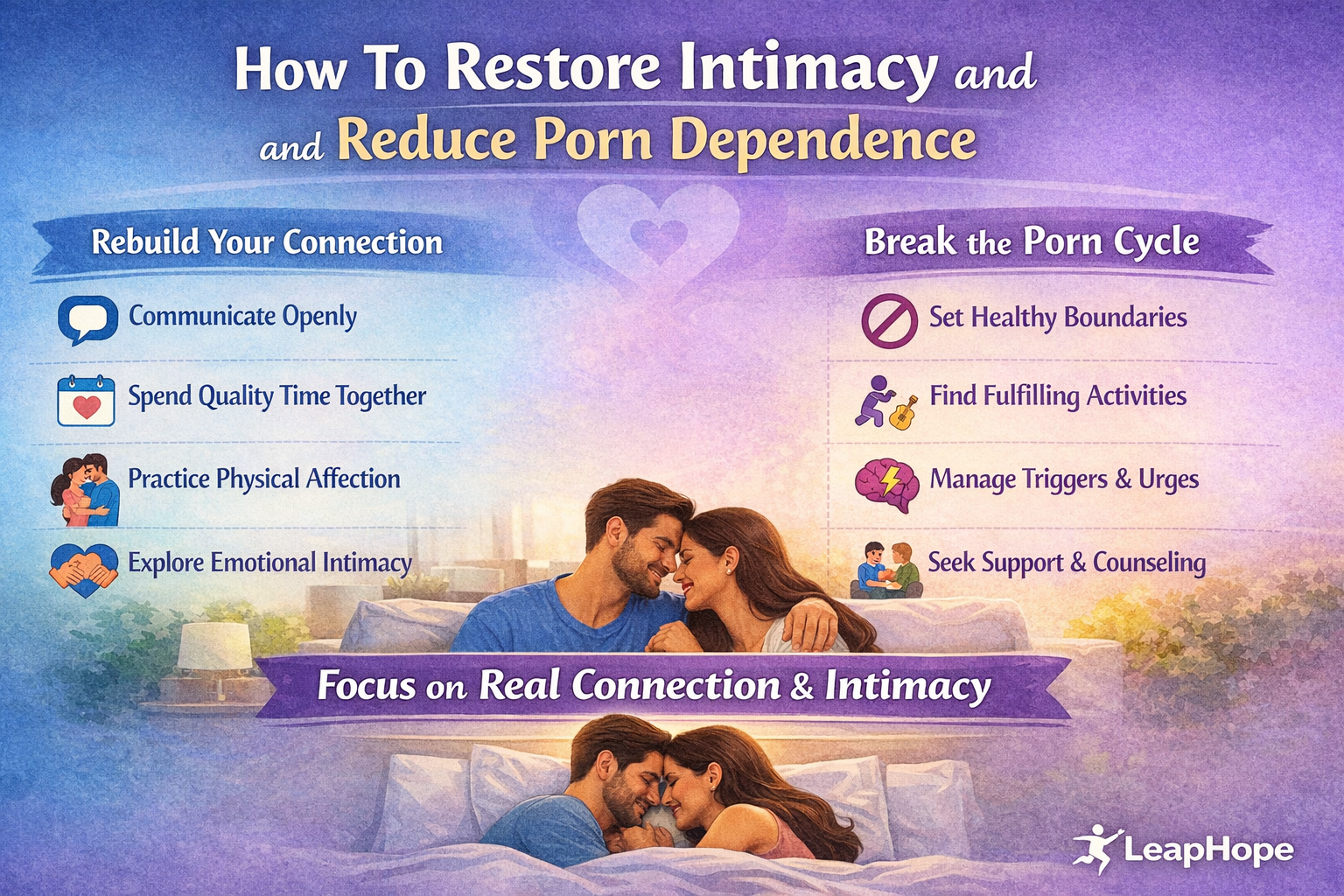
Talk Honestly Without Blaming Each Other
Say what is happening and how it affects you, not what is “wrong” with your partner. Blame leads to denial or fights. Calm, direct conversation makes cooperation possible.
Clear the Hurt That Has Built Up
Unspoken resentment kills desire. Talk about the rejection, anger, or pain both of you have been carrying. Until that tension is addressed, physical closeness usually won’t feel natural.
Cut Back on Porn Use on Purpose
Desire will not shift back to the relationship if it is constantly being released alone. Reducing use, especially at night, allows sexual tension to build again so intimacy becomes appealing.
Rebuild Everyday Connection First
Spend time together that is not about sex, talking, sharing meals, laughing, doing normal life side by side. Feeling like partners again is what makes attraction return.
Bring Back Safe Physical Touch
Start with affection that has no pressure to lead to sex: hugging, sitting close, holding hands, cuddling. This helps rebuild comfort with physical closeness.
Remove Pressure to “Perform”
Trying to force sex or prove desire usually backfires. Focus on comfort and mutual enjoyment, not goals. When pressure drops, natural arousal has space to return.
Get Professional Help if You Are Stuck
If conversations go nowhere, resentment is high, or sex has stopped for a long time, couples or sex therapy can help. A neutral professional can guide both partners without blame and give practical steps to rebuild intimacy.
When Professional Help Is Important
If the marriage has been sexless for a long time and nothing is improving, outside help is often needed. Persistent lack of intimacy usually does not resolve on its own.
Escalating conflict is another sign. If discussions about this topic keep turning into arguments, shutdowns, or blame, the relationship may be stuck in a cycle that is hard to break without guidance. Strong resentment, despair, or emotional exhaustion also indicate deeper damage.
Mental health effects such as anxiety or depression can develop when rejection and tension continue over time. If repeated attempts to repair the situation have failed, talking, making promises, trying to reconnect, professional support can provide structure and tools that couples cannot create alone.
Seeking help does not mean the marriage is over. It means the problem has become too complex or painful to resolve without assistance.
Conclusion
This situation does not mean love is gone or that the marriage is doomed. It usually reflects a pattern of disconnection where sexual needs are met privately instead of together, and that pattern can be changed.
Rebuilding intimacy takes effort from both partners. With honest communication and renewed closeness, desire often returns.
If you feel stuck, online sex therapy or online marriage counselling can help. Professional guidance provides a safe space to rebuild trust, improve communication, and restore a satisfying intimate connection.
FAQs
Why would a partner choose porn over sex with a willing spouse?
A partner may choose porn over sex with a willing spouse because porn offers quick release with no effort, pressure, or emotional involvement. Real sex requires energy, presence, and responsiveness to another person. When someone is stressed, tired, or anxious about performance, porn can feel easier even if attraction to the spouse still exists.
My partner masturbates to porn but doesn’t want sex with me. Why?
If your partner masturbates to porn but doesn’t want sex with you, it usually means sexual desire is being satisfied privately. After solo release, there is little physical tension left to drive partnered sex. Anxiety, routine, or emotional distance can also make real intimacy feel harder than masturbating alone.
Does porn make someone lose attraction to their spouse?
Porn does not always make someone lose attraction to their spouse. Many people still find their partner attractive but feel less sexual desire because arousal has become linked to porn. Attraction and desire are not the same, so love and appreciation can remain even when interest in sex drops.
Can a marriage survive if porn replaces intimacy?
A marriage can survive if porn replaces intimacy, but only if the issue is addressed. Many couples recover by reducing porn use, rebuilding emotional closeness, and restoring a shared sex life. Ignoring the problem usually allows distance and resentment to grow.
My partner can perform with porn but not with me. What does this mean?
If your partner can perform with porn but not with you, it often means arousal works in private conditions but breaks down under pressure or distraction during real intimacy. Anxiety, overstimulation, or lack of comfort can interfere with physical response even when attraction is present.
Porn is turning me off and now we don’t have sex. What do we do?
If porn is turning you off and now you don’t have sex, the first step is to acknowledge the impact openly. Rebuilding connection usually requires reducing porn use, restoring emotional closeness, and removing pressure around sex. If you feel stuck, couples or sex therapy can help both partners move forward together.