
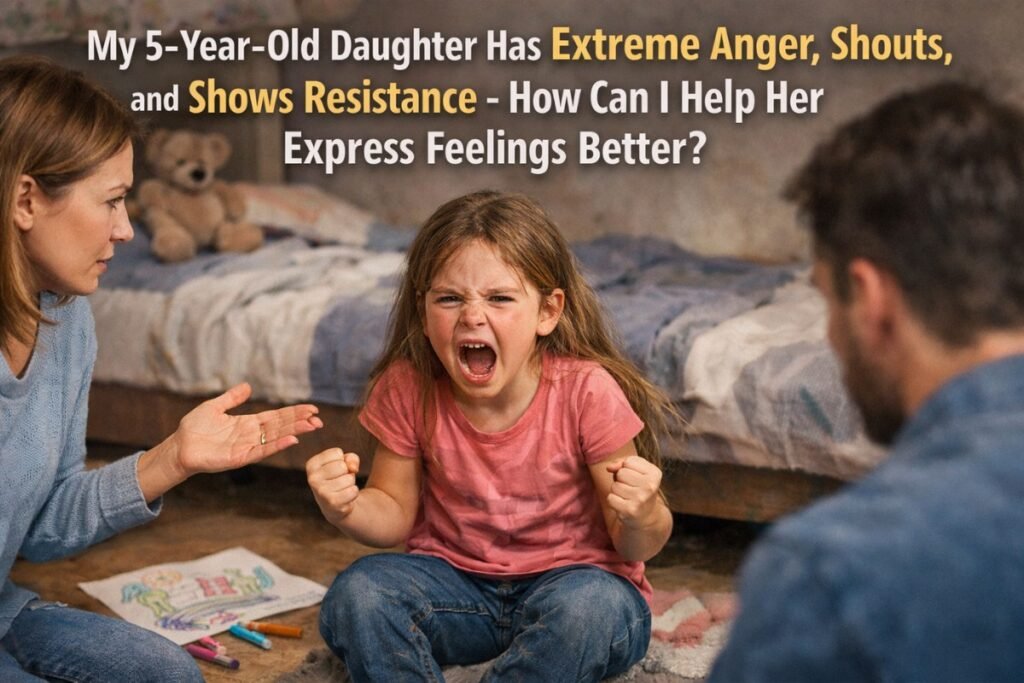
Many parents feel worried when their 5-year-old daughter suddenly shouts, argues, or refuses to cooperate over small things. She may be loving, cheerful, and helpful at times, yet become intensely angry or resistant when asked to do something she does not like. This change can feel confusing, especially because a 5-year-old is expected to “behave better” than a toddler.
One parent described her 5-year-old daughter like this:
“She is sweet most of the time, but when she gets upset, she screams, talks back, and refuses everything. It feels like nothing calms her in that moment.”
A 5-year-old can feel strong emotions but may still struggle to manage them or express them clearly. Shouting, resistance, or emotional outbursts often happen when she feels overwhelmed, frustrated, or misunderstood.
If your 5-year-old daughter behaves this way, it usually means she needs help expressing feelings in a safer way, not punishment or harsh control. With the right support, most children gradually learn to talk about emotions instead of reacting with anger.
Why This Happens at Age 5
Big Emotions, Still Learning Control
A 5-year-old daughter can feel anger, frustration, or hurt very strongly, but her brain is still learning how to slow those feelings down. She may know she should stay calm, yet in the moment the emotion feels too big to manage. This is why reactions can seem sudden and intense. Many important emotional needs at this age are felt deeply but not spoken.
More Rules and Expectations Now
At age 5, adults often expect better behaviour, listening, and self-control. She may be asked to follow instructions, sit properly, share, wait her turn, and handle tasks more independently. Keeping up with these expectations can feel tiring, especially after a long day.
Wants Independence
Many 5-year-old girls want to do things their own way. They may want to choose clothes, decide activities, or control small details. When they feel forced or rushed, resistance becomes a way to protect that sense of control.
Gets Upset When Things Feel Unfair
Fairness becomes very important at this age. If she thinks something is “not fair,” even a small issue can trigger strong anger or shouting. The feeling matters more than the actual situation.
Tiredness or Routine Changes
Lack of sleep, hunger, busy schedules, or changes in routine can reduce patience quickly. A child who is already tired or overstimulated has less ability to cope, so reactions become bigger than usual.
Often these factors build up quietly. By the time she shouts or refuses, she may already be overwhelmed, even if the trigger seems small.
Signs Your 5-Year-Old Daughter Is Struggling Emotionally
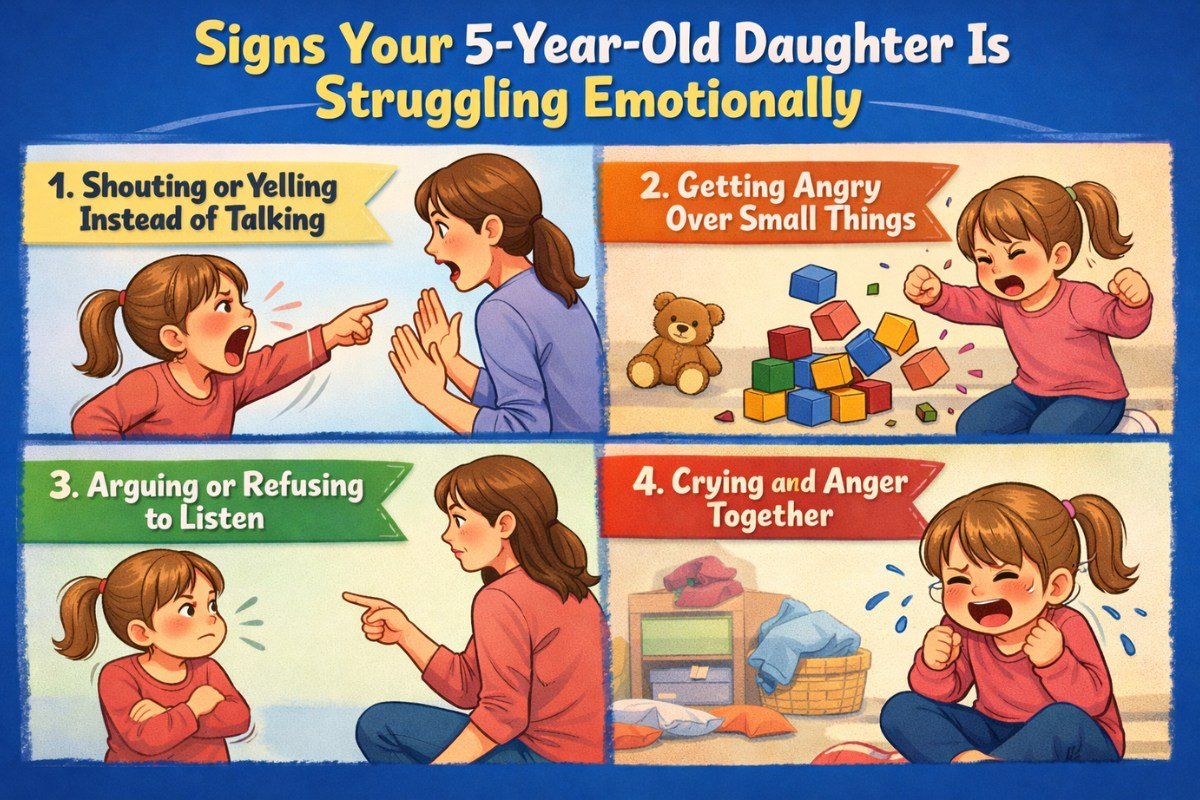
Shouting or Yelling Instead of Talking
When a 5-year-old daughter feels overwhelmed, she may raise her voice instead of explaining what is wrong. Shouting can happen because the feeling is stronger than her ability to use calm words in that moment.
Getting Angry Over Small Things
Minor problems, such as a toy not working, being told to stop playing, or a small disappointment, can trigger a big reaction. The issue may look small to adults but feels very important to her.
Arguing or Refusing to Listen
Saying “no,” talking back, or refusing instructions can be a way of showing frustration or a need for control. It does not always mean she wants to misbehave, she may simply feel pushed or upset.
Crying and Anger Together
At age 5, anger and sadness often mix. She may shout while crying or become tearful after an angry outburst. This shows she is overwhelmed rather than calm and defiant.
Sudden Mood Changes
She may go from happy to upset very quickly. Young children can struggle to manage emotional shifts, especially when tired or overstimulated. Children often communicate distress through behaviour when they cannot express it clearly in words.
Trouble Calming Down
Once upset, she may need a long time to settle, even with help. Her body stays “on alert,” making it hard to return to a calm state immediately.
These signs usually appear more at home, where she feels safest expressing strong emotions. If she is loving, playful, and engaged at other times, the problem is usually difficulty managing feelings, not a personality issue.
How to Help Your 5-Year-Old Daughter Express Feelings Better
Stay Calm and Listen First
When she is shouting or upset, reacting with anger usually makes things worse. Speak in a calm voice and give her a moment to feel heard. Children calm down faster when they feel someone is on their side.
Name Feelings for Her
If she cannot explain what she feels, simple labels help. Say things like, “You seem angry,” or “You look upset.” Over time, she learns the words she needs to express herself instead of shouting.
Teach Simple Emotion Words
Use everyday moments to talk about feelings such as angry, sad, frustrated, worried, or disappointed. The more words she knows, the easier it becomes to talk rather than react. Some children react strongly because their emotional system becomes overwhelmed quickly.
Give Choices Instead of Only Commands
Offering small choices, such as “Do you want to wear the red dress or the blue one?” helps her feel some control. This often reduces resistance and arguments.
Show How to Talk About Problems
Model calm problem-solving. For example, say, “I’m upset, so I’m going to take a deep breath.” Children learn more from what they see than from what they are told.
Use Calm-Down Tools
Simple tools can help her body settle, such as slow breathing, a quiet corner, hugging a soft toy, or sitting quietly with you. These are not punishments, but ways to reset.
Praise When She Uses Words Instead of Shouting
Notice even small improvements. Saying, “I like how you told me you were upset,” encourages her to keep trying healthier ways to express feelings.
Learning to express emotions takes time. With repeated guidance and patience, most 5-year-old children become better at talking about what they feel instead of reacting with anger.
When to Get Professional Help
Most 5-year-old children show anger and resistance sometimes, but extra help may be needed if your daughter’s reactions are very strong, happen too often, or are affecting daily life.
If she shouts or loses control many times a day, cannot calm down even with support, or her behaviour is creating problems at school or with other children, it is worth talking to a child specialist. Anger can also hide worry, sadness, or stress that she cannot explain.
Getting advice early does not mean something is wrong with her. It simply helps you understand what she needs and how to support her better.

You may consider seeking help if:
- She hurts others or herself during anger
- Outbursts are very intense or long-lasting
- Teachers report serious behaviour problems
- She seems anxious, fearful, or unhappy most of the time
- Sleep or eating has become difficult
- There is little or no improvement over time
Parents often wonder when strong behaviour is part of development and when extra support may be needed.
Final Thought
Strong anger and resistance at age 5 are very common. A 5-year-old daughter can be kind, loving, and helpful, yet still lose control when she feels overwhelmed. These reactions do not mean she is a bad child or that something is seriously wrong.
As she grows, her ability to understand feelings, use words, and calm herself will improve. What helps most is patience, clear limits, and a calm adult who guides her through difficult moments.
Small improvements matter. Taking a little less time to calm down, using a few words instead of shouting, or recovering faster after a meltdown are signs that she is learning.
Most children become better at handling emotions when they feel safe, understood, and supported.
FAQs
Why is my 5-year-old daughter so angry all the time?
At age 5, children feel strong emotions but still struggle to control them. Anger often appears when she is tired, frustrated, stressed, or unable to explain what she feels.
Is shouting normal for a 5-year-old?
Occasional shouting can happen at this age, especially when a child is overwhelmed. Frequent or very intense shouting may mean she needs help expressing feelings in a calmer way.
Why does my daughter argue about everything?
Arguing can be a way of showing independence or frustration. She may want control or feel that something is unfair.
How can I teach her to talk instead of yelling?
Stay calm, name feelings, and encourage simple words such as “I’m upset” or “I don’t like this.” Praise her when she communicates without shouting.
Could anxiety cause anger in a 5-year-old?
Yes. Worry, fear, or insecurity often appear as anger or resistance because young children cannot always explain anxiety directly.
When should I worry about her behaviour?
If anger is very frequent, causes harm, affects school or friendships, or does not improve over time, professional advice can help.