
If you’re over 35 and you keep having the same fights, it often isn’t about the topic anymore. It’s about how you’re being spoken to.
In counselling at LeapHope, we hear this every day from both women and men: “My husband doesn’t respect me anymore.” “My wife talks to me like I’m the problem.” Many say their partner has started using a harsh, dismissive tone even in front of children or family, something that would never have happened earlier in the relationship.
During arguments, the words chosen often feel deliberately wounding, aimed at the places that hurt most. Afterward, nothing really gets resolved. The tension just carries forward into the next disagreement.
In long-term marriages, especially after 35, this kind of disrespect usually grows out of accumulated resentment, unmet emotional needs, chronic stress, and past hurts that were never fully addressed. Over time, patience erodes, empathy drops, and partners stop giving each other the benefit of the doubt.
What’s left is a pattern of fighting that feels less like conflict and more like a loss of basic regard for one another.
Why Respect Is Essential for a Healthy Married Life
Respect touches something very basic in us, how we see ourselves and how we believe others see us. When someone treats us with respect, it strengthens our sense of worth and dignity. When it’s missing, it doesn’t feel like a simple disagreement; it feels personal.
Your spouse is usually the person closest to you, the one you share your life and everyday realities with. When that person begins to speak to you with disrespect, something inside you shifts. You might tolerate it for a while for the sake of the relationship, the children, or simply to avoid constant conflict. But when it keeps happening, it slowly wears down how you feel about the marriage and about yourself.
Respect is what makes love and partnership feel secure rather than fragile. The outside world can be stressful and demanding, but when you feel valued at home, those pressures are easier to carry. When you don’t, even ordinary problems can feel heavier. Feeling respected by the person you are building a life with creates stability, a sense that you are not alone and that your efforts and presence still matter.
Feeling Disrespected After Years Together, How It Changes a Marriage Over Time
When disrespect keeps happening in a marriage, things slowly start to break down.
First, partners stop sharing their feelings. They talk less about important things and keep problems to themselves. This creates emotional distance.
Closeness also suffers. Hugs, affection, and physical intimacy may reduce or stop because hurt and anger are still there.
A “not caring” attitude can grow. Partners stop doing small kind things, stop listening, and stop trying to make each other happy. Trust can weaken too. Some people start hiding money, making decisions alone, or living separate lives under the same roof.
Many couples stay together mainly for the children, family pressure, or financial reasons, not because they feel close anymore. If nothing changes, some marriages move toward separation because the relationship no longer feels supportive or safe.
Disagreement Is Normal, Disrespect Is Not
All couples disagree. Different opinions about money, children, work, or daily life are normal. Disagreeing does not mean the relationship is failing.
What matters is how partners speak to each other during those disagreements. You can be upset and still be respectful. You can say no without insulting, mocking, or hurting the other person.
Disrespect is different. It includes shouting, name-calling, sarcasm, eye-rolling, bringing up old mistakes, or speaking in a harsh tone meant to hurt. These behaviors turn a problem into a personal attack.
Healthy conflict focuses on solving the issue. Disrespectful conflict focuses on winning or hurting the other person. Over time, this pattern creates anger, fear, and distance instead of understanding.
Signs You Have Serious Disrespect Issues in Your Marriage
At 35+, some level of irritation or harsh behaviour can appear in a marriage, and many couples ignore it at first, assuming it is due to stress, past hurt, or daily pressures. However, if the behaviour becomes frequent, deliberate, or openly disrespectful, it should not be dismissed.
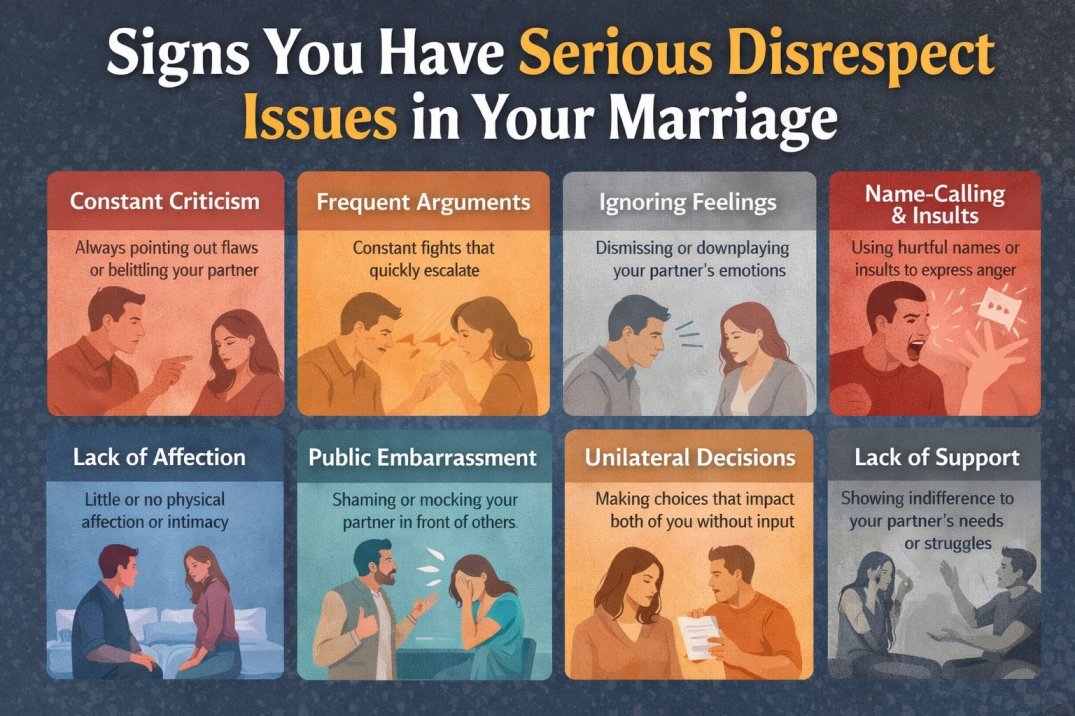
In such cases, the pattern itself becomes the problem, and the following signs may indicate serious disrespect in the relationship.
- Using insults, name-calling, or degrading language
- Speaking in a mocking, sarcastic, or harsh tone
- Bringing up past mistakes repeatedly to shame or control
- Interrupting constantly or refusing to let the other person speak
- Ignoring concerns without discussion
- Criticising or embarrassing the partner in front of others
- Giving silent treatment as punishment
- Walking away from conversations to avoid responsibility
- Slamming doors, throwing objects, or showing aggressive behaviour
- Making important decisions without consulting the partner
- Withholding affection, cooperation, or support to punish
- Sharing private matters publicly to undermine the partner
- Controlling money, time, or daily activities
- Starting arguments intentionally
Examples of Disrespect in Marriage
Disrespect in marriage often shows in ordinary situations and repeated patterns of behaviour, especially during conflict or daily interactions.
- During arguments, a partner uses hurtful words, insults, or statements meant to provoke rather than solve the issue
- They raise their voice immediately, refuse to let the other person speak, or twist what was said
- Personal weaknesses or past mistakes are used as weapons during fights
- In bed, one partner turns away, refuses physical closeness without discussion, or treats intimacy as a duty or bargaining tool
- Physical affection stops completely or is given only on their terms
- In front of your family, they criticise, mock, or contradict you openly
- In front of their family, they allow disrespect toward you or join in negative comments
- In public places, they speak harshly, ignore you, walk ahead without including you, or act as if you are not present
- Your opinions are dismissed, interrupted, or ignored during decisions
- Important choices are made without asking for your input or agreement
- Plans are changed without informing you
- Private matters are shared with friends or relatives without your consent
- They complain about you to others instead of addressing issues directly
- Backbiting or negative talk about you happens behind your back
- Your requests or concerns are treated as unimportant or inconvenient
What Is the Ultimate Disrespect in a Marriage?
The most serious forms of disrespect are not occasional harsh words but repeated actions that break trust and dignity. Public humiliation, such as criticising or mocking a partner in front of children, family, or others, removes privacy and respect at the same time.
Persistent contempt, constant sarcasm, belittling, or treating the partner as inferior, also signals deep damage to the relationship.
Betraying confidence by sharing private matters, using personal weaknesses during arguments, or repeatedly dismissing concerns without discussion further weakens the foundation of the marriage.
When these behaviours continue, the relationship can shift from partnership to indifference, where cooperation remains but mutual regard is largely gone.
Common Reasons You Argue and Disrespect Each Other
In long-term marriages, the some fights usually come from everyday situations that repeat for years. The topic may change, but the tension behind it stays the same.
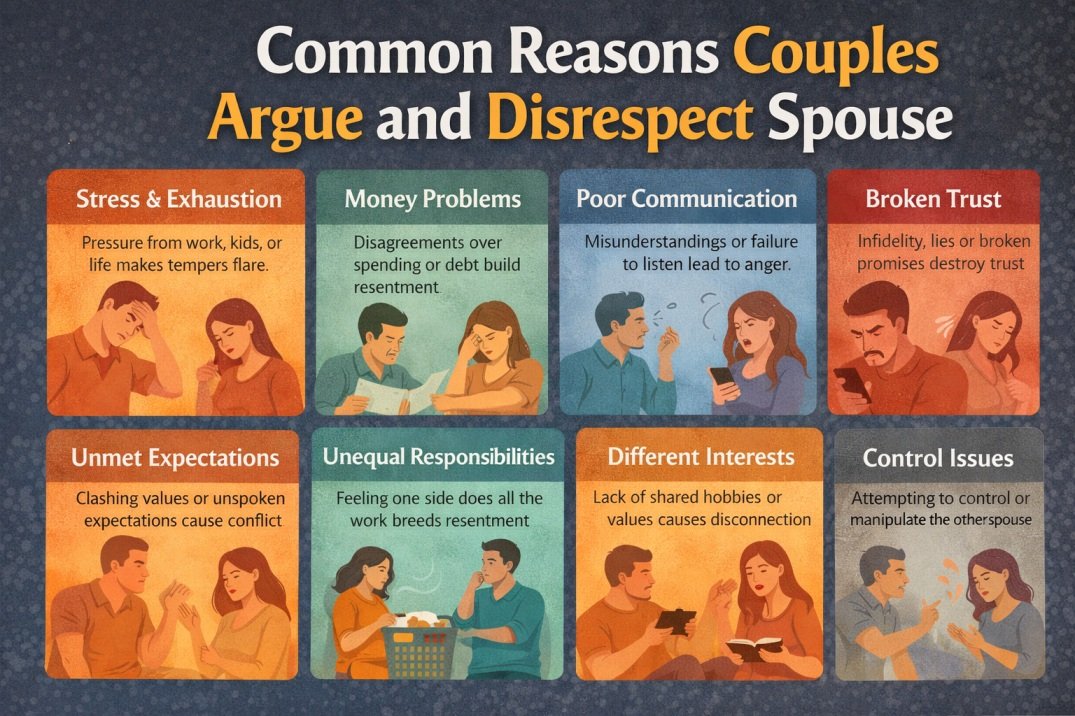
Unequal Load at Home
One partner feels they are doing most of the cooking, cleaning, childcare, or planning, while the other feels their work outside the home is not valued. Arguments start over small tasks but reflect deeper frustration.
Money Decisions and Spending Habits
Disagreements happen when one partner spends without discussing it, hides purchases, or worries constantly about finances while the other does not. Bills, savings, and lifestyle choices become recurring conflict points.
Parenting Conflicts
Partners disagree on discipline, routines, screen time, school decisions, or support for children. One parent may feel undermined when the other contradicts them in front of the kids.
Interference From Extended Family
Frequent tension arises when one partner prioritises parents or relatives, shares private matters with them, or allows them to criticise the spouse. Holidays, visits, and obligations often trigger arguments.
Lack of Time and Attention
Busy work schedules, commuting, and family duties leave little time for each other. Conversations become limited to logistics, and small complaints grow because connection is missing.
Old Issues That Keep Coming Back
Past incidents, broken promises, earlier conflicts, financial mistakes, or hurtful events get brought up again during new arguments, keeping the conflict alive.
If You’re a Woman Feeling Disrespected by Your Husband
In counselling, many women describe disrespect from their husband through everyday situations that repeat over time, not just one major incident.
Being insulted about looks, weight, age, cooking, housekeeping, career, or education, negative comments about her parents or background, comparisons with other women, criticism delivered in a harsh or mocking tone, being spoken to rudely in front of children, relatives, or friends, being contradicted or corrected publicly, personal matters exposed without permission, complaints about her shared with others while she is present.
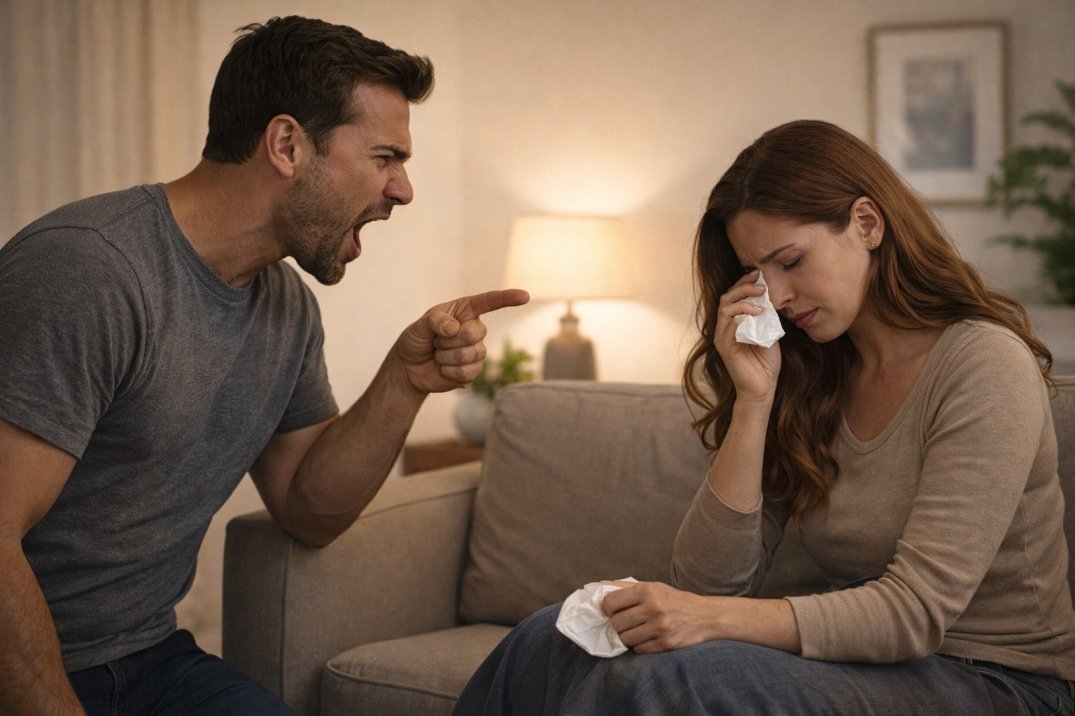
Being ignored during conversations, interrupted constantly, decisions about money or family made without asking her, requests dismissed, being told to “leave my house” during arguments, threats of abandonment, or being treated as if her role is replaceable.
Intimacy without consideration for consent or comfort, pressure for physical relations when she is unwell, exhausted, or not willing, insisting on sex immediately after an argument, using withdrawal of affection as punishment, or treating intimacy as entitlement rather than mutual connection.
Speaking harshly in public spaces, walking ahead without including her, acting as if she is not present, allowing others to disrespect her without intervening, talking negatively about her to friends or relatives, or undermining her authority in front of the children.
At midlife, these behaviours carry greater weight because the marriage usually involves shared responsibilities, financial ties, and family stability. When such patterns continue, they can seriously damage cooperation, trust, and the long-term future of the relationship.
If You’re a Man Feeling Disrespected by Your Wife
In counselling, many men describe disrespect from their wife as repeated behaviour that undermines their role, decisions, or dignity in daily life.
Being spoken to in a harsh, dismissive, or commanding tone, criticism about income, career, or ability to provide, comparisons with other men, mocking failures, questioning decisions in front of children or others, or treating him as incapable in practical matters.
Being ignored during discussions, interrupted constantly, opinions dismissed, decisions about money, children, or family taken without consultation, complaints shared with relatives or friends, or negative portrayal of him to others.

Public disrespect such as correcting or criticising him in front of family, speaking rudely in social settings, contradicting him openly, allowing others to insult him without support, or exposing private issues during gatherings.
Intimacy-related disrespect including mocking sexual desire, criticising performance, humiliating rejection, comparing him to others, using intimacy as reward or punishment, or discussing private sexual matters with others.
Ongoing lack of appreciation, refusal to cooperate in household matters, deliberate non-support, silent treatment, hostile behaviour after disagreements, or actions that exclude him from family decisions.
At midlife, these patterns can seriously weaken cooperation, trust, and stability, leading to emotional distance and parallel lives within the same marriage.
Is Your Spouse Regretful About Hurtful Things Said During Fights?
In some marriages, the overall relationship is caring and stable, and disrespect appears only during heated arguments. Outside of those moments, partners show concern, cooperation, and affection. When anger rises, however, one partner may say harsh or hurtful things they would not normally say. Some individuals struggle with anger or emotional control, and in that state they may use damaging words even while knowing those words will hurt.
Once the conflict settles, genuine regret often follows. This may include acknowledging what was said, apologising without excuses, and attempting to repair the interaction. The behaviour outside arguments remains respectful, which indicates the hurtful language is situational rather than a constant pattern.
In contrast, when disrespect has become routine in everyday interactions, regret is less common. Hurtful remarks, threats, or degrading comments may occur without apology or reflection, suggesting that the behaviour is no longer limited to loss of control during fights but has become part of how partners relate to each other. Over time, repeated incidents without meaningful repair can accumulate and affect trust and stability within the marriage.
Things You Should Never Say During an Argument
Couples often ask which statements cause lasting harm, especially after saying something in anger and later regretting it. Some words attack the person or the relationship itself rather than the issue, and these can create deep insecurity, resentment, and long-term damage.
- “I don’t need you” / “I can do better than you”
- “Leave this house” / “Get out”
- Threats of divorce or abandonment used to control the situation
- “I regret marrying you” / “You ruined my life”
- “You are just like your mother/father” used as an insult
- Attacking appearance, age, health, or personal vulnerabilities
- Humiliating remarks about income, career, or ability to provide
- Sexual rejection delivered in a degrading way or mocking performance
- Comparing the partner to ex-partners or other people
- Saying the children would be better off without the partner
- Revealing private or sensitive information to hurt them
- Statements meant purely to wound, not to resolve the conflict
These remarks often stay in memory long after the argument ends and can reduce trust, emotional safety, and willingness to communicate in the future.
You can learn more about healthy relationships from sources such as the American Psychological Association.
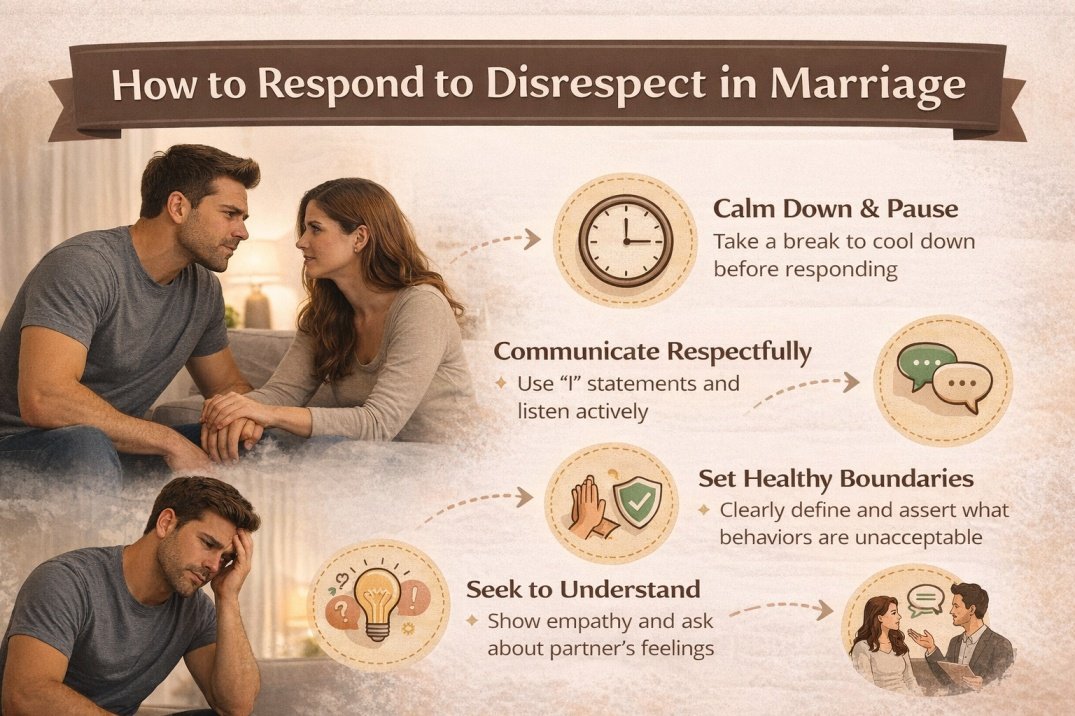
How to Respond to Disrespect in Marriage Without Losing Your Own Self-Respect
When disrespect happens, reacting impulsively often makes things worse. A controlled response protects your dignity, reduces escalation, and makes it clear that harmful behaviour will not be accepted.
Don’t Sink to the Same Level
Answering insults with more insults turns the argument into a fight for dominance. Instead, keep your tone steady and your words neutral.
Example:
Instead of: “You always talk like this because you’re impossible.”
Say: “I will talk when the conversation is respectful.”
Set One Clear Rule: No Respect, No Conversation
You do not have to continue a discussion that has become hostile. State the boundary calmly and step away if needed.
Examples:
“I’m not continuing this while I’m being spoken to like this.”
“We can talk later when things are calmer.”
“I’m stepping away now.”
Consistency is key, the boundary must be enforced every time.
Never Fight in Front of Children
Arguments in front of children weaken authority and create instability at home. If voices rise, pause immediately.
Example:
“Not in front of the kids. We’ll talk later.”
Use Simple Words That De-escalate
Long explanations during conflict often inflame things further. Short, neutral statements work better.
Examples:
“I hear you.”
“Let’s focus on the problem.”
“I’m not trying to fight.”
“We both need a break.”
These phrases slow escalation without surrendering your position.
Refuse to Take the Bait
Some arguments expand because one partner introduces new accusations, past issues, or provocations.
Example:
“I’m only discussing what happened today.”
“I’m not bringing up the past right now.”
Staying on one topic prevents conflict from spiralling.
Leave the Situation Before It Turns Ugly
Walking away is not defeat; it is damage control.
Example:
“I don’t want this to get worse. I’m taking a break.”
Return later only if calm discussion is possible.
Act in Ways That Reinforce Respect
Consistent calm behaviour, reliability, and self-control gradually change the tone of interactions. Respect grows when one partner stops feeding the conflict cycle.
Can Respect Be Rebuilt After Years of Conflict?
Yes, respect can be rebuilt even after conflict and disrespect in marriage. It can start with one person, or it can happen when both partners decide to fix things together. When one spouse begins speaking calmly, avoiding insults, and treating the other with basic respect while still maintaining clear boundaries, the tone of the relationship can start to shift.
In some cases, the other partner gradually responds in a similar way. When both partners are willing, change usually happens faster because effort comes from both sides.
Improvement comes from simple daily actions, not big promises. Speaking in a normal tone, listening without interrupting, stopping arguments before they turn hostile, and avoiding public criticism help restore stability. Couples can agree on basic rules such as no shouting, no name-calling, and no fighting in front of children.
Taking breaks when emotions run high, apologising clearly for hurtful behaviour, consulting each other on important decisions, and cooperating in everyday responsibilities rebuild trust over time.
Progress is usually slow, but consistent respectful behaviour from one partner or both can strengthen the marriage again.
Final Thoughts
Long marriages can go through hard times. Disrespect usually does not start all at once. It grows slowly from many small actions that are ignored. Noticing the problem is the first step toward change.
Respect comes back through daily behaviour, not big promises. Speaking kindly, listening, and treating each other with basic courtesy can slowly rebuild the relationship.
You deserve to feel valued and treated with dignity in your own home. If things feel stuck or too hard to fix alone, online marriage counselling from LeapHope can help couples learn healthier ways to talk, set boundaries, and bring respect back into the marriage.