Last Updated on October 5, 2026
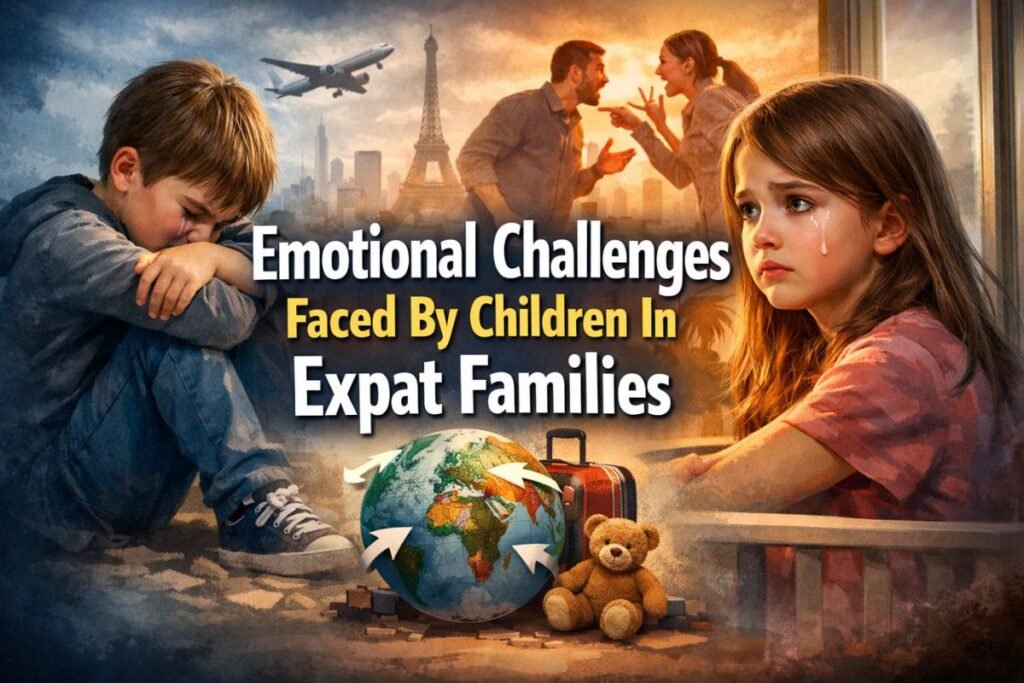
Moving abroad changes much more than a child’s address. Their school, social environment, routines and everyday sense of familiarity may all change at once.
That does not mean international relocation is inherently harmful. Research on internationally mobile children shows considerable variation in adjustment, with factors such as relationships, school environment, language, family support and perceived stress contributing to how children cope. A systematic review of Third Culture Kids also noted that research involving children and adolescents directly remains relatively limited.
For parents, the most useful thing to watch is change.
Has your child become noticeably different in how they behave, connect with others or manage everyday life since the move?
Here are nine signs worth paying attention to.
9 Signs Your Child May Be Struggling Emotionally After Moving Abroad
1. They Keep Asking to Go Back Home
When a child repeatedly says, “I want to go home,” first find out what home means to them.
They may mean their bedroom, grandparents, familiar streets, food, routines or simply a place where they knew what to expect.
Avoid immediately responding with, “This is home now.”
Instead, ask:
“What do you miss most?”
That question gives you something concrete to understand.
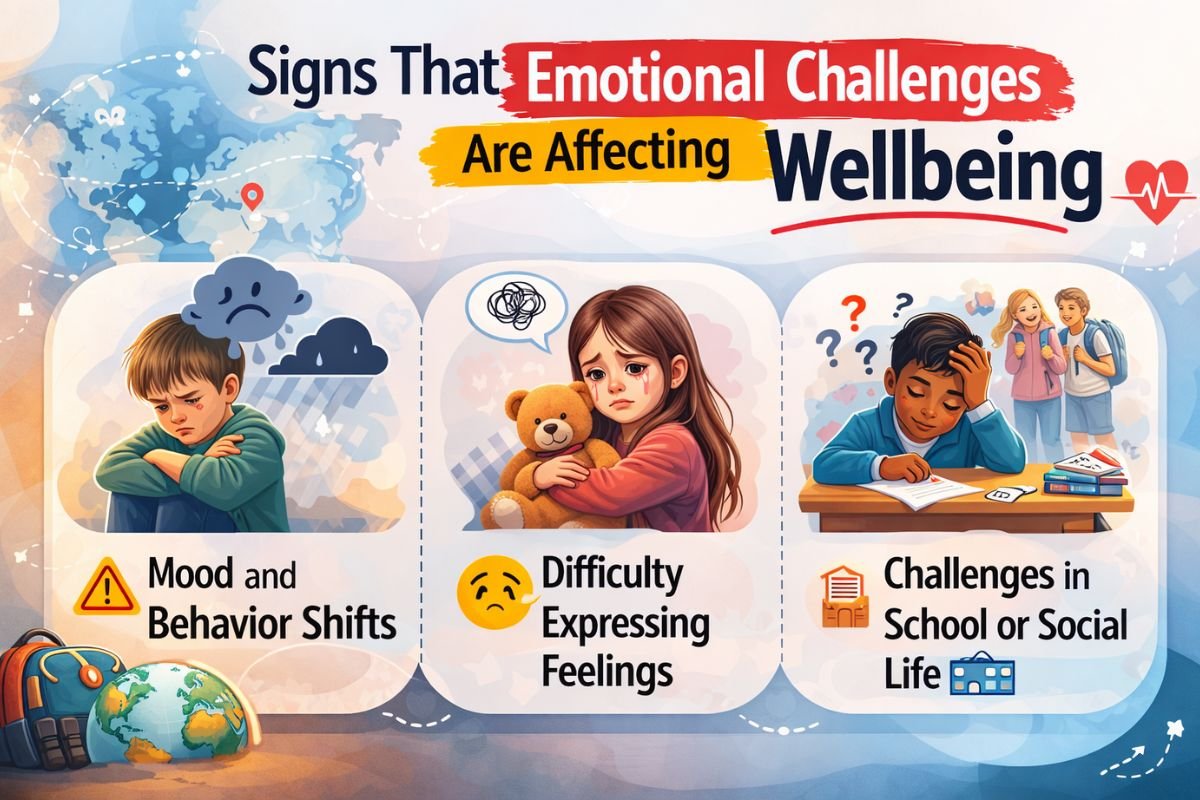
2. They Have Become Much Quieter or More Withdrawn
A previously expressive child may become noticeably quieter after entering a completely new social environment.
They may observe rather than participate, spend more time alone or stop initiating conversations.
Do not diagnose the behaviour from the outside.
Look at whether the withdrawal is gradually easing as the child settles or becoming stronger over time.
Some children with anxiety do not appear obviously frightened. LeapHope discusses less visible presentations in signs of anxiety in children who don’t seem afraid.
3. They Suddenly Hate School or Try to Avoid Going
“I hate school” can mean many different things.
The child may be struggling academically, experiencing bullying, feeling isolated, finding the teaching style unfamiliar or feeling overwhelmed by the school environment.
Ask specifically:
“What is the hardest part of school right now?”
That is more useful than asking whether school was “good” or “bad.”
Repeated school refusal, severe morning distress or a clear decline in school functioning deserves closer attention.
LeapHope’s school stress counselling focuses on concerns such as school refusal, academic stress, peer difficulties and difficulty adjusting to a new school environment.
4. They Are Struggling to Make Friends
Entering an established social group can be difficult.
A child may want friends but not know how to enter conversations, understand social cues or find children they genuinely connect with.
International mobility can complicate this further when friendships are repeatedly interrupted by families moving between countries.
Do not judge adjustment by the size of your child’s social circle.
One secure friendship can be more meaningful than being surrounded by classmates but feeling disconnected.
Persistent loneliness is more important to notice than popularity.
5. They Are Much More Irritable or Emotional
Distress does not always look like sadness.
You may notice more arguments, crying, impatience or unusually strong reactions to small frustrations.
Rather than immediately treating the behaviour as a discipline problem, look for a pattern.
When does it happen?
Is there a particular trigger?
Did it begin after the move?
Is the intensity increasing?
Behaviour is information. It is not, by itself, a diagnosis.
6. They Seem Unable to Let Go of Their Previous Life
Missing an old friend occasionally is expected.
More significant loss can involve repeatedly talking about everything that was left behind, becoming very distressed by reminders of the old life or struggling to engage with anything new.
International relocation can involve losses that adults may underestimate because nobody has died.
A child may lose daily contact with grandparents, close friends, pets, familiar places, routines and a social identity they had spent years building.
That is why grief can sometimes be relevant to relocation.
LeapHope’s child grief and loss counselling includes relocation, immigration and other major life transitions among the experiences that may bring families to counselling.
7. Their Sleep, Appetite or Physical Complaints Have Changed
Children sometimes communicate distress physically before they can explain it emotionally.
Parents may notice:
- difficulty sleeping
- frequent tiredness
- appetite changes
- recurrent headaches
- stomach aches
- physical complaints before school or social situations
These symptoms should not automatically be attributed to anxiety or relocation.
New, persistent or significant physical symptoms should be medically assessed.
When physical complaints occur alongside clear emotional or behavioural changes, however, it may also be useful to consider the child’s psychological wellbeing.
LeapHope’s child anxiety counselling supports children experiencing concerns including persistent worry, school anxiety and social fears.
8. They Seem Less Confident Than Before
A move can place a previously capable child in situations where they suddenly feel inexperienced.
Language is one example.
A child may know exactly what they want to say but struggle to say it as naturally in another language. They may understand the lesson but need longer to respond. Their humour, personality or social confidence may not translate immediately.
That can affect how competent they feel even when their underlying ability has not changed.
Pay attention to statements such as:
“I’m stupid.”
“I can’t do anything here.”
“Everyone else is better than me.”
Instead of immediately reassuring them, ask what happened just before they started feeling that way.
9. They Seem Unsure About Where They Belong
Children who grow up across countries may eventually face questions that children rooted in one cultural environment encounter differently.
“Where am I from?”
“Which place is actually home?”
“Why do I feel different here and different there?”
The term Third Culture Kid, or TCK, is commonly used in research for children who spend a meaningful part of their developmental years outside their own or their parents’ country of nationality.
Living across cultures is not a disorder.
Many children integrate several cultural identities comfortably.
But belonging can become emotionally difficult when uncertainty about identity is accompanied by persistent loneliness, low self-worth or a feeling that the child fits nowhere.
When Should You Seek Help From a Child Psychologist?
There is no clinically established deadline by which every child should have “adjusted” to another country.
What matters more is whether the child is moving toward better functioning or whether difficulties are becoming more disruptive.
Consider speaking with a child psychologist if you notice:
- persistent or worsening withdrawal
- repeated school refusal
- a significant decline in school or daily functioning
- anxiety increasingly restricting normal activities
- persistent sleep or eating changes
- recurring physical complaints alongside emotional distress
- loss of interest in activities the child previously enjoyed
- major changes in mood or behaviour
- persistent loneliness or inability to engage socially
- very low self-worth or statements suggesting they cannot cope
LeapHope also explains these thresholds in more detail in when parents should worry about a child’s emotional health.
A psychologist should not begin with the assumption that the international move itself is the diagnosis.
Assessment may consider when the changes began, their severity, developmental stage, school experiences, relationships, family circumstances and how much the difficulty is interfering with the child’s normal life.
LeapHope offers online child and teen counselling for families seeking psychological support for children and adolescents.
Families living internationally can also find country-specific information for:
Child counselling in the Netherlands
Child counselling in New Zealand
If a child talks about suicide, self-harm, wanting to die, abuse, being unsafe or harming someone else, seek urgent local mental-health or emergency support in the country where the child is physically located rather than waiting for a routine counselling appointment.
Final Thoughts
Moving abroad can be a major adjustment without becoming a psychological disorder.
The important question is not whether your child misses home, feels uncomfortable sometimes or takes time to settle.
Look at whether they are gradually rebuilding everyday life.
Are they beginning to participate?
Are they connecting with someone?
Is school becoming manageable?
Are they returning to activities they enjoy?
If the overall direction is improving, adjustment may simply need time.
If your child is becoming increasingly withdrawn, distressed or unable to function as they normally would, that is when closer attention and professional assessment may be appropriate.