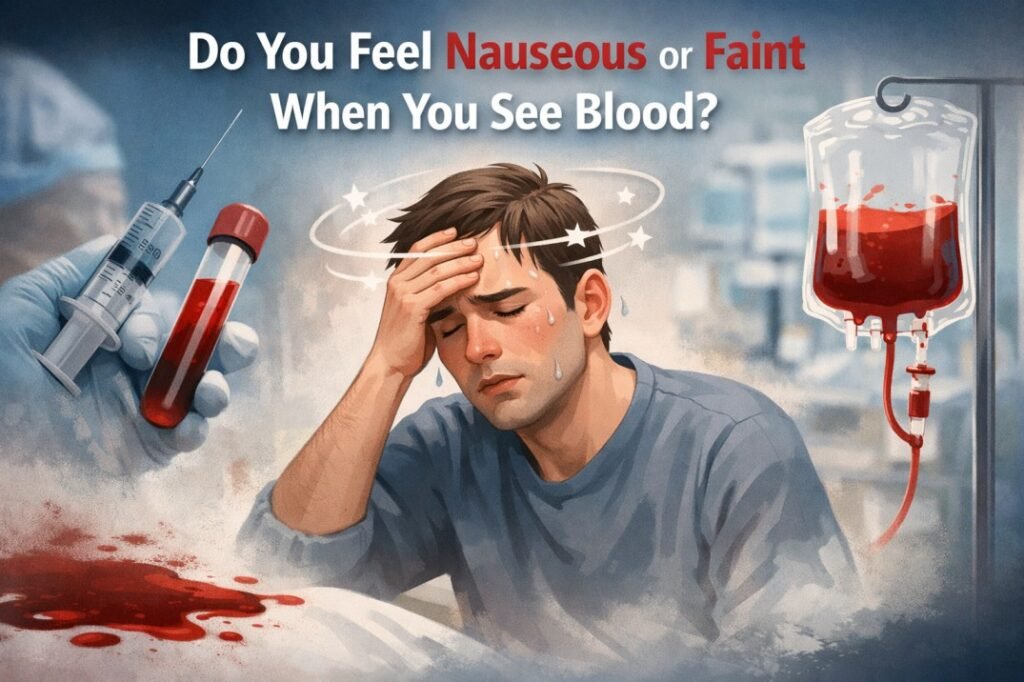
For some people, the sight of blood triggers an immediate physical reaction. You might feel dizzy, nauseous, weak, or suddenly lightheaded. Your chest may tighten, your hands may tingle, and within seconds it can feel as if you might faint.
This reaction often happens quickly and intensely, which can be frightening. Some people even feel as if they are losing control or about to collapse. Because others around them may not react the same way, they may wonder why their body responds so strongly.
In reality, this experience is more common than many people realise. Children, teenagers, and adults around the world report feeling faint or sick when they see blood, injuries, or medical procedures such as injections and blood tests.
In many cases, this reaction is caused by a reflex in the nervous system that briefly lowers blood pressure and reduces blood flow to the brain. Understanding why this happens can help you see that your body is not failing. It is reacting in a way that, while uncomfortable, is usually harmless.
In this article, we will explain what causes this reaction, what is happening in the brain and body, and whether it is something you can overcome.
What Is Vasovagal Syncope?
The reaction many people experience when they feel faint at the sight of blood is often called vasovagal syncope. It is one of the most common causes of fainting and occurs when the body briefly overreacts to certain triggers.
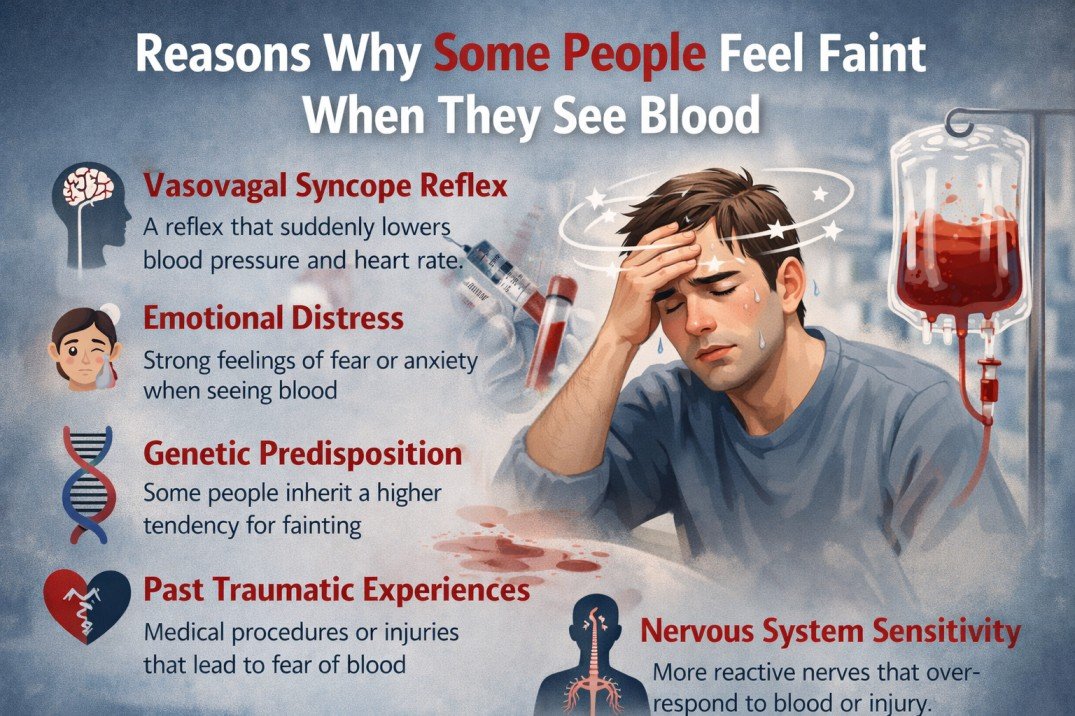
During this response, the nervous system suddenly lowers heart rate and blood pressure. As blood pressure drops, less blood reaches the brain for a short time. This can cause dizziness, weakness, nausea, or a feeling that you might faint. In some cases, a person may briefly lose consciousness.
Triggers often include the sight of blood, injuries, injections, or medical procedures such as blood tests. Doctors usually describe fainting in these situations as vasovagal syncope triggered by blood or injury.
Although the experience can feel alarming, it is usually not dangerous for healthy individuals. Most episodes are brief, and the body recovers quickly once normal blood flow returns to the brain.
What Does a Vasovagal Episode Look Like?
A vasovagal episode often begins suddenly and may progress within a few seconds. Many people first notice a wave of discomfort or weakness, especially after seeing blood, an injury, or a medical procedure.
Common early signs include feeling lightheaded, nauseous, or unusually warm. The skin may become pale, and sweating can increase. Some people notice ringing in the ears, blurred vision, or a narrowing of vision that feels like tunnel vision.
As the reaction continues, the body may feel weak or unsteady. Standing can become difficult, and it may feel as though you might collapse. In some cases, a person briefly loses consciousness.
If fainting occurs, it usually lasts only a short time. Once the person is lying down or blood flow returns to the brain, recovery typically happens quickly, although mild fatigue or nausea may remain for a while.
Why Does This Happen When I See Blood or Injury?
Feeling faint at the sight of blood is not simply a matter of fear or weakness. It usually happens because the body’s automatic control system reacts strongly to what the brain interprets as a threat. Several processes in the brain and nervous system contribute to this reaction.
Autonomic Nervous System Shift
The autonomic nervous system controls heart rate, blood pressure, and many automatic body functions. When you suddenly see blood or an injury, the body may first experience a brief stress response. Almost immediately after, the system can swing in the opposite direction.
This sudden shift slows the heart rate and lowers blood pressure. When blood pressure drops quickly, less blood reaches the brain, which can lead to dizziness, weakness, or fainting. This rapid change is what makes the reaction feel so sudden.
The Brain’s Rapid Threat Interpretation
The brain is constantly scanning for danger. When blood or injury appears, a small structure in the brain called the amygdala can quickly interpret it as a serious threat.
This interpretation can happen in milliseconds, before conscious reasoning has time to intervene. If the brain perceives the situation as highly significant or personally threatening, the body’s reflex response may become stronger, increasing the likelihood of feeling faint.
Disgust Sensitivity
For many people, blood is also a powerful disgust trigger. Disgust is a biological emotion designed to protect us from potential contamination or disease.
Strong disgust reactions can create a sense of physical weakness, nausea, or the urge to withdraw. In some individuals, this response combines with the nervous system reflex that lowers blood pressure, increasing the chances of dizziness or fainting.
Conditioning and Fear Memory
Sometimes the reaction becomes stronger after a previous fainting episode. If someone once fainted after seeing blood or during a medical procedure, the brain may remember that experience.
Later, even thinking about blood or anticipating a medical situation can trigger anxiety and physical symptoms. This creates a cycle where the expectation of fainting makes the body more sensitive to the trigger.
Genetic and Temperament Factors
Some people appear naturally more sensitive to this reflex than others. Differences in nervous system sensitivity, emotional temperament, and vagus nerve responsiveness can influence how strongly the body reacts.
Family patterns are sometimes seen as well, suggesting that certain individuals may be more biologically prone to fainting responses when exposed to blood or injury.
The Brain’s Role: Why It Feels Like You Might Die
When this reaction begins, the sensations can feel extremely alarming. Many people suddenly feel weak, dizzy, or as if they might collapse. Some even feel as though something life-threatening is happening.
This happens because the brain quickly activates the body’s stress response when it detects blood or injury. Adrenaline briefly increases alertness, but this is often followed by the vasovagal reflex, which causes the heart rate and blood pressure to drop suddenly.
As blood pressure falls, less blood reaches the brain for a short moment. This can produce symptoms such as tunnel vision, ringing in the ears, sweating, nausea, and sudden weakness.
Because these sensations affect balance and awareness so quickly, the brain may interpret them as danger. In reality, the body is experiencing a temporary reflex response, and the symptoms usually fade once normal blood flow returns to the brain.
Can This Happen at Any Age?
Yes, this reaction can occur at almost any age. Many people first experience faintness at the sight of blood during childhood or adolescence, when the nervous system may react more strongly to emotional or physical stimuli.
Teenagers often report dizziness or fainting during injuries, blood tests, or injections. For some people, the reaction becomes less intense with age. For others, it can continue into adulthood.
Adults in their twenties, thirties, or later may still experience the same response when exposed to blood or medical procedures. Factors such as stress, fatigue, or dehydration can sometimes make the reaction more likely.
If fainting begins suddenly later in adulthood, especially after the age of forty, it is generally recommended to seek medical advice to rule out other causes.