
Last Updated on October 2, 2026
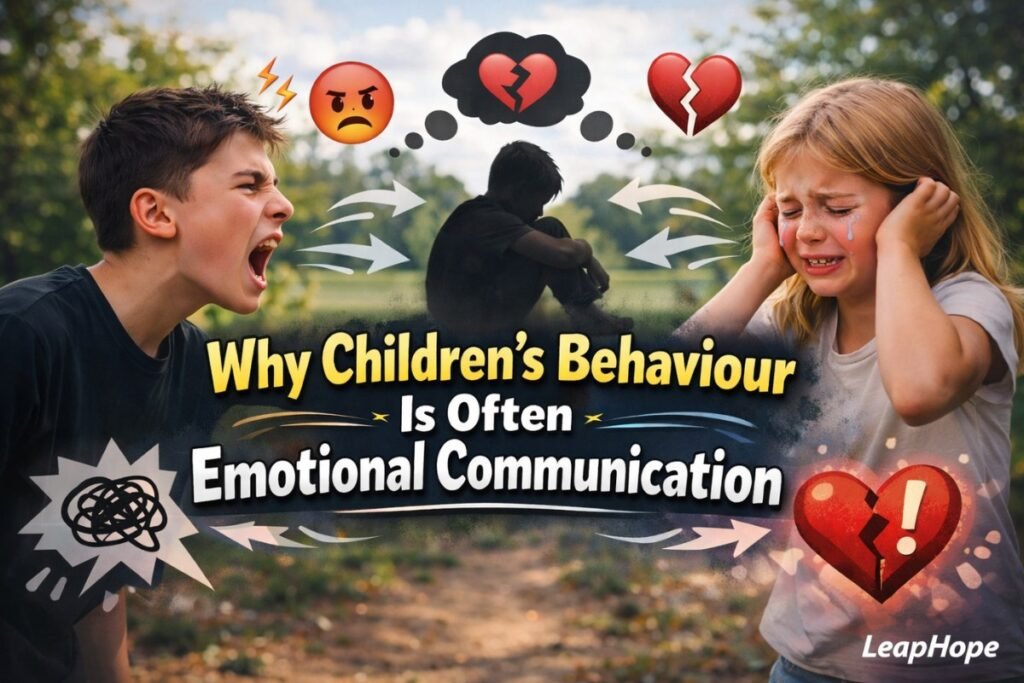
Parents usually notice emotional development through everyday behaviour. A child suddenly cries over something small, gets unusually angry when corrected, refuses to talk after school, or reacts much more strongly than expected.
The behaviour is visible. What it means is harder to judge.
This is where parents can sometimes misread what is happening. A child may know a rule but still lack the emotional control to follow it when upset. They may look completely fine at school but struggle once they are home. They may also feel something strongly without being able to explain it.
Here are some common examples.
1. Assuming a Big Reaction Means the Child Is Being Dramatic
A child may cry because a game ended, a plan changed or a sibling touched something that belonged to them. From an adult point of view, the reaction can look excessive.
But children do not always react only to the event in front of them. A difficult school day, poor sleep, frustration, hunger or several small disappointments can build up. The final trigger may simply be where everything comes out.
That does not mean the reaction should be ignored. It means the size of the reaction does not automatically tell you that the child is exaggerating.
If the same type of reaction keeps happening, it is more useful to notice when it happens and what usually comes before it.
2. Believing “They Know Better” Means They Can Always Control It
Parents often know that their child understands the rule.
They know hitting is wrong. They know shouting is not allowed. They know they are expected to wait their turn.
Yet the behaviour still happens.
This is not always a problem of understanding. Emotional control is a separate skill. A child may explain the rule perfectly when calm and still lose access to that control when they become very angry or frustrated.
Age matters here. The level of emotional regulation you would expect from a four-year-old is very different from what you would expect from a ten-year-old. Our guide to emotional development in children by age explains these differences in more detail.
3. Dismissing Behaviour as “Just Attention-Seeking”
Sometimes a child is clearly trying to get a response.
They may interrupt repeatedly, exaggerate a complaint, become unusually clingy or behave more dramatically when a parent is occupied.
Calling it attention-seeking may describe the behaviour, but it does not explain much.
The more useful question is why that particular behaviour has become the child’s way of getting a response. It may be a habit that has been reinforced over time. In other cases, the child may be looking for reassurance, connection or help but not asking for it directly.
The behaviour can still need a limit. Understanding what keeps it going simply gives parents a better starting point.
We discuss this more closely in why children act out.
4. Assuming a Child Is Fine Because They Behave Well at School
This is especially confusing when teachers report no problem.
A child may be quiet, cooperative and well-behaved throughout the school day, then become irritable or emotional after coming home.
Parents naturally wonder why the child can manage themselves in one place but not another.
Sometimes school requires much more emotional effort than it appears from the outside. A child may spend the day following instructions, managing noise, concentrating, navigating friendships and controlling reactions. By evening, their ability to cope may be much lower.
That does not explain every after-school outburst, but it is one reason home and school behaviour should not be compared too simply.
We have covered this specific pattern in why some children behave well outside but break down at home.
5. Expecting a Child to Explain What Is Wrong
A parent may notice that something has changed and ask directly.
The child says, “Nothing.”
Or, “I don’t know.”
That answer can look evasive, especially when the parent can clearly see that something is different.
But children do not always understand their own emotional experience well enough to explain it. A child may feel embarrassed and become angry. They may feel excluded at school and come home unusually quiet. They may feel anxious about something and only say they do not want to go.
The older a child gets, the easier it is to assume they should be able to explain everything. That is not always the case.
Changes in behaviour can sometimes appear before the child has the words to describe what is happening.
6. Labelling a Child as “Too Sensitive”
Some children are more affected by criticism, mistakes, rejection or unexpected change.
Parents may compare them with siblings or classmates and wonder why the same situation seems to affect their child so much more.
The label “too sensitive” is not very useful because it puts several different patterns into one category.
A child who becomes upset after criticism may be struggling with confidence. Another may find change particularly difficult. Another may react strongly when they feel excluded.
The important part is not whether the child seems more sensitive than someone else. It is what situations repeatedly affect them, how strongly they react, and how easily they recover.
7. Assuming They Will Grow Out of It
Many emotional difficulties do become easier as children mature.
They develop more language, better impulse control and a greater ability to tolerate frustration.
But parents should still expect some movement over time.
If a difficulty is becoming more frequent, more intense or starting to affect school, friendships, sleep or family life, it deserves a closer look rather than being dismissed as a phase.
The same applies when a child’s behaviour changes noticeably from what is normal for them.
Our guide on when to be concerned about a child’s emotional health covers these patterns in more detail.
What Matters More Than One Difficult Behaviour
One angry evening tells you very little.
A repeated pattern tells you much more.
When parents speak to us about a child’s behaviour, useful questions usually include when it started, whether anything changed around the same time, where the behaviour happens, what tends to trigger it, and whether the child is still functioning normally at school and with friends.
The American Academy of Pediatrics also recommends looking at a child’s developmental stage and the broader pattern when interpreting child behaviour.
The aim is not to find a psychological explanation for every difficult moment. Children can be tired, frustrated, stubborn or simply unhappy with a limit.
The concern is when the explanation parents are using no longer fits what they are repeatedly seeing.
When Parents Feel Unsure What They Are Seeing
Sometimes the hardest part is not managing the behaviour. It is not knowing what the behaviour means.
Parents may become stricter because they think the child is testing limits, then wonder whether they have missed something emotional. Others keep giving reassurance but see no improvement.
When the same pattern keeps repeating, parenting counselling can help parents look at the interaction more clearly and decide what needs to change.
If the difficulty appears more centred on the child’s emotional or behavioural functioning, an online child psychologist can assess the concern in the context of the child’s age, relationships, school life and recent changes.
Final Thought
Parents do not need to analyse every emotional reaction.
What helps is avoiding conclusions too quickly.
A child who “knows better” may still be struggling with control. A child who looks fine at school may still be having a difficult time. A child who cannot explain what is wrong may genuinely not understand it yet.
Looking at the pattern usually tells you more than the behaviour on its own.