Last Updated on October 2, 2026
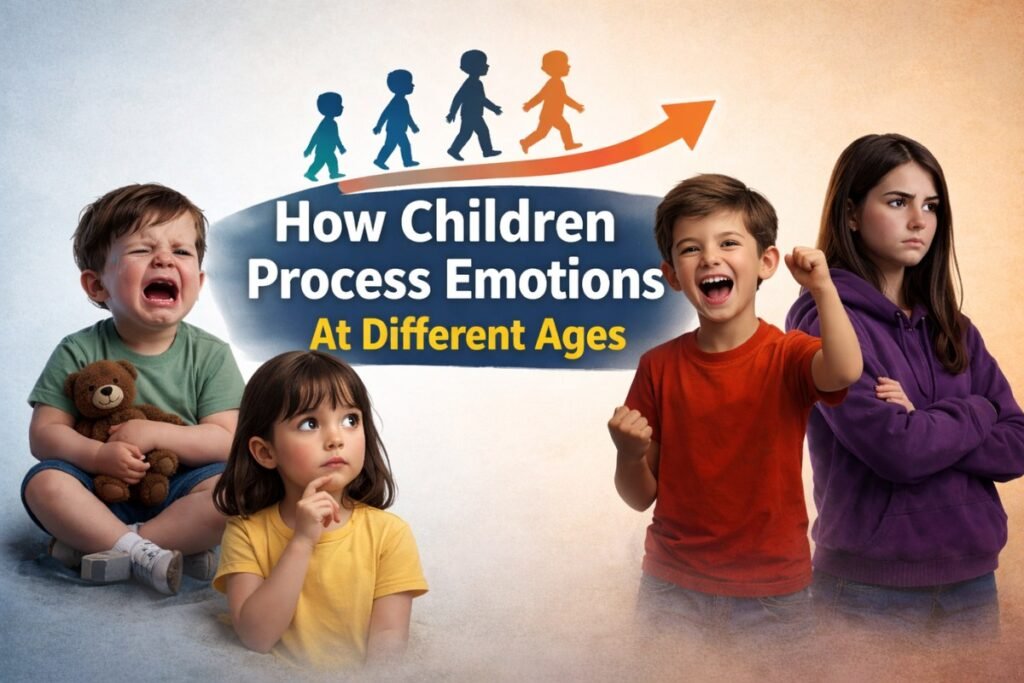
A four-year-old crying because another child took their toy is very different from a ten-year-old feeling hurt after being left out by friends.
Both are emotional reactions. But their ability to understand the feeling, explain it and recover from it is different.
That is why emotional development in children needs to be understood by age.
Children gradually learn to recognise emotions, understand other people’s feelings, manage frustration and talk about what is happening inside them. These abilities develop over time.
Research on developmental stages of social-emotional development also shows clear changes from infancy through childhood and adolescence.
The ages below are a guide, not a strict checklist. Temperament, language, family experiences and neurodevelopment can all affect how a child expresses emotions.
Emotional Development by Age: Quick Guide
| Age | What You May Notice |
|---|---|
| 1–2 years | Attachment, separation reactions, early empathy, dependence on adults for calming |
| 2–3 years | Big emotions, frustration, independence, early emotion words |
| 3–5 years | Better emotion recognition, fears, sharing and early self-control |
| 5–7 years | Greater awareness of friendships, rules, disappointment and embarrassment |
| 7–9 years | Better perspective-taking and stronger awareness of social expectations |
| 9–12 years | Peer comparison, privacy and more complex emotional reactions |
| 13–17 years | Identity, independence, relationships and more private emotional processing |
Ages 1–3: Emotions Come Before Words
Toddlers feel much more than they can explain.
A child may cry, cling, throw something or push you away because they are frustrated, tired, scared or disappointed.
Around this age, independence also grows quickly. A child may insist on doing something alone but become overwhelmed when it does not work.
This is normal. The wish for independence develops faster than emotional control.
Parents can help by naming what seems to be happening:
“You wanted to do it yourself. You’re frustrated.”
Young children often communicate emotions through behaviour, so behaviour often tells you more than words at this stage.
Ages 3–5: Children Begin Understanding Feelings
Preschool children usually know more emotion words such as happy, sad, scared and angry.
They also begin understanding other people’s reactions.
But recognising an emotion does not mean they can control it.
A four-year-old may say, “I’m angry,” and still cry or shout a moment later.
Fears can also become strong because imagination develops rapidly. Instead of arguing with the fear, acknowledge it briefly:
“I know that feels scary. You’re safe.”
Ages 5–7: Emotions Become More Social
School adds another layer to emotional development.
Children start thinking more about friendships, fairness, teachers and what other people think of them.
You may hear:
“She didn’t choose me.”
“He said my picture was bad.”
“Everyone else finished first.”
These experiences can bring disappointment, jealousy or embarrassment.
Children at this age can usually explain more, but they may still struggle to understand exactly why something upset them.
So when a child says “I don’t know,” they may genuinely not have the words yet. Read more about why children say “I don’t know” about their feelings.
Ages 7–9: Relationships Matter More
Friendships become increasingly important.
Children notice loyalty, fairness, exclusion and how other people see them.
They may also start hiding feelings.
A younger child might cry immediately. An eight-year-old may say “I’m fine” and become irritable later.
Give them space without closing the door:
“You don’t have to talk now. We can talk later if you want.”
This allows privacy while keeping support available.
Ages 9–12: Comparison Increases
Children at this age often become much more aware of how they compare with others.
They may compare:
- school performance
- appearance
- friendships
- popularity
- sport or other abilities
A poor test result may quickly become:
“I’m stupid.”
A friendship problem may become:
“Nobody likes me.”
Parents can help separate the event from the child’s conclusion about themselves.
“You struggled with this test” is very different from “You are bad at school.”
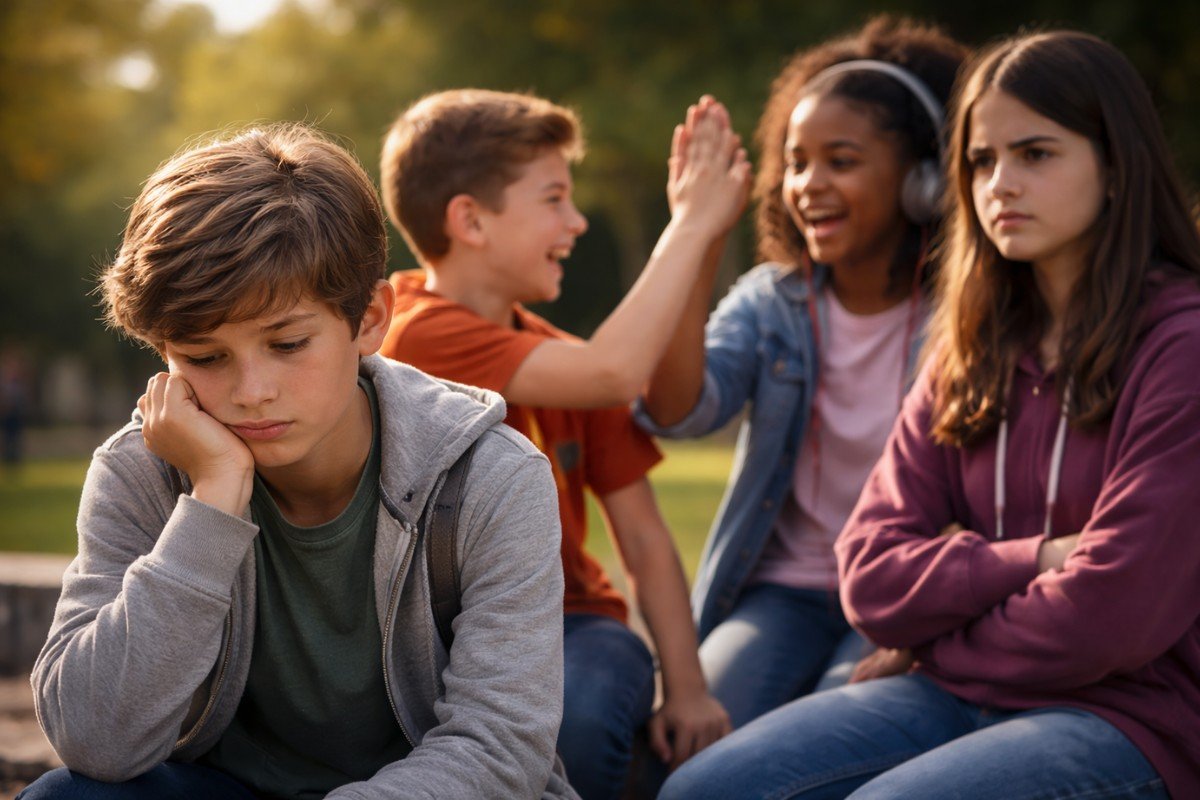
Ages 13–17: Teenagers May Share Less
Teenagers understand emotions in far more complex ways.
They are dealing with identity, friendships, relationships, rejection, future plans and independence.
But greater emotional understanding does not always mean greater openness with parents.
Repeated questions can make some teenagers withdraw further.
Instead of pushing for immediate answers, try:
“You seem like you’ve had a difficult day. I’m here if you want to talk.”
Teenagers still need parental support. They often just need it with more space.
When Should Parents Be Concerned?
Strong emotions alone do not mean something is wrong.
Occasional anger, crying, fear or withdrawal can happen at any age.
Pay more attention when emotional difficulties:
- continue for a long time
- become noticeably worse
- interfere with school
- affect friendships
- disturb sleep
- stop the child enjoying normal activities
- represent a major change from their usual behaviour
The more useful question is not simply:
“Is this normal?”
Ask:
“Is my child able to recover and continue functioning?”
Our guide on when to be concerned about a child’s emotional health explains these warning signs in more detail.
How Parents Can Support Emotional Development
Your response should change as your child grows.
A three-year-old may need help calming down.
An eight-year-old may need help finding words.
A fourteen-year-old may need privacy before talking.
Parents can help by naming emotions without forcing conversation, allowing children time to calm down and avoiding treating every difficult feeling as something that must immediately disappear.
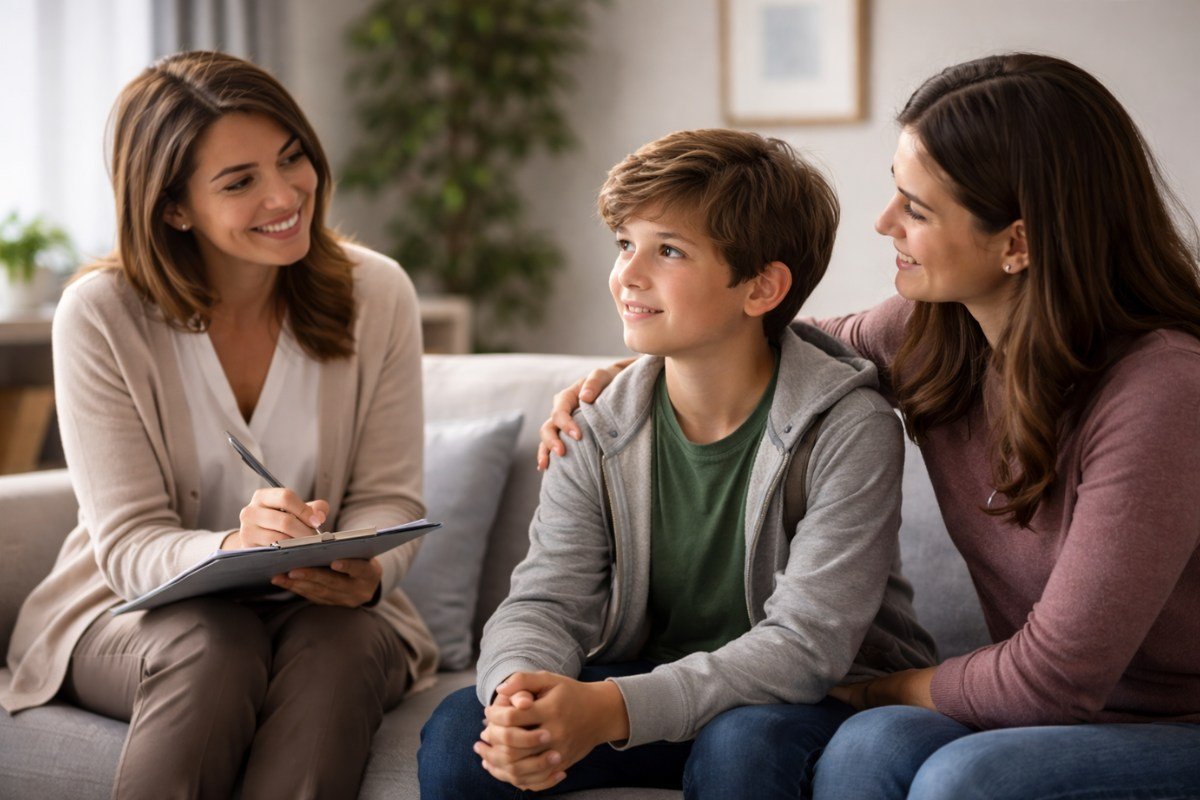
If you repeatedly feel unsure how to respond to your child’s emotions, parenting counselling can help you understand the pattern and choose responses that better match your child’s age and needs.
When Professional Support May Help
Professional support may be useful when the same difficulty keeps returning, becomes stronger or starts affecting several areas of the child’s life.
A psychologist will usually consider the child’s age, temperament, developmental history, school life, relationships and family environment rather than judging one behaviour in isolation.
The purpose is not to label an emotional child.
It is to understand whether the child is going through an expected developmental stage or struggling with something that needs more support.
Parents can also speak with an online child psychologist at LeapHope for individual assessment or therapeutic support.
Final Thought
Emotional development is not about raising a child who never cries, gets angry or feels overwhelmed.
It is about gradually learning to understand feelings, communicate them and recover from difficult moments.
What your child can manage at four will be different at nine and different again at fourteen.
Understanding that difference often changes the question from:
“How do I stop this behaviour?”
to:
“What is my child still learning how to handle?”