
Last Updated on September 30, 2026
Clinically reviewed by Dr. Mansi More Nopany, RCI Licensed Clinical Psychologist & Marriage Therapist · 10+ years of experience
Addiction rarely stays limited to the person using alcohol, drugs, gambling or another addictive behaviour. Over time, it can change how a marriage functions, how decisions are made, how money is managed and how safe one partner feels trusting the other.
The damage is often gradual. At first, the couple may argue about the behaviour itself. Later, the entire relationship can start revolving around it.
One spouse begins checking, covering, questioning or compensating. The other may hide, minimise, promise to stop or become defensive. Eventually the marriage is no longer dealing with one problem. The addiction starts shaping the relationship.
If you are asking how addiction affects a marriage, these are some of the clearest signs that the relationship itself is being damaged.
How Addiction Can Damage a Marriage
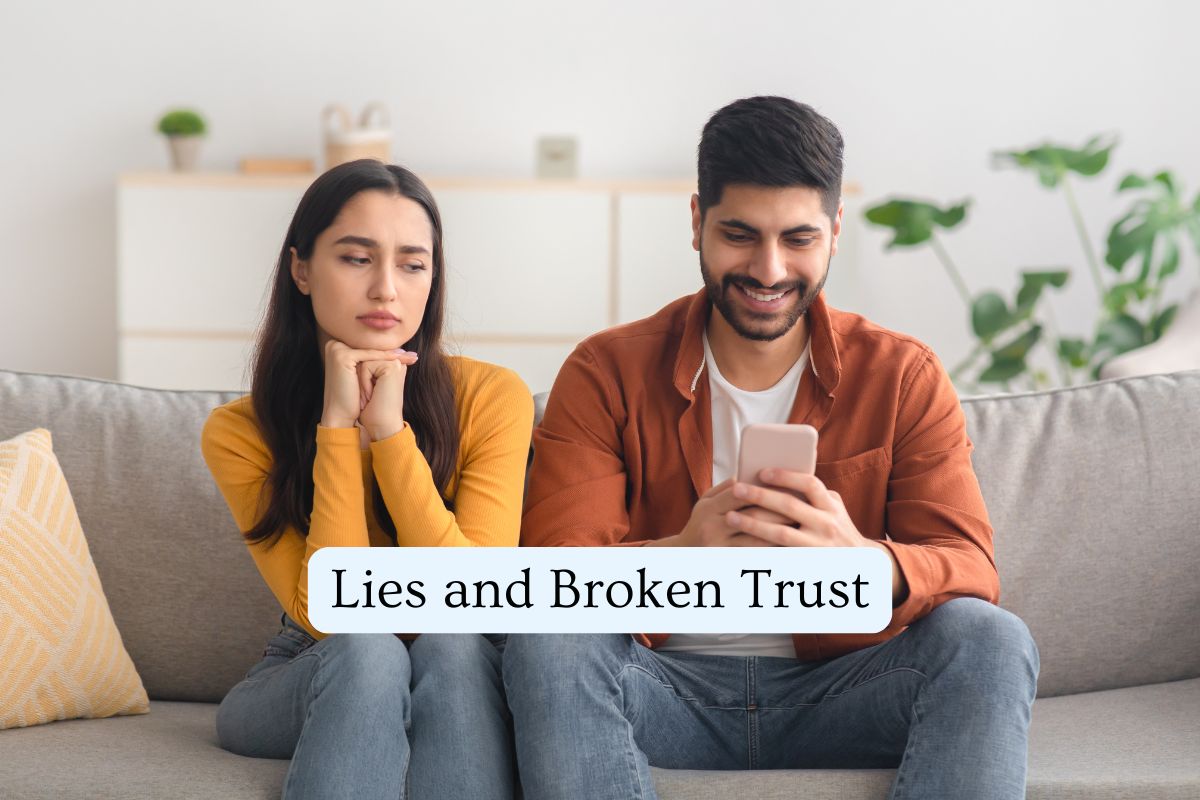
1. You Stop Trusting What Your Partner Says
People often say addiction “breaks trust,” but that can sound too vague.
In a marriage, trust is practical.
You need to know:
- whether your partner is telling you the truth;
- where money has gone;
- whether they will come home when they said they would;
- whether they are safe to drive;
- whether they can look after the children;
- whether they have actually stopped using;
- whether another promise is likely to last.
Once lying, hiding or minimising begins, the spouse may stop relying on words and start looking for evidence.
A promise such as “I haven’t been drinking” may lead to checking behaviour. A statement like “I only spent a little” may lead to opening bank accounts or payment apps.
That is a major shift in a marriage.
The spouse is no longer relating to their partner as an equal whose word can be trusted. They are becoming an investigator.
2. One Partner Becomes the Monitor
Once trust drops, monitoring often takes its place.
The spouse may start checking:
- phone activity;
- bank transactions;
- bottles or medication;
- betting history;
- location;
- credit cards;
- messages;
- whether the partner smells of alcohol;
- whether their behaviour has suddenly changed.
This does not necessarily happen because the spouse wants control.
Sometimes it begins because previous promises were unreliable and the spouse is trying to work out what is actually happening.
But living this way is exhausting.
The marriage can slowly become one person hiding and the other person checking.
That dynamic also creates more conflict. The addicted partner may complain about being watched, while the spouse may respond, “I wouldn’t check if I could trust what you tell me.”
At that point, the problem is no longer only the addictive behaviour. The couple’s entire communication pattern has changed.
3. Responsibilities Start Shifting Onto One Spouse
Addiction can change the basic division of responsibility in a marriage.
One partner may start missing work, forgetting commitments, sleeping through responsibilities or becoming unreliable during periods of use.
The other spouse begins compensating.
They may become the person who:
- handles all the bills;
- manages the children;
- explains absences to relatives;
- deals with emergencies;
- covers missed responsibilities;
- protects the family’s reputation;
- manages appointments;
- fixes problems after episodes of use.
Over time, resentment can become intense.
The spouse may think:
“I don’t feel like your husband or wife anymore. I feel like I’m managing you.”
This is one reason addiction can affect emotional and physical intimacy. It is difficult to experience your partner as an equal romantic partner when you increasingly feel responsible for keeping their life functioning.
4. The Marriage Starts Organising Itself Around the Addiction
This is one of the most important changes and one that many articles miss.
The addiction can become the organising principle of the household.
Plans may depend on:
- whether your partner has been using;
- whether they have money;
- what mood they are in;
- whether they are sober enough to attend;
- whether an argument has happened;
- whether you need to cover for them again.
The spouse begins adjusting life around the addiction.
You might stop inviting people over because you do not know how your partner will behave. You may change family plans, avoid certain conversations at certain times or hide what is happening from parents and relatives.
In Indian families, this can become even more complicated when there is pressure to protect the family’s image or avoid discussing addiction openly with parents, in-laws or extended family.
The marriage may look functional from outside while most decisions inside the home are quietly being made around the addiction.
5. Money Stops Feeling Like Shared Money
Addiction can damage more than the bank balance. It can damage the sense that finances belong to a partnership.
Problems may include:
- hidden spending;
- loans;
- credit-card debt;
- borrowing from friends or relatives;
- gambling losses;
- missed bills;
- loss of income;
- selling possessions;
- treatment or legal expenses;
- repeatedly needing money after promising not to.
The non-addicted spouse may eventually take control of accounts because they no longer trust their partner with shared money.
That may be necessary in some situations, but it changes the marital relationship.
Instead of two adults planning finances together, one spouse becomes the gatekeeper.
Future plans can also disappear. Savings meant for a house, children’s education, travel or retirement may be repeatedly diverted to the consequences of the addiction.
So financial damage is not only about losing money. It is about losing financial trust and partnership.
6. Every Conversation Turns Into Denial, Checking or Confrontation
Healthy couples argue about many different things.
In marriages affected by addiction, conversations can start returning to the same issue again and again.
The pattern may sound like:
“Have you been drinking?”
“No.”
“I can tell you have.”
“You always assume the worst.”
Or:
“Where did that money go?”
“Why are you checking everything I spend?”
One partner becomes defensive. The other becomes suspicious. Both may feel misunderstood.
Eventually normal communication shrinks.
Even unrelated disagreements can become connected to the addiction because so much unresolved anger is sitting underneath them.
This is also where the marriage can become locked in a cycle: addiction increases conflict, and relationship distress can then become part of the environment in which further use continues.
That does not mean the spouse caused the addiction.
It means addiction and relationship distress can begin feeding each other.
The SAMHSA treatment guidance on substance use and families describes this as a reciprocal relationship: substance misuse can contribute to family dysfunction, while family conflict and relationship patterns can also interact with continued use and relapse.
7. Emotional and Sexual Intimacy Start Disappearing
Trust problems do not stay outside the bedroom.
A spouse who feels lied to, financially unsafe or chronically disappointed may find it difficult to feel emotionally close during sex.
Intimacy can also change because of:
- intoxication;
- sexual-function problems;
- resentment;
- avoidance;
- unpredictability;
- reduced attraction to the partner’s behaviour;
- arguments immediately before intimacy;
- fear that affection will be interpreted as forgiveness.
Sometimes the addicted partner assumes that because the couple is still having sex, the relationship is okay.
The other spouse may experience it very differently.
They may participate physically while feeling emotionally detached.
This is where addiction can create a painful contradiction: the marriage still exists, but the sense of partnership has weakened.
If emotional distance has become a wider relationship problem, online relationship counselling may help the couple work on the pattern beyond the addiction itself.
8. You May Not Agree on How Serious the Damage Has Become
One of the most difficult parts of addiction in marriage is that both partners may be living in the same relationship but experiencing it very differently.
The partner with the addiction may think:
“We argue sometimes, but our marriage is basically fine.”
The spouse may think:
“Every part of our life now depends on whether you are using.”
Indian research involving men with alcohol use disorder and their wives found that the husbands reported greater couple satisfaction and quality of life than their wives, while wives reported more relational boredom.
It was a small clinical sample, so it should not be applied to every marriage. But it highlights an important pattern: the person with the addiction may underestimate how deeply the other partner is being affected.
That difference itself becomes a source of conflict.
The spouse is asking for change.
The addicted partner thinks the reaction is exaggerated.
Nothing gets resolved because the couple cannot even agree on the seriousness of the problem.
9. Children and Family Life Begin Adjusting Around the Problem
When children are involved, addiction can reshape the entire family.
One spouse may try to protect the children by:
- preventing them from seeing intoxicated behaviour;
- changing plans at short notice;
- making excuses for the other parent;
- taking over most parenting;
- preventing arguments in front of the children;
- covering financial problems.
Children may still notice more than parents realise.
They may notice that one parent behaves differently at certain times, that arguments happen around money, or that the other parent appears anxious and watchful.
The non-addicted spouse can start feeling like they are parenting both the children and their partner.
That creates enormous resentment.
It also moves the marriage further away from an equal partnership.
If you are trying to understand how to respond to your partner without taking responsibility for everything they do, our guide on how to support a partner with addiction without losing yourself covers boundaries, enabling and practical support separately.
The Cycle That Can Keep Addiction and Marriage Conflict Going
It is tempting to think of the problem as a straight line:
addiction → marriage problems
Real relationships are usually more complicated.
A cycle can develop:
- One partner uses or relapses.
- The spouse becomes frightened, angry or suspicious.
- Monitoring and arguments increase.
- The addicted partner becomes defensive or secretive.
- Trust falls further.
- Emotional distance increases.
- Stress inside the relationship grows.
- Substance use or addictive behaviour continues.
- The cycle begins again.
This is why simply telling the spouse to “be more supportive” is not enough.
It is also why blaming the spouse for the addiction is wrong.
The addiction needs appropriate treatment, while the relationship may need its own repair.
Both problems can exist at the same time.
When Addiction Is No Longer Just a Marriage Problem
Some situations should not be handled as ordinary communication difficulties.
Safety becomes the priority when addiction involves:
- physical violence;
- threats;
- sexual coercion;
- dangerous driving;
- severe intoxication while responsible for children;
- serious financial exploitation;
- weapons;
- overdose risk;
- suicidal behaviour;
- severe withdrawal symptoms.
Substance use can increase the risk of aggression and intimate-partner violence in some relationships, although addiction does not automatically mean a person will become violent.
If you or your children are in immediate danger, focus on safety and emergency support rather than trying to resolve the situation through a calm relationship conversation.
Can a Marriage Recover After Addiction?
Yes, some marriages recover, but recovery requires more than repeated promises.
Trust usually returns through consistent behaviour over time.
That can include:
- addiction treatment;
- honesty about use and relapse;
- financial transparency;
- taking responsibility for harm caused;
- rebuilding reliability;
- changing destructive relationship patterns;
- addressing resentment rather than asking the spouse to “move on.”
Marriage counselling can be useful when both partners are safe and willing to work on the relationship, particularly when trust, communication and roles have changed because of the addiction.
Behavioural couples approaches for substance use have also shown that involving the relationship in treatment can improve both substance-use and relationship outcomes for some couples.
If addiction is now affecting trust, communication, parenting, money or intimacy across the marriage, online marriage counselling can help the couple work on the relationship damage alongside appropriate addiction treatment.
Final Thoughts
Addiction does not damage every marriage in exactly the same way.
For some couples, the first major loss is trust. For others, it is money. In another marriage, one spouse gradually becomes responsible for everything while the other becomes increasingly unreliable.
But one of the clearest warning signs is this:
The marriage has started organising itself around the addiction.
You are changing plans because of it. Checking because of it. Hiding things from family because of it. Taking over responsibilities because of it. Arguing about it. Protecting children from it.
At that point, the addiction is no longer affecting only one person.
It is changing the relationship itself.