
Last Updated on February 15, 2026
Your job is supposed to support your life, not slowly take over your marriage. But sometimes the shift happens so gradually that you don’t notice it at first. Longer hours. More pressure. Constant notifications. Travel. Promotions. Deadlines. You tell yourself it’s temporary, necessary, or “for us.”
And yet, something feels different at home. Conversations are shorter. Patience is thinner. Intimacy feels distant. One of you may feel overlooked, the other overwhelmed. If you’ve started wondering whether your job is affecting your marriage, it’s usually because the change is already showing up in small, everyday ways.
This isn’t about ambition being wrong. It’s about what happens when work stress, career pressure, or emotional attachment to the workplace begins to replace connection at home. Before the distance grows deeper, it helps to understand what’s really happening.
How Work Slowly Starts Changing Your Marriage
Have you started wondering, “When did we stop talking properly?”
Do you feel like your partner is home, but not really present?
Have you told yourself, “This is just a busy phase,” more times than you can count?
Work rarely changes a marriage overnight. It happens in small adjustments that don’t feel dangerous at first. A few late evenings. Cancelled plans. A promotion that brings pride but also longer hours. Travel that becomes frequent. You both adapt, assuming it’s temporary.
Career pressure and ambition slowly consume emotional energy. After handling deadlines, clients, meetings, and expectations all day, there’s very little left to give at home. Emotional availability shifts quietly. Conversations become shorter. Stress replaces curiosity. You may both believe this phase will pass, but when “just this phase” stretches into months or years, the distance becomes part of daily life.
Why You Might Not Notice the Damage Early
At first, it feels reasonable. You tell yourself this is about providing, building security, creating a better future. Hard work feels responsible. Sacrifice feels mature. Questioning it can even feel selfish.
You may keep repeating, “This is just a phase.” After this promotion. After this project. After this quarter. Both of you adjust your expectations slightly, believing normal life will return soon. But when every season feels intense, the new normal becomes distance.
Loneliness often gets minimised. You push aside the feeling that something is missing because you don’t want to seem unsupportive. You avoid difficult conversations because you don’t want your partner to feel guilty or pressured. In trying to protect the marriage from conflict, you may slowly allow emotional space to grow unnoticed.
Signs Your Job Is Affecting Your Marriage
When your job begins affecting your marriage, the signs don’t appear all at once. They show up in patterns. Small shifts. Repeated moments that slowly change how you feel about each other. If you’re unsure whether work is interfering with your relationship, start here.
You Feel Like You Come Second to Work
“Can this wait? I have something urgent.”
“Let’s talk on the weekend.”
“I’m exhausted.”
Work decisions happen instantly. Time with you gets postponed. When your partner finally sits down, they’re drained, distracted, or scrolling through emails.
You stop asking for attention. You adjust around their schedule. You tell yourself it’s temporary.
But inside, it starts feeling clear:
work gets the priority, and you get what’s left.
Conversations Revolve Around Stress and Deadlines
“Today was crazy.”
“You won’t believe what happened at work.”
“I have a deadline tomorrow.”
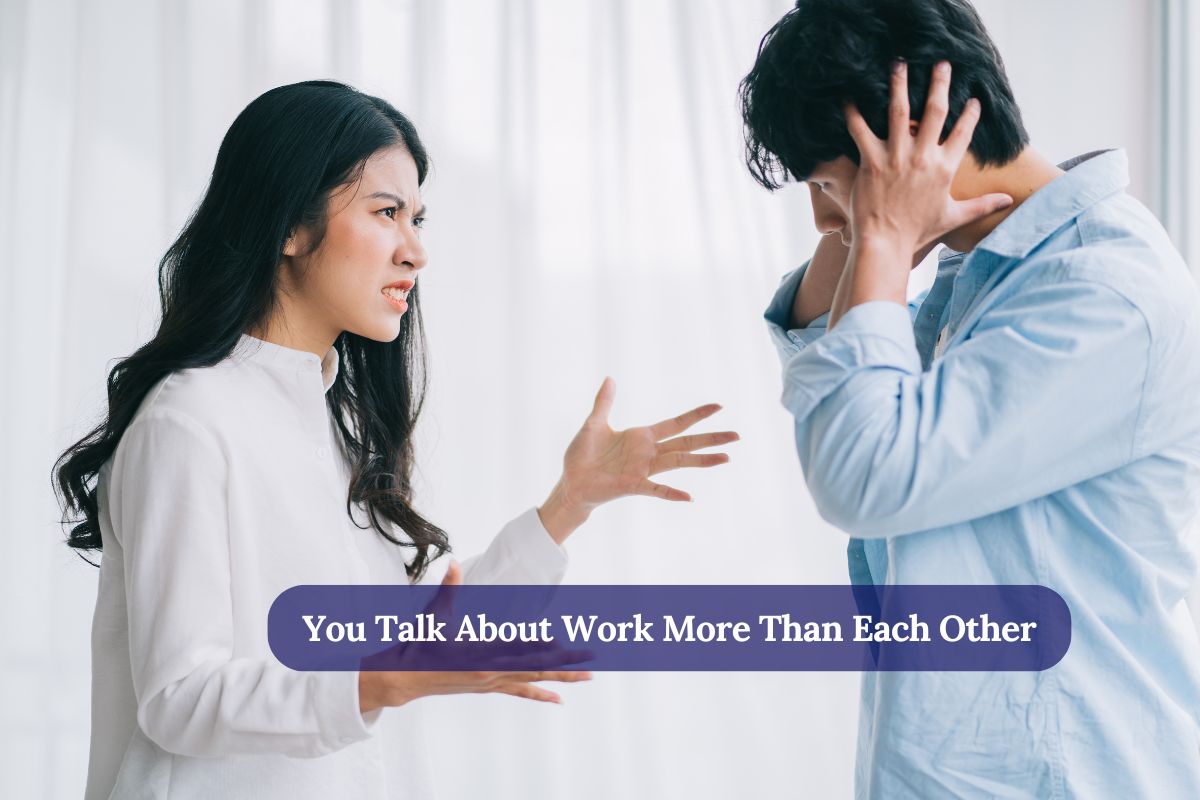
Every conversation circles back to meetings, targets, office politics, or pressure. When you try to share something personal, it gets cut short or redirected.
Slowly, your marriage starts sounding like a workplace recap. Emotional conversations shrink. Laughter reduces. You talk, but you don’t really connect.
Emotional Intimacy Has Reduced
“You seem distant.”
“I’m just tired.”
“Can we talk later?”
The long conversations stop happening. You share updates, not feelings. You discuss tasks, not fears. Hugs feel brief. Touch feels routine. Eye contact doesn’t linger the way it used to.
You notice small changes. You hesitate before opening up because they already seem overwhelmed. You stop sending that thoughtful message during the day because they’re “busy.” Nights feel quiet, not peaceful.
It’s not that love disappears. It’s that emotional access becomes limited. And when emotional intimacy reduces, the marriage starts feeling functional instead of connected.
A Coworker Knows More About Your Spouse’s Day Than You Do
“Don’t worry, I already told her about it.”
“We had lunch together, I explained everything.”
“She understands how stressful it is.”
You realise someone at work hears the full story before you do. They know about the promotion tension, the office conflict, the inside jokes. You get the summary, if at all.
At first, it feels harmless. Then it starts feeling uncomfortable. Not because of proof of cheating, but because emotional sharing has shifted outward. When your spouse feels more understood at work than at home, connection begins moving in the wrong direction.
Late-Night Emails and Calls Interrupt Your Time Together
You sit down for dinner and the phone lights up.
“We need this tonight.”
“Just one quick reply.”
The laptop opens again. Bedtime gets delayed. Conversations pause mid-sentence. You wait while they finish “something urgent” that seems to happen every night.
It’s not just the interruption. It’s the message it sends. Work can enter your shared space at any time. Your time together feels conditional, always secondary to whatever comes through that screen.
Promotions Bring Pride but Also Distance
You celebrate the promotion. You feel proud. You post the congratulations message. You tell friends and family. It looks like success.
Then the hours increase. The responsibility doubles. The pressure follows them home. They talk about expectations, targets, leadership, performance. You nod, you support, but you also feel the shift.
Free evenings shrink. Weekends become “recovery time.” Decisions start revolving around career growth. You’re proud of what they achieved, but you quietly miss the version of them who had more space for you.
Night Shifts or Travel Are Killing Your Routine
You wake up when they’re coming home. They leave when you’re settling in. Meals don’t line up. Sleep doesn’t line up. Conversations happen in fragments.
When travel becomes frequent, you start living separate rhythms. Important moments get missed. Arguments happen over the phone. Reconnection feels awkward instead of natural.
Routine is what builds closeness. When schedules constantly clash, you stop sharing daily life. You become two people managing logistics instead of two people living together.
You’ve Started Fighting About Time, Not Love
The arguments aren’t about love anymore. They’re about hours.
“You’re never home.”
“You don’t make time.”
“I told you I had work.”
You’re not questioning whether you care about each other. You’re fighting over availability. Over missed dinners. Over cancelled plans. Over who always adjusts.
The fight sounds practical, but underneath it is something deeper: the feeling of not being chosen.
Income Changes Have Shifted Power or Respect
The paycheck changes, and something else shifts with it.
“I’m the one paying for this.”
“You wouldn’t understand the pressure.”
“Since when do you make these decisions alone?”
Maybe one partner got promoted. Maybe one lost a job. Maybe one paused their career. The income gap widens, and slowly, so does the tone.
Decisions start feeling uneven. Respect feels conditional. One person feels burdened, the other feels dependent. It’s not always said directly, but it’s felt.
When money begins influencing voice, authority, or confidence inside the marriage, the balance changes and that imbalance creates tension.
Work Stress Has Increased Irritability or Alcohol Use
Small things trigger big reactions.
You ask a simple question and get a sharp reply.
You try to talk and hear, “Not now.”
The tension from the office doesn’t stay at the office.
Maybe they unwind with a drink every night now. Maybe one drink became two. Maybe silence replaced conversation because it feels safer than conflict.
Work stress starts shaping mood at home. Patience drops. Warmth reduces. You begin adjusting your tone to avoid setting them off.
When stress turns into irritability or coping habits, the marriage absorbs the pressure.
You’ve Thought, “I’m Married to Their Job”
It crosses your mind quietly.
“You’re always working.”
“Your job never switches off.”
“Do we even come first?”
You notice that work shapes your evenings, your weekends, your plans. You adjust around deadlines. You compete with meetings. You wait for a calmer phase that never really comes.
It’s not that there’s no love. It’s that the job feels like the third presence in the marriage and you’re the one trying to fit around it.

When Work Turns Into Emotional Escape
Sometimes work doesn’t just create stress. It becomes a refuge.
At work, there’s structure. Clear goals. Recognition. Control. At home, there are emotional conversations, unmet needs, and expectations that feel heavier. Without realising it, one partner may start staying longer at the office not just because of deadlines, but because it feels easier there.
Career can slowly become an identity shield. “I’m busy” replaces deeper discussions. Achievement replaces vulnerability. Ambition looks productive, but it may also be protecting someone from facing discomfort in the relationship.
Avoidance disguised as hard work is difficult to detect. It sounds responsible. It looks impressive. But when work consistently feels safer than emotional closeness, distance in the marriage deepens quietly.
According to the American Psychological Association, ongoing work stress significantly affects mental health, which can directly impact relationship quality.
When It’s More Than Just Long Hours
Sometimes it’s not only about being busy. It’s about what starts happening because of the distance.
Emotional closeness may shift toward someone at work. Sharing personal struggles, inside jokes, daily frustrations, small wins. It may feel harmless at first. But when a coworker becomes the first person your spouse opens up to, boundaries quietly blur.
Boundary crossing doesn’t always look dramatic. It can be late-night messages that feel too personal. Travel companionship that feels too comfortable. Confiding in someone else instead of you. Emotional affairs often begin with understanding, not intention.
Burnout adds another layer. Constant stress can lead to emotional numbness, low mood, withdrawal, even depression. Instead of connection, there’s silence. Instead of closeness, there’s exhaustion.
And underneath it all, chronic resentment builds. One partner feels neglected. The other feels pressured. Neither feels fully understood. When it reaches this point, it’s no longer just about long hours. It’s about trust, mental health, and emotional safety inside the marriage.
What You Can Do Before the Distance Grows
If you recognise these signs in your marriage, don’t wait for a breaking point. Distance grows quietly. It’s easier to reset early than repair later.
Here’s how to approach it in a structured way.
Set Clear Work Boundaries
Don’t rely on “I’ll try.” Be specific.
- Define a cut-off time for non-urgent emails.
- Protect at least one weekly time block for just the two of you.
- Agree that not every work call must be answered immediately.
Boundaries reduce resentment because expectations become visible.
Create Device-Free Zones
Work follows you through screens.
- No phones at the dining table.
- No emails in bed.
- No scrolling during serious conversations.
Physical boundaries around devices protect emotional presence.
Build Reconnection Rituals After Travel or Long Days
If schedules are intense, connection must be intentional.
- A fixed check-in call when travelling.
- A “first evening back” ritual with no social plans.
- A short daily debrief that includes feelings, not just updates.
Routine restores closeness.
Have Honest Career Conversations
Avoid vague promises like “It’s just for now.”
Ask directly:
- How long is this pace sustainable?
- What are we sacrificing?
- Are we both okay with this level of ambition?
Alignment prevents silent resentment.
Redefine Success Together
If career growth keeps expanding but your connection keeps shrinking, something is misaligned.
Success should include:
- Emotional availability
- Shared time
- Mutual respect
- Mental health stability
Ambition and marriage can coexist, but only when both are consciously prioritised.
Seek Counselling Before Resentment Hardens
If the same fights repeat and nothing changes, structured support can help.
Counselling isn’t about choosing sides.
It’s about restoring balance before emotional distance becomes permanent.

Final Thoughts
Your job should support your marriage, not slowly replace it. Ambition, growth, and financial stability are not the problem. Disconnection is. When work begins shaping your tone, your availability, and your emotional energy at home, the relationship absorbs that shift.
It is always easier to reset boundaries early than to repair resentment later. The goal is not choosing between career and marriage. It is protecting both with intention.
Book Online Marriage Counselling!
FAQs
Can a job destroy your marriage?
A job can destroy your marriage if long-term stress, emotional absence, or boundary violations go unaddressed. It is rarely the work itself, but the disconnection and resentment that build around it.
How do you fix work-life imbalance in marriage?
You fix work-life imbalance in marriage by setting clear boundaries, protecting device-free time, having honest conversations about career expectations, and intentionally rebuilding emotional connection.
Is emotional cheating at work common?
Emotional cheating at work is common because coworkers spend long hours together and share stress. When personal sharing shifts from spouse to colleague, emotional boundaries can blur quickly.
Should you choose career over spouse?
Choosing career over spouse is rarely a healthy long-term solution. Sustainable success includes protecting emotional connection, not sacrificing the relationship for professional growth.
Can night shifts affect marriage?
Night shifts can affect marriage by disrupting shared routines, reducing intimacy, and limiting quality time. Opposite schedules require deliberate effort to maintain connection.
Does job stress increase divorce risk?
Job stress can increase divorce risk when chronic pressure leads to emotional withdrawal, frequent conflict, or unhealthy coping patterns like avoidance or alcohol use.