
Last Updated on October 23, 2026
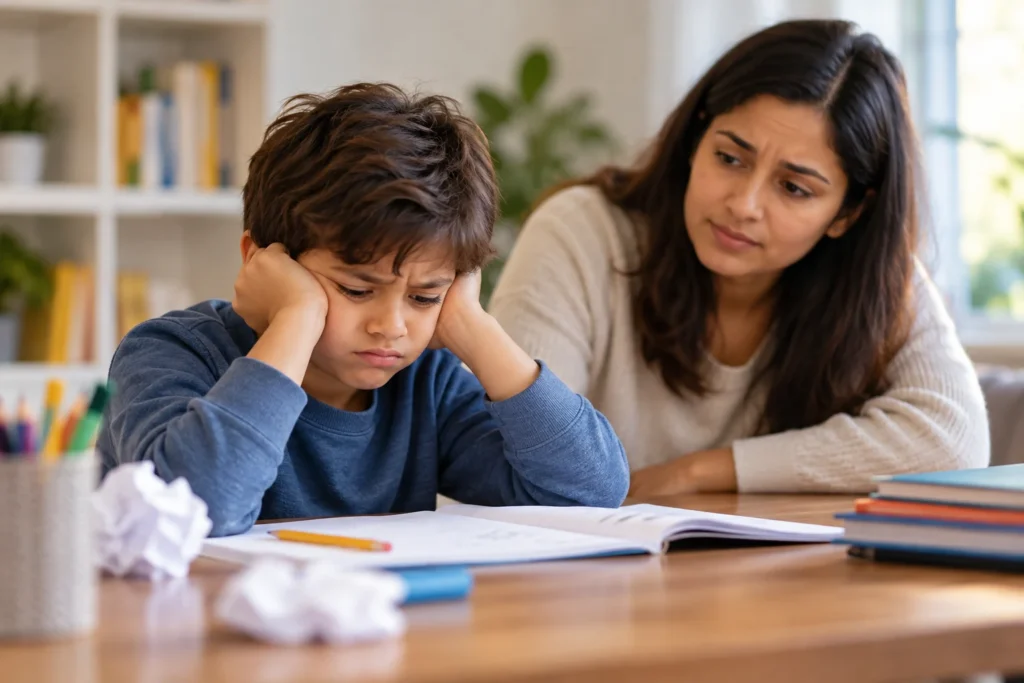
Your child has become unusually irritable. They get upset over small things, don’t seem interested in their favourite activities and prefer spending time alone. When you ask what’s wrong, they either get angry or tell you everything is fine.
You may wonder whether they’re going through a difficult phase, struggling with something at school or experiencing a mental health problem.
Depression in children can be difficult to recognise because it doesn’t always look like sadness. Some children become withdrawn, while others seem angry, frustrated or uninterested in things they previously enjoyed.
Knowing what to look for can help you understand when these changes deserve attention.
What Is Depression in Children?
Childhood depression is a mental health condition that affects how your child feels, thinks and functions in everyday life.
According to the NHS, children with depression may experience persistent sadness or irritability, lose interest in activities and have difficulties with relationships, sleep or concentration.
Unlike an occasional bad mood, depression involves symptoms that continue over time and affect your child’s wellbeing.
A major depressive episode generally involves low or irritable mood, or a loss of interest or pleasure, alongside other symptoms for at least two weeks. A qualified clinician considers the full pattern before making a diagnosis.
Children may not always understand or explain their emotions clearly, which is why changes in their everyday behaviour can be particularly important.
Signs of Depression in Children
1. Persistent Irritability or Anger
Your child may become easily frustrated, argue more often or react strongly to situations that previously didn’t bother them.
You might notice that even ordinary requests lead to tears or angry outbursts.
Depression in children can sometimes appear as irritability rather than obvious sadness. The CDC notes that depressed children may be perceived as troublesome or unmotivated.
The concern is a persistent change in mood, not an occasional argument or tantrum.
2. Losing Interest in Favourite Activities
One of the important signs of depression is losing interest or pleasure in activities your child once enjoyed.
They might stop asking to play with friends, lose enthusiasm for games or hobbies, or seem uninterested in family outings.
Children naturally change interests as they grow. What deserves attention is a wider loss of enjoyment that continues over time.
3. Withdrawing From Friends and Family
Your child may spend more time alone, avoid meeting friends or become unusually quiet during family conversations.
Some children stop participating in activities they previously enjoyed with others.
Pay attention when withdrawal is noticeably different from your child’s usual personality and begins affecting relationships.
4. Changes in Sleep, Appetite and Energy
Depression can affect your child’s physical wellbeing.
They may struggle to fall asleep, sleep more than usual, experience changes in appetite or feel tired throughout the day.
Some children also complain frequently of headaches or stomachaches.
Because these symptoms can have medical causes, persistent physical complaints should also be discussed with a paediatrician.
5. Difficulty Concentrating or Managing Schoolwork
You may notice unfinished homework, difficulty concentrating or a decline in school participation.
Your child might seem less motivated or find previously manageable tasks overwhelming.
These changes can accompany depression, particularly when they occur alongside persistent mood changes or loss of interest.
6. Negative Thoughts About Themselves
Some children begin expressing unusually harsh opinions about themselves.
They might repeatedly say they’re useless, that nobody likes them or that they can’t do anything right.
Persistent feelings of worthlessness, excessive guilt or hopelessness can be associated with depression and deserve attention.
Statements about wanting to die or hurt themselves require prompt professional assessment, regardless of your child’s age.
Is Your Child Depressed or Just Going Through a Phase?
Children naturally experience sadness, anger and disappointment. A disagreement with a friend or a difficult day at school may temporarily affect their mood.
Depression is more concerning when the changes are persistent, noticeably different from your child’s usual behaviour and affect everyday life.
Pay attention to three things:
- How long the changes last: Are the difficulties continuing rather than improving after a particular event?
- How much has changed: Is your child behaving very differently from how they usually do?
- How daily life is affected: Are school, friendships, family relationships or enjoyable activities becoming difficult?
A major depressive episode generally requires symptoms over at least two weeks, but you don’t need to wait that long to consult a professional if you’re worried.
No single symptom confirms depression. An assessment is needed to understand whether your child is experiencing depression or another difficulty.
What Causes Depression in Children?
There isn’t always one clear reason why a child develops depression. Several factors may contribute.
Family History and Biological Factors
Children with a family history of depression may have a greater vulnerability, although this doesn’t mean they will necessarily develop the condition.
Individual biological and psychological factors also influence how children respond to stressful experiences.
Bullying, School Pressure and Friendship Difficulties
Bullying, social exclusion, difficulties with classmates and ongoing academic stress can affect a child’s mental health.
A 2024 systematic review of Indian school mental-health research examined 31 studies involving children and adolescents and identified depression among the important mental-health concerns.
Although much of this evidence involves adolescents, it highlights why school experiences deserve attention when understanding emotional difficulties.
For Indian and NRI families, it may also be useful to consider whether changes in school, friendships, cultural adjustment or belonging are affecting your child.
Family Changes and Stressful Experiences
Bereavement, family conflict, separation, relocation or other significant changes can contribute to emotional distress.
Children respond differently to these experiences, and depression can also develop without an obvious stressful event.
Sleep and Digital Experiences
Poor sleep, online bullying and problematic digital experiences may be associated with emotional difficulties.
Research involving Indian adolescents has explored associations between depressive symptoms, sleep and screen exposure. These findings do not establish that screen use directly causes depression.
If your child spends more time online, consider whether their sleep, friendships or emotional wellbeing have changed rather than assuming technology is the cause.
How Can You Help a Child With Depression?
If you notice persistent changes in your child’s mood or behaviour, there are practical ways to support them while arranging appropriate professional guidance.
1. Ask about specific changes rather than repeatedly asking what’s wrong.
You might say, “I’ve noticed you haven’t wanted to play outside lately. Has something changed?”
Give your child time to respond. Younger children may find it easier to communicate while drawing, playing or doing an activity alongside you.
2. Find out whether anything at school is contributing.
Speak with your child’s teacher about changes in concentration, participation, friendships or behaviour.
If bullying or exclusion is involved, work with the school to address the situation. Simply asking your child to ignore it may not resolve the problem.
3. Help your child gradually return to enjoyable activities.
When depression reduces motivation, waiting until your child feels interested again can lead to further withdrawal.
An approach used in evidence-based depression treatment, called behavioural activation, involves gradually increasing participation in manageable, meaningful activities.
For example, you might suggest a short drawing activity together rather than expecting your child to immediately return to a full schedule of hobbies.
Keep expectations realistic and avoid forcing participation.
4. Reduce demands that are currently overwhelming your child.
If schoolwork or everyday activities have become difficult, consider smaller tasks, manageable goals and appropriate temporary support.
The aim is to help your child remain engaged without adding unnecessary pressure.
5. Seek an appropriate mental health assessment.
If symptoms persist or interfere with everyday life, a child psychologist can assess your child’s mood, development, behaviour and circumstances.
Evidence-based psychological treatments are available. The NICE guidelines describe developmentally appropriate approaches for children aged 5–11, including family-based interpersonal psychotherapy, family therapy and individual cognitive behavioural therapy, depending on their clinical needs.
Home support can help, but it should not replace professional treatment when depression is present.
Important: If your child talks about suicide, wanting to die or hurting themselves, take it seriously. Seek prompt professional assessment; if there is immediate danger, stay with your child and obtain emergency medical help.
When Should You Speak to a Child Psychologist?
You don’t have to wait until your child has severe symptoms or a confirmed diagnosis.
If you’re worried about persistent mood changes, irritability, withdrawal or loss of interest, speaking with a qualified child psychologist can help you understand what is happening.
A professional can assess your child’s difficulties, offer guidance and recommend treatment when needed. Sometimes, an initial consultation is simply an opportunity to get clarity and reassurance.
LeapHope offers online child depression counselling and online child and teen counselling for families seeking psychological support.
Let’s Recap
Depression in children may appear through persistent sadness, irritability, withdrawal or losing interest in everyday activities.
Occasional mood changes are part of growing up, but noticeable and lasting difficulties shouldn’t be dismissed.
If you’re concerned about your child’s emotional wellbeing, a qualified professional can help you understand their symptoms and identify the support they need.
Clinical and Research References
- NHS — Depression in Children and Young People
- CDC — Anxiety and Depression in Children
- NICE — Depression in Children and Young People: Identification and Management
- Indian School Mental Health Systematic Review (2024)
Medical review by a qualified child mental-health professional is recommended before publication.


