Last Updated on February 20, 2026
Your child knows the rules. You’ve explained them more than once. Yet the same behaviour keeps coming back.
It may show up as anger, tears, defiance, or complete emotional shutdown. You try calm conversations. You try consequences. You try staying patient. But nothing seems to change.
This is where many parents begin to question themselves.
Why does my child keep acting this way?
Is this just bad behaviour in children?
Or is something deeper going on?
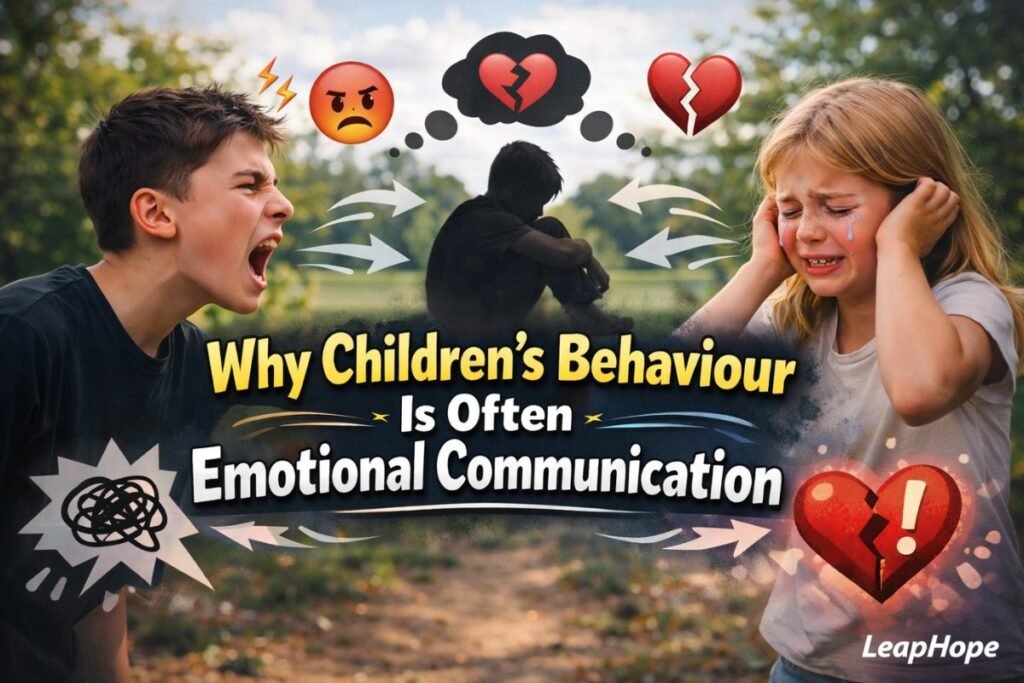
In many cases, what looks like misbehaviour is actually emotional communication. Children often express feelings through behaviour because they do not yet have the emotional vocabulary, regulation skills, or inner awareness to explain what they feel. A small trigger can lead to a big reaction because the behaviour is not about the moment. It is about what is happening underneath.
In this article, we’ll explore why children express emotions through behaviour, what it really means, and how parents can begin to understand child emotional behaviour differently.
Why Does My Child’s Behaviour Feel So Confusing?
One of the hardest parts for parents is that the behaviour doesn’t follow a clear pattern. The same child can react calmly one day and completely fall apart the next, even when the situation looks similar.
What parents usually notice first
You notice that the behaviour isn’t consistent. Your child might handle a situation well at school, then react strongly at home over something small. Or they may follow rules easily with others but push back with you. This makes it hard to know what’s really going on, because nothing seems predictable.
You may also notice that the reaction feels bigger than the trigger. A simple reminder, a small change in plans, or a harmless comment suddenly leads to tears, anger, or refusal.
Why behaviour rarely matches the situation
What you’re seeing in that moment is often not about that moment at all. Many children carry emotions from earlier in the day, things they didn’t understand, couldn’t express, or felt they had to hold in. When something small happens later, it becomes the point where everything spills out.
To a parent, it looks confusing. To the child, it feels like too much all at once.
Why parents start doubting themselves
When behaviour keeps repeating, parents often turn the question inward. You may wonder if you’re being too strict, too soft, or sending mixed signals. You might try changing your approach again and again, hoping something finally works.
The doubt grows because logic doesn’t seem to reach your child, even when you’re calm and clear. That’s usually the sign that the behaviour isn’t about understanding rules. It’s about emotions your child doesn’t yet know how to handle or explain.
What Does It Mean When Behaviour Is Emotional Communication?
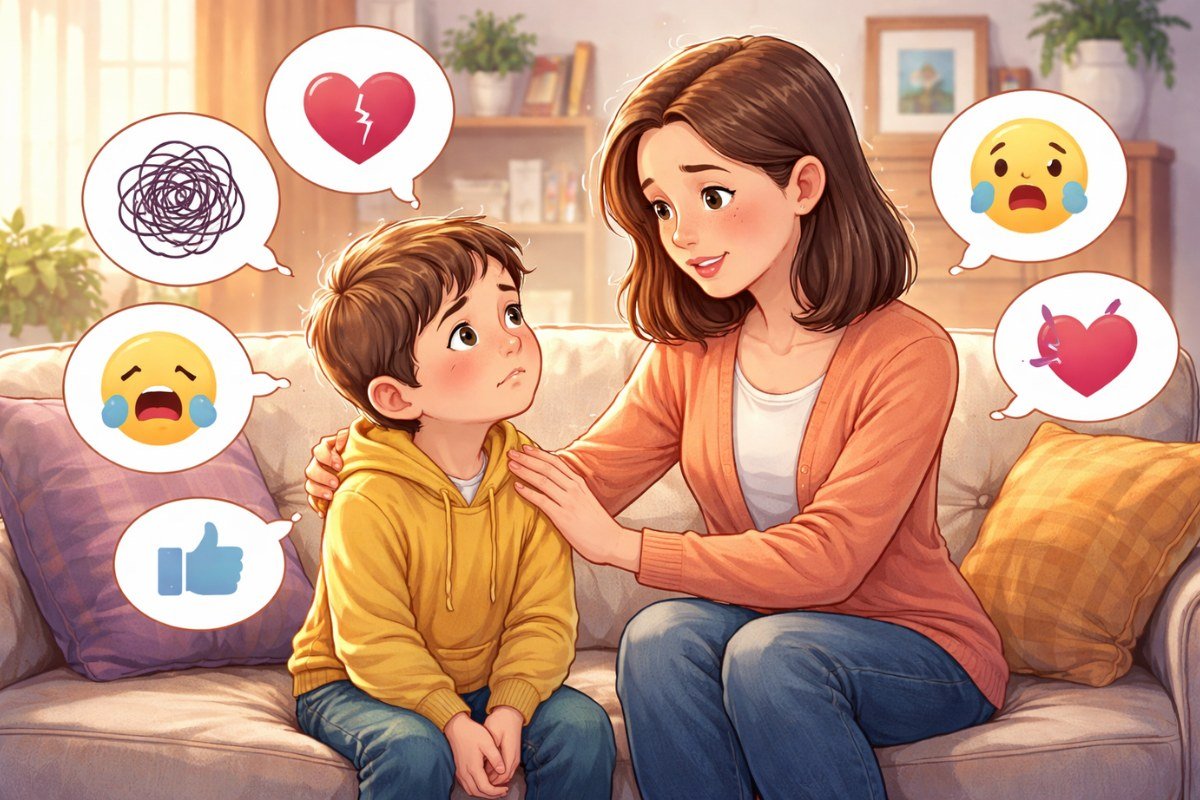
When children don’t have the words for what they’re feeling, behaviour often does the talking for them. This isn’t something they plan. It’s what happens when emotions show up faster than understanding.
Why children show feelings instead of explaining them
Many children don’t know what they’re feeling while they’re feeling it. They just know something doesn’t feel right. The emotion hits, their body reacts, and the behaviour comes out before any thinking happens.
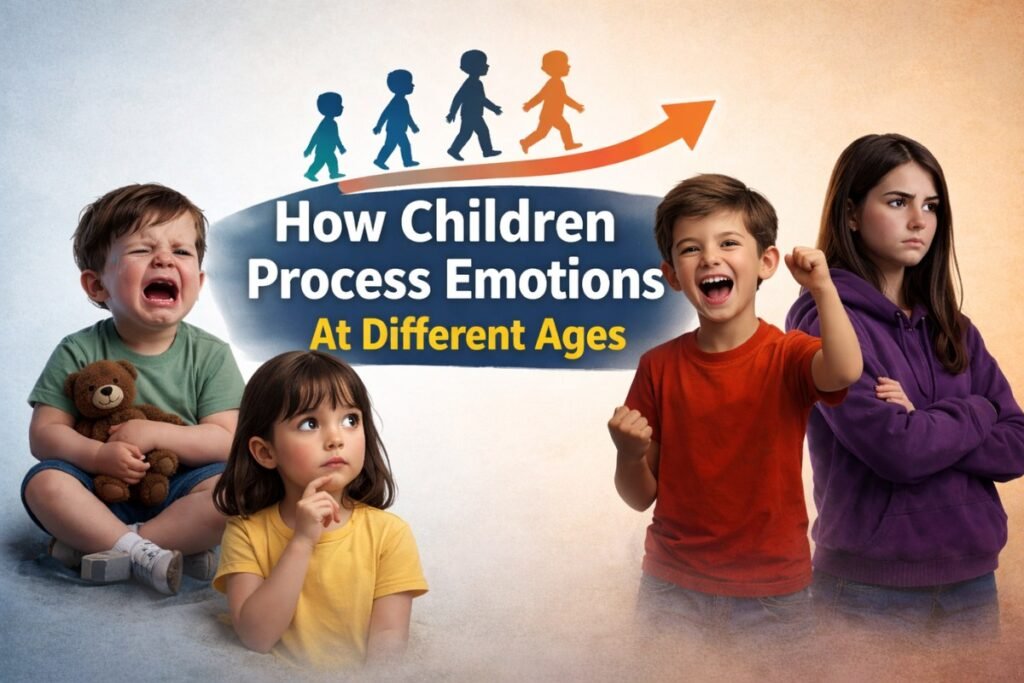
That’s why asking, “Why did you do that?” often leads nowhere. Your child may not know the answer any more than you do. Children don’t understand feelings the same way at every age. As they grow, emotions change in how they’re felt and expressed. We’ve explained this in more detail in our article on how children understand emotions by age.
What behaviour is often saying underneath
Anger can be a sign of frustration or hurt that hasn’t been noticed yet.
Refusal can be a way of saying something feels too hard.
Clinginess can come from fear or insecurity.
Silence can mean your child feels overwhelmed and doesn’t know where to start.
The behaviour may look messy or confusing, but underneath it is usually a feeling your child hasn’t figured out how to express.
Why this isn’t manipulation
It’s easy to assume children use behaviour to control situations or get their way. In reality, most children don’t have that kind of emotional strategy. They aren’t choosing behaviour over words. Words simply aren’t available to them yet.
When behaviour is emotional communication, it’s not about honesty or dishonesty. It’s about a child doing the best they can with feelings they don’t yet understand.
Why Children Use Behaviour Instead of Words
For many children, behaviour isn’t a choice. It’s the only way something inside them finds a way out.
When emotions are too big to explain
Some feelings are overwhelming even for adults. For children, they can feel impossible to sort through. When a child is flooded with emotion, there’s no pause to think, no space to explain. The feeling takes over first, and the behaviour follows.
That’s when you see sudden shouting, refusal, crying, or complete shutdown. Not because your child wants to react that way, but because they don’t know how else to release what they’re feeling.
When children don’t feel safe expressing feelings directly
Children are very sensitive to reactions. If they’ve felt dismissed, corrected, or misunderstood in the past, they may stop trying to explain themselves. Even gentle responses can feel risky when they’re unsure how their feelings will be received.
So instead of saying “I’m scared,” “I’m hurt,” or “I can’t handle this,” the emotion comes out sideways through behaviour.
When children don’t yet understand their own feelings
Often, children are dealing with more than one feeling at a time. They may feel angry and sad, or excited and anxious, all mixed together. That confusion makes it hard to put anything into words.
Behaviour becomes the outlet because it doesn’t require clarity. It just releases what’s building inside.
What Parents Often Misread as “Bad Behaviour”
When behaviour keeps repeating, it’s natural to label it. Naughty. Rude. Attention-seeking. Defiant. These labels help in the moment, but they often miss what’s actually happening underneath.
When behaviour is mistaken for defiance
Some behaviours look like power struggles. Refusing to listen. Saying “no” again and again. Doing the opposite of what’s asked. It can feel intentional, like your child is challenging you.
Often, it’s not about control. It’s about a child feeling overwhelmed, cornered, or unable to cope with what’s being asked. The resistance is less about saying no to you and more about saying “this feels too much.”
When attention-seeking is really connection-seeking
Many parents worry their child is acting out just to get attention. But for children, attention and connection aren’t separate things. When emotional needs aren’t met, behaviour is one of the few ways they know how to pull closeness back in.
This is why behaviour can increase when parents are busy, tired, or emotionally distant, even if unintentionally. The child isn’t trying to annoy you. They’re trying to feel noticed and safe again.
When repeated behaviour is a stuck emotional loop
Sometimes the same behaviour shows up again and again, even after it’s been addressed. This can feel especially frustrating. You’ve talked about it. You’ve set boundaries. Nothing seems to change.
In many cases, the behaviour is carrying the same emotional message that hasn’t been understood yet. Until that feeling is recognised, the behaviour keeps repeating, just in slightly different forms.
Why Correcting Behaviour Alone Often Doesn’t Work
Most parents start with correction because that’s what makes sense. If a behaviour is wrong, you explain it, set limits, or give consequences. And sometimes that works. But with emotional behaviour, it often doesn’t.
Why consequences don’t change emotional behaviour
Consequences deal with the behaviour you can see. They don’t touch the feeling underneath it. If a child is acting out because they’re overwhelmed, scared, or hurt, removing a privilege doesn’t make that feeling go away.
The emotion is still there. So the behaviour finds another way to come back. In some families, behaviour carries even more weight because of daily stress and extra responsibilities. Parents caring for a disabled child often notice emotions showing up in different ways. We’ve spoken about this experience in our piece on caring for a disabled child.
Why children repeat behaviour even after consequences
Parents often ask, “They know this isn’t allowed, so why do they keep doing it?” The answer is usually simple and frustrating at the same time. Knowing a rule doesn’t mean a child can manage the emotion driving the behaviour.
Until the feeling settles, the behaviour keeps looping. Not because the child isn’t listening, but because the emotion hasn’t been understood or processed yet.
What parents feel when nothing changes
This is where many parents feel worn down. You try different approaches. You stay calm one day and firm the next. Still, the same issues return.
Over time, frustration turns into self-doubt. You start wondering if you’re failing, if you’re missing something obvious, or if this is just how things will always be. Most parents don’t talk about this part, but it’s common, and it’s heavy.
How Parents Can Start Listening to Behaviour Differently
Most parents don’t ignore behaviour. They respond to it all day long. The shift here isn’t about doing more, it’s about noticing something slightly different.

Shifting from “How do I stop this?” to “What’s happening?”
When behaviour repeats, the first question is usually how to make it stop. That’s natural. But emotional behaviour often settles faster when the focus moves from control to understanding.
Instead of asking why your child is doing this, it can help to wonder what they might be dealing with in that moment. Not to excuse the behaviour, but to see what’s driving it.
Responding to emotion before behaviour
Children calm down when they feel understood, not when they feel corrected. If the emotion underneath is strong, addressing the behaviour first can make things escalate.
When the feeling is acknowledged, even quietly, the behaviour often softens on its own. The correction can come later, once your child is steadier.
Why this feels hard in real life
This way of responding sounds simple, but it’s hard when you’re tired, rushed, or already frustrated. Parents have emotions too, and those show up in the moment just as quickly.
Listening differently doesn’t mean getting it right every time. It means noticing when behaviour is carrying more than just a rule-breaking moment, and giving yourself permission to pause before reacting.
When Emotional Communication Becomes Heavy for a Child
Some behaviour passes once the moment is over. Other behaviour keeps returning, even when you respond calmly and try to understand. This is where many parents start to feel uneasy, not alarmed, just quietly concerned.
When behaviour settles once emotions are supported
In many cases, behaviour softens after connection. Your child calms down, returns to themselves, and things move on. The reaction may have been strong, but it doesn’t linger.
There’s movement. There’s relief. The emotion comes and goes.
This kind of behaviour, while tiring, usually doesn’t weigh on a child for long.
When behaviour becomes repetitive and draining
Sometimes, the same patterns keep looping. The same reactions. The same struggles. The same emotional fallout. Even after comfort or understanding, your child doesn’t seem to feel lighter.
You may notice that emotions spill into many parts of life. Sleep becomes unsettled. Mornings feel harder. School, routines, or relationships start to feel heavy.
What stands out isn’t just intensity. It’s how little relief there seems to be.
Why parents often sense this before they can explain it
Many parents feel this shift before they can put words to it. It shows up as a gut feeling. A sense that something isn’t easing the way it used to.
This doesn’t mean something is “wrong.” It means your child may be carrying emotions that aren’t finding release yet, and that weight is starting to show.
When Support Outside the Family Can Help
There are times when you do everything you can, and your child still seems stuck. Not because you’re doing something wrong, but because some feelings are hard for children to sort out inside the family, even when there’s love and care.
Why children sometimes express emotions more clearly elsewhere
Children are often very aware of their parents’ reactions, even when no one says it out loud. They may worry about upsetting you, disappointing you, or adding to your stress. Because of that, they hold things in.
A space outside the family can feel different. There’s less pressure to protect anyone’s feelings. Some children find it easier to talk, play, or simply feel what they’re feeling when they don’t have to manage a parent’s response at the same time.
How support helps translate behaviour into understanding
Support doesn’t mean fixing behaviour or changing who your child is. It offers a place where emotions can be noticed and understood, without rushing them away.

For many children, having someone help make sense of what they’re feeling slowly reduces the need for behaviour to speak for them. And for parents, it can bring clarity to patterns that have felt confusing or exhausting.
If you ever feel unsure, learning more about online child counselling can be one way to explore gentle support, without pressure or labels.
Final Thought
Children don’t always know how to say what they’re feeling. When words aren’t available, behaviour speaks instead.
Seeing behaviour as communication doesn’t mean ignoring limits. It means pausing long enough to ask what your child might be carrying inside.
You won’t get it right every time. What matters most is staying curious, staying present, and listening, even when the message comes out in messy ways. Sometimes, having a neutral space helps children open up in ways they can’t at home. If you feel your child is carrying emotions they don’t know how to express yet, exploring options like online child and teen counseling can offer gentle support without pressure.
FAQ’s
Why does my child keep repeating the same behaviour?
Children repeat the same behaviour when the emotion underneath has not changed. If feelings are not understood or supported, behaviour continues trying to communicate what words cannot express.
Is my child being difficult on purpose?
Most children are not being difficult on purpose. What looks intentional is often emotional overwhelm, frustration, or anxiety that they do not yet know how to regulate or express safely.
Why doesn’t talking or explaining fix the behaviour?
Talking or explaining does not fix behaviour when the real issue is emotional regulation. Understanding a rule is different from being able to manage the feeling driving the behaviour.
Why does my child behave well outside but not at home?
Children often behave well outside because they are holding their emotions in. At home, where they feel safest, those contained feelings may finally come out.
Is attention-seeking behaviour a bad thing?
Attention-seeking behaviour is not always negative. It often signals a need for connection, reassurance, or emotional security rather than a desire to cause disruption.
Why does behaviour get worse when I try to correct it?
Behaviour can worsen after correction if a child already feels overwhelmed. Increased pressure may intensify emotions, leading to stronger reactions instead of calmer behaviour.
Can emotional behaviour stop on its own?
Emotional behaviour can settle with time, maturity, and support. However, repeated patterns often continue when the underlying feeling has not yet been recognised or soothed.
How do I know if behaviour is emotional or just misbehaviour?
Emotional behaviour usually follows patterns, escalates during stress, or appears when a child is tired or overwhelmed. Misbehaviour tends to be more situational and less emotionally charged.
Is emotional behaviour a sign something is wrong with my child?
Emotional behaviour does not automatically mean something is wrong. It often reflects normal development, though persistent or intense patterns may benefit from closer attention.
Why does my child shut down instead of acting out?
Some children internalise emotions rather than express them outwardly. Shutting down can be a sign of emotional overload, anxiety, or difficulty processing strong feelings.