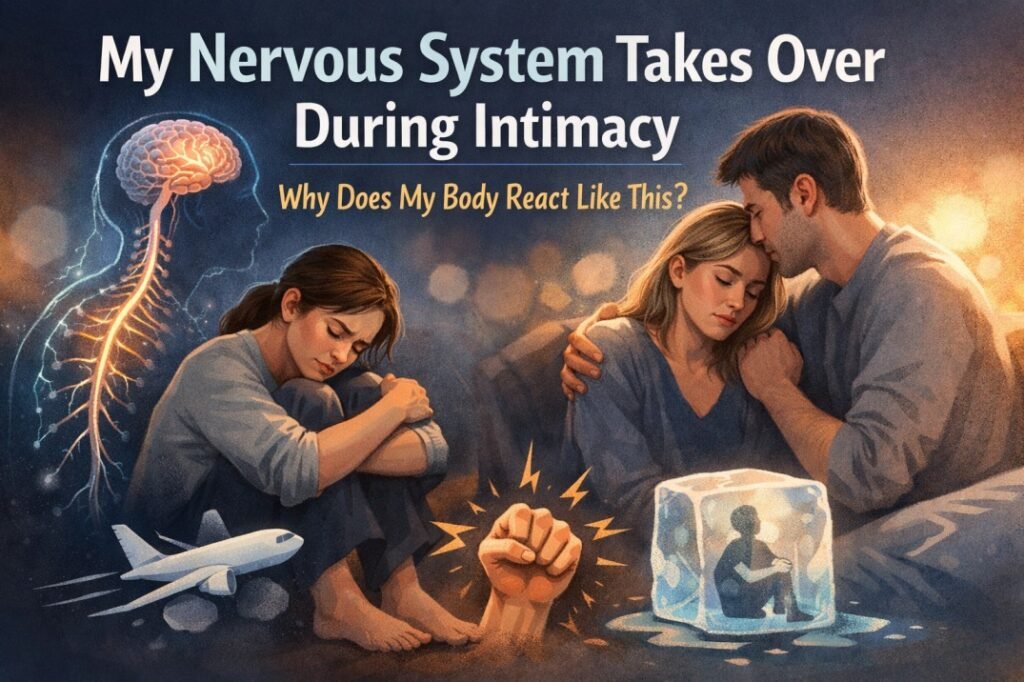
Many men and women come to counselling at LeapHope saying the same thing. They want intimacy, they feel ready, but in the middle of it, something just goes off.
It starts with the mind. Instead of staying in the moment, they begin thinking too much. They notice what they are doing, how they are doing it, what their partner might be thinking. It stops feeling natural.
Then the body follows. The excitement drops. The body feels tight instead of relaxed. Even kissing can suddenly feel like too much, especially when it starts to feel like it will lead to sex.
They don’t always stop, but they are not really there either. It feels forced, or disconnected, or just not the way it should feel.
That’s where it gets frustrating. The desire is there, but the experience doesn’t match it. The more they try to stay present, the more their mind interferes and the more their body pulls back.
This is not just sexual performance anxiety. It’s when overthinking and your body’s reaction both kick in at the same time.
In this article, we’ll break down why this happens and how you can get out of this pattern.
What People Mean When They Say “My Nervous System Takes Over During Intimacy”
When people say their nervous system takes over during intimacy, they are describing a sudden shift in their body and mind where the moment stops feeling natural. They may go still or feel stuck, as if their body is not responding the way it should. Some notice their heart racing or a sense of uneasiness without a clear reason.
At the same time, the mind becomes overactive, analysing everything, thinking about performance, or worrying about what the partner is feeling. Others feel slightly disconnected, like they are present but not fully engaged in the moment. There is often an urge to pull back, slow down, or stop, even if they don’t act on it.
Physically, the body may feel tense, arousal may drop, and natural responses like lubrication or erection may not happen as expected. This can all happen even when the person wants intimacy, which is why it feels confusing and frustrating.
Is This the Same as Sexual Performance Anxiety?
Sexual performance anxiety usually means you start worrying about how you will perform during intimacy. You think about whether you are doing things right, whether your body will respond properly, or how your partner will judge you. These thoughts create pressure, and that pressure affects your experience.
There is clear overlap. In both cases, the mind interferes, the body stops responding naturally, and the moment no longer feels relaxed or enjoyable. You may overthink, lose arousal, or feel disconnected even when you want to stay present.
The key difference is where it starts. Performance anxiety is mostly thought-driven, your mind creates pressure, and your body reacts to it. But when people say their nervous system takes over, the response can be more body-driven. The shift can happen quickly, sometimes even before clear thoughts come in, and the body moves into tension, shutdown, or discomfort on its own.
This can also get triggered in specific situations. It often happens with a partner you have not been intimate with before, when there is some level of uncertainty or pressure. It can also show up during stressful phases of life, when your mind is already overloaded. Even a small moment of discomfort, something your partner says or does, or a sudden feeling of “this is going too fast,” can be enough to shift your state. From there, intimacy drops, and your nervous system starts taking over your body.
Sometimes it starts in the mind, but often it lives in the body.
Why Your Body Reacts This Way During Intimacy
Your Nervous System Is Trying to Protect You
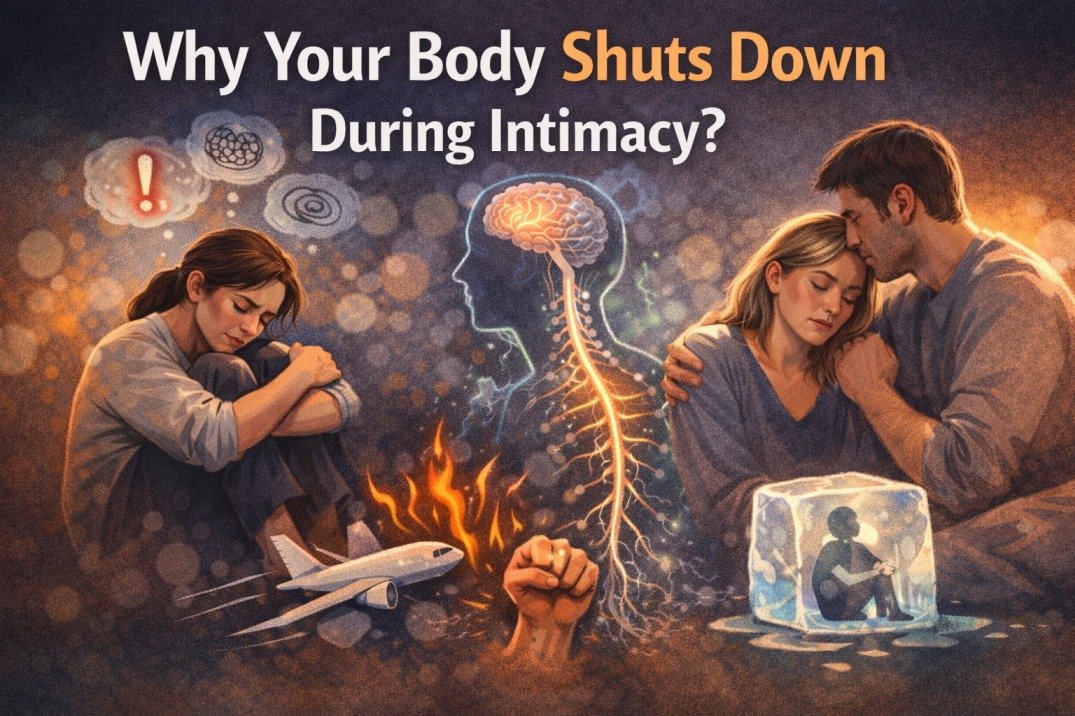
Your body has a built-in system that reacts when something feels uncomfortable or unsafe. It can go into fight, flight, or freeze. Fight means tension or irritation, flight means wanting to pull away, and freeze means your body goes still or shuts down. This is not something you choose. It happens automatically, even if your mind wants intimacy.
Past Emotional or Sexual Experiences
This reaction does not always come from big trauma. Small past experiences also shape it. Rejection, embarrassment, shame, or even an awkward first experience can stay in the background. When a similar moment comes up again, your body remembers and reacts.
Fear of Vulnerability and Being Seen
Intimacy is not just physical, it also means being emotionally open. That can bring fear. You may worry about being judged, not being good enough, or being rejected. Even if you don’t say it out loud, that fear can affect how your body responds.
Conditioning Around Sex, Shame, or Guilt
What you learned growing up also plays a role. Messages like “sex is wrong,” “don’t express desire,” or feeling guilt around intimacy can stay in your system. Even if you don’t consciously believe them now, your body can still react based on those early patterns.
Performance Pressure and Expectations
Many people put pressure on themselves to do things “right” or to satisfy their partner. This pressure builds tension. Instead of relaxing into the moment, you start trying to meet expectations, and that blocks natural response.
Overthinking and Hyper-Awareness During Intimacy
When your mind becomes too active, it pulls you out of the experience. You start watching yourself, analysing every move, and thinking ahead. This constant checking makes it hard for your body to stay relaxed. Once that happens, your response drops and the moment feels forced.
Why This Can Feel So Confusing and Frustrating
The hardest part is this simple question: “I want this, so why is my body reacting like this?”
You are not forcing yourself into intimacy. The desire is there. But in the moment, your body does something different. That gap between what you want and how you feel creates a strong internal conflict.
One part of you moves toward closeness. Another part pulls back to protect you. Both are active at the same time, and that makes the experience feel mixed, unclear, and hard to understand.
This often leads to emotional impact. You may feel shame, like something is wrong with you. You may feel guilt, especially if you think you are disappointing your partner. Over time, it can turn into self-doubt, where you start questioning your ability to be present or enjoy intimacy at all.
That’s why this issue is not just physical. It affects how you see yourself, your confidence, and how safe you feel in close moments.
How to Calm Your Nervous System During Intimacy
Slow Down the Pace (This is key)
Don’t wait for the moment to get intense and then try to fix it. Slow things down early. Stay longer in simple touch, hugging, or kissing without pushing it forward. When you remove the rush, your body gets time to feel safe instead of reacting.
Focus on Safety, Not Performance
Stop tracking “where this is going.” In your mind, remove the idea that this has to lead to sex. Tell yourself, “We are just staying here for now.” This takes away pressure and reduces that sudden switch where your body pulls back.
Stay Connected to Your Body
When your mind starts running, bring your focus back to something physical. Slow your breathing. Notice your partner’s touch. Even placing your hand on your own body can help you stay grounded. The goal is not to think less, but to feel more.
Catch the Moment Early
Most people ignore the first signs, slight tension, a small shift, a distracting thought. That’s where you step in. Pause, slow down, or change the pace right there. If you wait too long, your body moves fully into shutdown.
Communicate Without Making It Heavy
You don’t need a serious conversation in the middle. Keep it normal. Say, “Let’s slow down a bit,” or “Give me a second.” A supportive partner usually understands more than you expect.
Build Comfort Outside the Pressure of Sex
Spend time being physically close without the expectation of sex. Sit together, hug, lie down, touch without moving forward. This helps your body learn that intimacy does not always mean pressure or performance.
Don’t Force Yourself to “Push Through”
If your body has already shut down, don’t try to override it. That usually makes it worse next time. Instead, pause and reset. Respecting that signal actually helps your system feel safer in future moments.
Work on the Pattern, Not Just the Moment
If this keeps happening, look at the bigger picture. Stress, overthinking habits, past experiences, all of this plays a role. You don’t fix this in one moment, you shift it slowly over time.
When To Seek Professional Help
If this keeps happening again and again, it’s not something to ignore.
Pay attention if you notice:
- It happens almost every time intimacy begins
- You feel panic, anxiety, or complete shutdown
- You start avoiding closeness or relationships
- You feel stressed even before intimacy
This often connects to deeper patterns like past experiences, emotional discomfort, or constant overthinking.
What helps:
- Nervous system regulation
- Sex therapy
- Emotional healing work
If this feels familiar, you can explore support at LeapHope and work through this step by step with a therapist, without pressure.
FAQs
Why does my body panic during intimacy?
Your body panics during intimacy when your nervous system reads the situation as overwhelming or unsafe. It can trigger fight, flight, or freeze, even if you mentally want closeness.
Is it normal to feel anxious during sex?
Yes, feeling anxious during sex is common. Many people experience overthinking, pressure, or body tension during intimacy, especially with new partners, stress, or past negative experiences affecting comfort.
How do I stop overthinking during intimacy?
To stop overthinking during intimacy, slow the pace, focus on physical sensations like breathing and touch, and remove pressure to perform. Staying present helps your mind settle naturally over time.
Can anxiety affect arousal?
Yes, anxiety directly affects arousal. When your body feels tense or unsafe, it shifts focus to protection instead of pleasure, which can reduce desire, lubrication, or erection during intimacy.
Why do I shut down during physical closeness?
You shut down during physical closeness when your nervous system feels overwhelmed or your mind overthinks. This creates a freeze or withdrawal response, even if you want intimacy.