Last Updated on February 18, 2026
If you’re here, something feels different after having a baby.
Maybe sex feels painful.
Maybe you have no desire at all.
Maybe your doctor said you’re cleared, but your body doesn’t feel ready.
Or maybe you’re simply confused because things haven’t “gone back to normal” after pregnancy.
Sex after pregnancy is affected by healing tissues, hormonal shifts, breastfeeding, exhaustion, and emotional changes. Some women experience dryness or discomfort. Many notice a drop in sex drive. A few feel a surprising increase. All of these responses are common in the postpartum period.
If you’re a partner reading this, you may be wondering whether it’s safe, why she seems distant, or how to reconnect without causing pressure. These concerns are normal too.
Sex after having a baby isn’t just physical. It involves recovery, hormones, emotions, and communication. This guide explains what is medically safe, why pain happens, how libido changes, and how couples can rebuild intimacy with confidence.
When Can You Have Sex After Giving Birth?
Most doctors recommend waiting about 4 to 6 weeks after delivery before having sex, as also explained by the Mayo Clinic. This guideline exists because your body is still healing internally and externally.
During the first few weeks:
- The uterus is healing where the placenta detached
- The cervix is gradually closing
- Lochia (postpartum bleeding) is still present
- Infection risk is higher
Having sex at 1–3 weeks postpartum is generally discouraged because tissues are still vulnerable.
By 4–6 weeks, medical risk is usually lower. But six weeks is not a magic switch. Being “cleared” means infection risk has reduced, not that you will automatically feel comfortable or ready.
Even at 6–9 weeks, you may experience:
- Vaginal dryness due to low estrogen
- Scar sensitivity from tears or stitches
- Pelvic floor tightness or weakness
- Emotional hesitation
If bleeding has not stopped, waiting is advised. If you had a C-section, internal uterine healing still requires similar time, even without vaginal tearing.
Orgasm is not typically dangerous once healing progresses, but uterine contractions may feel uncomfortable in early weeks.
If you had sex earlier than recommended, watch for:
- Heavy bleeding
- Fever
- Foul-smelling discharge
- Severe pain
The safest time to resume sex is when bleeding has stopped, pain is minimal, and you feel physically and emotionally ready.
There is no benefit to rushing recovery.
Why Is Postpartum Sex Painful?
Sex can feel very different after having a baby. Burning, sharp entry pain, tightness, or deep aching are common in the early weeks and even months postpartum.
The most common cause is hormonal change. After delivery, estrogen levels drop significantly. If you are breastfeeding, estrogen stays lower for longer. This can lead to:
- Vaginal dryness
- Thinner, more sensitive tissue
- Increased friction during penetration
Even with lubricant, low estrogen can make tissues feel irritated or sore.
Scar tissue can also cause discomfort. If you had tearing, stitches, or an episiotomy, the healed area may feel tight or less flexible at first. Entry pain is often linked to this reduced elasticity. Even women without visible tears can experience internal sensitivity as tissues recover.
Some women feel unusually tight rather than loose. This is often related to the pelvic floor. After childbirth, muscles can become weak or overly tense. Over-tight muscles, especially when combined with anxiety, can make penetration painful.
Fear itself can increase pain. When you anticipate discomfort, the nervous system activates a protective response. Muscles tighten automatically. Breathing shortens. The body braces. This guarding reflex is common and treatable.
Mild discomfort in the early stages can be normal. Persistent, sharp, or worsening pain is not.
If pain continues beyond 8 to 12 weeks, especially if it prevents penetration or causes significant distress, possible causes include:
- Ongoing hormonal dryness
- Scar tissue sensitivity
- Pelvic floor dysfunction
- Anxiety-related muscle tension
Dryness is not permanent for most women. As hormones stabilise, especially after breastfeeding decreases, lubrication and elasticity often improve.
If sex still hurts after three months, or if pain feels severe rather than mild, speak to a healthcare provider or pelvic floor therapist. Postpartum pain is common, but it should not be accepted as your long-term reality.
Is It Normal to Have No Sex Drive After a Baby?
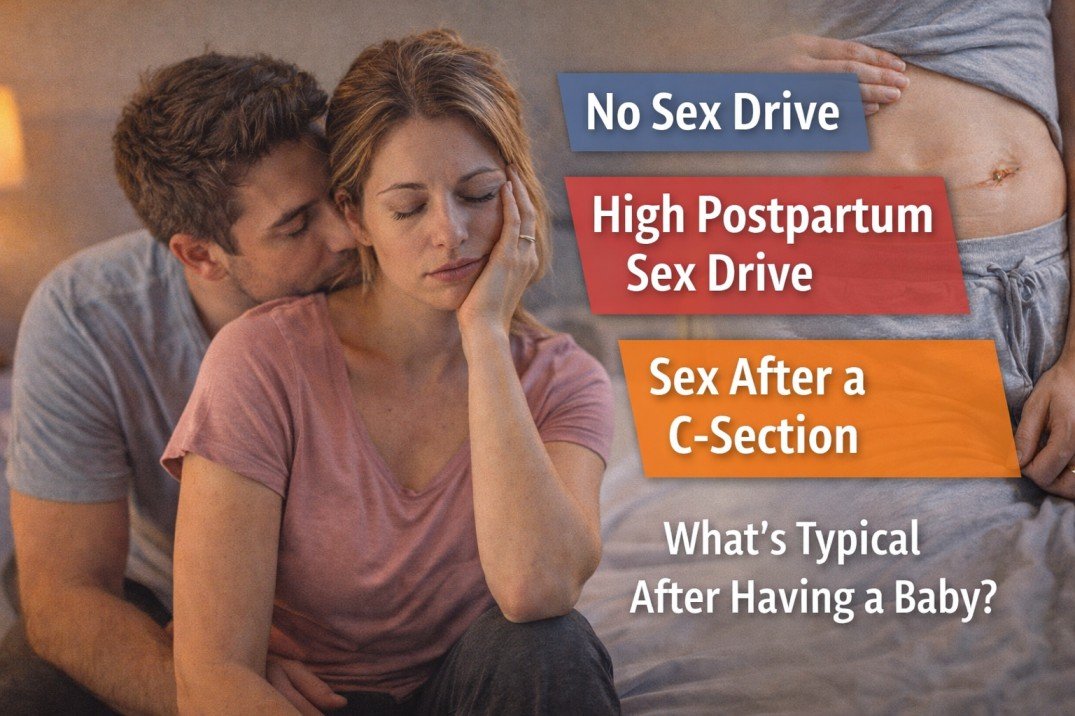
Yes. A drop in sex drive after having a baby is very common.
Many women feel confused when desire disappears completely. You may love your partner but feel no interest in sex. You might avoid intimacy, feel disconnected from your body, or feel “touched out” after caring for your baby all day.
This does not mean something is wrong.
Several factors contribute to low libido postpartum.
Hormones:
After birth, estrogen drops sharply. If you are breastfeeding, prolactin stays high, which can suppress sexual desire and increase dryness.
Exhaustion:
Chronic sleep deprivation affects mood, energy, and libido. When your body is focused on recovery and infant care, sex is not a priority.
Mental load:
Feeding schedules, sleep tracking, household tasks, and constant responsibility leave little mental space for erotic energy.
Identity shift:
Many women temporarily feel more like caregivers than partners. That shift can dampen desire.
It also helps to understand the difference between low desire and aversion.
Low libido means interest is reduced.
Aversion feels like anxiety, fear, or strong resistance toward intimacy. The second may need professional support.
For most women, desire returns gradually as:
- Sleep improves
- Hormones stabilise
- Breastfeeding decreases
- Emotional connection rebuilds
There is no fixed timeline.
However, if you feel persistently numb, withdrawn, hopeless, or distressed for several months, speak with a healthcare provider. Postpartum depression and anxiety can affect both desire and connection.
A temporary loss of libido after pregnancy is common. It does not define your sexuality or your relationship.
High Postpartum Sex Drive: Is That Normal Too?
Yes. A higher sex drive after having a baby can also be normal.
While many women experience low libido, some feel unexpectedly aroused within a few weeks. You might feel confused if you are “horny so soon,” especially around 4 to 6 weeks postpartum. This does not mean something is wrong.
Hormones fluctuate dramatically after delivery. As pregnancy hormones drop, your body recalibrates. For some women, this shift can temporarily increase sensitivity and desire.
There can also be an emotional component. After the intensity of pregnancy and childbirth, reconnecting physically may feel grounding or reassuring. Some women describe a renewed closeness with their partner that increases arousal.
Relief can play a role too. Once the physical discomfort of late pregnancy is gone, movement may feel easier and sensation may feel different. For some, that leads to stronger awareness of sexual desire.
A higher sex drive does not mean you must act on it immediately. Physical healing timelines still apply. Even if desire is strong, waiting until bleeding has stopped and tissues have healed reduces risk.
Like low libido, increased desire is part of the normal hormonal spectrum after childbirth. Every body responds differently.
Sex After a C-Section: What’s Different?
It’s common to assume that a C-section makes sex recovery easier because there was no vaginal tearing. In reality, healing still takes time.
Even after a surgical birth, your uterus has the same internal wound where the placenta detached. That internal healing process still requires about 4 to 6 weeks. The cervix also needs time to close, and infection risk remains during early recovery.
So the general timeline is similar to vaginal birth.
What feels different after a C-section is the abdominal recovery. You may notice:
- Sensitivity or numbness around the incision
- Tightness across the lower abdomen
- Core muscle weakness
- Discomfort with certain movements or pressure
Because abdominal muscles were cut during surgery, they need time to regain strength. Positions that place pressure on the lower stomach may feel uncomfortable at first.
Many women find it easier to:
- Choose positions where they control depth and movement
- Avoid direct pressure on the incision area
- Move slowly and adjust if pulling or sharp pain occurs
If you’re wondering about sex at 4 weeks after a C-section, medical guidelines usually still recommend waiting until around 6 weeks, especially if bleeding has not stopped. Internal healing matters even if you feel externally fine.
Pain after a C-section may feel different from vaginal birth. Instead of entry pain, you may notice abdominal pulling or deep internal soreness. Both are part of recovery, but severe or worsening pain should be evaluated.
A C-section is major abdominal surgery. Healing deserves the same patience and care as any other surgical recovery.
Unprotected Sex Postpartum: Can You Get Pregnant Again?
Yes, you can get pregnant again after having a baby, even before your first period returns.
One of the biggest misconceptions is that pregnancy is not possible until menstruation resumes. In reality, ovulation happens before your first postpartum period. That means you can release an egg without any warning bleeding beforehand.
If you had unprotected sex at 2, 4, or 6 weeks postpartum, pregnancy is possible if ovulation has already occurred. The likelihood varies depending on individual hormonal recovery, but it is not zero.
Can You Ovulate Before Your First Period?
Yes. Ovulation can occur as early as a few weeks after delivery in women who are not exclusively breastfeeding. For others, it may take longer. There is no universal timeline.
Because ovulation comes before menstruation, the first sign of fertility returning may be a positive pregnancy test.
Is Breastfeeding Reliable Birth Control?
Breastfeeding can delay ovulation, but it is not guaranteed protection.
The lactational amenorrhea method only works reliably when:
- You are exclusively breastfeeding
- Feeding occurs frequently, including at night
- Your period has not returned
- Your baby is under six months old
Even then, effectiveness decreases if feeding patterns change.
Breastfeeding alone should not be assumed to be permanent contraception.
What If You Had Unprotected Sex Early Postpartum?
If unprotected sex occurred very early, such as within the first few weeks, infection risk may be more concerning than pregnancy risk. During this time:
- The uterus is still healing
- The cervix may not be fully closed
- Lochia may still be present
Watch for heavy bleeding, fever, foul-smelling discharge, or severe abdominal pain. These require medical evaluation.
When Should You Take a Pregnancy Test?
A pregnancy test is most reliable about 14 days after ovulation or around the time a period is expected. Testing 9 or 10 days after sex may be too early for accurate results.
If your period has not returned postpartum, timing becomes harder to predict. In that case, testing about two weeks after unprotected sex gives more reliable information.
When to Start Contraception After Birth
Discuss birth control options with your healthcare provider at or before your postpartum visit. Many methods can be started:
- Immediately after delivery
- At the 6-week checkup
- Earlier, depending on the method and breastfeeding status
The safest approach is to plan contraception before resuming unprotected intercourse.
Postpartum sex itself is not inherently risky once healing has progressed. The risk comes from timing, protection, and physical recovery. Understanding how fertility returns helps reduce panic and allows you to make informed decisions.
What If You Feel Scared of Sex After Childbirth?
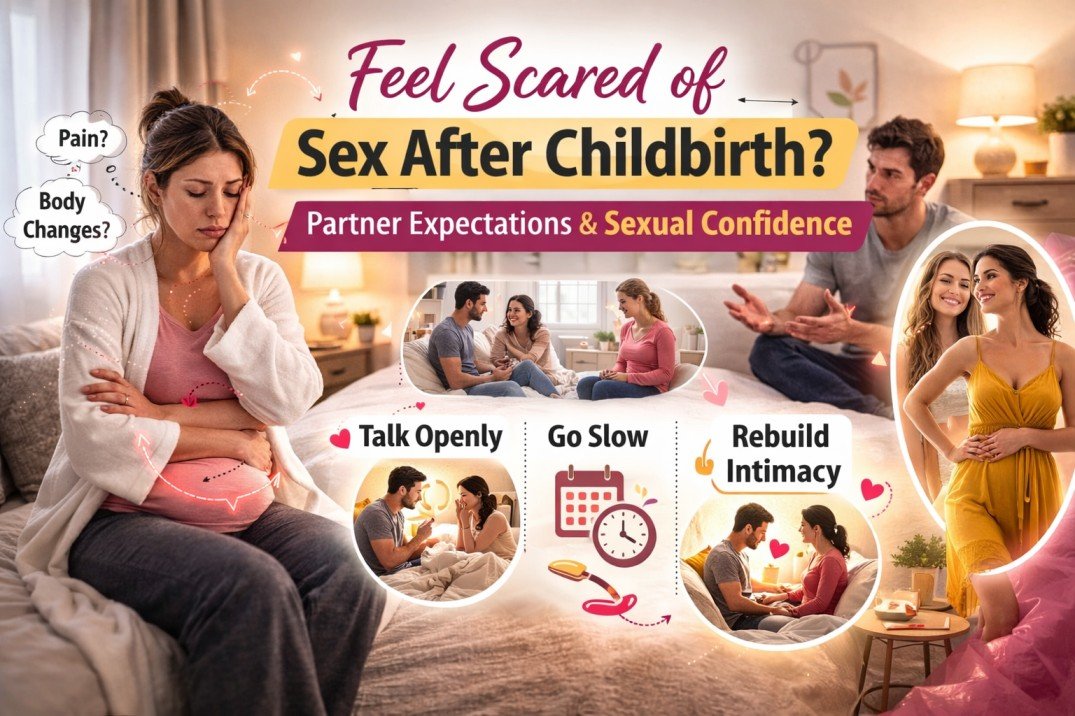
Feeling scared of sex after childbirth is common.
You may fear pain, tearing again, or disappointing your partner. Some women notice they freeze or feel anxious when intimacy begins. This reaction is not unusual.
After birth, your body remembers the physical intensity of delivery. When you expect pain, your muscles may tighten automatically. The pelvic floor can contract without you realising it. That tension can make penetration uncomfortable, which reinforces the fear.
This is a protective response, not a personal failure.
Medical clearance only confirms that tissues have healed enough. It does not mean you feel emotionally ready. Physical healing and emotional readiness are different.
If anxiety appears during intimacy, slow the process down. Start with touch that does not involve penetration. Communicate clearly that you can stop at any time. Choose positions where you control movement and depth.
If fear remains strong for several months, or if you associate sex with trauma from birth, speaking with a pelvic floor therapist or counsellor can help.
Most women regain comfort gradually once healing progresses and positive experiences replace anxious ones.
Fear after childbirth is common. It usually improves with time, patience, and gentle reintroduction.
Relationship Pressure and Partner Dynamics
After a baby, it’s common for partners to have different levels of desire. One person may feel ready to reconnect, while the other feels exhausted or not interested yet.
If your partner wants sex and you don’t, it doesn’t mean something is wrong. Recovery happens at different speeds.
Saying you’re not ready can be simple and clear:
- “I want us to feel close, but I need more time physically.”
- “I’m still healing. I don’t want to rush this.”
Reassurance reduces misunderstanding. Many partners worry they are no longer desired. Many women worry they are disappointing their partner. Honest communication helps both.
It’s also normal to feel like roommates in the early months. Sleep disruption and constant baby care shift the relationship dynamic. That phase usually improves as routines stabilise.
Intimacy doesn’t have to mean intercourse. It can include:
- Cuddling without pressure
- Kissing or touch
- Massage
- Talking without distractions
If scheduling feels unromantic, remember that this stage of life runs on routines. Choosing a quiet time when the baby is asleep can reduce stress.
If the baby sleeps in the same room, privacy concerns are common. Many couples wait for deeper sleep or focus on quiet, non-penetrative closeness.
Guilt is common on both sides. Wanting sex is not wrong. Not wanting sex is not wrong.
Postpartum intimacy is rebuilt through patience, reassurance, and gradual connection.
Body Image and Sexual Confidence After Pregnancy
It’s common to feel different in your body after pregnancy. You may worry that you feel “loose,” that sex feels different for your partner, or that stretch marks and scars have changed your attractiveness.
The idea that childbirth permanently makes someone loose is largely a myth. The vagina is elastic and designed to stretch and recover. Early differences in sensation are usually related to healing, dryness, or pelvic floor changes, not permanent damage.
If sex feels different, common reasons include:
- Hormonal dryness
- Temporary tissue sensitivity
- Pelvic floor weakness or tightness
- Reduced arousal due to stress or fatigue
Your body may look different too. Breasts, skin, and muscle tone change. Feeling less confident during this stage is normal.
Attraction is influenced by emotional connection, not just appearance. Many partners are focused on closeness, not physical “perfection.”
Confidence often improves as healing progresses and you slowly reconnect with your body.
Post-pregnancy changes are real, but they do not erase your sexuality.
When to See a Doctor or Therapist
Some discomfort and emotional adjustment are normal after childbirth. But certain symptoms should not be ignored.
Speak to a healthcare provider if you experience:
- Pain that lasts several months or worsens over time
- Bleeding during or after sex
- Severe or persistent dryness that does not improve
- Sharp pain that prevents penetration
- Ongoing pelvic pressure or heaviness
These may indicate scar complications, pelvic floor dysfunction, infection, or hormonal imbalance.
If intimacy triggers panic, intense anxiety, or strong avoidance that continues for months, emotional support may help. Online sex therapy or counselling can address fear, trauma associations, and relationship strain.
Practical Ways to Rebuild Intimacy After Pregnancy
Rebuilding intimacy after having a baby works best when it is gradual and pressure-free. Your body is still adjusting physically, and your mind may need time to feel safe again. Comfort matters more than performance.
Instead of trying to “go back to normal,” focus on creating small, positive experiences. Slow progress builds confidence. Rushing often increases tension and discomfort.
Here are practical ways to make intimacy more comfortable:
- Use a generous amount of water-based lubricant, even if you did not need it before. Hormonal changes often reduce natural lubrication.
- Spend more time on foreplay than you think you need. Arousal helps muscles relax and increases comfort.
- Choose positions where you control depth and movement, so you can stop or adjust easily.
- Avoid direct pressure on healing areas, especially after tearing or a C-section.
- Start with non-penetrative touch such as massage, kissing, or lying close without expectations.
- Agree in advance that either partner can pause or stop at any time without pressure.
- Focus on breathing slowly to reduce pelvic muscle tension.
- If penetration feels uncomfortable, try shorter attempts rather than forcing longer ones.
- Rebuild emotional closeness outside the bedroom through conversation and physical affection.
- If pain persists, consider pelvic floor therapy rather than continuing to “push through.”
Rebuilding intimacy is not about speed. It is about safety, comfort, and gradual confidence.
Final Thoughts
Sex after having a baby often changes. It is normal if desire drops or if it takes months to feel comfortable again. Every body heals differently, and every couple adjusts at their own pace.
Partners should be mindful during this time. Recovery is not just physical. Hormones, exhaustion, body image, and emotional shifts all affect intimacy. Pressure or resentment creates distance. A few months of patience can protect long-term connection. There will be time for sex later.
For women, it is okay if you are not ready. Marriage does not require immediate sexual performance after childbirth. Speak clearly about what you need instead of withdrawing in silence.
Caring for a newborn is exhausting. Confidence, hormones, sleep, and energy all change. Even couples with a strong sex life before pregnancy may struggle for a while after birth. That phase is common.
Take your time. Focus on healing and emotional connection. If pain, anxiety, or relationship strain continues, consider online counselling support. Getting help is a sign of care, not weakness.
Frequently Asked Questions
How long after pregnancy can you have sex?
Most healthcare providers recommend waiting about 4 to 6 weeks after delivery. This allows the uterus to heal, bleeding to reduce, and infection risk to decrease. However, emotional readiness and comfort may take longer.
Is postpartum sex supposed to hurt?
Mild discomfort can happen in early recovery due to dryness, scar sensitivity, or pelvic floor tension. Severe or persistent pain is not normal and should be evaluated.
Can you get pregnant before your first postpartum period?
Yes. Ovulation can occur before your first period returns, which means pregnancy is possible even without visible menstrual bleeding. Breastfeeding does not guarantee protection.
Is it normal to have no sex drive after having a baby?
Yes. Hormonal shifts, sleep deprivation, emotional adjustment, and breastfeeding commonly reduce libido for several months. Desire often returns gradually as recovery stabilises.
When should I see a doctor about postpartum sex problems?
Seek medical advice if pain lasts several months, bleeding occurs during sex, anxiety is intense, or libido absence causes distress. Pelvic floor therapy or counselling can help when recovery feels stuck.
Last Reviewed & Updated: 18 February 2026