
Last Updated on February 18, 2026
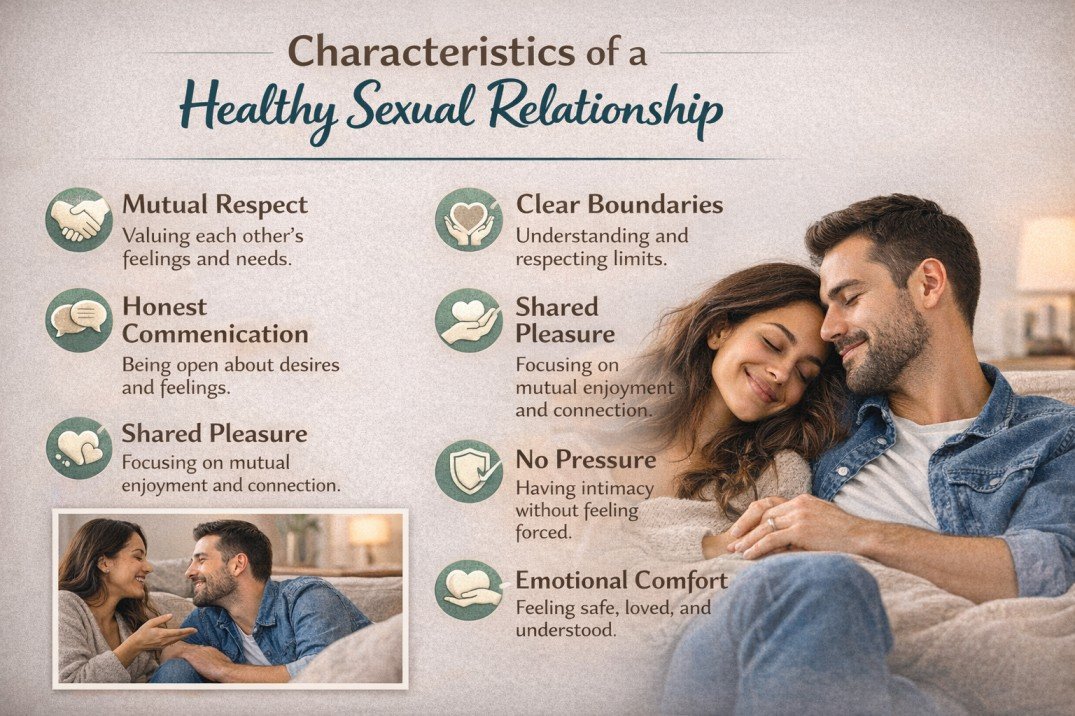
A healthy sexual relationship is not about having sex every day or trying to copy what you see online. It is built on mutual desire, clear boundaries, honest communication, and feeling safe before, during and after intimacy. In real life, healthy sexual relationships include different libido levels, occasional rejection without punishment, respect for digital boundaries, and comfort discussing what feels good or uncomfortable.
Many couples quietly wonder, “Is our sex life normal?” The truth is that there is no fixed number or perfect formula. What matters is whether both partners feel respected, wanted, and emotionally secure. Below are 20 real-life secrets that show what a healthy sexual relationship actually looks like today.
What a Healthy Sexual Relationship Really Means
A healthy sexual relationship means you don’t feel pressured to say yes. You don’t feel confused about where you stand. You don’t feel afraid to say no. And you don’t feel like you’re competing with porn, exes, or people on social media.
It feels steady. You know what’s okay and what’s not. You trust that your partner respects your boundaries, your pace, and your comfort. That is the foundation everything else builds on.

20 Secrets That Show Up in Normal Couple Moments
Healthy sexual relationships are not built on dramatic gestures or constant excitement. They show up in small, everyday interactions, how you handle rejection, how you talk, how you treat each other after intimacy. These are the moments that quietly define whether a relationship feels safe and satisfying.
1. You Can Say “I’m Not in the Mood” Without It Turning Into a Fight
In a healthy relationship, “not tonight” does not lead to silence, sarcasm, or emotional distance. One person’s low desire is not treated as a personal attack.
There is no punishment the next day. No cold behaviour. No guilt. Desire changes from day to day, and both people understand that.
2. You Don’t Feel Like You Have to Perform
Sex does not feel like a test. You are not trying to impress, compete, or prove that you are “good enough.”
There is no pressure to act a certain way, look a certain way, or copy something seen online. You feel comfortable being yourself, even if things are imperfect.
3. Physical Touch Exists Outside the Bedroom
Intimacy is not limited to sex. It shows up in small touches, a hand on the back, sitting close on the couch, a quick hug before leaving.
These moments reduce pressure because connection is not only tied to intercourse.
4. Rejection Does Not Turn Into Emotional Withdrawal
If one partner initiates and the other declines, the connection does not disappear.
There is still conversation. Still warmth. Still care. Healthy couples do not use distance as a reaction to disappointment.
5. You Can Talk About What Feels Good Without Embarrassment
There is space to say, “I like this,” or “Can we slow down?” without fear of hurting someone’s ego.
Feedback is not criticism. It is information that helps both people feel more comfortable.

6. Desire Does Not Have to Match Exactly
One person may want sex more often. The other may need more time.
Instead of forcing balance, you talk about it. You negotiate. You do not shame each other for different levels of desire.
7. You Don’t Feel Compared to Porn or Social Media
No one is measuring your body, stamina, or style against edited videos or curated couple content.
You are not asked to compete with unrealistic standards. What happens between you is based on comfort, not comparison.
8. You Know What Counts as Cheating in Your Relationship
You have discussed boundaries around flirty messages, late-night chats, and online interactions.
There are no hidden definitions. Both people know where the line is.
9. You Do Not Use Sex to Avoid Conflict
Arguments are discussed directly. Sex is not used to cover up tension or skip hard conversations.
Physical closeness feels genuine, not like a temporary distraction.
10. You Don’t Feel Anxious After Being Intimate
After intimacy, you feel calm. Not confused. Not worried about what it meant.
You do not replay the moment wondering if you did something wrong.
11. You Can Laugh When Something Goes Wrong
Awkward moments happen. A strange sound. A missed rhythm. An interruption.
Instead of embarrassment turning into shame, you laugh and move on.
12. You Feel Wanted, Not Obligated
There is a difference between being desired and being expected to show up.
Healthy intimacy feels chosen, not required.
13. You Can Move at Your Own Pace
There is no pressure to escalate faster than you are ready.
Emotional readiness matters as much as physical attraction.
14. Fantasies Can Be Shared Without Pressure to Act
You can talk about ideas or curiosity without being forced to perform them.
Sharing builds trust. Acting on them is always a mutual decision.
15. Stress Is Recognised, Not Criticised
Work pressure, exams, family issues, mental health struggles, all of these affect libido.
Instead of taking it personally, you acknowledge that life impacts desire.
16. You Can Admit Insecurity
You can say, “I feel self-conscious,” without being mocked or dismissed.
Your partner responds with reassurance, not criticism.
17. Initiating Does Not Feel Risky
You do not fear humiliation when you make the first move.
If the answer is no, it is handled gently.
18. Intimacy Does Not Disappear After Sex
Care continues afterward. Conversation continues. Affection continues.
You do not feel used or emotionally disconnected.
19. You Enjoy Being Close Even Without Sex
You can spend time together without physical expectations.
Connection is not dependent on intercourse happening.
20. You Feel Respected Before, During and After
There is no guilt, no pressure, no manipulation.
At the end of the day, you feel valued as a person, not just as a body.
According to the World Health Organization, sexual health includes physical, emotional, mental, and social well-being, not just the absence of problems.
What Is Not a Healthy Sexual Relationship?
A healthy sexual relationship is not measured by how often you have sex. It is not about meeting a number or matching what other couples claim to be doing. Frequency alone does not define satisfaction.
It is not obligation. You are not required to say yes to keep someone interested, avoid an argument, or maintain the relationship. Desire cannot grow where pressure exists.
It is not about proving yourself. Sex should not feel like an audition for love, attractiveness, or worth. You do not have to perform, impress, or compete to be valued.
It is not copying what you see online. Porn, social media, and “couple goals” content are edited and curated. Real intimacy is built on comfort, not comparison.
It is not silent resentment. If one partner feels unheard, pressured, or consistently rejected without discussion, tension builds. Healthy couples address discomfort instead of burying it.
It is not feeling anxious or confused. After intimacy, you should not feel regret, uncertainty, or fear about what it means. A healthy sexual connection leaves you feeling calm, respected, and secure.
When You Should Pay Attention
If you feel pressured regularly, even in subtle ways, that matters.
If you feel rejected and then punished for wanting closeness, that is not healthy.
If you avoid intimacy because it feels stressful or tense, something needs attention.
If you feel afraid to speak up about what you like or dislike, the foundation is not strong yet.
These signs do not mean the relationship is doomed. They mean it is time for an honest conversation and sometimes, outside support can help.
If something feels confusing, overwhelming, or stuck, that is reason enough to seek clarity.
Book an online counselling session today and take the first step toward a healthier, more secure relationship.
Frequently Asked Questions
Is it normal if we don’t have sex very often?
Yes. A healthy sexual relationship is not defined by frequency. Some couples connect weekly, some monthly. What matters more is whether both partners feel satisfied and respected, not how often it happens.
Why do I feel guilty for saying no to sex?
Feeling guilty often comes from fear of disappointing your partner or losing closeness. In a healthy relationship, saying no does not create punishment or distance. If guilt is constant, it’s worth discussing expectations openly.
Can mismatched libido still work in a relationship?
Yes, but only if it is handled with respect. Different levels of desire are common. Problems start when one partner pressures and the other withdraws instead of talking about it.
Is it unhealthy if I feel anxious after intimacy?
If intimacy regularly leaves you feeling confused, regretful, or tense, that is a sign something needs attention. Healthy sexual experiences usually leave both partners feeling calm and secure.
What if we have chemistry but still feel sexually disconnected?
Chemistry creates attraction. Sexual comfort creates safety. If comfort is missing, conversations about pace, boundaries, and expectations can help rebuild that sense of ease.
Last Updated: 18 February 2026