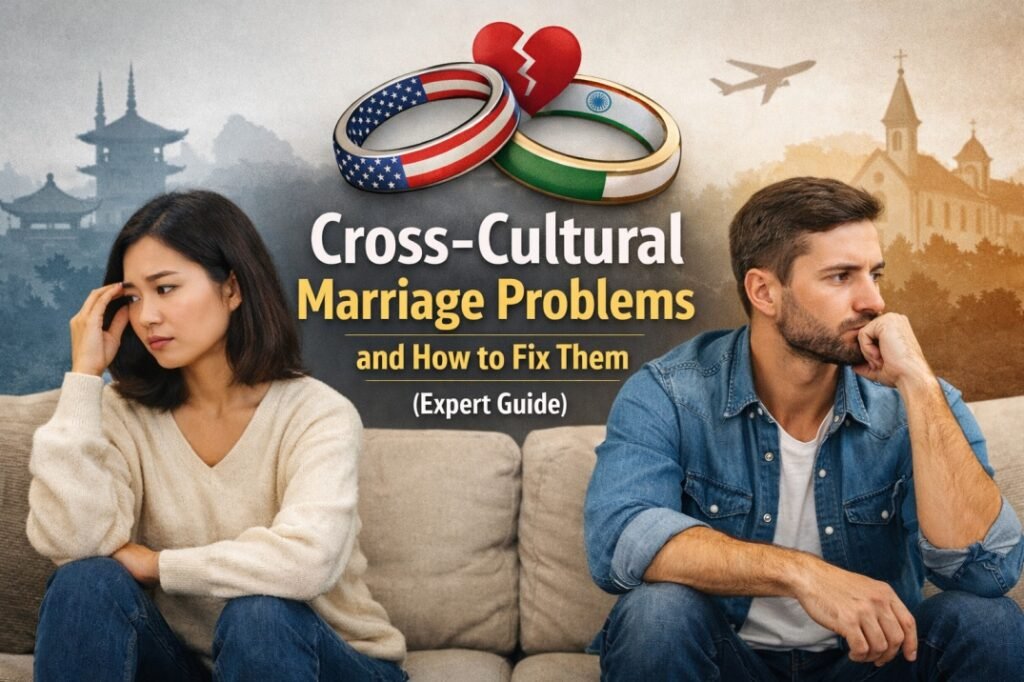
Many couples reach out to LeapHope with cross-cultural marriage problems. The same concerns keep coming up, moving abroad, not understanding each other’s needs, and frequent conflicts that repeat without real resolution.
We see this most in couples in their 20s and 30s. They’re open to dating across cultures, the relationship feels easy in the beginning, and things seem to work during the dating phase.
But marriage changes the situation.
It’s no longer just two people. It brings in families, expectations, values, and completely different ways of living. This is where many couples start feeling misunderstood, even though the intention isn’t wrong.
In most cases, the problem isn’t just cultural differences, it’s how those differences are interpreted.
In this article, our marriage therapists break down the exact problems couples face in cross-cultural marriages and how to fix them.
What Challenges Couples Face in Cross-Cultural Marriage
Here are some of the most common problems couples tell us they face, even when they love each other and want the relationship to work.
Communication Differences
In cross-cultural marriage, communication becomes difficult when deeper topics come up.
One partner may be direct and expect clear answers, while the other communicates indirectly to avoid conflict. This creates confusion where one feels things are too blunt, and the other feels nothing is being said clearly.
Some prefer to address issues immediately, while others avoid confrontation. Emotional expression also differs, one may speak openly, while the other stays reserved, making each feel misunderstood.
Even tone, silence, eye contact, or language gaps can be misinterpreted, leading to situations where both are talking, but not truly understanding each other.
Family Expectations and In-Law Pressure
In cross-cultural marriage, family expectations often become a major source of conflict.
In many Asian cultures, involving parents in decisions is normal, while in cultures like the US or UK, couples are expected to be independent. This creates tension when one partner sees family involvement as natural and the other sees it as interference.
There are also differences in how strongly one feels responsible toward parents. In some cultures, fulfilling family duties is expected, while in others, the focus is on the couple’s independence.
Over time, this leads to situations where one partner feels pressured by in-laws, and the other feels stuck between their spouse and their family.
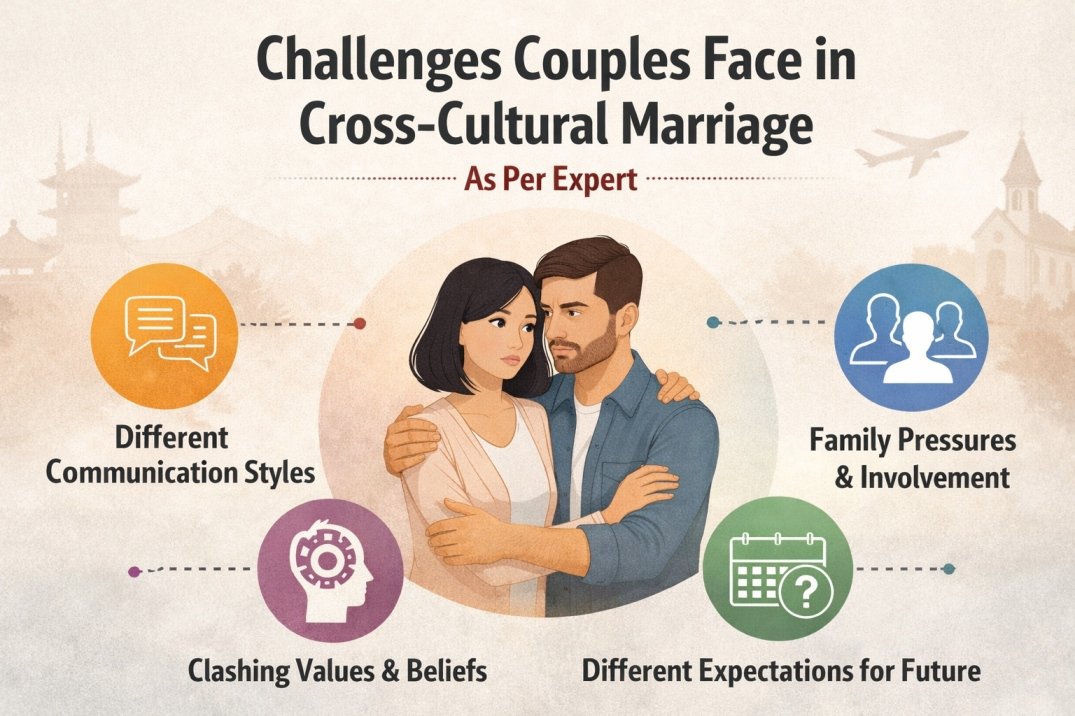
Differences in Values and Life Priorities
In cross-cultural marriage, value differences become clear when real decisions start.
Views on marriage, money, and roles can be very different. One partner may expect equal sharing of responsibilities, while the other may have more defined expectations based on upbringing. Spending habits and financial priorities can also clash.
Decision-making becomes difficult when one prefers independent choices and the other expects joint decisions. Over time, differences in long-term goals, such as career focus, lifestyle, or where to live, can lead to ongoing tension if not aligned.
Daily Lifestyle Differences
In cross-cultural marriage, daily habits often become a constant source of friction.
Food preferences, routines, and punctuality can be very different. One partner may follow a fixed schedule, while the other is more flexible, leading to irritation over time.
Expectations around gender roles and social behaviour also vary. What feels normal to one can feel inappropriate or uncomfortable to the other.
These are small issues, but because they happen every day, they often turn into repeated conflicts and ongoing frustration.
Feeling Misunderstood or Disrespected
In cross-cultural marriage, the same behaviour can be interpreted very differently.
What one partner sees as normal or respectful may feel rude, distant, or dismissive to the other. Cultural definitions of respect vary, whether it’s tone, response time, or how opinions are expressed.
Because of this, emotional reactions often don’t match the actual intent, leading to situations where both partners feel hurt, even when neither meant to cause it.
Identity Conflict and Losing Yourself
In cross-cultural marriage, it’s common for one partner to adjust more than the other.
Over time, this can mean changing habits, beliefs, or behaviour just to avoid conflict. What starts as adjustment can slowly turn into ignoring your own background and preferences.
This often leads to a feeling of disconnection from yourself, where you’re trying to make the relationship work but no longer feel like who you were before.
Power Imbalance in the Relationship
In cross-cultural marriage, one partner may end up having more control due to circumstances.
Financial dependency or visa and relocation issues can make one partner rely more on the other. This can affect decision-making, where one person’s choices carry more weight.
Over time, this imbalance can create frustration, as one partner feels less independent while the other may not fully realise the impact of that control.
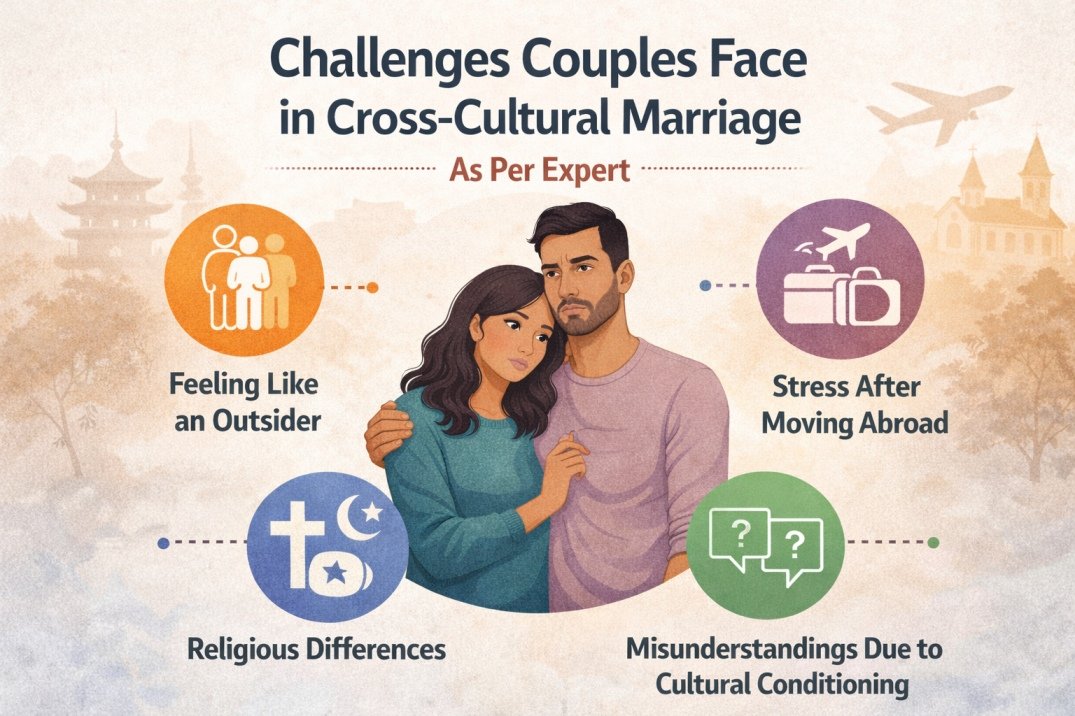
Feeling Like an Outsider
In cross-cultural marriage, one partner may struggle to fully feel part of the other’s world.
Not fitting into the partner’s culture or social environment, and not understanding the language or customs, can create a sense of exclusion. Even simple situations can make one feel left out.
Over time, this creates a “guest vs insider” dynamic, where one partner feels they belong naturally, while the other is constantly trying to adjust and fit in.
Stress After Moving Abroad
In cross-cultural marriage, moving abroad can put additional strain on the relationship.
Mental exhaustion from adjusting to a new country affects emotional connection, making even small issues harder to handle. Isolation and homesickness can increase frustration and sensitivity.
Often, one partner adapts faster while the other struggles, creating imbalance and tension in how both experience the same situation.
Religious Differences
In cross-cultural marriage, differences in belief systems can create ongoing tension.
Partners may follow different religions, leading to disagreements around rituals, practices, and daily habits. What feels important to one may not hold the same meaning for the other. This can become more complex when families are involved, as there may be pressure to follow specific traditions or expectations.
In some cases, these differences are also influenced by country or cultural background, where religious identity is strongly tied to social norms. This can add another layer of pressure, especially if there are underlying cultural or religious tensions.
These issues often become more difficult when thinking about the future, especially decisions around children, traditions, and how faith will be practiced.
Parenting and Children-Related Conflicts
In cross-cultural marriage, differences become more visible when it comes to children.
Decisions around language, cultural identity, and traditions can create conflict, as both partners may want to pass on their own background. Parenting styles can also differ, where one may focus on independence and open expression, while the other may value discipline and structured upbringing.
These differences can lead to confusion and disagreements if expectations are not discussed clearly.
External Pressure and Social Judgment
In cross-cultural marriage, pressure often comes not just from within the relationship but from outside as well.
Families may not fully accept the relationship, especially when cultural or religious differences are strong. There can also be stereotypes or assumptions from others about the relationship, which adds stress.
Over time, social judgment and lack of support can create additional pressure on the couple, making it harder to manage existing issues.
Misunderstandings Due to Cultural Conditioning
In cross-cultural marriage, many conflicts come from how each partner has been shaped by their upbringing, not from personality.
One partner may think in an individual way, focusing on personal choice, while the other is used to a more collective mindset. Emotional expression can also differ, where one is open and direct, and the other is more reserved.
Because of this, the same situation is understood differently, leading to misunderstandings even when both partners have good intentions.
Small Issues Becoming Bigger Problems Over Time
In cross-cultural marriage, many problems don’t start big, they build slowly.
Small differences in habits, expectations, or behaviour keep repeating without real resolution. Over time, this creates emotional exhaustion, where even minor issues start triggering stronger reactions.
If not addressed early, these repeated conflicts turn into frustration and resentment, making the relationship feel heavier than it should.
Reality After Commitment Feels Different
In cross-cultural marriage, things often feel different after commitment.
Many differences don’t show during dating, but become clear once daily life, responsibilities, and long-term decisions come in. What seemed manageable earlier starts creating friction.
Over time, deeper issues surface, making couples realise that the relationship involves more adjustment than they initially expected.
Note: Most cross-cultural couples are willing to understand differences and work on their marriage. They usually try to resolve issues unless there are serious concerns like infidelity or loss of trust.
How to Fix Cross-Cultural Marriage Problems (Marriage Therapist’s Approach)
Improve Communication With Structure, Not Assumptions
Don’t rely on assumptions during conversations. Pause and ask what your partner actually means instead of replying immediately, especially during arguments.
In cross-cultural marriage, one partner may be direct, while the other may communicate indirectly or avoid conflict. This can create confusion where one feels things are too blunt, and the other feels nothing is being said clearly.
You can also openly discuss your communication styles, how you express emotions, handle conflict, or respond in difficult situations. Most of this is shaped by upbringing, not intention, and there is nothing inherently wrong with either style.
Focusing on understanding meaning instead of reacting to words helps reduce unnecessary conflict.
Understand Behaviour Before You Judge It
In cross-cultural marriage, behaviour often gets judged too quickly based on your own standards.
What feels normal in one culture can feel uncomfortable in another. For example, in many Indian or Chinese families, being involved in each other’s decisions or asking personal questions is seen as care. In contrast, in American or UK cultures, this may feel intrusive. In Japanese culture, being reserved and avoiding direct confrontation is considered respectful, while in more direct cultures, it may come across as distant or unclear.
The problem starts when these differences are treated as wrong instead of different.
Before reacting, try to understand what that behaviour represents for your partner. When you understand the intention behind it, your response becomes more balanced and less emotional.
Set Clear Boundaries With Family
In cross-cultural marriage, confusion around family roles often creates repeated conflict.
In some cultures like Indian or Chinese, regular involvement of parents is normal, whether it’s advice, visits, or decision-making. In contrast, in American or UK cultures, couples are expected to manage things independently after marriage.
Problems start when these expectations are not clearly discussed. One partner may see family involvement as support, while the other sees it as interference.
Instead of reacting each time, decide together what level of involvement works for both of you. Be clear about what stays between the two of you and where family input is acceptable. Consistency in these boundaries prevents the same conflict from repeating.
Align Core Values, Not Just Daily Habits
In cross-cultural marriage, focusing only on small habits doesn’t solve deeper issues.
Conflicts around money, roles, independence, or priorities usually come from underlying values, not the situation itself. For example, one partner may value financial security and saving, while the other prioritises spending on experiences or lifestyle. One may expect clearly defined roles, while the other prefers flexibility.
If these differences are not discussed, the same arguments keep repeating in different forms.
Instead of trying to fix surface-level behaviour, focus on what matters underneath. Talk clearly about what you expect from marriage, how you view responsibilities, and what your long-term priorities are. When values are understood or aligned, daily conflicts reduce naturally.
Address Daily Differences Before They Turn Into Patterns
In cross-cultural marriage, most stress comes from small things that repeat every day.
Differences in routines, time habits, cleanliness, social life, or how you spend your free time can slowly build irritation. One partner may prefer a structured routine, while the other is more flexible. One may want to go out, meet friends, or socialise, while the other expects a more settled lifestyle after marriage.
These are not major issues on their own, but when they keep repeating without discussion, they turn into patterns.
Instead of ignoring them, address these differences early and agree on what works for both of you. Small adjustments made consistently prevent long-term frustration.
Maintain Your Identity While Adapting
In cross-cultural marriage, one partner often adjusts more to keep things smooth.
Over time, this can mean changing habits, preferences, or behaviour just to avoid conflict. What starts as adjustment can slowly turn into losing your own identity.
This usually happens when one partner keeps compromising while the other continues as usual. It may not be intentional, but it creates imbalance.
Instead of over-adjusting, be clear about what matters to you and what you are not comfortable changing. Adapt where needed, but not at the cost of losing your own sense of self.
Create Balance in Power and Decision-Making
In cross-cultural marriage, imbalance can develop without being obvious.
Situations like relocation, visa dependency, or financial reliance can give one partner more control over decisions. Even daily choices may start leaning toward one side, not because of intent, but because of circumstances.
Over time, this can make one partner feel less independent or unheard.
To avoid this, make decisions consciously as a couple. Discuss finances openly, share responsibilities, and ensure both voices are equally considered. A balanced structure prevents silent frustration from building.
Actively Include Each Other in Your World
In cross-cultural marriage, one partner can easily feel left out without it being intentional.
This happens when conversations happen in a language they don’t understand, or when cultural references, jokes, or family dynamics are not explained. Over time, this creates distance and a feeling of not fully belonging.
Instead of assuming they will adjust, make an effort to include them. Explain context, translate when needed, and involve them in your social and cultural environment.
When both partners feel included, the “outsider” feeling reduces and connection improves.
Discuss Religion and Parenting Expectations Early
In cross-cultural marriage, many serious conflicts come later because these topics were never discussed clearly.
Differences in religious beliefs can affect daily practices, festivals, and long-term expectations. These differences become more sensitive when families are involved or when there is pressure to follow certain traditions.
Parenting adds another layer. Decisions around language, cultural identity, discipline, and values can become difficult if both partners have different expectations.
Instead of delaying these conversations, discuss them clearly and early. Agree on what matters, what can be flexible, and how you want to handle these areas together.
Build a Shared Way of Living Instead of Choosing One Culture
In cross-cultural marriage, trying to follow only one culture often creates imbalance.
If one partner adjusts completely while the other continues as usual, it leads to frustration over time. Trying to “fit into” one system doesn’t work long-term.
Instead, focus on creating your own way of living that works for both of you. This can include combining traditions, adjusting routines, and deciding what actually matters in your day-to-day life.
A shared system reduces pressure, avoids constant comparison, and helps both partners feel equally valued in the relationship.
When You Should Consider Marriage Counselling
If the same issues keep repeating and nothing is improving, it’s a sign the problem needs a different approach.
You should consider counselling if you are facing:
- Repeated arguments over the same issues
- Difficulty understanding each other
- Ongoing stress around family, culture, or expectations
- Feeling unheard or emotionally distant
- Challenges after moving abroad
- Imbalance in decisions or roles
- Confusion around religion, children, or future plans
Online marriage counselling at LeapHope helps you understand the root of these conflicts and handle them in a more structured and effective way.
How Counselling Helps in Cross-Cultural Marriage
Counselling helps you understand the root of conflicts, not just the arguments.
It focuses on identifying repeated patterns, improving communication, and aligning expectations around values, family, and future decisions. The approach is structured, where both partners are guided to understand differences clearly instead of reacting to them.
If you are still in the relationship or engagement stage, pre-marriage counselling helps you discuss important areas early and avoid future conflict.
A structured counselling approach makes it easier to handle differences without constant misunderstanding.
Bottom Line
Cross-cultural marriage problems are not caused by culture itself, but by misunderstanding, different expectations, and unspoken assumptions.
Most conflicts come from how situations are interpreted, not from a lack of love or effort. When these differences are understood clearly, many issues become easier to manage.
The focus should not be on changing each other, but on understanding, adjusting where needed, and creating a way of living that works for both of you.
With clarity, communication, and the right approach, cross-cultural marriages can become more stable and stronger over time.