
At LeapHope, we regularly speak with women and men from around the world who are struggling with painful questions after discovering infidelity. But one question comes up far more often than people admit out loud:
“Should I call the woman my husband cheated with?”
“Should I message the guy my girlfriend cheated on me with?”
“Will contacting the affair partner finally give me the truth?”
“Should I hear their side of the story before deciding what to do next?”
For many people, the urge to contact the person their partner cheated with can become overwhelming. Some want answers. Some want closure. Some want proof that they are not being lied to anymore. Others simply want the mental torture to stop.
In this article, we will explain the real psychological reasons people feel this intense urge after betrayal, what people secretly hope will happen after making contact, when it may help, when it often makes the trauma worse, and what actually helps emotionally after infidelity.
Deep Reasons Why You Feel Such a Strong Urge to Contact the Affair Partner
Your Brain Is Desperate for Missing Answers
One of the biggest reasons people feel such a strong urge to contact the affair partner is because betrayal creates emotional uncertainty that the brain struggles to tolerate. After cheating is discovered, many people are left with unanswered questions, missing details, deleted messages, changing timelines, and partial confessions that never fully add up.
This becomes even worse when there has been trickle truth, where the cheating partner reveals information slowly over time instead of being fully honest from the beginning. Every new detail can make the betrayed partner feel like there is still more being hidden.
Psychologically, the brain has a hard time processing incomplete emotional narratives. When trust breaks, the mind keeps searching for certainty and tries to “solve” the betrayal by gathering more information.
That is why many people become obsessed with hearing the affair partner’s side of the story. It is often less about wanting connection with them, and more about no longer trusting the version of events coming from their own partner.
You Are Trying to Regain Emotional Control
Cheating can make people feel emotionally powerless. Many betrayed partners suddenly feel unstable, confused, rejected, and unable to trust their own reality anymore. When someone lies, hides messages, or slowly reveals the truth over time, it can feel like your entire emotional safety has been shaken.
In that state, contacting the affair partner can feel like taking control back. Your mind starts believing that doing something is better than sitting with unanswered questions and emotional pain. Reaching out may feel like a way to finally get clarity, force honesty, or stop feeling helpless.
But many people later realize the urge was not only about the affair partner. It was also about trying to escape the emotional chaos created by the betrayal.
You Want to Understand Why You Were Replaced
After infidelity, many people become stuck comparing themselves to the affair partner. Thoughts like “What did they have that I didn’t?” or “Why were they worth risking the relationship for?” can start replaying constantly in the mind.
People often begin questioning their appearance, personality, age, sexuality, intelligence, or emotional value. Even confident people can suddenly feel insecure after betrayal. The affair partner becomes someone they measure themselves against, even if they never cared about that person before.
This is one reason the urge to contact the affair partner can become so strong. Part of the mind starts believing that understanding them will somehow explain the betrayal and reduce the pain of feeling replaced.
The Affair Partner Has Become Emotionally Symbolic
After betrayal, the affair partner often stops feeling like just another person. In the mind of the betrayed partner, they can slowly become a symbol of rejection, humiliation, abandonment, insecurity, and emotional pain.
That is why people sometimes become obsessed with someone they never even cared about before. The affair partner starts representing the moment life changed emotionally. They become connected to the shock, the comparison, the lies, and the feeling of no longer being “enough.”
This symbolic meaning is one reason the urge to contact them can feel so intense. The brain starts treating them like the key to understanding the betrayal, even though the real emotional wound usually runs much deeper than that person alone.
Part of You Believes Contact Will Finally Bring Closure
Many people secretly believe that one conversation with the affair partner will finally calm their mind. They imagine that hearing the full truth, getting answers, or confronting the situation directly will somehow stop the overthinking and emotional pain.
This is especially common when there are deleted messages, changing stories, or things that still do not make sense. The brain starts thinking, “If I can just know everything, maybe I can finally move on.”
The problem is that emotional closure does not always come from more information. Sometimes new details create even more questions, more comparison, and more mental replaying. That is why contacting the affair partner often does not bring the peace people hoped for emotionally.
Part of You Wants Validation That You Are Not Crazy
Many betrayed partners start doubting their own instincts after infidelity, especially if they were lied to, manipulated, or repeatedly told that “nothing was going on.” Some people feel emotionally gaslit for months before the truth finally comes out.
Because of this, part of the urge to contact the affair partner comes from wanting confirmation that your feelings and suspicions were real all along. You may want someone else to finally admit what happened, confirm the lies, or validate the emotional pain you have been carrying.
This is also why many people become desperate to hear the affair partner’s version of events. It is not always about wanting connection with them. Sometimes it is about wanting to feel sane again after living in confusion and doubt.
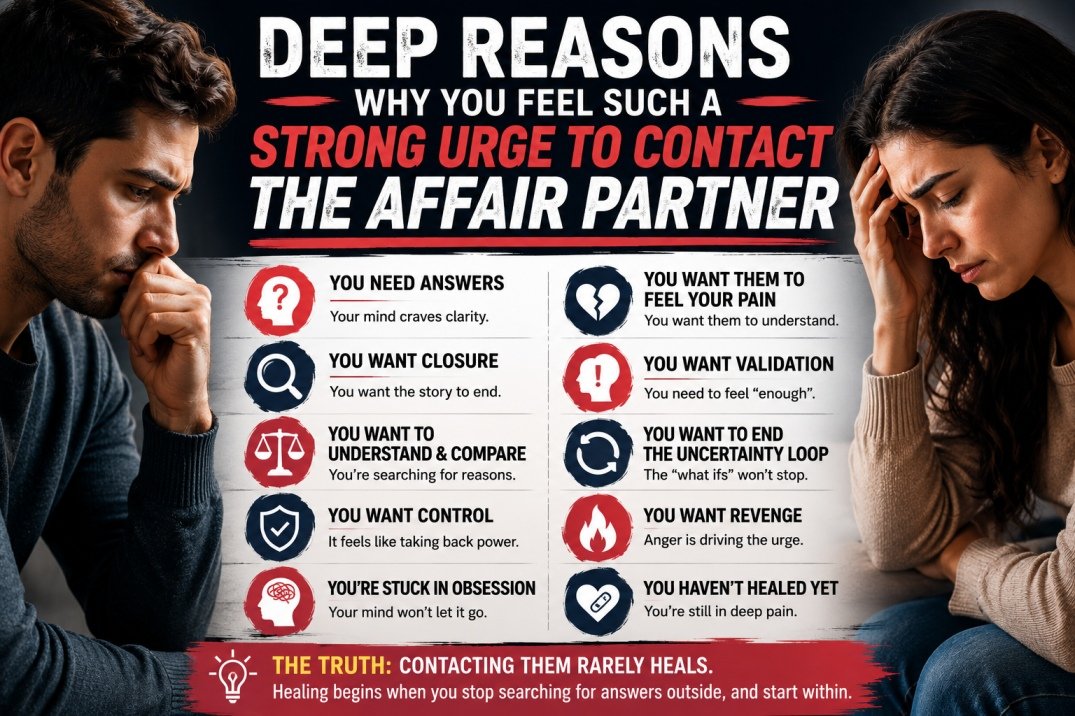
Part of You May Simply Want the Pain Released Somewhere
Infidelity creates a huge amount of emotional pressure. Anger, humiliation, resentment, rejection, and sadness can build up so intensely that many people feel desperate to release those emotions somewhere.
For some betrayed partners, contacting the affair partner becomes an emotional outlet. They may want to confront them, expose the truth, express their anger, or make someone else understand the damage that was caused. Some people also want the affair partner to feel guilt, shame, or consequences for their role in the betrayal.
This does not make someone “crazy.” It is a very human reaction to emotional pain. But acting from emotional overload can sometimes create even more chaos afterward, especially if the conversation does not go the way the person hoped.
Why Contacting the Person Your Partner Cheated With Often Becomes a Bad Idea
You Often Leave With More Questions, Not Less
Many people contact the affair partner hoping they will finally get clarity and peace of mind. But in reality, the conversation often creates even more confusion. The stories may not fully match, important details may still be missing, or new information may raise even more painful questions.
Instead of calming the mind, the brain can become even more stuck trying to figure out what is true and what is not. This is one reason many betrayed partners say the contact gave them temporary relief at first, but made the obsession and overthinking worse afterward.
Contact Rarely Stops the Obsession Completely
Many people believe that once they hear the full story, the obsession will finally end. But emotionally, that is often not what happens. New details can create new mental images, new comparisons, and new questions that the brain keeps replaying afterward.
Even when people get answers, they may still continue thinking about the affair partner constantly. This happens because the real wound is usually not just missing information. It is the betrayal, rejection, insecurity, and emotional shock created by the cheating itself.
That is why factual clarity does not always bring emotional peace.
The Affair Partner May Not Respond the Way You Imagined
Many people secretly hope the affair partner will apologize, tell the full truth, or validate their pain. But in reality, the response can be very different from what they emotionally imagined beforehand.
Some affair partners become defensive, deny things, protect themselves, or continue protecting the cheating partner. Others may ignore the message completely, give cold answers, or act like they do not care. In some situations, they may even lie, manipulate the situation further, or enjoy the emotional power the contact gives them.
When someone is already emotionally vulnerable after betrayal, these reactions can create even more pain and emotional spiraling afterward.
Sometimes the Silence Hurts More Than the Truth
One of the most painful outcomes is when the affair partner never responds at all. Many betrayed partners spend days imagining the conversation, hoping for answers, honesty, or even basic human empathy. When they are ignored instead, it can feel like another emotional rejection layered on top of the betrayal itself.
Some people describe the silence as emotionally haunting because it leaves the mind stuck in the same uncertainty as before. Instead of getting closure, they are left replaying the situation even more, wondering what the silence meant and why they were not “worth” a response.
This is one reason contacting the affair partner can sometimes deepen the emotional wound instead of helping it heal.
When Contacting the Affair Partner Might Actually Help
There are situations where contacting the affair partner may genuinely help bring clarity, especially when both people were being lied to or manipulated by the same person. In some cases, the affair partner may not even know the full reality of the relationship.
- Your partner told the affair partner they were single, separated, or “basically divorced”
- Both you and the affair partner were being lied to differently
- You suspect there is still ongoing contact or a hidden second relationship
- Your partner keeps changing the story and nothing fully adds up
- The affair partner’s spouse or partner is also unknowingly being cheated on
- There are serious concerns involving money, pregnancy, health, or sexually transmitted infections
- You need factual clarity before deciding whether to stay, separate, or rebuild trust
In these situations, some people feel the conversation gave them important clarity they were not getting from their partner. But even then, emotional closure is never guaranteed, and the conversation can still become emotionally painful afterward.
So, Should You Really Contact the Person Your Partner Cheated With?

As per experts, no. Contacting the person your partner cheated with does not give the emotional relief people hope for. Many betrayed partners believe the conversation will finally calm their mind, confirm the truth, or stop the obsession. But emotionally, it often becomes another part of the trauma instead of closure.
Contacting them can become more harmful when:
- You are hoping they will repair your insecurity or emotional pain
- You need validation because your partner’s lies made you doubt your own reality
- You are already obsessively checking social media, comparing yourself, or replaying the affair mentally
- You are emotionally spiraling and hoping one conversation will stop the overthinking
- Part of you wants revenge, emotional release, or wants them to suffer too
- You secretly believe hearing “the full truth” will completely heal the obsession
In these situations, the conversation often creates more rumination, comparison, emotional fixation, and trauma instead of peace. The real wound is usually the betrayal itself, not the affair partner alone.
Questions to Ask Yourself Before Reaching Out
Before contacting the affair partner, it is important to slow down and honestly ask yourself what you are emotionally hoping the conversation will give you. Many people believe they are only looking for truth, but underneath that, they may also be searching for relief, reassurance, validation, or emotional control after betrayal.
- What am I truly hoping they will give me?
- Am I seeking truth or emotional relief?
- Am I emotionally prepared for lies, silence, or indifference?
- Will this realistically help me heal?
- Could this deepen the obsession instead?
- Am I trying to solve emotional pain through emotional exposure?
Sometimes these questions reveal that the real wound is not the affair partner themselves, but the emotional chaos created by betrayal, rejection, and broken trust.
What To Do Instead of Contacting the Person Your Partner Cheated With
- Focus on the betrayal itself, not just the affair partner
The deeper wound is usually the broken trust, dishonesty, rejection, and emotional shock caused by the cheating, not the affair partner alone. - Stop feeding the obsession loop
Constantly checking social media, replaying details, comparing yourself, or imagining conversations with them usually keeps the nervous system stuck in the trauma. - Rebuild the parts of yourself the betrayal damaged
Infidelity can damage self-worth, confidence, emotional safety, and identity. Healing often begins when you stop measuring yourself against the affair partner. - Process the betrayal with support
Betrayal trauma can create intrusive thoughts, emotional spiraling, anxiety, and obsessive rumination. Therapy or relationship counseling often helps more than continuing to search for answers inside the affair.
When To Seek Professional Help
If the betrayal is affecting your sleep, emotional stability, daily functioning, or ability to stop thinking about the affair, it may be a sign that the emotional impact has become deeper than normal relationship stress.
Common signs include:
- Intrusive thoughts about the affair
- Obsessive checking or comparison behaviors
- Emotional spiraling and anxiety
- Sleep problems or panic attacks
- Constant rumination and overthinking
- Feeling emotionally stuck after the betrayal
For people struggling with betrayal trauma, obsessive thoughts, anxiety, or emotional instability after infidelity, online therapy with a psychologist can help process the emotional pain in a healthier way.
If the focus is rebuilding trust, repairing communication, or deciding the future of the relationship, online marriage counseling or couples therapy may also help.
Final Thoughts
Most people are not truly trying to contact the affair partner because they want a relationship or connection with them. They are usually trying to escape the uncertainty, comparison, helplessness, rejection, and emotional chaos created by betrayal.
After infidelity, the mind desperately searches for answers that feel like they will finally bring relief. But many people eventually realize that emotional healing rarely comes from the affair partner themselves.
The real healing usually begins when you stop searching for peace inside the person connected to the betrayal and start focusing on your own recovery instead.