

At LeapHope, our online sex therapists hear this concern very often: “Sex feels like a chore to me.” Some people say it feels like a chore to their husband or wife. Others worry because they still love their partner but no longer feel excited about intimacy.
If this sounds like you, you are not alone. Many couples go through times when sex starts to feel like pressure, duty, or something to get over with instead of something warm and connecting.
This does not mean your relationship is broken or that something is wrong with you. Usually, it means stress, tiredness, emotions, health changes, or relationship issues are getting in the way of desire.
The good news is that this is common, and it can improve once you understand what is causing it.
When Sex Starts Feeling Like an Obligation Instead of Intimacy
Psychologically, sex begins to feel like an obligation when desire is replaced by pressure. Instead of wanting closeness, you feel expected to provide it, and your mind shifts from connection to compliance. You may agree to sex to avoid tension, guilt, or conflict rather than from genuine desire.
This often occurs when there is performance anxiety, fear of disappointing your partner, or pressure to meet expectations. If intimacy becomes linked to criticism, demands, or negative comments about your body or response, the brain can start associating sex with stress rather than pleasure.
Desire also weakens when autonomy and emotional safety are low. Feeling disrespected, unheard, or disconnected can make physical closeness feel forced. When unresolved relationship tensions remain but sex is still expected, intimacy may begin to feel like a duty rather than a shared experience.
Over time, repeated pressure can create mental distance during sex. You may feel rushed, detached, or focused on finishing rather than being present. The goal becomes ending the situation smoothly so both partners can relax, not enjoying the experience itself.
You can care about your partner and still feel emotionally withdrawn during intimacy. In these moments, sex stops feeling like connection and starts feeling like something you need to get through.
Why Sex Can Feel Like a Chore – The Real Reasons (Not Just Low Libido)
Sex rarely feels like a chore because of one single issue. It is usually the result of multiple factors building up over time, such as emotional strain, stress, pressure, health changes, or relationship problems.
Low libido is only one part of the picture. Even people who still feel attraction can experience sex as draining when their mind is tense, their body is exhausted, or intimacy feels expected rather than wanted.
Read below for the key reasons why sex may be feeling like a chore to you or your partner.
Pressure to Perform or Satisfy Your Partner
When couples have sex frequently, expectations about duration, intensity, or climax can naturally increase. It is normal for both partners to want satisfying sex. However, when preferences turn into demands such as asking a man to last longer, not finish early, or maintain certain positions, it can create significant mental pressure. Instead of enjoying the moment, he may start monitoring timing and control, which increases anxiety and physical tension.
Many women experience pressure too. Some men expect sex even when their partner is tired, stressed, in pain, or not emotionally ready. Feeling obliged to participate rather than genuinely wanting to can reduce arousal and create discomfort or detachment.
In both cases, sex shifts from mutual connection to performance. When one partner feels responsible for delivering a certain outcome, intimacy can start to feel like a task to complete rather than something shared and enjoyable.
Emotional Disconnection Outside the Bedroom
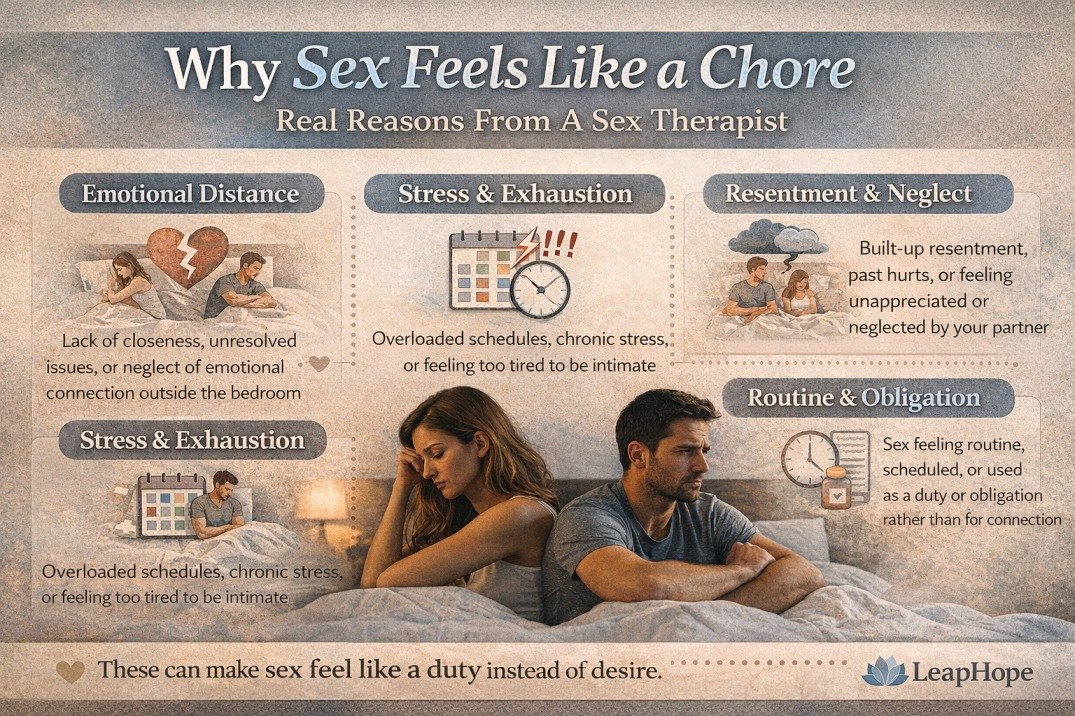
Emotional disconnection outside the bedroom directly affects what happens inside it. When couples carry unresolved anger, feeling taken for granted, power struggles, hurt, or tension from the day, the mind does not switch to desire just because sex is initiated. The body may be present, but emotionally, the person is still stuck in the conflict.
Some couples even continue arguments in the bedroom. In certain cases, one partner may offer sex as a way to end the fight, seek reassurance, or “fix” the situation, while the other is still replaying what happened, the harsh words, lack of support, or feeling disrespected. This mismatch blocks arousal and creates discomfort.
When sex happens in this state, it can feel forced, confusing, or empty rather than connecting. Instead of closeness, it highlights the distance. Over time, the brain starts associating sex with unresolved conflict, making it feel like something to endure rather than enjoy.
Stress, Exhaustion, and Mental Load
High stress and constant responsibilities leave little energy for sex. Work pressure, burnout, parenting duties, caregiving, and daily decision-making can drain both the body and mind. By the end of the day, many people feel physically tired, mentally overloaded, or emotionally empty.
Sex usually happens at night, exactly when energy is lowest. When sleep deprivation and fatigue are present, the body prioritises rest, not arousal. Even if you care about your partner, desire may simply not activate.
Biologically, chronic stress keeps the body in a “survival” state. Stress hormones like cortisol stay elevated, which suppresses sexual arousal, lubrication, erection quality, and overall responsiveness. In this state, sex can feel like extra effort instead of relief or pleasure.
This affects both men and women, though it may show up differently, lower interest, difficulty becoming aroused, reduced stamina, or wanting sleep more than intimacy.
Internal Factors That Affect Your Ability to Feel Desire
Sometimes the difficulty is not about the relationship or situation but what is happening internally. Anxiety, depression, emotional numbness, body image concerns, past trauma, or fear of vulnerability can reduce the mind’s openness to sex even when attraction exists.
Neurodivergence, including ADHD, can also affect sexual experience. The brain may struggle to shift from task mode to intimacy mode. Distractibility can make it hard to stay mentally present, while sensory sensitivities may cause discomfort with touch, noise, or physical closeness.
Some people with ADHD need novelty to stay engaged, so routine sex can feel unstimulating. By the end of the day, executive fatigue can leave very little mental energy for intimacy. Rejection sensitivity may also increase pressure to “perform correctly,” which further blocks desire.
These responses reflect differences in nervous system functioning, not personal flaws or lack of love.
Routine Without Emotional or Sensory Engagement
Some couples fall into a fixed routine, coming home from work, having dinner, scrolling on phones, watching TV, then sex, then sleep. There is little conversation, no emotional check-in, and no transition from daily stress to intimacy.
Basic connection questions like “How was your day?” or “Is something bothering you?” may disappear. Without emotional engagement, sex can feel like the only interaction left to share, almost like a scheduled task rather than a chosen moment.
When intimacy happens in this automatic way, without warmth, curiosity, or build-up, it can start to feel like something expected at the end of the day, just another item to complete before sleeping. Over time, routine replaces desire, and sex begins to feel mechanical instead of meaningful.
Why Sex Can Feel Like a Task Even in Loving Relationships
Many people say, “I love my wife,” “I love my husband,” or couples deeply in love with their boyfriend or girlfriend, yet when it comes to sex, they feel a mental block. The love is real, but desire does not follow automatically.
Sometimes this block is linked to private struggles, secrecy issues, erectile difficulties, premature ejaculation, performance anxiety, or other sexual concerns that a person feels embarrassed to discuss. Unrelated life challenges such as financial stress, work problems, health worries, or family issues can also occupy the mind, leaving little space for sexual interest.
Love and sexual desire are connected, but they are not the same. In long-term relationships, desire often shifts from spontaneous to responsive, meaning interest may not appear on its own, especially during stressful or demanding periods.
This does not mean the relationship is failing or that love has disappeared. It often means the mind is preoccupied, anxious, or guarded, making it harder to relax into intimacy even with someone you care about deeply.
When It’s Not You – Your Partner Is the One Experiencing Sex as a Chore
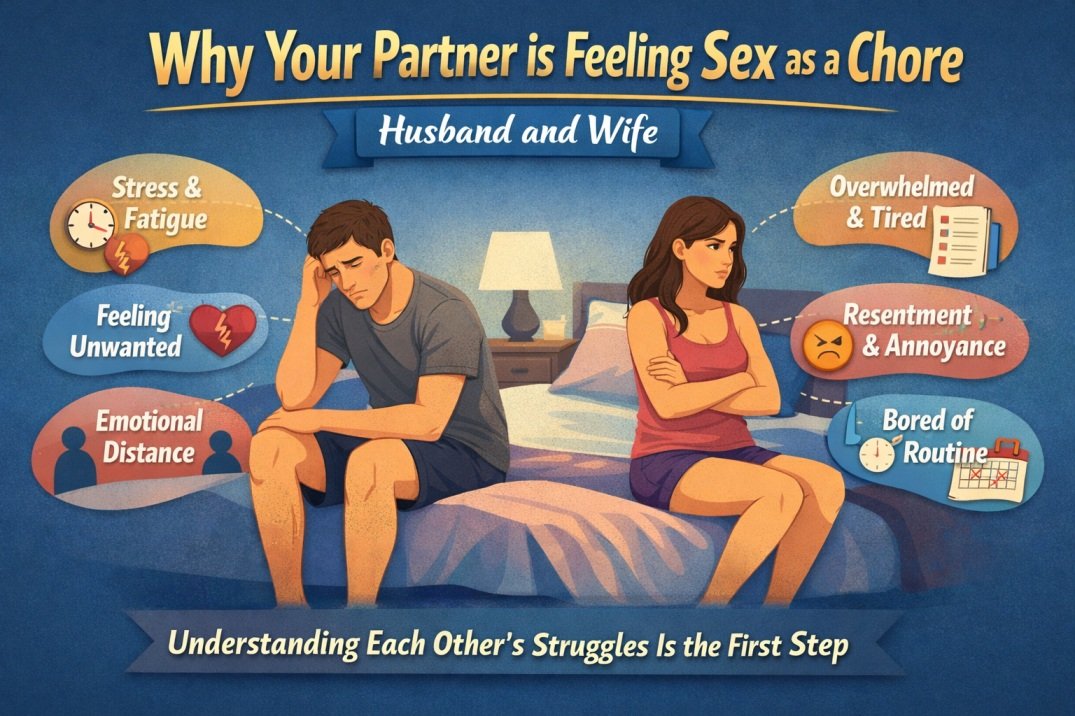
If your partner is the one avoiding sex or treating it like a duty, try not to take it as personal rejection right away. They may be mentally or physically tired, dealing with emotional strain, or simply not in a state where desire can activate.
Sometimes pressure is added unknowingly, repeated requests, expectations to perform, or treating sex as something owed rather than shared. If connection is missing and the focus is only on having sex, your partner may feel demanded rather than desired.
In these situations, pushing harder usually increases resistance. Reducing pressure and rebuilding emotional connection often makes it easier for your partner to open up about what is really affecting them.
Why Trying to Conceive Can Make Sex Feel Mechanical for Some Couples
When couples are trying to conceive, sex often becomes timed around ovulation, turning it from a choice into a “must.” Even if one or both partners are tired, stressed, or not in the mood, they may feel they cannot skip that window. This creates a psychological block where desire is replaced by obligation.
Because the goal becomes pregnancy, not pleasure, intimacy can shift into task mode. Some couples move straight to penetration to “make it count,” reducing or completely skipping foreplay. Without emotional build-up or arousal, sex can feel rushed, pressured, or purely functional.
Over time, the mind starts associating sex with pressure, timing, and performance rather than closeness. This can make it harder to feel spontaneous desire even outside fertile days.
This pattern is very common during the trying-to-conceive phase, and for many couples it improves once the pressure around timing and outcome eases.
Is It Normal for Sex to Feel Less Exciting or Like a Chore After Having a Baby?
Yes, it is very common for sex to feel less exciting or even burdensome after having a baby. Hormonal changes can lower libido, especially for mothers, while physical recovery from childbirth may involve pain, dryness, or discomfort that makes intimacy difficult.
Severe sleep deprivation and constant exhaustion also reduce the body’s capacity for arousal. When you are barely rested, the body prioritises recovery over sexual interest.
Many parents, especially mothers also feel “touched out” from holding, feeding, and caring for a baby all day. Instead of craving more physical contact, they may need personal space.
At the same time, becoming a parent brings a major identity shift. Attention, energy, and emotions are centred on the child, which can leave little room for couple intimacy. None of this means love or attraction has disappeared, but the conditions that support desire are temporarily changed.
While this phase is normal, it can still feel frustrating or worrying. With time, support, rest, and gradual reconnection, intimacy often becomes easier again.
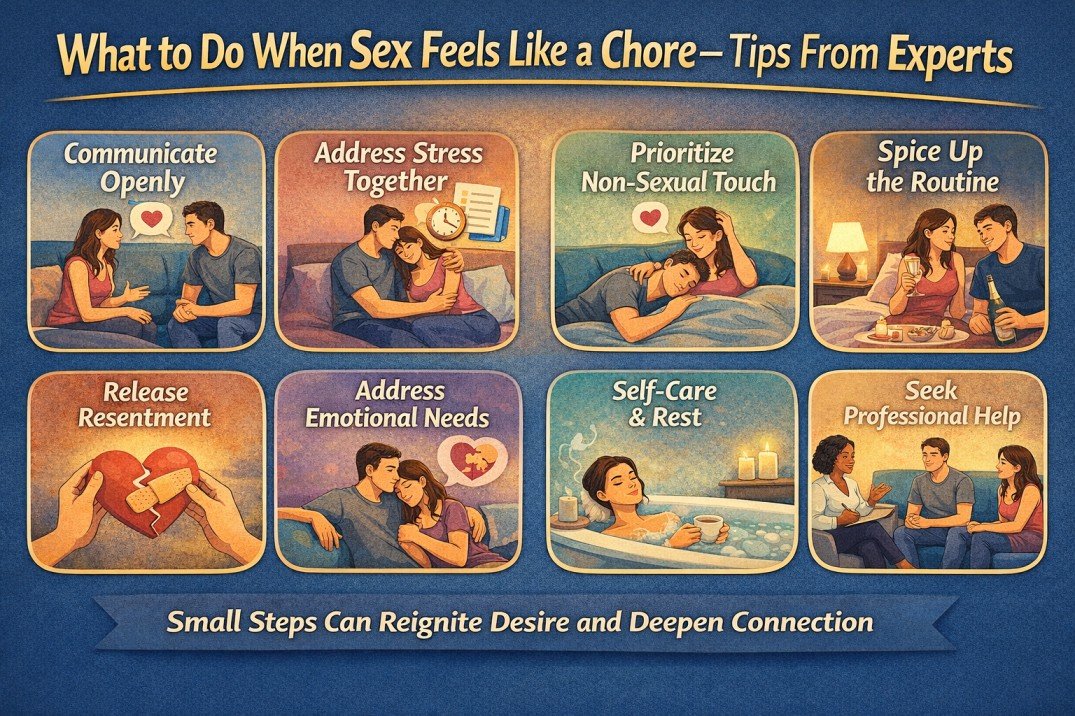
What to Do When Sex Feels Like a Chore – Tips From Experts
Here are tips from experts that help restore emotional connection and desire for each other.
First, Stop Performance Talk Immediately
Whether you are a man or a woman, stop all performance-focused talk. Avoid asking your partner to last longer, reach orgasm, or “do it properly.” These expectations create pressure and mental blocks instead of comfort.
If things end sooner than expected, it does not have to be a failure. You can rest, relax, and try again later if both feel comfortable. The goal is connection, not proving stamina or skill.
For men, do not prepare for sex automatically. Check her mood, how her day was, whether she is tired, stressed, or upset. Gentle affection, conversation, or a simple massage can help release physical and emotional tension. For women, communicating honestly about comfort and desire also reduces pressure on both sides.
Ask what feels right, now, later, or not today at all. Sometimes sleeping close, hugging, or holding each other is more helpful than forcing intimacy.
The first step is to remove pressure and mental barriers so desire has space to return naturally.
Start Working on Relationship Conflicts
If you or your partner are dealing with conflicts about family, personal matters, parenting, money, or daily life stress, start talking to understand each other, not just to prove your point. Most people focus on being right, but intimacy improves when both feel heard and supported.
If you live with extended family, support your partner during difficult moments instead of staying silent. Address ongoing issues like parenting disagreements, financial stress, or trust concerns openly, especially in today’s social media age, where insecurities can grow easily.
Try to become a peaceful place for each other in a noisy, demanding world. When the relationship feels safe and supportive, desire often returns on its own.
Address Stress and Overall Wellbeing
Chronic stress, poor sleep, health issues, and constant pressure can drain both energy and sexual desire. If you or your partner are overwhelmed, intimacy will naturally feel like extra work rather than comfort.
One major factor is physical health and stamina. Modern lifestyles, especially long sitting jobs, reduce endurance, circulation, and overall energy. After a full day of work, the body may feel exhausted quickly, making nighttime intimacy difficult even after a few minutes.
Regular physical activity helps both men and women. Exercise improves stamina, blood flow, hormone balance, mood, and overall vitality. It also activates the body’s energy systems, so you feel less fatigued and more responsive instead of drained.
Improving rest, sharing responsibilities, managing workload, and supporting mental health also matter. When the body and mind feel stronger and calmer, interest in intimacy often returns naturally.
Reintroduce Playfulness and Novelty Gradually
Flirting is good, but everyday couples often need more to break routine. Start doing small unexpected things, surprises, random dates, thoughtful gestures, or helping your partner without being asked. These actions rebuild warmth and attraction outside the bedroom.
You can also refresh your intimate life in ways that feel comfortable for both of you. Trying new positions, changing timing or place, focusing more on foreplay, or exploring shared fantasies can reduce boredom and bring back excitement. The goal is not pressure to perform something new, but to replace monotony with curiosity.
There are many ways to reconnect. Keep exploring together at a pace that feels safe and enjoyable for both partners.
Stop Having Sex Daily for Some Time
When sex happens every day, the body and mind can become accustomed to it, and the intensity may gradually decrease. A short break of a few days can help rebuild physical sensitivity, energy, and anticipation.
Even a 2–3 day pause can allow desire to build again, creating a natural sense of readiness in both body and mind. This can make intimacy feel more engaging and less routine when it resumes.
The purpose is not to withdraw from your partner, but to restore excitement so sex feels wanted rather than repetitive.
Is It Normal for Sex to Feel Like a Chore Sometimes?
If you are in the early phase of a relationship and sex already feels like a chore, it may point to serious underlying issues in attraction, comfort, trust, or relationship stability. Early on, the body and mind are usually more responsive, and desire tends to be high even when life is stressful.
In long-term relationships, however, it can be normal for sex to feel routine or pressured at times. When partners are guaranteed, responsibilities increase, and daily life brings stress, fatigue, and emotional ups and downs, desire may fluctuate.
Occasional periods of low interest are common, but if the feeling persists or causes distress, it deserves attention rather than being ignored.
When to Seek Professional Support
Consider professional help if sex consistently feels stressful, avoided, or causes ongoing tension between you and your partner. If the situation is not improving despite efforts to communicate and reconnect, professional guidance can help identify deeper psychological, relational, or physical factors.
- Ongoing distress, avoidance, or dread around sex
- Relationship conflicts escalating because of intimacy issues
- Performance anxiety, erectile difficulties, or premature ejaculation linked to psychological pressure
- Pain during sex or physical discomfort that makes intimacy difficult
- Very low or absent desire for your partner specifically
- Normal desire in general but low desire only within this relationship
- Strong anxiety, shame, or past trauma reactions during intimacy
- Feeling stuck despite trying to fix things on your own
If you relate to these signs, talking to an online sex therapist at LeapHope can help you understand why sex feels like a chore and what can be done to restore comfort and desire. Seeking support is a proactive step toward a healthier, more connected intimate life.
Final Thoughts
Experiencing sex as a chore does not define your relationship or mean that love has disappeared. In many cases, desire returns when pressure decreases, emotional connection improves, and life stress becomes more manageable. Intimacy naturally changes across different stages of life, and difficult phases do not have to be permanent.
Seeking help is not a sign of failure, it shows care for yourself, your partner, and the relationship. If the issue is linked to communication problems, conflict, or emotional distance, online marriage or couples counselling can also be helpful alongside sex therapy.
With understanding, patience, and the right support, many couples are able to rebuild comfort, closeness, and a more satisfying intimate life.
FAQs
Why does sex with my spouse feel like a chore even though I love them?
Sex with your spouse can feel like a chore even though you love them when pressure, stress, resentment, or exhaustion replace desire. You may still love your spouse, but sex starts to feel expected instead of wanted. Routine, emotional distance, or performance pressure can make sex feel like a duty rather than connection.
I no longer feel interested in sex with my partner, but I still love them. Does this mean the relationship is over?
If you no longer feel interested in sex with your partner but still love them, it does not mean the relationship is over. Loss of interest in sex can happen due to stress, health changes, hormones, emotional issues, or relationship tension. Many couples experience this and can rebuild intimacy with support and understanding.
Why don’t I feel connected during sex with my wife?
If you don’t feel connected during sex with your wife, it often means emotional connection outside the bedroom is low. Stress, unresolved conflict, routine sex, or distraction can make sex feel physical but not emotionally bonding. Feeling connected usually requires emotional closeness, communication, and presence, not just physical activity.
My partner wants sex, but I’m rarely in the mood. What should I do?
If your partner wants sex but you are rarely in the mood, first understand why your desire is low. Stress, fatigue, health problems, emotional strain, or feeling pressured can reduce interest in sex. Talk honestly with your partner and focus on rebuilding connection and reducing pressure rather than forcing yourself.
Is it normal for one partner to have much lower sex drive than the other?
Yes, it is normal for one partner to have a much lower sex drive than the other. Differences in libido are common and can be affected by age, stress, hormones, health, personality, or life circumstances. Couples often need communication and compromise to manage mismatched desire.
Why do I feel irritated or pressured when my partner asks for sex?
You may feel irritated or pressured when your partner asks for sex if sex feels expected, frequent, or disconnected from your mood. Pressure, exhaustion, unresolved conflict, or lack of emotional connection can make requests for sex feel like demands. Irritation is often a sign that your needs or boundaries are not being met.
My husband says he doesn’t feel connected during sex. What does that mean?
If your husband says he doesn’t feel connected during sex, it usually means sex feels physical but not emotionally meaningful to him. He may be missing closeness, engagement, or emotional intimacy. Stress, routine, distraction, or unresolved relationship issues can reduce the feeling of connection during sex.