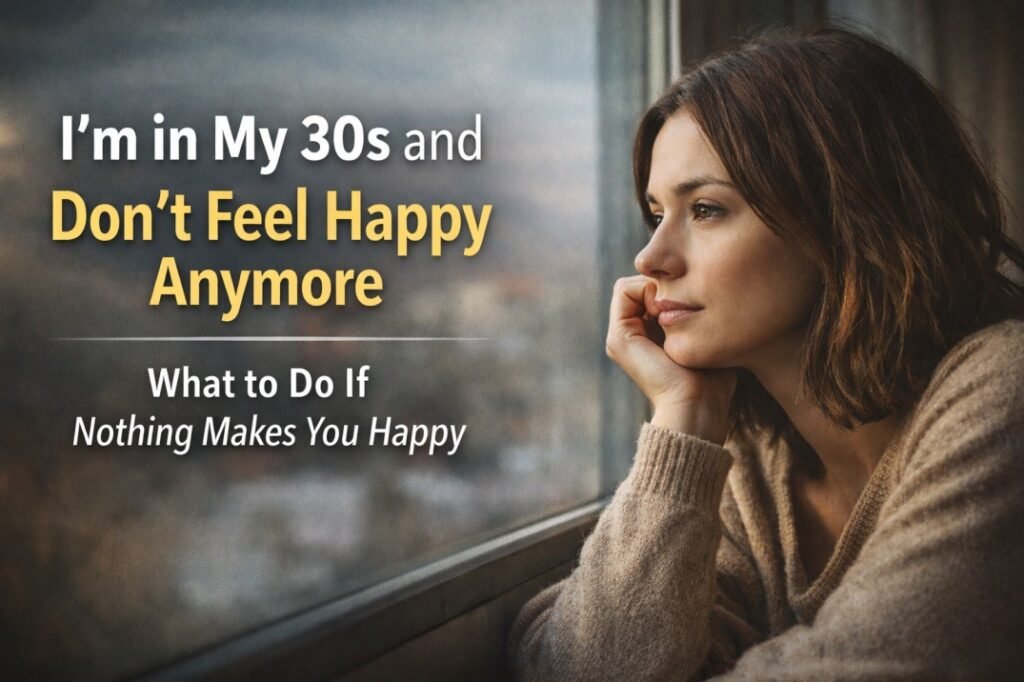
“I don’t feel happy. Nothing feels good. Even a small thing can ruin my whole day.”
A 37-year-old said this in a therapy session. There was no big crisis behind it. Just a quiet frustration that life didn’t feel the way it used to.
Sometimes it’s something small, a tense moment with your partner, a comment from someone at work, or even an unpleasant interaction with a stranger. The moment passes, but it keeps replaying in your mind for hours, sometimes the whole day. Your mood doesn’t bounce back the way it once did.
What hurts even more is when big, important milestones don’t bring the happiness you expected. Buying a car or home, having a child, achieving something you worked hard for, these are supposed to feel exciting. Instead, they may feel strangely muted, like just another event on the calendar.
Many people in their 30s quietly notice this shift. You may still function normally, but the emotional highs are lower, and the lows linger longer. You might find yourself thinking that you felt more alive, more excited, and more hopeful in your 20s or college years, even when life was objectively harder back then.
If this feels familiar, you’re not alone. And it doesn’t mean you’re ungrateful or broken. There are real psychological and life-stage reasons why joy can fade and sensitivity can increase during this period.
What “I Don’t Feel Happy Anymore” Really Means Psychologically
When someone says “I don’t feel happy anymore,” or “I don’t feel happy or sad,” or “Nothing makes me happy,” it usually doesn’t mean they are deeply miserable all the time. More often, life just feels flat, dull, or heavy. Good things don’t feel very good, and difficult moments feel hard to shake off – not extremely sad, just lingering and draining.
From a psychological point of view, this often happens when your mind and body are worn down by long-term stress, pressure, or emotional overload. Your system shifts into a kind of low-energy mode, where strong positive feelings become harder to access. Emotions don’t disappear completely; they just feel muted or distant.
In men, this may show up as irritability, low motivation, loss of interest, or pulling away from people. In women, it often appears as feeling overwhelmed, tearful, anxious, or mentally exhausted. The outward behaviour can look different, but the inner experience is very similar.
At its core, this state usually means your emotional reserves are low, not that something is wrong with you. When energy is depleted, the brain focuses on getting through the day rather than enjoying it, which is why joy fades while stress reactions remain close to the surface.
Why Small Things Can Change Your Mood, Especially in Your 30s
In your 30s, your day is already full of interactions with your partner, children, coworkers, clients, strangers, notifications, and endless online content. Most of it passes normally. But one sharp comment, a tense exchange, being ignored, or even a negative reel online can suddenly pull your mood down and keep it there.
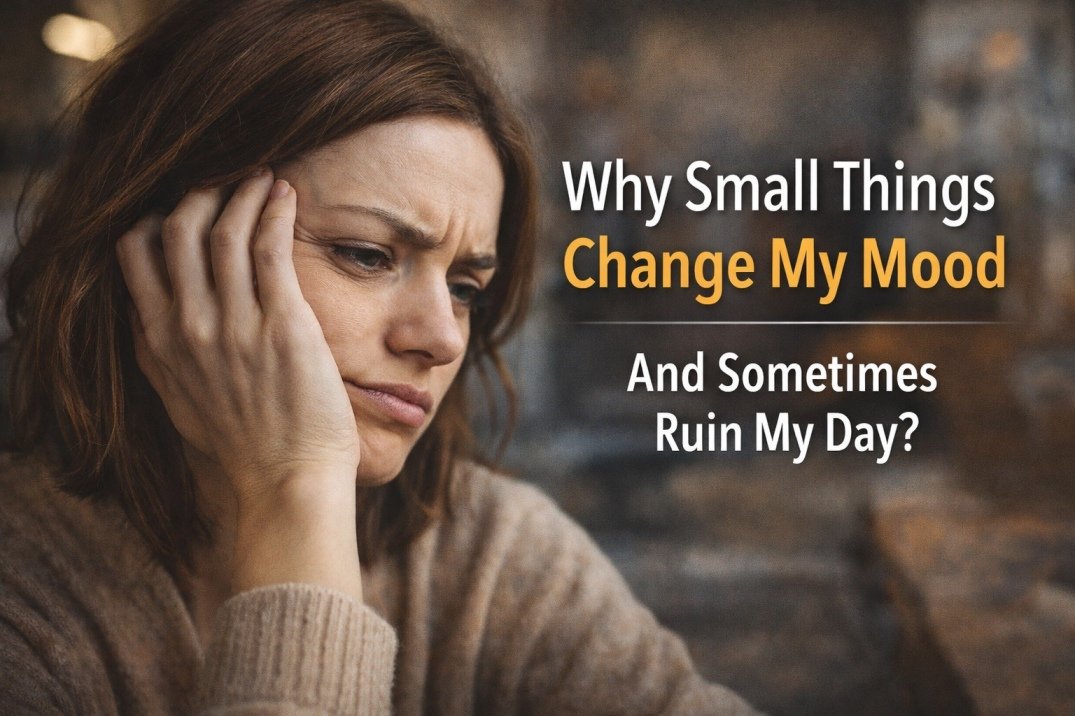
What makes it frustrating is that the moment itself may be small, yet your mind keeps returning to it. You replay what was said, what you should have said, whether you were disrespected, misunderstood, or judged. It can feel like your brain refuses to move on, even though you want to.
By this stage of life, you also carry more history. Past experiences, disappointments, and responsibilities shape how you interpret situations. A casual remark can land on top of old stress or self-doubt, making it feel heavier than it objectively is. You may not feel deeply sad, just irritated, unsettled, or emotionally “off” for hours.
Meanwhile, good interactions don’t linger in the same way. Your brain treats them as safe and moves on. But uncomfortable moments feel unresolved, so your mind keeps working on them in the background. When you are already tired or stretched thin, that mental loop drains your mood even more, making it hard to return to the calm or neutral state you had before.
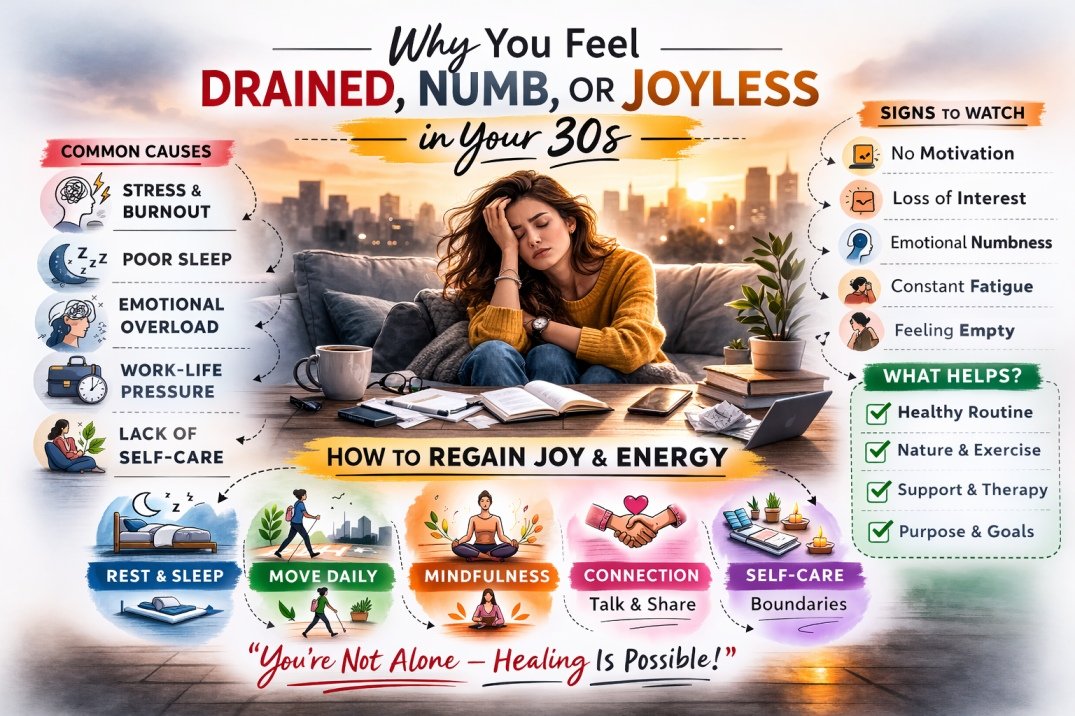
Why You May Feel Drained, Numb, or Joyless in Your 30s
If you are in your 30s, man or woman, it’s common to feel more tired, flat, or easily drained even when life looks “fine” on paper. This stage often comes with heavy responsibilities, less downtime, and constant mental load.
Not everyone experiences this for the same reasons, but many people notice a gradual emotional dip during this decade. Some of the possible factors below may apply to you, while others may not.
Emotional Baggage From Past Experiences
By your 30s, most people have lived through enough experiences to carry some emotional weight, difficult relationships, breakups, betrayals, disappointments, losses, or repeated conflicts. You may have moved forward outwardly, but those moments can still shape how safe, hopeful, or open you feel inside.
Over time, this can make you more cautious and less emotionally responsive. It becomes harder to feel carefree excitement, because a part of you has learned that things can change, hurt, or fall apart.
Too Many Responsibilities With No Real Break
In your 30s, life often expects you to handle many things at once, work pressure, bills, home tasks, family needs, planning for the future, and being available to others. Even when nothing dramatic is happening, your mind rarely gets to switch off completely.
When this goes on for years, your energy is constantly being used just to keep things running. With little true downtime to recover, you may start feeling mentally tired, irritable, or emotionally flat, even on ordinary days.
Life Becoming Routine Instead of Exciting
By your 30s, many days revolve around the same cycle, work at the office or from home, commuting, managing the house, caring for family or kids, and handling endless small tasks. Weekdays are packed, and weekends often get filled with chores, errands, or catching up on things that were postponed.
Whether you are a man or a woman, the routine can feel nonstop. There is little unstructured time to truly relax, explore, or do something just for yourself. Over time, this constant cycle can feel draining, leaving you burnt out and making life feel more like maintenance than something to enjoy.
Feeling Stuck or Unfulfilled at Work
By your 30s, work is no longer just a stepping stone, it takes up most of your waking hours. Many people feel pressure to perform, stay stable, or support others financially, even if the job is not satisfying. You may feel stuck between responsibilities and the risk of change.
When work feels repetitive, stressful, or meaningless, it can drain your motivation and mood day after day. Because there is little time or energy left afterward, that dissatisfaction can spill into the rest of life, making everything feel heavier.
Constant Care for Others, Little Care for Yourself
Many people in their 30s spend a large part of their day taking care of others, children, partner, parents, family needs, or even coworkers who depend on them. You become the one who listens, fixes problems, remembers things, and keeps everything running smoothly.
When this giving happens daily without enough time to rest or focus on yourself, your own needs slowly move to the background. Over time, this can leave you feeling drained, invisible, or emotionally empty, even though you are doing everything “right.”
Poor Sleep and Constant Tiredness
By your 30s, good sleep often becomes harder to maintain. Late work hours, stress, screen time, young children, or irregular schedules can leave you running on less rest than your body needs. You may wake up already tired and carry that fatigue through the day.
When sleep is poor for months or years, it affects mood, patience, and emotional control. Small problems feel bigger, motivation drops, and it becomes harder to feel positive or energetic, even when nothing major is wrong.
Feeling Alone or Disconnected From People
Even with family, coworkers, or friends around, many people in their 30s feel they don’t have someone they can truly open up to. Conversations often stay practical, work, kids, plans, responsibilities, while deeper feelings remain unshared.
Over time, this lack of real emotional connection can create a quiet sense of loneliness. You may appear socially active on the outside but still feel misunderstood or unsupported inside, which can slowly lower mood and enthusiasm.
Holding Feelings Inside for Years
Many adults learn to keep their emotions under control to avoid conflict, stay strong, or keep life running smoothly. Instead of expressing anger, hurt, disappointment, or stress, they push it aside and move on.
Over time, these unspoken feelings don’t disappear, they build up in the background. This emotional buildup can leave you feeling tense, numb, or easily triggered, even when you cannot point to a clear reason.
Subtle Physical or Hormonal Changes
By your 30s, your body may not recover as quickly as it once did. Energy levels, metabolism, stress tolerance, and hormone patterns can shift gradually for both men and women, even if you are generally healthy.
These changes are often subtle, but they can affect mood, motivation, sleep, and emotional balance. You may feel more tired, less enthusiastic, or slower to bounce back after stress without realising that your body is also part of the picture.
Constant Mental Noise From Screens and Information
By your 30s, your mind is rarely quiet. Work messages, emails, news, social media, reels, and endless notifications keep pulling your attention throughout the day. Even during “free time,” your brain is still processing information instead of resting.
This constant stimulation can leave you mentally crowded and overstimulated. When your mind never gets true downtime, it becomes harder to feel calm, present, or emotionally refreshed, which can contribute to feeling drained or numb.
Why You May Feel Neither Happy Nor Sad – Just “Neutral”
Feeling neither happy nor sad, just flat or blank is often called emotional numbness or anhedonia (reduced ability to feel pleasure). You may still function normally, but experiences don’t register with the same intensity as before.
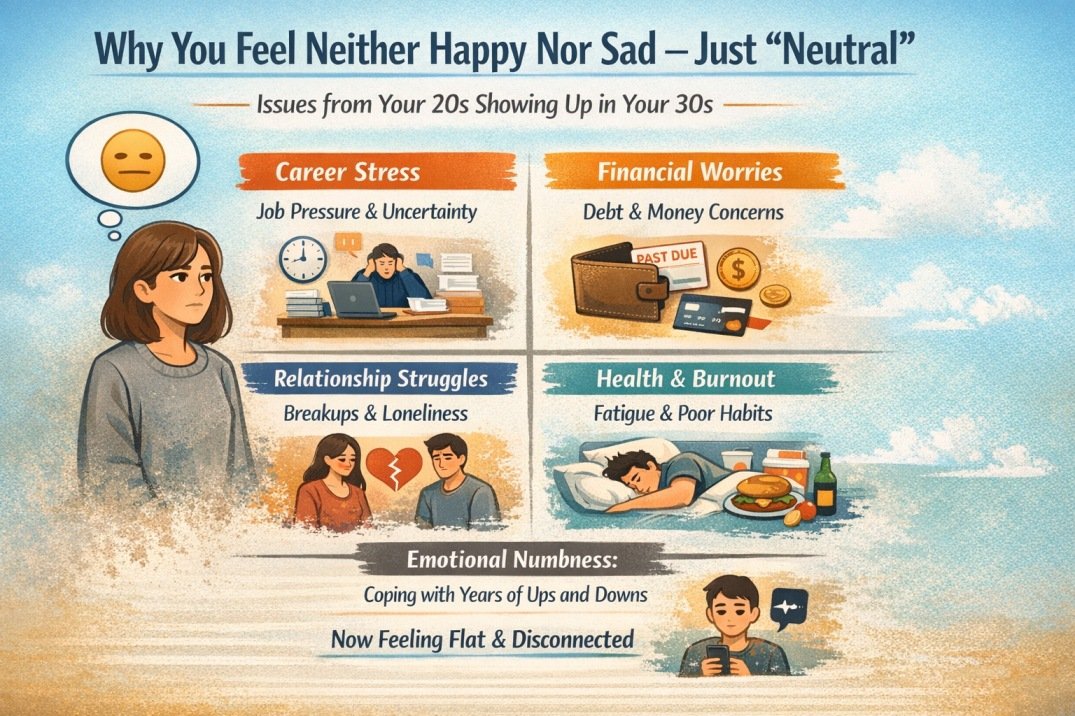
This state usually develops gradually during long periods of stress, burnout, or emotional strain rather than after one single event. Many people cannot pinpoint when it started. It can last for weeks or months, especially if the underlying pressure continues.
In men, it often appears as low motivation, irritability, or a sense of not caring. In women, it may feel like emptiness mixed with fatigue or overwhelm. Either way, there is a common sense of disconnection from your own feelings.
People often describe it simply: “I laugh but don’t feel happy,” “Nothing excites me,” or “Life feels muted.” It is the mind’s way of conserving energy and protecting you from overload while still allowing you to function.
Does “I Don’t Feel Happy Anymore” Mean You’re Depressed?
Not necessarily. Many people who feel low, flat, or joyless are experiencing burnout, chronic stress, or emotional exhaustion rather than clinical depression. In burnout, you may feel drained, irritable, or unmotivated but still able to function and experience occasional good moments.
Depression, on the other hand, usually involves a more persistent low mood along with other changes such as loss of interest in almost everything, sleep or appetite disturbances, feelings of hopelessness, or difficulty carrying out daily tasks. The difference is not always obvious, especially in early stages.
Temporary emotional numbness can also occur during stressful periods or after prolonged pressure. If your mood improves with rest, positive events, or reduced stress, it is less likely to be a depressive disorder.
However, if the feeling persists for weeks or months, worsens over time, or starts affecting your work, relationships, sleep, or ability to cope, it may be helpful to speak with a mental health professional. Getting support does not mean something is “wrong” – it simply means you don’t have to handle it alone.
Signs You’re Emotionally Exhausted (Not Broken)
One of the clearest signs of emotional exhaustion is that you still care about people and responsibilities, but you don’t feel much inside. You go through the motions, helping, working, responding, yet the warmth or satisfaction that once came naturally feels absent.
You may also feel tired even after resting. Sleep can restore your body, but your mind still feels heavy or drained, as if you never fully recharge.
Many people begin avoiding noise, crowds, long conversations, or extra demands because they feel overstimulating. Withdrawing becomes a way to protect the little energy you have left.
Underneath it all, there is often a quiet sense of missing your old self, the version of you who was more patient, engaged, or emotionally alive. This feeling points to depletion, not permanent change.
Step-by-Step Plan to Feel Emotions and Happiness Again in Your 30s – From a Psychologist
Reduce Overload Before Adding New Goals
First, stop living in emergency mode. In your 20s you may have trained yourself to push nonstop, studies, career building, proving yourself. By your 30s, you likely have some stability, yet the mind keeps running as if everything is urgent.
Not everything is. Trim long work hours into productive hours where possible, drop unnecessary pressure, and accept that everyone’s timeline is different. Some people achieve things early, some later – both are normal.
Restore a Sense of Safety
Remind yourself that you don’t have to compete with everyone anymore. Constant comparison (“they moved ahead, I didn’t”) keeps the brain tense. Focus on your own path, your family, your stability, and what truly matters to you now.
Even relationship problems are part of normal life, not every disagreement needs to stay in your mind. Letting go of daily hurts helps your system relax.
Add Small Bits of Newness
You don’t need dramatic changes or new achievements. Create space for small, enjoyable experiences, hobbies you never tried, places you haven’t visited, or activities you can share with your partner or kids.
Exploration in your 30s often looks quieter but can still bring freshness and interest back into life.
Reconnect With Your Body and Senses
Physical activity is one of the most reliable mood stabilisers. Walking, stretching, sports, yoga, or any regular movement helps regulate stress hormones and improves sleep and energy.
When the body becomes active again, emotions often become more accessible too.
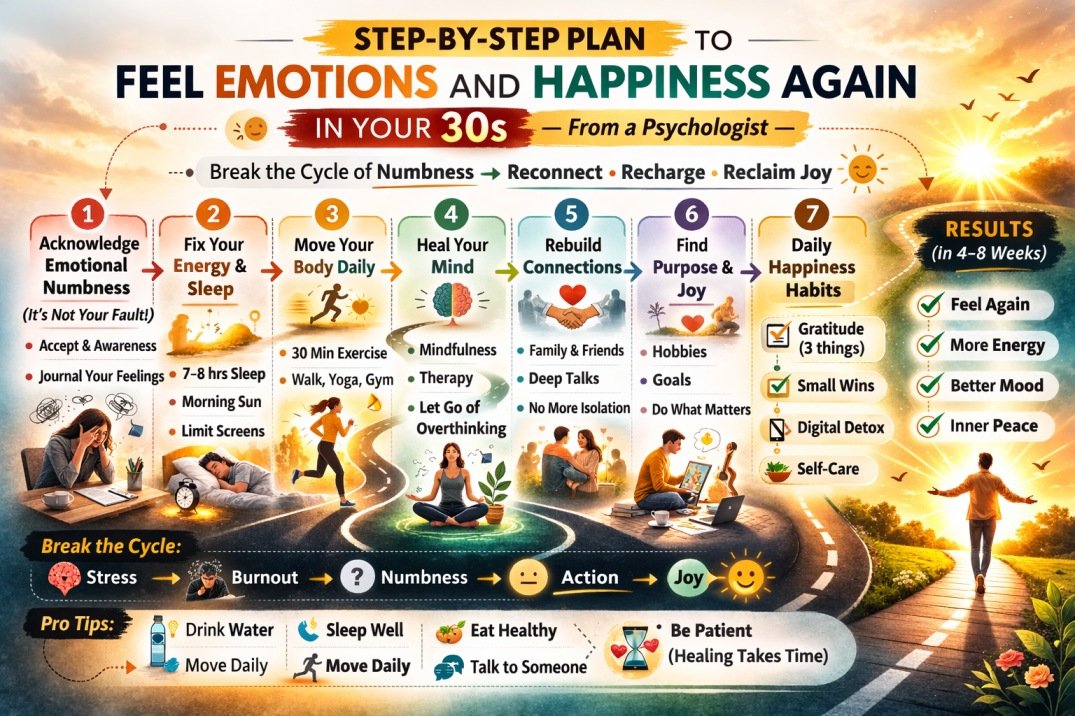
Seek Meaningful Human Connection
You don’t necessarily need a large social circle. Many people in their 30s already have meaningful connections at home. Spending quality time with your partner, children, or a trusted person without distractions can restore a sense of warmth and belonging more than casual socialising.
Give Yourself Permission to Slow Down
Life does not have to be a constant race. Allow yourself to pause, rest, and enjoy ordinary moments without guilt. You don’t have to keep proving your worth through productivity or achievements. Slowing down signals to your mind that it is safe to feel again.
Additional support: If the numbness or low mood persists, professional help can be valuable. Therapists can offer structured techniques to process emotions, reduce mental loops, and help you reconnect with feelings in a gradual, safe way.
When to Consider Professional Support
If numbness or lack of happiness continues for weeks or months, or starts affecting your work, sleep, or relationships, it may be time to seek support. Feeling stuck, constantly exhausted, or increasingly disconnected from people are signs you don’t have to manage this alone.
Talking to a professional can help you understand what’s happening and learn practical ways to restore emotional balance. If stepping out feels difficult or your schedule is tight, online therapy for emotional numbness and low mood at LeapHope offers private, convenient support from qualified therapists at home.
Final Thoughts
Feeling this way in your 30s is more common than people admit. Many adults go through periods where life feels flat, heavy, or less meaningful, even when everything looks stable from the outside.
It does not mean something is wrong with you. Emotional systems respond to stress, responsibility, and life transitions, and sometimes they simply need time and support to reset.
Your capacity to feel joy, excitement, and connection is not gone, it may just be buried under fatigue and pressure. As circumstances shift and energy returns, those feelings can come back.
Most importantly, you are not alone in this experience. Many people quietly struggle with the same feelings, and with the right changes and support, this phase can pass.
FAQs
Can I overcome feeling unmotivated and not enjoying anything anymore?
Yes, you can overcome feeling unmotivated and not enjoying anything anymore. This usually happens when you are stressed, burned out, or emotionally exhausted, not because something is permanently wrong. As your energy improves, motivation and enjoyment often return.
Why do I feel empty and disconnected from everyone?
You feel empty and disconnected from everyone when your mind is overwhelmed, tired, or under long-term stress. Feeling empty or disconnected is a common emotional response to burnout, loneliness, or emotional overload.
Why don’t I feel like myself anymore?
Not feeling like yourself anymore often happens during periods of stress, fatigue, or major life pressure. Your core personality hasn’t disappeared, your emotional energy is low, which makes you feel distant from your usual self.
Is it normal to feel tired, down, and unmotivated all the time?
It can be normal to feel tired, down, and unmotivated all the time during very stressful phases or poor sleep. However, if feeling tired and unmotivated continues for weeks and affects daily life, it may need attention or support.
Why don’t things excite me anymore?
Things may not excite you anymore when your brain is focused on coping rather than pleasure. Long-term stress or exhaustion reduces your ability to feel excitement, even about activities you once enjoyed.
What should I do if I feel mentally and emotionally exhausted?
If you feel mentally and emotionally exhausted, start by reducing pressure, improving rest, and talking to someone you trust. If feeling mentally exhausted continues, professional support can help you recover more effectively.