

“Having issues with self-trust, fear of confrontation, core beliefs about worth, and performance anxiety,” said a 31-year-old woman in therapy at LeapHope.
This is not a single case. Many people struggle with the same problems. They often remember feeling low in confidence and afraid of conflict from a young age. Over time, these patterns can grow into anxiety and avoidant habits.
In stressful moments, the body may go into a flight response. It becomes hard to speak up or stand your ground. Some people suddenly feel very hot or very cold, tense, shaky, or uncomfortable. Instead of saying what they want to say, they back down to end the situation.
These reactions usually become more noticeable in the 20s and 30s, when work pressure, adult responsibilities, and expectations increase. Situations that involve judgment, conflict, or performance can trigger strong fear and self-doubt.
Understanding why this happens is the first step toward change. This article explains how self-trust problems, fear of confrontation, and performance anxiety are connected, and what you can do to build confidence and feel more stable over time.
These Problems Are Common, But Living Like This Is Exhausting
Nothing is necessarily “wrong” with you. Many people have doubts about themselves and avoid conflict to prevent unnecessary drama. Life does not have to be at a breaking point for these patterns to exist, and many people continue working and managing daily responsibilities.
However, living this way can become exhausting. At work, you may hesitate to ask questions, share ideas, or speak confidently. Your mind blocks you, and your body reacts as if the situation is unsafe. Even small interactions can trigger tension or the urge to stay silent.
When someone treats you unfairly or crosses a boundary, you may not confront them. Instead, you carry regret, frustration, or guilt afterward. Over time, this weakens trust in yourself and increases fear of future situations.
Although life may look stable from the outside, internally you may feel tense, cautious, and always on guard. It can feel like you are surviving rather than living fully. Enjoyment, confidence, and peace become limited because so much energy goes into managing fear, doubt, and avoidance.
How Low Self-Trust, Fear of Confrontation, and Performance Anxiety Are Connected
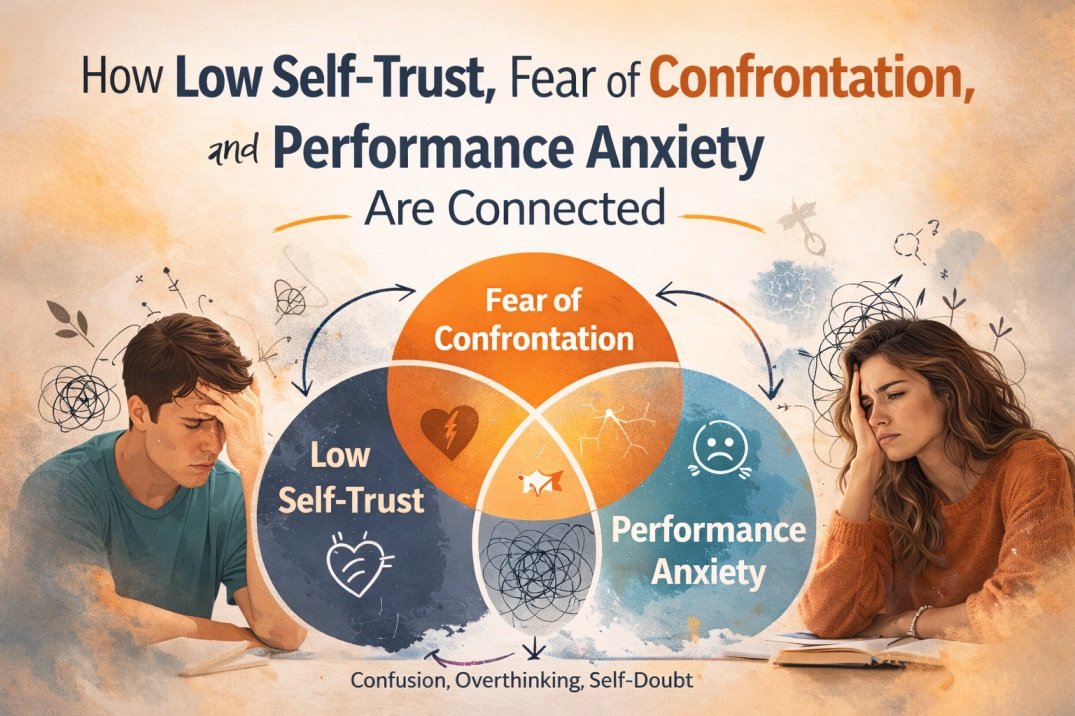
These three problems usually come from the same underlying belief: “I may not handle this well.” When you do not trust your own judgement, every important interaction feels uncertain.
Low self-trust makes you depend more on others’ reactions to feel safe. Before speaking or acting, your mind tries to predict what could go wrong. If the situation involves disagreement, confrontation feels risky because you cannot be sure you will manage the outcome.
The same lack of trust affects performance. When you believe mistakes will have serious consequences, tasks that involve responsibility or visibility feel threatening. Instead of focusing on the task, part of your attention goes into monitoring yourself and trying not to fail.
Your brain treats all three situations, making decisions, facing conflict, and being evaluated as similar threats. This activates the body’s stress response, which pushes you toward caution, avoidance, or overcontrol.
Over time, these reactions reinforce each other. Avoiding confrontation prevents you from building confidence. Anxiety during performance increases doubt about your abilities. Increased doubt further reduces self-trust. The result is a stable cycle where each problem strengthens the others.
When and How Your Core Beliefs About Yourself Developed
Core beliefs about yourself do not appear suddenly in adulthood. They form slowly through repeated experiences across childhood, adolescence, and early adult life. These beliefs shape how safe you feel, how much you trust your judgement, and how you respond to mistakes, criticism, or pressure.
By the time you reach your 20s or 30s, these beliefs usually operate automatically. You may not notice them directly, but they influence your thoughts, emotions, and reactions in everyday situations.
Childhood experiences that shaped beliefs about safety, approval, and mistakes
Low confidence and fear of confrontation are learned over time, not inborn. Some children show these patterns very early, even in kindergarten, while others develop them later depending on their environment.
A child’s sense of safety comes mainly from family interactions. When expressing opinions leads to criticism, dismissal, or strong reactions, the child’s brain does not analyse why it happened. It simply learns that speaking up brings discomfort, while staying quiet reduces it.
Young children usually do not understand complex emotions or have words to describe them. However, their brain and body still record the experience. The memory is stored as a feeling, tension, embarrassment, fear, or relief when the situation ends. This becomes a silent guide for future behaviour.
Certain family patterns make this learning stronger, such as:
- Frequent tension or unresolved conflict
- Very strict rules or high expectations
- Unpredictable reactions from adults
- Little space to disagree or ask questions
- Pressure to be obedient or “not cause trouble”
Children who are more emotionally sensitive may absorb these experiences more deeply. Repeated exposure to discomfort during conflict can shape lasting beliefs about safety, mistakes, and approval.
Over time, these responses become automatic. Even without clear memories, the body reacts quickly in similar situations. Speaking up feels risky, and staying silent feels safer. What once helped the child avoid distress can later appear as low self-trust and fear of confrontation in adult life.
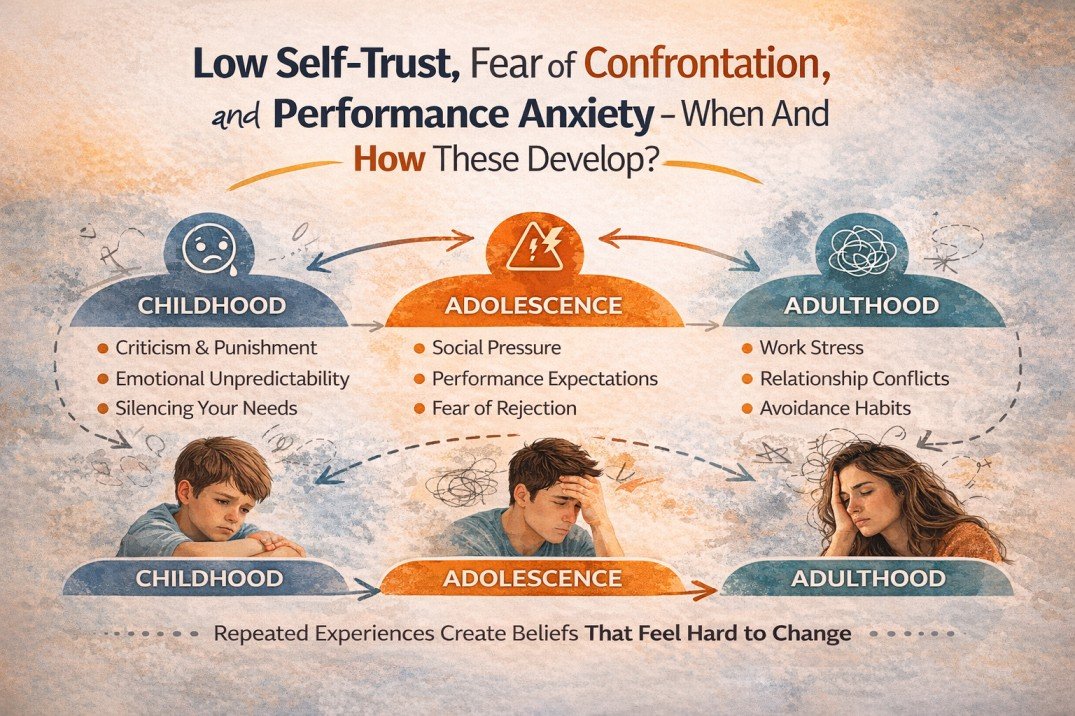
Adolescent and early adult experiences that reinforced performance-based self-worth
During adolescence, support from family becomes especially important. Teenagers face academic pressure, social challenges, and decisions about the future, but they still depend on emotional and sometimes financial stability at home. When that support is limited, inconsistent, or missing, they may feel they must handle everything alone.
Without a reliable backup, many become cautious. They avoid risks, conflict, or situations that could create problems they cannot manage by themselves. This can lead to emotional isolation and lower confidence over time.
If someone treats them unfairly or makes mistakes that affect them, confronting the issue may feel too risky. Conflict could escalate or create stress they feel unprepared to handle. Accepting the situation can seem safer than challenging it.
Even when some support exists, gaps matter. A family may provide financial stability but little emotional understanding, or emotional warmth but limited guidance. The mind adapts based on these experiences, shaping beliefs about how safe it is to speak up, ask for help, or take risks.
Repeated experiences of handling problems alone and avoiding confrontation can form lasting patterns that continue into adulthood.
How Your Current Core Beliefs Affect Your Behaviour, Emotions, and Relationships in Your 30s
By your 30s, issues like self-trust problems, fear of confrontation, and performance anxiety begin to affect your position, confidence, and quality of life. Even when you are capable, the lack of confidence in your own judgement can limit how others see you and how much control you feel over your life.
These beliefs can affect you in the following ways:
- Your knowledge and abilities may go unnoticed because you cannot express them confidently
- Others may not take you seriously or may overlook you for important opportunities
- Unfair treatment, blame, or extra work may continue because it is not challenged
- Career growth can slow down despite hard work and competence
- Decisions feel stressful, leaving you uncertain about your choices
- Boundaries become weak, leading to overload and fatigue
- Self-respect may decrease when you repeatedly accept situations you dislike
- Confidence becomes dependent on external approval rather than internal stability
- Relationships can suffer when important issues remain unspoken
- Emotional closeness may reduce as frustration or distance builds over time
Over time, this can lead to a sense of being capable but under-recognised, responsible but not confident, and stable but not fully satisfied with how your life is progressing.
How to Change Core Beliefs in Your 30s and Build Self-Trust, Assertiveness, and Emotional Stability
By your 30s, work, relationships, and responsibilities leave less room for doubt or avoidance. Self-trust issues, fear of conflict, and anxiety about mistakes can therefore feel more limiting than before.
Expectations may differ for men and women, but both often face pressure to appear confident, reliable, and in control. When underlying beliefs do not support this, everyday situations become harder.
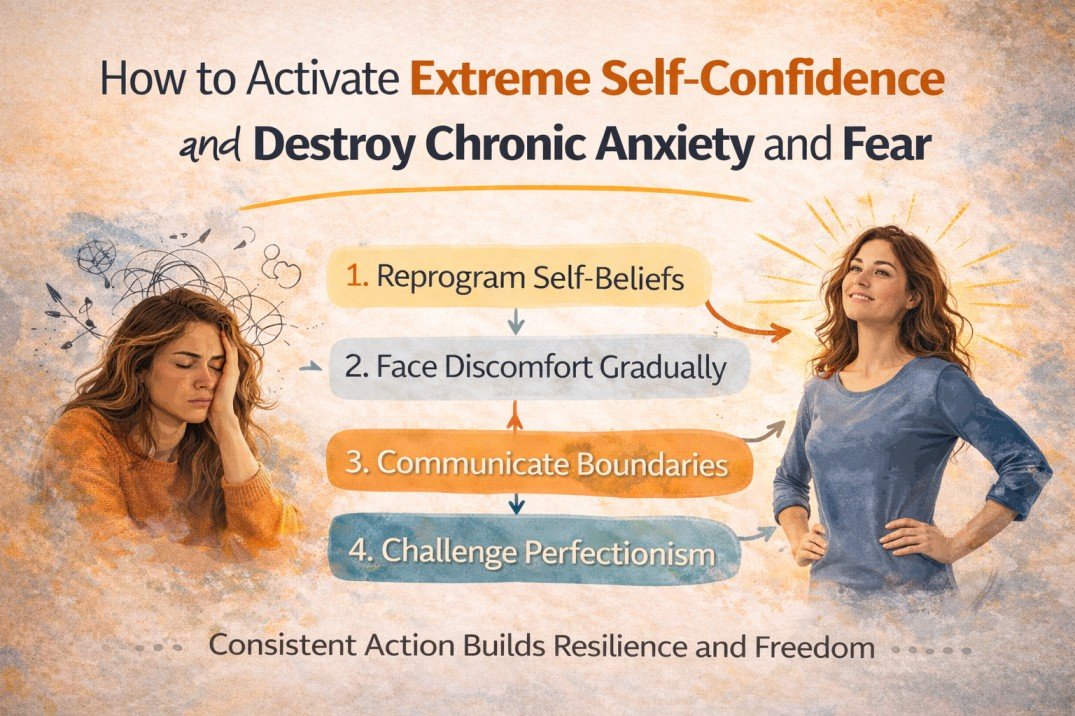
Below are psychologist-verified ways to rebuild self-trust, communicate more assertively, and feel more emotionally stable.
Identify How These Beliefs Are Affecting Your Life
Set aside quiet time and write down specific situations where self-doubt or avoidance influences your choices. Focus on real events rather than general feelings.
Include areas such as work decisions, communication, boundaries, opportunities you declined, or situations where you stayed silent despite having something to say. Men and women in their 30s often have enough experience to recognise patterns when they see them clearly.
Writing these down helps move the issue from your mind onto paper, where it becomes easier to examine objectively. It also creates a starting point for change, because you can see exactly where different responses are needed.
Consider What Could Improve If You Expressed Yourself Openly
Now that you have listed how self-trust issues, fear of confrontation, and performance anxiety are affecting your daily life, write down what could improve if you spoke and acted more confidently.
Think about situations at work where presenting your ideas clearly, asking questions, or confronting a colleague or senior could lead to better outcomes. Include other areas of life as well, decisions, boundaries, and important conversations you have been avoiding.
List all possible benefits, such as clearer expectations, fair treatment, recognition of your work, stronger relationships, and fewer misunderstandings. Also note how it could affect your internal state. Speaking up can reduce mental pressure, constant overthinking, guilt, regret, unresolved anger, and the stress of carrying things silently.
Seeing these potential gains in writing helps shift focus from fear to relief and progress, making change feel more worthwhile.
Develop Clear Personal Standards (e.g., Not Accepting Disrespect or Boundary Violations)
Now you are in your 30s. You may have spent your 20s in self-doubt, staying safe and avoiding conflict, but by this stage you are more mature and likely have built some personal, professional, or emotional strength.
Decide clearly what you will no longer tolerate, disrespect, humiliation, public mockery, unfair blame, unwanted personal intrusion, or boundary violations at work or in relationships.
Write these limits down. If someone crosses them in your presence, respond calmly and directly without excessive overthinking. Your body may feel tense, but you can still act according to your decision.
Not everything requires confrontation, but direct boundary violations should not be ignored. Consistent responses protect self-respect and prevent unhealthy patterns from continuing.
Stop Agreeing Automatically
Pause before saying yes out of habit or pressure. In your 30s, your time and energy are limited, and automatic agreement can quickly lead to overload.
Start responding with, “Let me think,” or “I’ll confirm after checking,” and reply later by call or message. Even if a task is easy, avoid accepting immediately if it is not your responsibility or priority.
Use the same approach in relationships and family matters. Agree only to things that do not create unnecessary mental pressure.
Keep this consistent with everyone, seniors, juniors, friends, or relatives. Immediate yes should be reserved for genuine emergencies, not routine requests.
Start With Small Confrontations and Learn From the Outcome
Begin with simple, low-risk situations instead of major conflicts. For example, correct a small misunderstanding at work, ask for clarification when instructions are unclear, remind someone about a delayed task, or speak up when something minor feels unfair.
In daily life, this could mean telling a service provider about an error, expressing a preference with friends, or addressing small issues with family members instead of staying silent.
These small actions help you experience that speaking up does not automatically create drama. Many situations resolve quickly, and even when they feel awkward, you realise you can handle them.
Repeated practice in ordinary situations builds confidence for more important conversations later.
Speak From Your Own Perspective While Staying Calm
When addressing an issue, focus on your experience rather than accusing the other person. Use simple statements such as “I need clarification,” “I’m not comfortable with this,” or “I would prefer a different approach.”
Keep your tone steady and avoid raising your voice, even if the other person reacts emotionally. Calm communication reduces escalation and increases the chance that your message will be taken seriously.
This approach works in professional settings, relationships, and family interactions. It allows you to express yourself clearly while maintaining control over the situation.
Build Self-Trust by Making and Following Through on Your Own Decisions
Start making small decisions independently and commit to them. This could include choosing how to handle a task, setting a boundary, expressing an opinion, or deciding not to engage in something that feels wrong.
Follow through even if you feel uncertain. Confidence does not come from waiting until you feel ready, it develops after you see that you can handle outcomes.
Each completed decision sends a message to your mind that your judgement is reliable. Over time, this reduces dependence on others’ approval and makes future decisions easier.
Consistent follow-through gradually rebuilds self-trust, which is the foundation for assertiveness, emotional stability, and long-term confidence.
Use Evidence-Based Methods Such as Cognitive Behavioural Therapy (CBT)
Approaches like Cognitive Behavioural Therapy (CBT) focus on identifying unhelpful thought patterns, testing them against reality, and replacing avoidance with constructive action. These methods are widely used because they target the beliefs, behaviours, and physical reactions that maintain anxiety and low self-trust.
In practice, this may involve recognising automatic negative thoughts, challenging unrealistic assumptions, and gradually facing situations that have been avoided. Behavioural techniques also help your nervous system learn that disagreement, visibility, or evaluation is not as dangerous as it feels.
Structured methods provide clear steps rather than relying on willpower alone. Many people in their 30s find this helpful because it aligns with practical problem-solving skills they already use in other areas of life.
Over time, consistent practice can reduce fear responses, improve confidence in decision-making, and strengthen emotional stability.
When to Seek Professional Help
Self-help strategies can help, but professional support may be useful if these patterns feel deeply rooted or hard to change on your own.
Consider seeking help if:
- Anxiety or fear interferes with daily functioning or work
- You avoid important situations despite negative consequences
- Relationships are affected by communication difficulties
- Physical symptoms such as sleep problems or constant tension are present
- You feel stuck despite trying to improve
Therapy provides structured guidance and a safe space to practise new ways of thinking and responding. If you prefer privacy and flexibility, you can speak to an online clinical therapist at LeapHope.
Seeking help is a proactive step toward improving confidence, decision-making, and overall wellbeing.
Final Thoughts
Low self-trust, fear of confrontation, and performance anxiety are not fixed traits. They are patterns shaped by past experiences and reinforced over time. In your 30s, you have greater awareness, independence, and capacity to respond differently than before.
Change does not happen all at once. Small, consistent actions can gradually rebuild confidence, improve communication, and reduce anxiety. Progress often comes from doing things differently even while discomfort is still present.
The goal is not to eliminate fear completely, but to prevent it from controlling your decisions and limiting your life. With time and practice, many people develop a stronger sense of stability, self-respect, and ease in situations that once felt overwhelming.
FAQs
Why am I scared of confrontation?
You’re usually scared of confrontation because your brain has learned that conflict could lead to rejection, anger, or loss of safety. Even if nothing bad actually happens now, your body reacts as if it might. It’s a learned response, not a personality flaw.
How can I overcome my fear of confrontation?
You overcome fear of confrontation gradually, not all at once. Start with small situations where the risk is low, speak calmly, and notice that the outcome is usually manageable. Repeated experiences help your brain feel safer over time.
Why does my body shut down during confrontation?
Your body shuts down because it goes into a stress response called fight, flight, or freeze. Blood flow, temperature, and thinking patterns change quickly, which can make you feel hot, cold, shaky, or unable to speak clearly. It’s automatic, not intentional.
How can I be assertive without being confrontational?
You can be assertive without being confrontational by speaking calmly, focusing on facts, and expressing your needs without attacking the other person. Assertiveness is about clarity, not aggression.
I hate confrontation. How can I start standing up for myself?
If you hate confrontation, start by standing up for yourself in small ways first, like expressing preferences or correcting minor issues. This builds confidence without overwhelming you.
Why do I feel anxious when I try to stand up for myself?
You feel anxious because your brain treats disagreement as a threat. Standing up for yourself challenges old patterns, so your body reacts even if your logical mind knows it’s safe.
Can fear of confrontation come from childhood?
Yes, fear of confrontation often starts in childhood if expressing anger, disagreement, or mistakes led to uncomfortable reactions. The brain learns to avoid conflict to stay safe.
Is it normal to freeze during arguments?
Yes, freezing during arguments is a common stress response. Some people fight, some flee, and some freeze. It doesn’t mean you’re weak, it means your nervous system is trying to protect you.
Why do I get mad at myself for not speaking up?
You get mad at yourself because your actions didn’t match what you needed or believed. That internal mismatch creates frustration, regret, and reduced self-trust.
How do I become more assertive if I’ve always been a pushover?
Becoming more assertive starts with small decisions, clear communication, and following through consistently. Assertiveness is a skill that improves with practice, not something you either have or don’t.