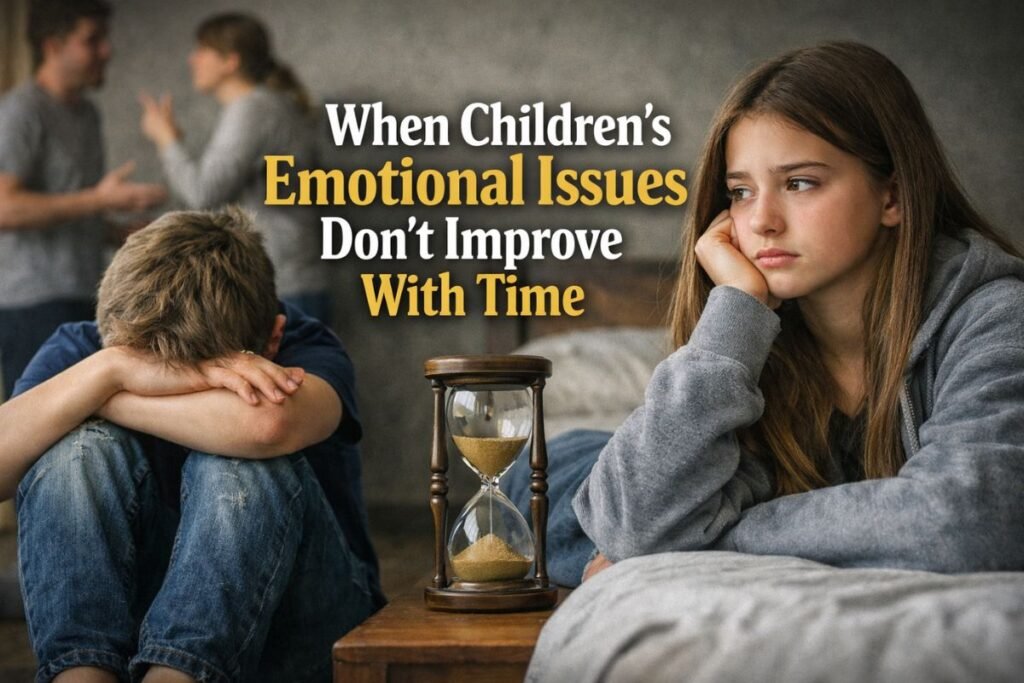
You may have noticed your child seems sad, irritable, or withdrawn for weeks or even months. You hoped it would pass, but the same patterns keep coming back. Even in a loving home, emotional struggles don’t always improve on their own.
It’s normal to wonder if this is just a phase or something more. Children often hide how they feel to avoid worrying you, or they simply don’t know how to explain their emotions.
This article will help you spot signs that emotional issues are lasting, understand possible causes, and learn ways to support your child before small struggles turn into bigger problems.
Why Emotional Struggles Can Persist
Some children’s emotional challenges don’t improve with time, even in loving homes. Understanding the reasons behind persistent struggles helps parents respond thoughtfully and provide meaningful support.
Not Just a Phase
Children often experience mood swings, irritability, or sadness as part of growing up. However, when these feelings last for weeks or months, they may indicate a deeper emotional struggle rather than a temporary phase.
Persistent patterns can affect daily life, school, and relationships. Recognizing that these emotions are ongoing allows parents to intervene before small issues become bigger problems.
Stress from School and Peer Relationships
Children spend much of their day at school. Academic pressures, homework, and adjusting to new teachers can create ongoing stress. Peer interactions can also be challenging—conflicts, teasing, or difficulty making friends can weigh heavily on a child’s emotional wellbeing.
Even small, repeated stressors can accumulate over time, making children anxious, withdrawn, or more reactive than usual.
Family or Home Environment Stress
Even in supportive families, children notice tension. Frequent moves, divorce, parental work pressures, or ongoing household stress can affect emotional stability.
Children may internalize these stresses, showing up as irritability, withdrawal, mood swings, or changes in behavior at home. A stable and calm environment helps buffer these effects.
Past Experiences and Trauma
Emotional struggles can stem from earlier experiences such as loss, accidents, or exposure to conflict. These events may continue to impact mood, confidence, or behavior if they haven’t been fully processed.
Children might not express these feelings directly, so their behavior can be a subtle signal that they are still coping with past experiences.
Personality and Temperament Factors
Every child reacts differently to challenges. Sensitive, cautious, or highly empathetic children are often more affected by stress or change.
Some children struggle to express emotions, while others may overreact or withdraw. Understanding your child’s natural temperament can help you respond with patience and empathy.
Accumulated Stress Over Time
Sometimes emotional struggles persist simply because stress adds up. Repeated school changes, peer conflicts, family stress, or past experiences can accumulate, making it harder for a child to bounce back naturally.
Parents can help by observing patterns, validating feelings, and offering consistent support, rather than expecting issues to resolve on their own.
Signs That Emotional Issues Are Lasting
Sometimes emotional struggles in children don’t go away on their own. Even children who seem happy at times may be quietly struggling. Observing patterns over time is key to understanding when support is needed.
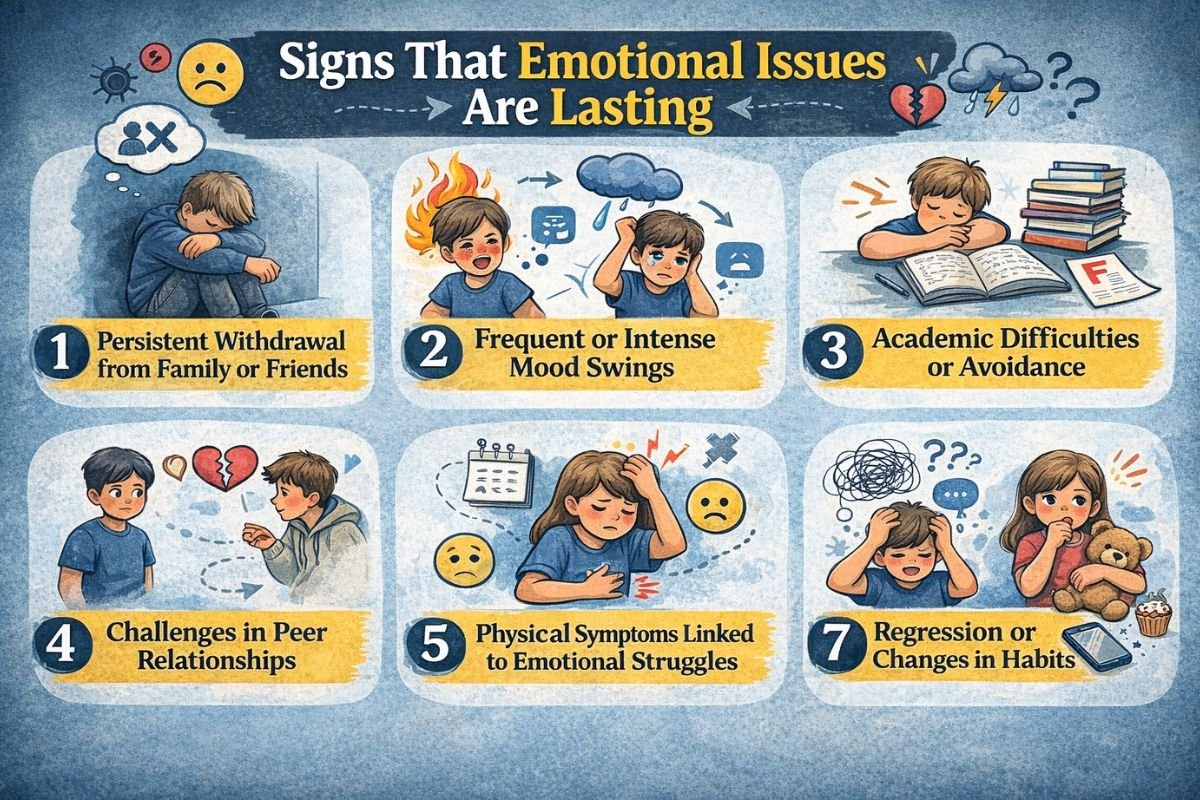
Persistent Withdrawal from Family or Friends
Children may avoid spending time with family, decline invitations to playdates, or stop talking to friends. This isn’t always laziness or moodiness it can signal that your child is feeling overwhelmed or disconnected.
Pay attention if withdrawal lasts weeks or months rather than days. Gentle engagement and creating safe spaces to connect can help children feel more comfortable opening up.
This article helps parents recognize the key signs and patterns of persistent emotional struggles. It complements your content by offering guidance on how to know when support is needed.
Frequent or Intense Mood Swings
Irritability, sadness, or anger that doesn’t improve may indicate ongoing emotional challenges. Children might overreact to minor frustrations or show extreme reactions that seem disproportionate to the situation.
Notice patterns rather than single events. Emotional outbursts that repeat over time often signal stress that isn’t resolving naturally.
Children often show ongoing emotional struggles through actions rather than words. Learning how children express emotions through behaviour helps parents interpret mood changes, irritability, or withdrawal accurately.
Academic Difficulties or Avoidance
Children struggling emotionally may have trouble focusing, completing assignments, or participating in class. Avoidance of schoolwork or reluctance to engage in group projects can also be a sign that stress is affecting their ability to learn.
Parents can support their children by observing consistent struggles and offering help without pressure. Celebrating small achievements builds confidence and reduces anxiety.
Challenges in Peer Relationships
Struggling to make friends, maintain friendships, or navigate group dynamics can indicate ongoing emotional stress. Children may feel socially anxious, insecure, or unsure how to relate to peers.
Support can include facilitating small social opportunities, encouraging participation in hobbies or activities, and acknowledging the difficulties of adjusting to social situations.
Physical Symptoms Linked to Emotional Struggles
Stress and emotional difficulties often show up physically. Children may complain of headaches, stomachaches, fatigue, or trouble sleeping. These symptoms may appear without any medical explanation.
Noticing patterns in these physical cues can alert parents to underlying emotional challenges that need attention.
Difficulty Expressing or Naming Emotions
Children may repeatedly respond with “I’m fine” or avoid conversations about feelings. They might struggle to put emotions into words or feel afraid of being judged.
Parents can help by noticing subtle cues such as changes in tone, facial expressions, or body language, and by offering opportunities for gentle conversation or creative expression like drawing or journaling.
Even confident children can experience ongoing anxiety or stress. Understanding hidden anxiety children may carry quietly helps parents identify subtle signs that emotional struggles persist.
Regression or Changes in Habits
Sometimes children revert to earlier behaviors, such as clinginess, thumb-sucking, or bedwetting, when stressed. This regression can indicate that emotional struggles are persistent and affecting their sense of security.
Observing these patterns helps parents understand that emotional challenges are ongoing rather than situational.
Common Parent Responses That Can Make Issues Persist
Even loving and attentive parents can sometimes respond in ways that unintentionally make a child’s emotional struggles last longer. Recognizing these patterns helps parents respond more effectively and reduce stress for their children.
Minimizing or Dismissing Feelings
Phrases like “It’s nothing” or “You’ll get over it” can make children feel their emotions aren’t important. This often leads to withdrawal or hiding feelings.
Instead, acknowledging their feelings with simple statements such as “I can see this is hard for you” helps children feel understood and validated.
Pressuring Children to Talk
Repeatedly asking “What’s wrong?” or demanding explanations can overwhelm children who don’t yet have the words to express their emotions.
Gentle check-ins like, “I’m here if you want to talk” or spending time together without expecting a conversation can encourage children to open up at their own pace.
Overreacting to Emotional Behavior
Responding to tears, anger, or frustration with yelling, punishment, or visible frustration can make children feel unsafe expressing emotions.
Remaining calm, patient, and empathetic allows children to process their feelings without fear of judgment or criticism.
Comparing to Siblings or Peers
Statements such as “Why can’t you handle this like your brother?” or “Look at how your friend adjusted” can increase anxiety and lower self-esteem.
Focusing on your child’s unique experiences and progress helps them feel valued and understood, rather than pressured to meet external standards.
Ignoring Subtle Signs of Stress
Small cues like low energy, irritability, quietness, or reluctance to participate in activities are often overlooked. Ignoring these signs allows stress to accumulate over time.
Parents can notice these patterns and respond gently, helping children feel supported before emotional struggles become more serious.
Over-Focusing on Outcomes
Concentrating solely on school performance, behavior, or achievements while ignoring emotional needs can make children feel misunderstood.
Balancing attention between feelings and expectations teaches children that emotions matter, fostering resilience and trust.
Persistent emotional struggles often appear physically as headaches, stomachaches, or fatigue. Recognizing these physical signs of emotional stress in children helps parents intervene early.
How Parents Can Support Children
When emotional struggles don’t improve with time, children need consistent support, empathy, and understanding. The way parents respond can make a big difference in helping children feel safe, heard, and capable of coping.
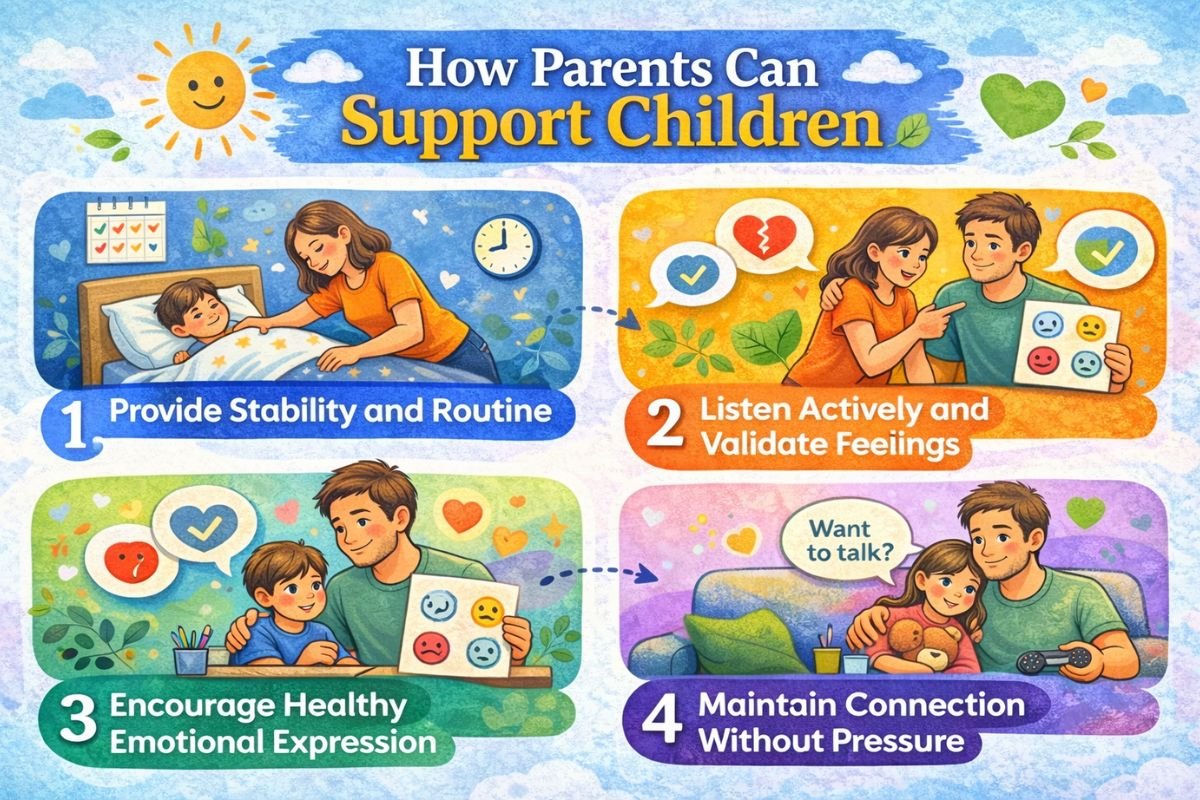
Provide Stability and Routine
Consistent daily routines give children a sense of security. Regular mealtimes, bedtime, and predictable schedules help children feel grounded, especially when emotions feel overwhelming.
Stability doesn’t remove emotional struggles, but it gives children a foundation to rely on while processing feelings and adjusting to challenges.
Listen Actively and Validate Feelings
Children often hide their emotions or respond with “I’m fine.” Listening without judgment and acknowledging their feelings is critical.
- Reflect what you notice: “I can see you’ve been upset lately.”
- Avoid dismissive phrases like “It’s nothing” or “Stop overreacting.”
- Validation reassures children that their emotions are real and important.
Encourage Healthy Emotional Expression
Children need safe ways to express their feelings. Encouraging creative outlets helps them process emotions constructively.
- Drawing, writing, or journaling
- Playing music, sports, or other physical activities
- Role-play or storytelling to explore feelings
Modeling calm emotional regulation yourself teaches children that expressing feelings is safe and natural.
Maintain Connection Without Pressure
Children may withdraw if they feel pressured to talk or explain their feelings immediately. Gentle connection is more effective:
- Shared activities like cooking, walking, or reading together
- Short, casual conversations instead of interrogations
- Quiet presence and availability when they are ready to talk
This approach encourages trust and makes children feel understood without forcing expression.
Offer Choice and Autonomy
Giving children control over small decisions fosters confidence and reduces anxiety.
- Let them choose activities, free time, or ways to complete homework
- Respect their personal space and decisions
- Encourage small responsibilities to build independence
Autonomy helps children feel their voice matters, which can improve emotional resilience.
Recognize Patterns and Respond Early
Rather than reacting only to single incidents, look for consistent patterns in:
- Behavior and moods
- Social interactions and friendships
- Physical signs like headaches, stomachaches, or fatigue
Early recognition allows parents to provide support before emotional struggles escalate or become chronic.
Promote Social Connections and Support Networks
Children benefit from relationships outside the family as well. Support can include:
- Encouraging friendships through clubs, hobbies, or shared activities
- Supporting teamwork or group activities at school
- Connecting with mentors, coaches, or relatives who provide guidance and reassurance
Social support helps children feel less isolated and builds coping skills.
By combining stability, empathy, validation, healthy expression, gentle connection, autonomy, pattern recognition, and social support, parents can help children navigate emotional struggles that don’t improve with time. This consistent, human-centered approach nurtures resilience, confidence, and long-term emotional wellbeing.
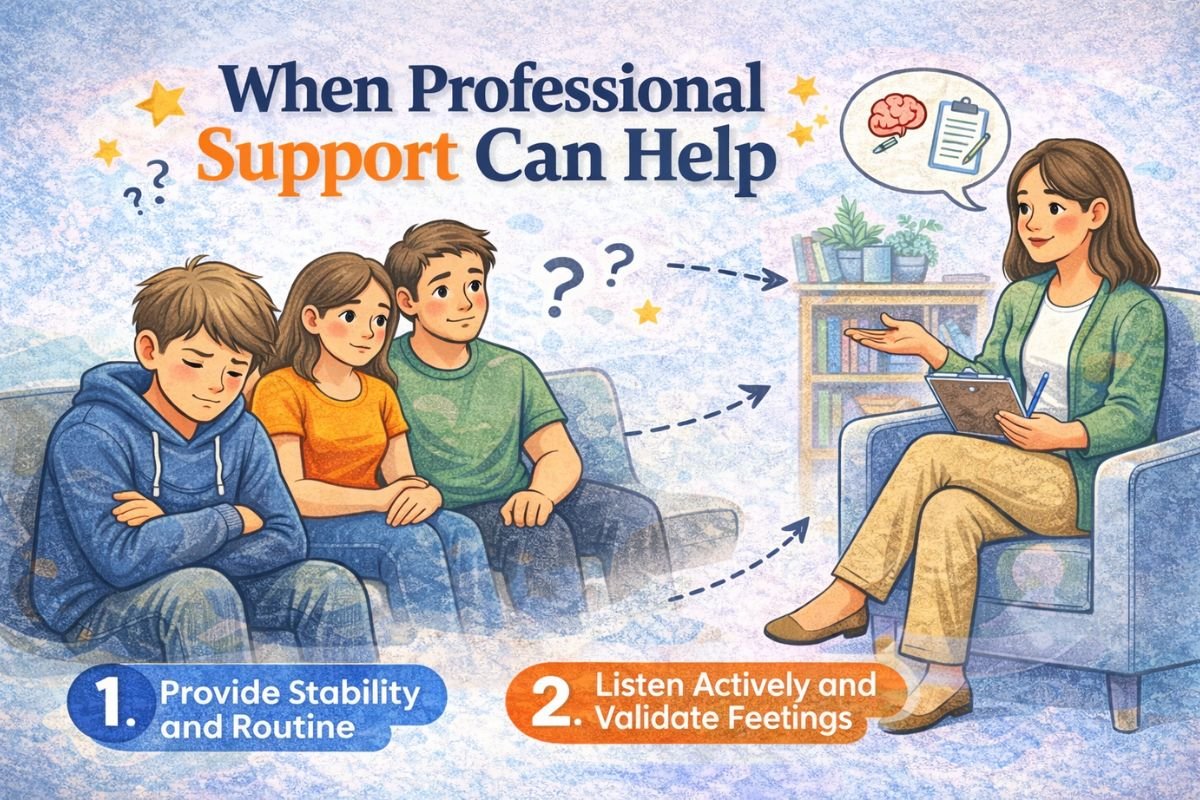
When Professional Support Can Help
Even with attentive parenting, some emotional struggles persist and may require guidance from a professional. Seeking support doesn’t mean parents have failed—it provides children with a safe space to express themselves and gives parents tools to respond effectively.
Safe and Neutral Space for Children
Children may feel more comfortable sharing their feelings with someone outside the family. Therapists or counselors offer a neutral environment where children can talk freely about stress, sadness, or anxiety without fear of judgment.
This safe space helps children process emotions they might not be able to express at home. Over time, it can make them more confident and willing to communicate their feelings with parents.
Guidance and Support for Parents
Professionals can help parents understand patterns and triggers behind persistent emotional struggles. They provide guidance on:
- Recognizing subtle signs of ongoing stress
- Responding calmly and empathetically
- Maintaining consistent routines and support
- Encouraging healthy emotional expression
This guidance reduces parental anxiety and helps parents feel more confident in supporting their child.
When to Consider Professional Support
Parents might consider professional help if:
- Emotional struggles last for weeks or months without improvement
- Mood changes, withdrawal, or irritability affect school, friendships, or home life
- Parents feel unsure how to respond effectively
Many parents find online counselling for children and teens helpful. It offers a safe space for children to share feelings while providing parents with guidance and strategies to support them.
Final Thought
Emotional struggles in children don’t always improve with time, even in loving and supportive homes. Patterns like withdrawal, irritability, anxiety, or mood swings can persist quietly, making it hard for parents to know how best to help.
The most effective approach combines patience, empathy, and consistency. Observing patterns, validating feelings, maintaining routines, encouraging healthy expression, and balancing connection with autonomy helps children feel safe and understood.
Sometimes, professional support is the best way forward. Counselors provide children with a neutral space to explore emotions and guide parents in understanding patterns, triggers, and strategies.
Early recognition, thoughtful responses, and consistent support can help children navigate emotional struggles, build resilience, and gain confidence in managing their feelings over time.
Frequently Asked Questions
1. How do I know if my child’s emotional struggles are serious?
Persistent withdrawal, mood swings, irritability, or ongoing anxiety are signs that support may be needed. Patterns over time are more important than single incidents.
2. Can emotional struggles last even in a loving home?
Yes. Children can experience stress, anxiety, or sadness even when parents are supportive and caring. Emotional challenges are often about coping, not about parental care.
3. My child says “I’m fine,” but I can tell something is wrong. What should I do?
Avoid pressuring your child. Offer calm listening, validate their feelings, and provide opportunities for safe expression through conversation, play, or creative activities.
4. How long should I wait before seeking help?
If emotional struggles persist for weeks or months, affect school, friendships, or home life, it may be time to seek guidance from a professional. Early support can prevent problems from escalating.
5. Can physical symptoms indicate emotional stress?
Yes. Headaches, stomachaches, fatigue, or trouble sleeping without a clear medical cause often accompany ongoing emotional struggles.
6. How can parents respond without making things worse?
Avoid dismissing feelings, overreacting, or pressuring children to explain immediately. Calm observation, empathy, and gentle encouragement are more effective.
7. What strategies help children manage persistent emotional struggles?
Stability, routines, active listening, validating emotions, creative outlets, and gentle connection help children cope and build resilience.
8. Can professional support really help?
Yes. Therapists or online counselors provide a safe space for children to express feelings and help parents understand patterns, triggers, and strategies to support their child effectively.
9. How can I encourage my child to talk about feelings?
Create low-pressure opportunities to share, such as casual conversations, shared activities, or creative expression. Respect their pace and privacy.
10. What if my child resists professional help?
Introduce counseling as a neutral space, not a punishment. Highlight that it’s a place to talk freely, gain support, and learn tools to feel better, while maintaining trust and patience.