

Last Updated on February 19, 2026
In therapy, sex after 50 rarely arrives as a simple complaint about performance. It shows up as distance, hesitation, or quiet self-doubt. Clients worry they are losing desire, losing reliability, or losing connection.
Biology does change. Hormones shift. Blood flow slows. Arousal takes longer. Lubrication may decrease. Erections may become less predictable. These are normal midlife adaptations, not personal failures.
What creates distress is the meaning couples attach to those changes. A slower erection becomes “I’m inadequate.” Reduced desire becomes “I’m not attracted anymore.” Silence fuels shame. Shame fuels avoidance. Avoidance creates distance.
Midlife sexuality shifts from reflex-driven to relationship-driven. It becomes more influenced by emotional safety, stress regulation, attachment patterns, and communication than by raw hormone levels. When couples understand this transition, they stop fighting change and start adapting to it. That shift alone restores more intimacy than any performance fix ever could.
Is It Normal to Still Want Sex After 50?
Yes. Wanting sex after 50 is normal. Many adults remain sexually active well into their 60s and beyond. Desire does not automatically disappear with age.
What changes is sexual response, not sexuality itself. Arousal may take longer. Erections may be less immediate. Lubrication may require more stimulation. Recovery time increases. These are functional shifts, not signs of lost identity.
The real problem often begins with assumption. When people believe sex should decline after midlife, they unconsciously withdraw. Expectation creates distance faster than biology does.
From a psychological perspective, desire after 50 depends more on emotional safety and connection than on raw hormones. When partners feel valued and secure, sexuality continues. When resentment, stress, or silence grows, desire fades regardless of age.
Midlife sexuality is not about youth. It is about adapting to a new rhythm. Couples who accept that rhythm maintain intimacy far more easily than those who fight it.
How Often Do Couples Over 50 Have Sex?
There is wide variability. Some couples have sex weekly, some monthly, some less often. Frequency alone does not determine health or satisfaction.
Age matters less than overall wellbeing. Physical health, stress levels, medication use, emotional connection, and relationship quality influence sexual frequency far more than the number on a birthday.
Satisfaction is more important than numbers. A couple having sex twice a month and feeling connected may be healthier than a couple having sex twice a week with pressure or resentment.
Comparison quietly reduces desire. When partners measure themselves against friends, media, or past decades, anxiety increases and spontaneity drops.
There is no universal “normal.” The only meaningful benchmark is whether both partners feel satisfied, respected, and connected within their own relationship rhythm.
Why Sex Feels Different After 50
Sex feels different because both the body and the nervous system change. Estrogen and testosterone shift. Genital blood flow becomes less efficient. Arousal takes longer to build. Recovery takes longer afterward. These are predictable physiological transitions, not dysfunction.
Chronic stress, diabetes, hypertension, thyroid imbalance, and medications further influence sexual response. The body becomes more sensitive to overall health. Sexual function reflects cardiovascular and hormonal health more directly in midlife.
Body image also plays a role. Weight changes, muscle tone shifts, surgical scars, and aging anxiety can reduce confidence. Self-consciousness activates the stress response, and stress suppresses arousal.
Midlife sexuality shifts from reflex-driven to relationship-driven. Earlier sex may have felt automatic. After 50, desire responds more to emotional safety, reduced pressure, and intentional pacing. When couples adjust expectations and slow down, sex often becomes deeper, even if it is less spontaneous.
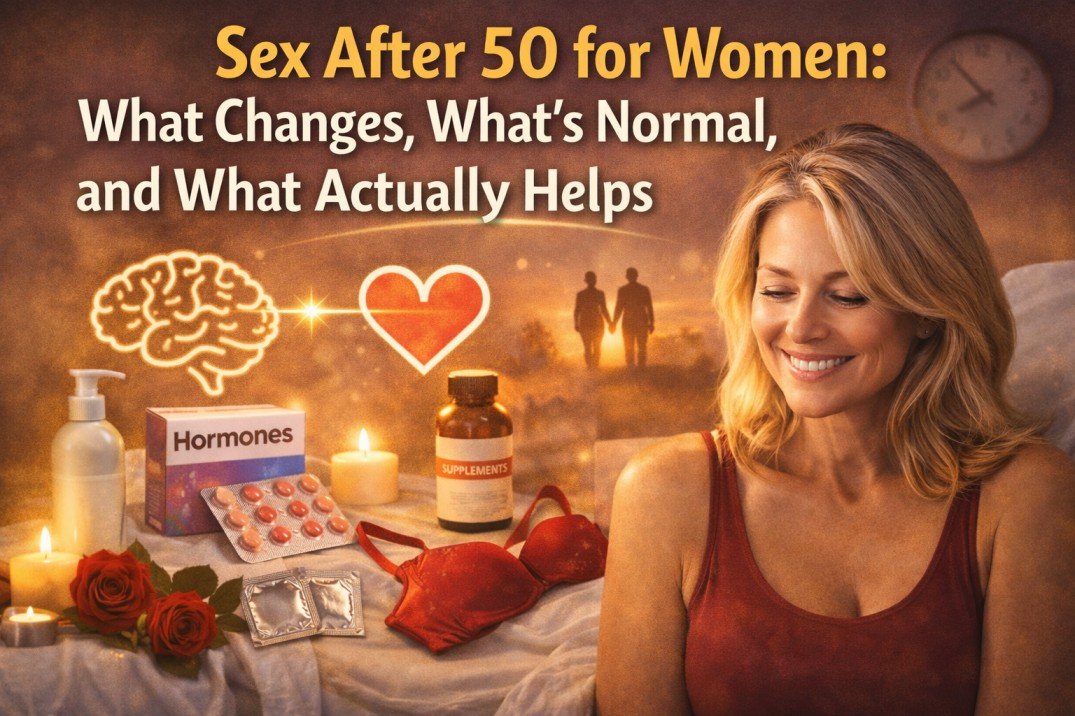
Why Female Sexual Desire Changes After 50
After 50, hormonal changes affect sexual response. Estrogen declines after menopause. Testosterone also decreases gradually. These shifts influence blood flow, sensitivity, lubrication, and overall sexual interest.
Desire may feel less spontaneous. Many women in midlife experience responsive desire, meaning interest develops after stimulation begins rather than appearing suddenly. Waiting to feel desire before engaging can lead to less sexual activity, even when the capacity for pleasure is still present.
Stress has a stronger impact at this stage of life. Mental load, relationship tension, sleep problems, and unresolved resentment suppress libido more reliably than age itself. The nervous system must feel relatively calm for arousal to build.
Changes in desire are common. They are not proof of lost attraction or permanent decline. When hormonal, emotional, and relational factors are addressed, many women regain satisfying sexual connection.
Vaginal Changes After 50: Lubrication, Sensitivity, and Comfort
After menopause, vaginal tissue becomes thinner and less elastic due to lower estrogen. Blood flow decreases. Natural lubrication is reduced. This can make penetration feel dry, tight, or uncomfortable even when you feel mentally aroused.
Arousal no longer guarantees wetness. Many women assume dryness means lack of attraction. It does not. Lubrication is a vascular response, not a measure of desire. As circulation slows with age, the body may need more time and more stimulation.
Extended foreplay becomes necessary, not optional. Slower touch, external stimulation, and gradual build-up allow blood flow to increase. Rushing penetration often leads to discomfort, which then creates avoidance.
Using lubrication is not a failure. It is an adaptation to biological change. Midlife sexuality works best when comfort is prioritized instead of tested.
Painful Sex or Bleeding After 50: What It Means
Painful sex in midlife is common, but it is not something you should ignore. Falling estrogen makes vaginal tissue thinner and drier, which can cause small tears and burning during penetration, especially if arousal is rushed. Over time, your body may begin to tense in anticipation of pain.
Pelvic floor muscles can tighten automatically when you feel anxious. That tension makes penetration harder, which increases discomfort and reinforces the fear. This becomes a cycle of pain and avoidance.
Light spotting can happen from dryness, but any bleeding after menopause should always be medically evaluated. In therapy, we often see how untreated pain turns into emotional distance when one partner avoids sex and the other feels rejected.
Body Image and Midlife Sexual Confidence
Midlife changes your body. Weight shifts, surgical scars, skin texture, muscle tone, all of it can affect how you see yourself. Even if your partner still finds you attractive, you may not feel desirable anymore. That internal shift alone can lower arousal.
Self-consciousness pulls you out of the moment. Instead of feeling sensation, you monitor how you look. That mental distance reduces pleasure and makes orgasm harder. This is not vanity, it is psychology.
In therapy, we often see that sexual confidence is rebuilt through connection, not cosmetic fixes. When you feel wanted, safe, and emotionally seen, your body responds differently. Confidence in midlife is relational work, not a mirror problem.
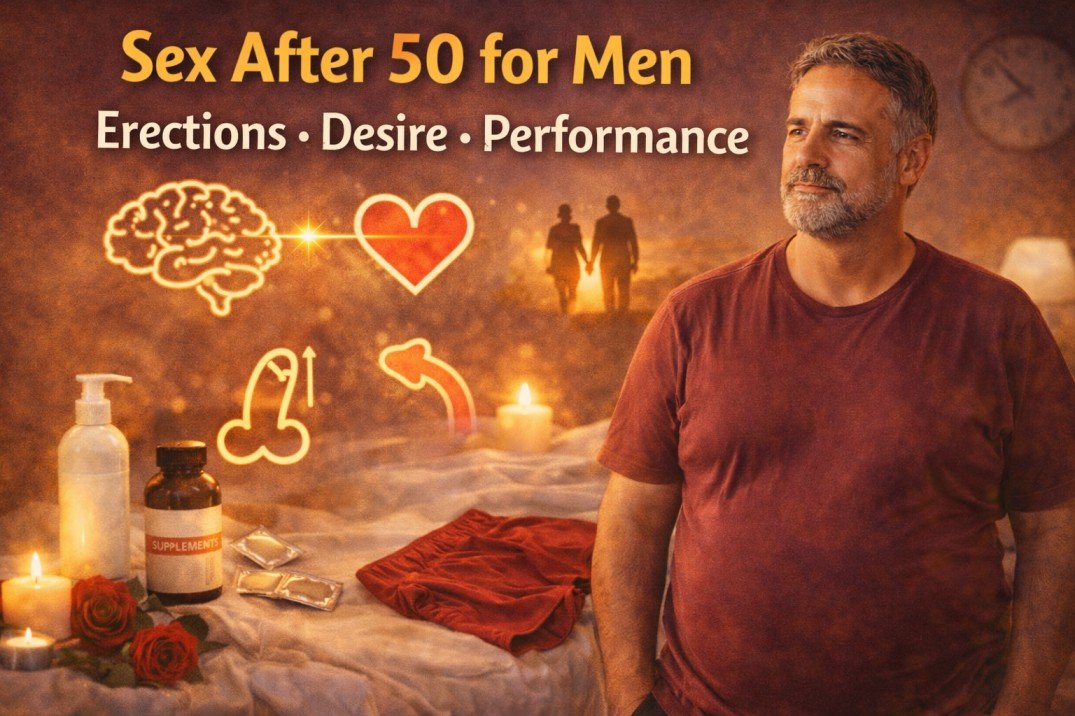
Erectile Changes After 50 in Men: Slower Arousal and Recovery
In midlife, erections usually become slower and less automatic. You may need more direct stimulation and more time before you feel fully aroused. This is largely about blood flow and natural testosterone shifts, not loss of masculinity.
The refractory period, the time needed before another erection, also becomes longer. What took minutes at 30 may take hours or even a day at 55. That is physiology, not failure.
Occasional erection difficulty is normal, especially under stress, fatigue, or alcohol use. Persistent difficulty that causes distress is worth medical attention. Variation is expected. The problem is often the panic around the change, not the change itself.
Performance Anxiety and Masculinity Fears
Many men in midlife start to worry about losing an erection before sex even begins. The moment that fear enters, the focus shifts from pleasure to monitoring. Instead of feeling sensation, you start checking firmness, timing, and control. That mental shift alone can interrupt arousal.
Shame makes it worse. Most men do not talk about this fear, not with friends and often not with their partner. Silence increases pressure. To avoid embarrassment, some men stop initiating altogether, which their partner may misread as loss of desire.
In therapy, we see this often. Anxiety sustains the problem more than age does. When fear replaces connection, the body responds accordingly. Reducing pressure usually improves function more than trying to force performance.
Why Male Sexual Desire Changes After 50
Male desire can shift in midlife, and it is rarely caused by just one thing. Testosterone gradually declines with age, which can lower spontaneous desire and energy. Add stress, poor sleep, work pressure, and health issues, and libido naturally fluctuates.
Fatigue plays a bigger role than most couples realise. When your nervous system is constantly in survival mode, sexual desire is not the priority. The body protects energy first.
Porn conditioning can also affect arousal patterns. High-intensity stimulation over time can make real-life intimacy feel slower or less immediately stimulating. This does not mean attraction is gone, it means the brain has adapted to a different level of input.
Emotional disconnection matters too. When resentment builds or communication breaks down, desire often drops. Male libido in midlife is both biological and psychological. It is not simply about hormones, and it is rarely just about attraction.
Relationship Dynamics That Reduce Desire After 50
By midlife, sexual struggles are rarely just physical. The relationship dynamic becomes central. What couples often describe in therapy is not lack of love, but a pattern that slowly erodes closeness.
The Silent Rejection Cycle
In midlife relationships, desire often fades through pattern, not loss of love. One partner initiates, the other hesitates due to stress, fatigue, pain, or anxiety. The initiator feels rejected and pulls back. The other senses distance and stops initiating to avoid pressure.
Over time, both feel unwanted. This avoidance-reinforcement loop quietly replaces intimacy with self-protection.
Emotional Disconnection Over Time
In midlife, desire often reflects the emotional climate of the relationship. When resentment builds, appreciation decreases, or conflicts remain unresolved, sexual closeness naturally weakens.
If affection only appears when sex is expected, it begins to feel transactional. Emotional labor imbalance, feeling unseen, or chronically criticised can quietly shut down desire.
Sexual struggles often mirror emotional distance. When connection improves, desire often follows.
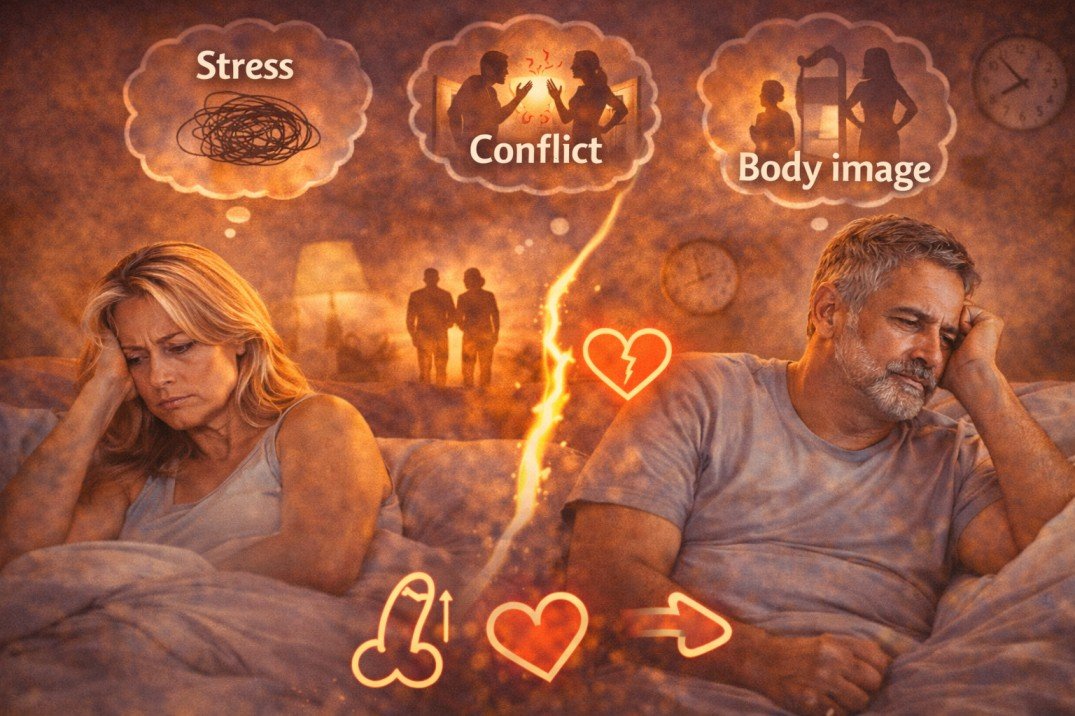
Pressure, Duty Sex, and Avoidance
When sex starts to feel like an obligation, desire declines. One partner may agree out of guilt, while the other senses the lack of enthusiasm. This creates performance pressure instead of connection.
The pursuer feels constantly rejected. The other feels chased or evaluated. Over time, both associate intimacy with tension rather than pleasure.
In therapy, we see that duty-driven intimacy reduces spontaneous desire. Pressure does not create arousal. Safety and mutual willingness do.
Midlife Stressors That Impact Intimacy
Midlife often brings invisible pressure. Caring for aging parents, career demands, health scares, financial strain, or adjusting to an empty nest all place the nervous system under stress.
When the body is in problem-solving mode, sexual desire naturally lowers. Libido is not just hormonal, it is stress-sensitive.
These external pressures suppress intimacy in both partners. What looks like disinterest is often emotional and physical exhaustion.
42 Psychologist-Backed Tips for Better Sex and Deeper Intimacy After 50
Shift From Performance to Pleasure Mapping
Stop trying to perform. Start paying attention to sensation. What worked at 30 may not work at 55, and that is normal.
Slow down and explore what feels good now without rushing toward orgasm. Ask, adjust, and stay present. Pleasure improves when pressure decreases.
Extend Arousal Time Without Rushing Penetration
Do not begin with penetration. Midlife arousal needs more time.
Build anticipation through touch and gradual stimulation before testing readiness. When you stop rushing, arousal improves naturally.
Use Non-Penetrative Sessions Intentionally
Occasionally remove intercourse from the plan. This reduces performance pressure for both partners.
Focus on touch, closeness, and sensation without a goal. Curiosity returns when penetration is not expected.
Alternate Control Positions
Change who controls depth and rhythm. This can reduce discomfort and improve confidence.
When the receiving partner controls movement, anxiety often decreases. Adjusting control improves comfort and increases trust.
Focus on Full-Body Sensation
Shift attention beyond the genitals. In midlife, arousal responds strongly to broader sensory input.
Spend time stimulating areas like the neck, back, inner arms, or scalp. Expanding focus reduces pressure and increases overall pleasure.
Normalize Lubrication Without Shame
Use lubrication openly and without embarrassment. Midlife tissue changes make dryness common, not personal.
Lubrication is adaptation, not failure. Comfort increases relaxation, and relaxation improves arousal.
Explore Clitoral and External Stimulation Openly
Do not rely only on penetration for orgasm. Many women, especially after menopause, need direct external stimulation to climax.
Talk openly about what feels effective instead of assuming. Clear communication reduces frustration and improves satisfaction for both partners.
Practice Slow Breathing During Intimacy
Slow your breathing consciously during intimacy. Deep, steady breaths calm the nervous system and reduce performance tension.
When the body feels safe, arousal builds more easily. Controlled breathing also increases sensation and can strengthen orgasm intensity.
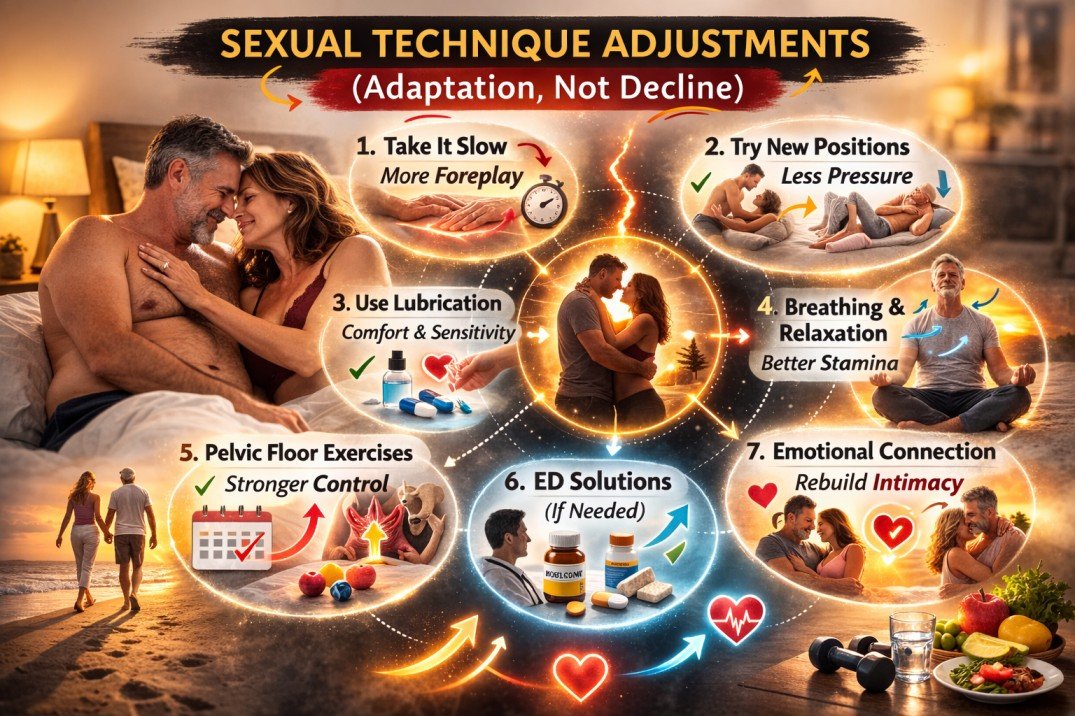
Improve Cardiovascular Health
Sexual function depends on blood flow. Poor circulation affects erection quality and genital sensitivity.
Commit to at least 30 minutes of brisk walking or moderate exercise daily. Even small improvements in heart health can noticeably improve sexual response.
Strengthen Pelvic Floor Muscles
Train your pelvic floor regularly. Stronger muscles improve erection firmness in men and orgasm intensity in both partners.
Practice controlled Kegel exercises daily. Consistency matters more than intensity.
Prioritize Sleep
Protect your sleep. Testosterone regulation, mood stability, and sexual desire all depend on adequate rest.
Chronic sleep deprivation lowers libido and increases irritability. Aim for consistent, uninterrupted sleep whenever possible.
Reduce Excess Alcohol
Limit alcohol before intimacy. Alcohol reduces nerve sensitivity and weakens erection reliability.
Even moderate overuse can blunt arousal and delay orgasm. Clearer nervous system function improves sexual response.
Maintain Healthy Weight
Excess visceral fat affects blood flow and hormone balance. Both directly influence sexual function and desire.
Focus on gradual, sustainable weight management. Small improvements can significantly improve stamina and arousal.
Include Resistance Training
Add simple strength exercises to your weekly routine. Lifting weights or using bodyweight helps support healthy testosterone levels.
Feeling physically stronger often improves confidence. Confidence directly supports sexual desire and performance.
Stretching and Mobility Work
Stretch regularly to improve flexibility. Better mobility reduces stiffness in hips, back, and knees during intimacy.
When your body moves comfortably, you feel less distracted by discomfort. Comfort improves relaxation and arousal.
Manage Chronic Illness Proactively
Conditions like diabetes, high blood pressure, and thyroid imbalance directly affect blood flow, hormones, and nerve sensitivity.
Stay consistent with medical care and treatment. Stable physical health supports stable sexual function.
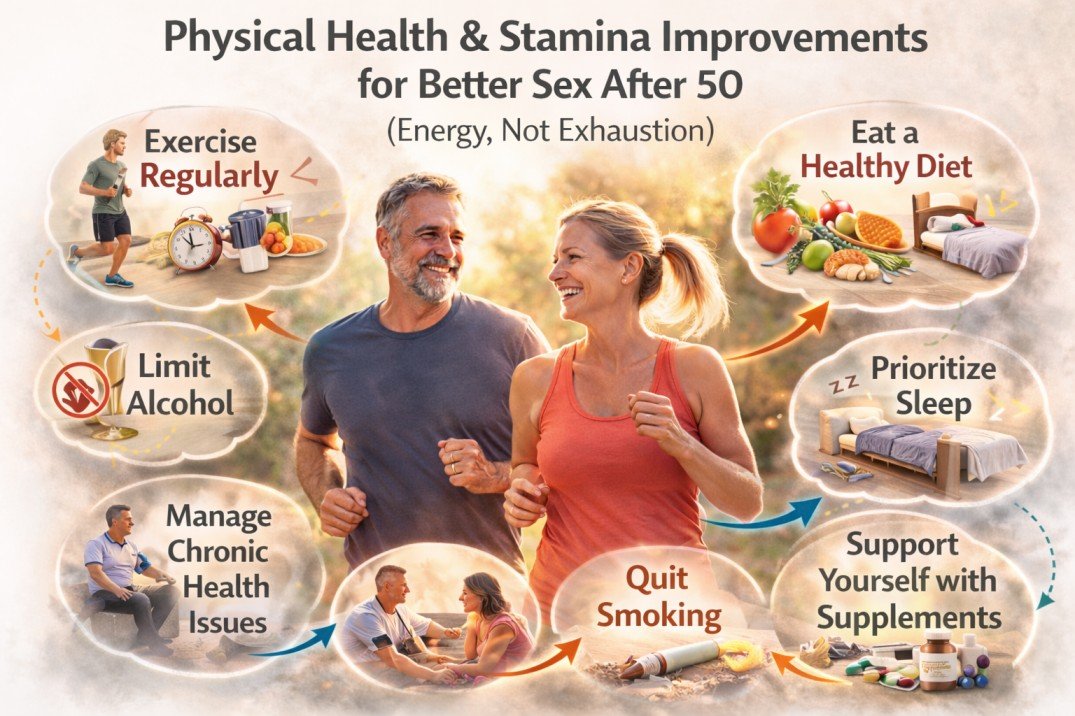
Consider Nutritional Support
Nutrient deficiencies can affect energy, hormones, and circulation. Omega-3s, vitamin D, zinc, and magnesium may support vascular and hormonal health.
Do not self-prescribe blindly. Get levels checked when possible and use supplements as support, not replacement for medical care.
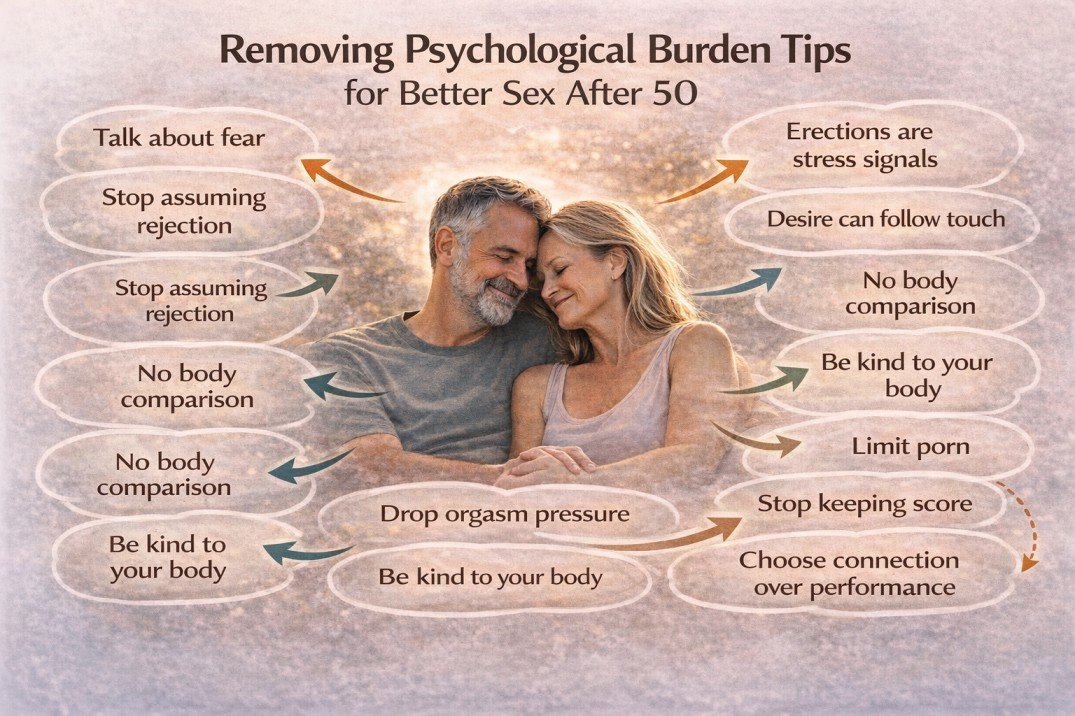
Break the Silence About Fear
Speak openly about your fears instead of hiding them. Many midlife sexual struggles continue simply because neither partner names what they are worried about.
When fear stays unspoken, distance grows. Honest conversation reduces shame and rebuilds trust.
Reframe Erectile Changes as “Signal,” Not “Failure”
See erection changes as information, not proof of inadequacy. Erections reflect blood flow, stress, fatigue, and health, not masculinity.
When you treat changes as signals, you respond with care instead of panic. Reduced pressure often improves function.
Understand Responsive Desire
Desire does not always appear before intimacy. For many women in midlife, especially after menopause, desire follows arousal rather than starting it.
Begin with touch and closeness instead of waiting to “feel in the mood.” Arousal can create desire, not the other way around.
Interrupt the Rejection Cycle Early
Address hesitation or hurt quickly instead of letting it build. Repeated avoidance turns into emotional distance over time.
Talk after small disappointments before they become patterns. Early repair prevents long-term withdrawal.
Stop Comparing to Younger Bodies
Stop measuring yourself against younger bodies or past versions of yourself. Comparison creates insecurity and blocks arousal.
Focus on connection and sensation instead of appearance. Intimacy grows when you stay present, not when you compete with age.
Remove Orgasm as the Only Goal
Stop treating orgasm as the measure of success. When climax becomes the only goal, pressure increases and pleasure decreases.
Focus on connection, touch, and shared experience. Relaxed intimacy often leads to better orgasms naturally.
Practice Self-Compassion Around Aging Bodies
Speak to yourself with kindness about physical changes. Aging does not reduce your worth or desirability.
When you accept your body, tension decreases. Reduced self-criticism improves confidence and sexual openness.
Limit Porn If It Distorts Expectations
Notice if porn has changed your arousal patterns. High-intensity stimulation can reduce sensitivity to real-life touch.
If you feel disconnected during intimacy, reduce or reset usage. Reconditioning your brain improves responsiveness to your partner.
Redefine “Success” in Bed
Stop measuring success by duration, erection strength, or intensity. In midlife, success means feeling connected and relaxed together.
When connection becomes the goal, pressure decreases. Reduced pressure improves pleasure and performance naturally.
Schedule Intimacy Without Scheduling Performance
Set aside time for closeness, not for proving anything. The goal is connection, not achieving a perfect erection or orgasm.
When time together feels safe and unrushed, anxiety decreases. Relaxed intimacy improves natural arousal.
Use Gradual Exposure for Anxiety
If fear has built around sex, do not jump straight into full intercourse. Rebuild slowly with low-pressure touch sessions.
Start with non-sexual or light sensual contact and increase gradually. Confidence grows when experiences feel safe and successful.
Shift From Evaluation to Experience
Stop checking erection firmness or lubrication during intimacy. Monitoring pulls you out of the moment.
Focus on sensation instead of performance. Presence improves arousal more than analysis.
Use Verbal Reassurance During Intimacy
Offer simple reassurance during intimacy. Short phrases like “I like this,” “You feel good,” or “Take your time” reduce anxiety.
Verbal safety calms the nervous system. When both partners feel accepted, arousal becomes more stable and natural.
Address Shame Directly
Name feelings of embarrassment or inadequacy instead of hiding them. Shame quietly blocks arousal faster than age ever does.
When shame is spoken, it loses power. Openness restores safety and connection.
Warm Up Muscles Before Intimacy
Prepare your body before intimacy. A warm shower or light stretching reduces stiffness in hips, back, and legs.
When muscles are relaxed, movement feels easier. Physical comfort supports better arousal.
Choose Positions That Reduce Joint Load
Select positions that feel physically sustainable. Side-lying or supported positions reduce strain on hips, knees, and lower back.
Less physical stress means less distraction. Comfort improves focus and pleasure.
Control Depth to Reduce Discomfort
Use positions that allow the receiving partner to control depth and pace. This helps manage sensitivity and prevents pain.
When movement feels controlled, the body stays more relaxed. Relaxation reduces discomfort and improves pleasure.
Use Cushions or Pillows for Support
Use pillows or cushions to support hips, knees, or lower back. Small adjustments can significantly improve comfort.
When the body feels supported, muscles relax more easily. Relaxation increases arousal and reduces pain.
Address Pelvic Floor Tension (Not Just Weakness)
Do not assume the pelvic floor is weak. In many midlife cases, the muscles are over-tight.
Chronic tension can cause pain and discomfort during penetration. Gentle relaxation exercises or pelvic floor therapy can improve comfort and function.
Increase Non-Sexual Touch Daily
Add physical touch that has no sexual goal. Holding hands, hugging, or sitting close rebuilds emotional safety.
Touch without pressure reduces defensiveness. Safety restores natural desire over time.
Express Desire Verbally
Say clearly that you want your partner. Do not assume they know.
Hearing “I desire you” strengthens confidence and lowers performance fear. Feeling wanted is one of the strongest aphrodisiacs in midlife.
Initiate Equally
Do not let one partner carry the role of always initiating intimacy. Shared initiation reduces pressure and quiet resentment.
When both partners take emotional risk, desire feels mutual rather than chased.
Laugh Together During Awkward Moments
Things will not always go smoothly in midlife intimacy. An erection may fade or a position may feel uncomfortable.
Laugh gently instead of panicking. Humor lowers performance tension and keeps connection intact.
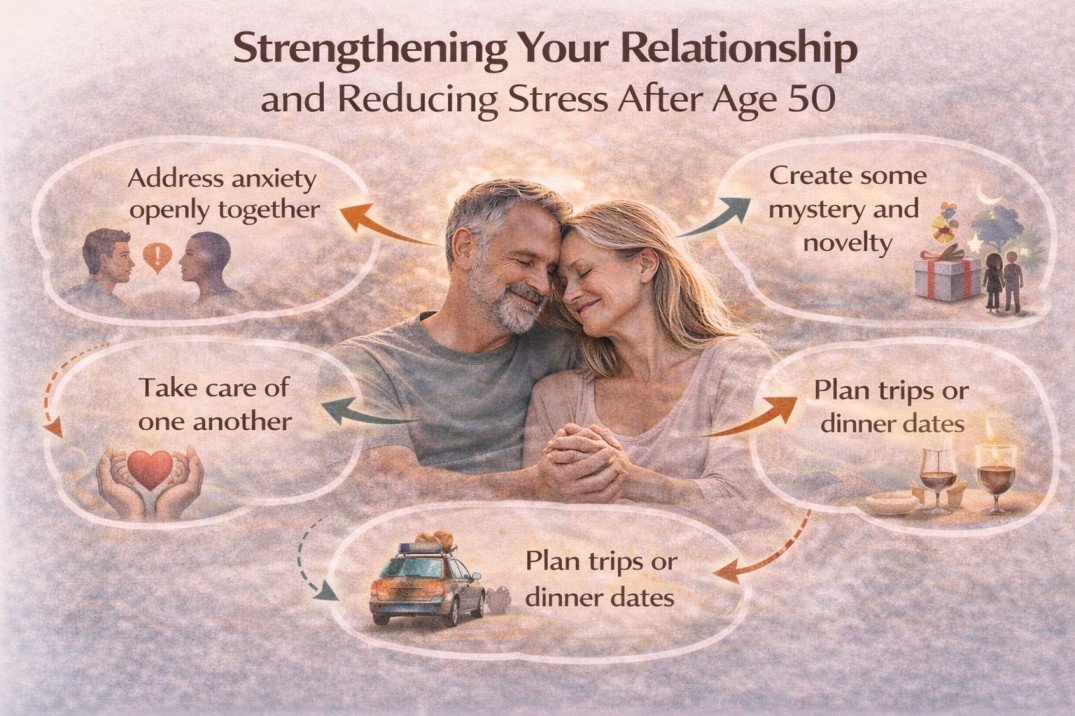
Create Mystery Again
Routine can dull anticipation over time. Small changes, like a night away, a different room, or even dressing differently, can reset curiosity.
A little distance or novelty restores anticipation, which fuels desire.
Seek Therapy Early, Not Late
Do not wait until months of avoidance turn into emotional distance. Sexual concerns are much easier to address when they are still small.
Early support prevents shame, resentment, and silence from becoming permanent patterns.
Always Practice Safe Sex in Midlife Dating
Menopause does not eliminate STI risk. In fact, many adults over 50 use protection less often, which increases exposure. If you are dating again, discuss recent testing early and be open about your own sexual health. Clear conversations build trust, not suspicion.
Condom use may feel inconvenient, especially if erections are less predictable, but planning ahead prevents anxiety in the moment. Some couples test together before stopping protection. Responsible intimacy protects both your health and your connection.
When Professional Help Is Helpful
Seek professional support if pain during sex continues, bleeding occurs after menopause, erections cause significant distress, or avoidance has become a pattern. These are not issues to “push through.” They are signals that deserve attention.
If communication has broken down or shame is dominating intimacy, online sex therapy can help reset the dynamic before distance becomes permanent. Support is not a last resort. It is a proactive step toward protecting your relationship and your sexual wellbeing.
Conclusion
Sex after 50 is not decline, it is transition. Midlife sexuality shifts from reflex-driven to relationship-driven. It becomes less automatic and more intentional, less ego-based and more emotionally intelligent, less about performance and more about collaboration.
Underneath most midlife sexual concerns is not lack of love or attraction, but fear, silence, biology, and misunderstanding. When couples address these openly and adapt with compassion, intimacy often becomes deeper than it was in younger years. At any age, the core need remains the same: to feel wanted, valued, and connected.
FAQs
Is it normal for men to struggle with erections after 50?
Yes. Erections often become slower and less predictable in midlife due to blood flow changes, stress, and hormone shifts. Occasional difficulty is common. Persistent distress should be evaluated, but variation itself is normal.
Why does sex hurt after menopause?
After menopause, estrogen declines can thin vaginal tissue and reduce natural lubrication. This can cause dryness, microtears, and discomfort. Pain is common but treatable and should not be ignored.
How often should couples over 50 have sex?
There is no universal number. Frequency varies based on health, stress, and relationship quality. Satisfaction and connection matter more than how often sex occurs.
Does testosterone decline affect desire in both men and women?
Yes. Testosterone gradually declines in men and also plays a role in female desire. However, stress, emotional connection, and health often influence libido as much as hormones do.
Can sex get better after 50?
Yes. Many couples report deeper intimacy because communication improves and pressure decreases. When performance expectations are replaced with connection, sex can become more satisfying.
Why do some couples stop having sex after 50?
Avoidance often begins with pain, anxiety, or repeated rejection. Without communication, small issues become patterns. Early discussion and adjustment can prevent long-term distance.
Is lubrication normal after 50?
Yes. Using lubrication is adaptation, not failure. Natural moisture may decrease with age even when arousal is present. External support improves comfort and pleasure.