Last Updated on March 21, 2026
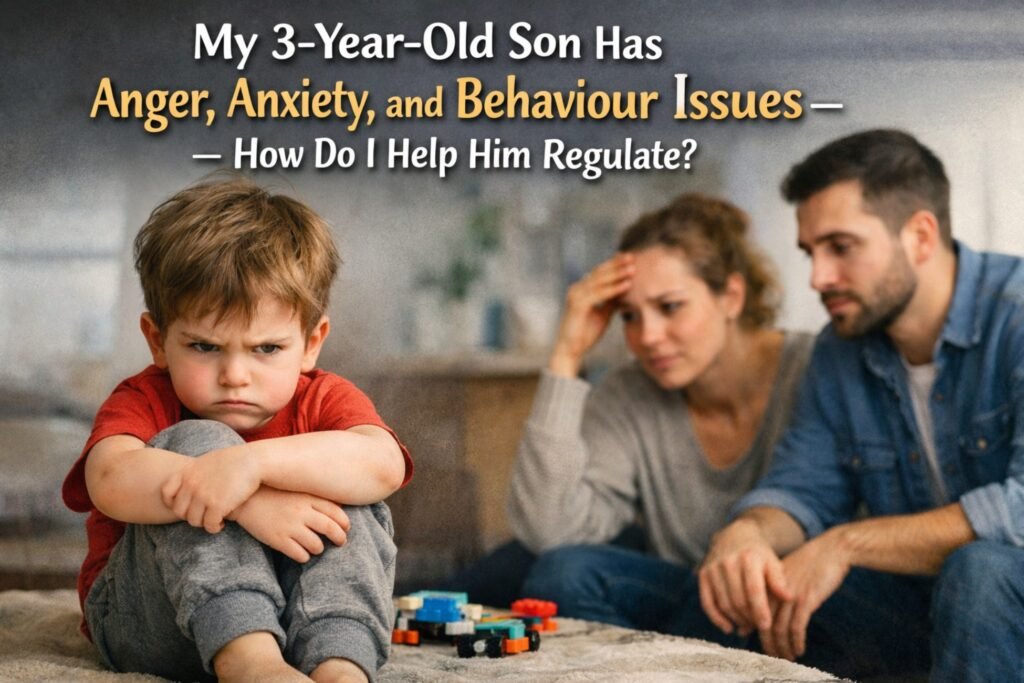
Many parents feel worried when their 3-year-old son suddenly screams, hits, throws things, or refuses to cooperate over small problems. The same child may be loving and playful at other times, which makes the behaviour confusing.
One parent described her 3-year-old son like this:
“He is sweet most of the day, but if something doesn’t go his way, he explodes. He cries, shouts, or hits, and it takes a long time to calm him.”
At age 3, children feel strong emotions but cannot control them or explain them well. A 3-year-old boy often shows anger and anxiety through physical actions rather than words.
If your 3-year-old son behaves this way, it usually means he needs help learning how to calm his body and express feelings, not punishment or labels.
Why This Happens at Age 3 Specifically (Causes)
Strong anger, anxiety, and behaviour problems often appear at age 3 because a child’s emotions develop faster than self-control. A 3-year-old boy can feel frustration, fear, or excitement very intensely but does not yet have the skills to manage those feelings.
- Strong emotions, weak impulse control
A 3-year-old reacts immediately. He cannot pause, think, or calm himself the way older children can. - Desire to be independent
Many 3-year-old boys want to do things on their own. When they cannot succeed, frustration quickly turns into anger. - Limited ability to explain feelings
A 3-year-old may not know words for “overwhelmed,” “jealous,” or “scared.” Physical outbursts become the easiest way to communicate distress. - Anxiety shows through behaviour
Fear of separation, new situations, or loss of control may appear as clinginess, refusal, or aggression rather than quiet worry. - Physical triggers lower tolerance
Hunger, tiredness, overstimulation, or sudden changes in routine can make a 3-year-old boy much more reactive.
These factors often combine. A tired or hungry child who is already frustrated will reach the breaking point faster. The behaviour reflects overload, not deliberate misbehaviour.
Signs of Anger, Anxiety, and Regulation Difficulty in a 3-Year-Old Son
At age 3, emotional distress shows through behaviour rather than clear explanations. A 3-year-old boy may move from calm to explosive very quickly because he cannot regulate feelings on his own yet.
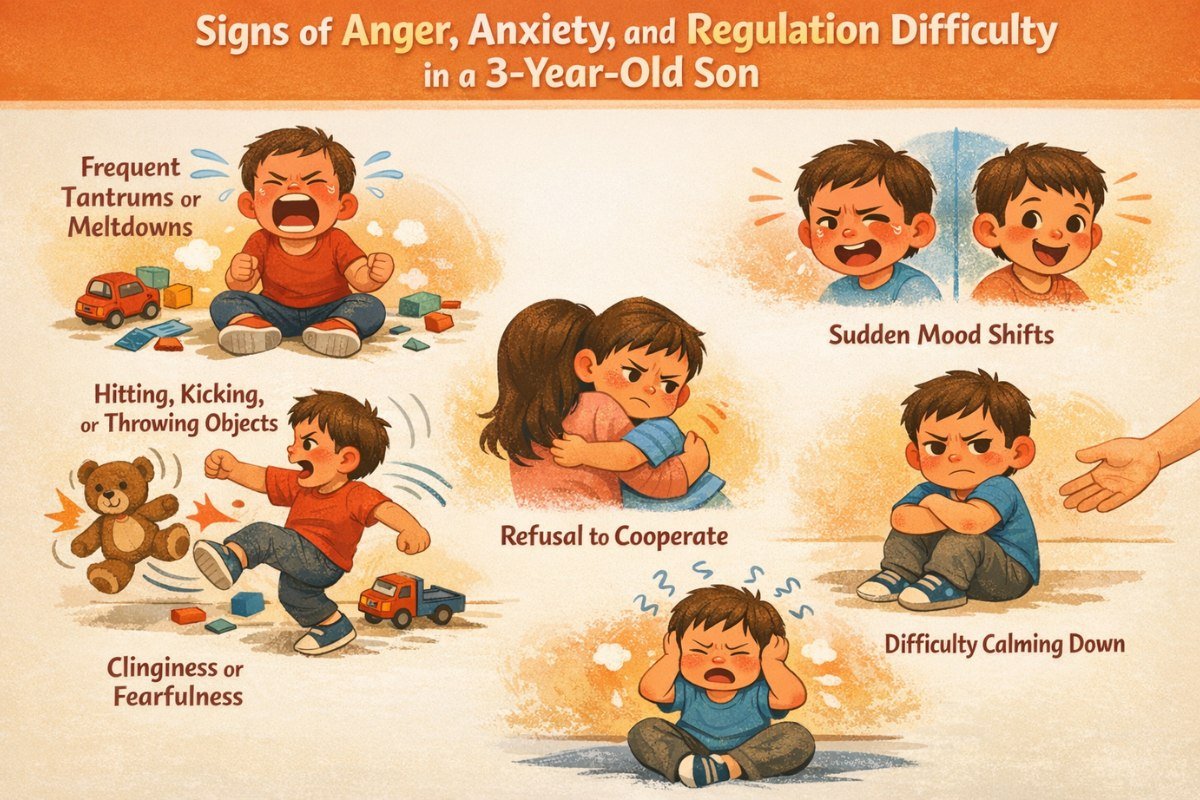
Common signs include:
- Frequent tantrums or meltdowns
Intense crying, screaming, or collapsing when things do not go his way. - Hitting, kicking, or throwing objects
Physical actions are a common outlet for overwhelming frustration. - Sudden mood shifts
Happy one moment, extremely upset the next. - Refusal to cooperate
Saying “no,” resisting instructions, or dropping to the floor. - Clinginess or fearfulness
Wanting constant proximity to a parent, especially in new situations. - Difficulty calming down
Once upset, it may take a long time to settle even with comfort. - Aggression during frustration
Reacting strongly when a task is difficult or interrupted.
These behaviours often appear more at home because that is where the child feels safest expressing emotions. If the child is affectionate, playful, and engaged between episodes, the problem is usually regulation, not personality. Young children often communicate distress through behaviour rather than words.
How Anger and Anxiety May Show in a 3-Year-Old Boy
A 3-year-old boy often expresses distress through actions rather than words. Instead of saying he feels overwhelmed, scared, or frustrated, his body reacts first.
Common patterns include:
- More physical reactions
Hitting, kicking, pushing, or throwing objects when upset. - Impulsive responses
Acting before thinking, especially when frustrated or overstimulated. - Escalation during rough play
Play can suddenly turn aggressive if excitement becomes too intense. - Big reactions to limits
Being told “no” or asked to stop an activity may trigger a strong outburst. - Restlessness when overwhelmed
Pacing, running, or struggling to stay still when emotions are high.
Not every 3-year-old boy shows all these behaviours, but many display distress in physical ways because self-control and language skills are still developing. The behaviour reflects difficulty managing feelings, not intentional defiance.
How to Help Your 3-Year-Old Son Regulate
A 3-year-old boy cannot calm himself during big emotions. He needs an adult to help his body settle first. This process is called co-regulation and is the main way young children learn self-control.
- Stay calm and close
Your tone and body language help his nervous system slow down. Shouting or arguing usually makes the outburst stronger. - Name the feeling in simple words
Say things like “You’re angry” or “You’re upset.” This helps him connect sensations with language over time. - Offer physical comfort if he accepts it
Some children calm when held, hugged, or gently touched. Others prefer you to sit nearby without touching. - Keep routines predictable
Regular times for meals, sleep, and activities reduce anxiety and sudden meltdowns. - Watch for hunger and tiredness
A 3-year-old loses coping ability quickly when physically depleted. - Give safe ways to release anger
Stomping feet, squeezing a pillow, or pushing against a wall can discharge energy without harm. - Praise attempts to calm down
Notice when he takes a breath, stops hitting, or asks for help. This reinforces regulation skills.
Progress is gradual. With repeated support, most 3-year-old children learn to calm faster, express feelings more clearly, and handle frustration better. Many important emotional needs at this age are shown through closeness, protest, or intense reactions.
Signs You Should Seek Professional Help
Most anger and anxiety at age 3 are part of normal development, but support may be needed if the behaviour is severe, persistent, or affecting daily life. Parents often wonder when strong behaviour is part of development and when extra support may be needed.

Consider consulting a paediatrician or child specialist if:
- Aggression causes injury
Frequent hitting, biting, or throwing objects that harm others or the child himself. - Extreme anxiety or fear
Intense clinginess, panic during separation, or fear that limits normal activities. - Unable to calm even with support
Outbursts remain prolonged despite comfort and reassurance. - Persistent sleep problems
Difficulty falling asleep, frequent night waking, or distress around bedtime. - Speech or developmental concerns
Limited communication can increase frustration and behaviour issues. - Problems reported in preschool or daycare
Difficulty functioning in structured settings compared to peers.
How Parents’ Responses Shape Regulation Skills
A 3-year-old learns how to handle emotions by watching and depending on adults. He cannot develop regulation alone. Your reactions during difficult moments teach him what to do with big feelings.
- Calm responses help him calm faster
When you stay steady, his body gradually follows. Loud or harsh reactions usually increase distress. - Feeling safe reduces intensity over time
Children express emotions more strongly when they trust the caregiver will not reject them. Safety makes recovery easier. - Consistent boundaries create security
Predictable limits help a 3-year-old know what to expect, which lowers anxiety and impulsive behaviour. - Harsh punishment can increase dysregulation
Fear or shame may stop behaviour briefly but does not teach coping skills. - Support during recovery matters most
What happens after the outburst helps the child learn how to return to calm and reconnect.
Final Thought
Strong anger and anxiety at age 3 are very common. A 3-year-old son can love deeply, play happily, and still lose control when overwhelmed. These reactions do not mean he will grow into an aggressive or anxious child.
As the brain matures and language improves, most children learn to express feelings with fewer outbursts. What matters most is consistent support, clear boundaries, and a calm adult presence.
If your 3-year-old son is affectionate, curious, and able to enjoy activities between episodes, there is strong reason to feel reassured. With time and guidance, regulation skills usually improve steadily. Some children cry frequently not because they are weak, but because their emotional system becomes overwhelmed quickly.
FAQs
Why is my 3-year-old son so angry all the time?
A 3-year-old feels strong emotions but has very little self-control. Anger often appears when he is frustrated, tired, hungry, or unable to express what he needs.
Is aggression normal at age 3?
Mild hitting, kicking, or throwing during tantrums can occur at this age because physical actions are easier than using words. Persistent or severe aggression should be evaluated.
Can anxiety cause behaviour problems in a 3-year-old?
Yes. Fear, insecurity, or overwhelm often appear as clinginess, refusal, or anger rather than verbal worry.
How can I calm my 3-year-old during a meltdown?
Stay close, speak calmly, and reduce stimulation. Physical comfort or quiet presence helps more than reasoning or punishment during peak distress.
Will my child grow out of these behaviours?
Most children improve as language, impulse control, and coping skills develop, especially with consistent support.
When should I get professional help?
Seek guidance if aggression is severe, the child cannot calm with support, or there are concerns about development, communication, or daily functioning.