Last Updated on February 17, 2026
Quick Clinical Snapshot
- Feeling tired of initiating intimacy is common in long-term relationships.
- It is frequently linked to sexual desire discrepancy, where partners experience different libido levels or different desire styles.
- Over time, repeated one-sided initiation can create resentment, rejection sensitivity, and emotional withdrawal.
- This pattern is not always about loss of attraction. Many partners still feel desire but struggle with initiation dynamics.
- When addressed through direct communication, emotional validation, and couples therapy frameworks, initiation imbalance can improve significantly.
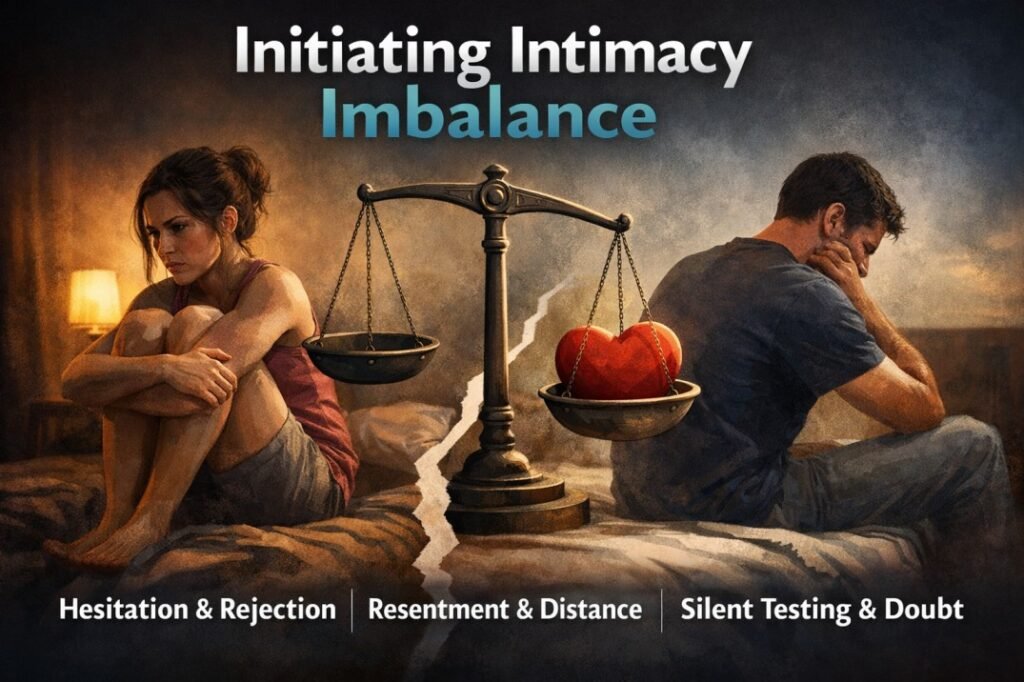
Initiation fatigue is less about how often sex happens and more about how connection is initiated and shared. When one partner consistently carries the emotional labour of starting intimacy, the imbalance can gradually affect confidence, attachment security, and overall relationship satisfaction.
Left unaddressed, the pattern tends to evolve into a pursue-withdraw cycle. Addressed early, it often becomes an opportunity to strengthen communication and rebuild mutual vulnerability.
What Does “Tired of Initiating Intimacy” Mean?
Tired of initiating intimacy means you feel emotionally drained from always being the one who starts physical or romantic connection, while your partner remains passive.
It is not just about sex frequency.
It is about imbalance.
Initiating requires vulnerability. When you repeatedly take that risk alone, it can create:
- Rejection sensitivity
- Lower confidence
- Growing resentment
- Emotional withdrawal
This pattern often reflects sexual desire discrepancy, attachment differences, or emotional labour imbalance, not necessarily loss of attraction.
At its core, the fatigue comes from feeling solely responsible for keeping intimacy alive.
Why Am I Always the One Initiating?
If you feel like you have to initiate everything, you’re likely experiencing a relational pattern, not a personal flaw.
Many people search things like “my partner doesn’t initiate intimacy anymore” or “my wife never initiates intimacy” because the imbalance feels personal. It can easily translate into, “Am I not desirable?” But most initiation gaps are driven by dynamics, not attraction loss.
Here are the most common reasons:
1. Sexual Desire Discrepancy
One partner may experience spontaneous desire, while the other experiences responsive desire. If your partner waits to feel desire before acting, you naturally become the initiator.
2. Rejection Aftermath
Sometimes a husband stopped initiating after rejection or a wife did because repeated refusals created quiet avoidance. Even subtle rejection can condition someone to stop trying.
3. Emotional Labour Patterns
If you are already the one who manages communication, plans dates, or initiates emotional conversations, that pattern often extends into physical intimacy.
4. Attachment Differences
Anxious attachment may increase pursuit of closeness. Avoidant attachment may decrease proactive intimacy. When these styles interact, one partner typically initiates more.
5. Stress and Burnout
Mental load, work stress, parenting, or emotional fatigue can reduce proactive sexual behaviour. Desire may still exist, but energy for initiation drops.
The key insight:
Being the consistent initiator usually reflects a pattern in how vulnerability is distributed in the relationship, not a verdict on your attractiveness.
When You’re Tired of Initiating And Starting to Withdraw
Many people reach a point where they think:
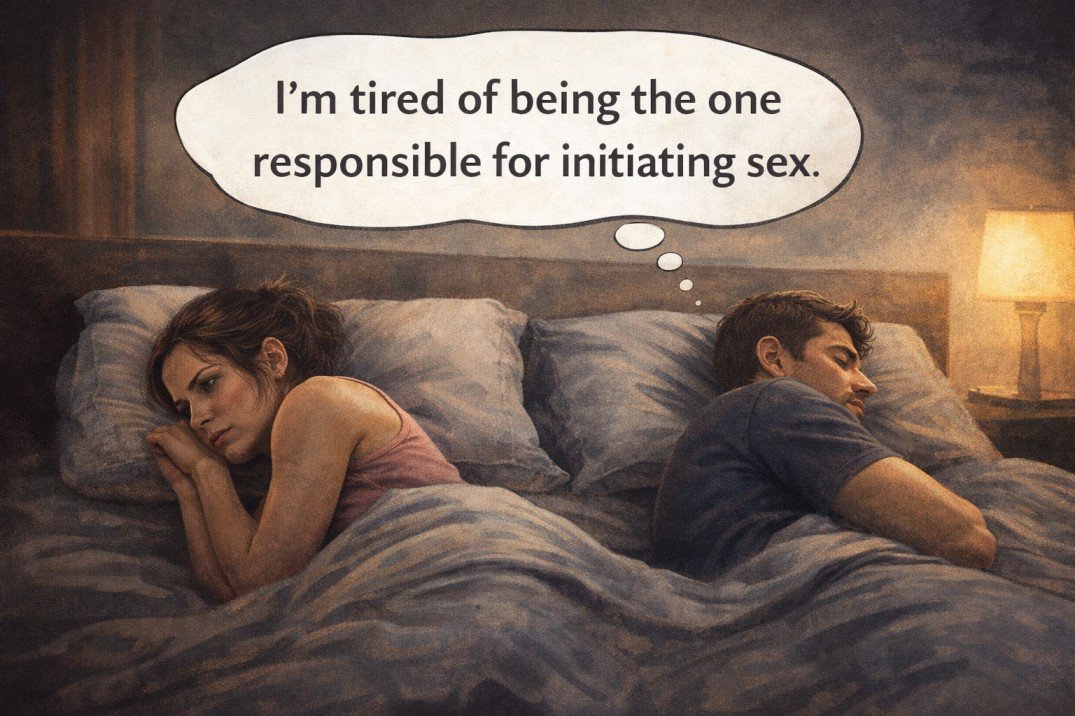
- “I’m tired of being the one responsible for initiating sex.”
- “If I don’t start it, nothing happens.”
- “He only wants sex when he wants it.”
- “Is it wrong to stop initiating altogether?”
This stage is less about desire and more about emotional impact.
Resentment Begins to Build
When intimacy only happens on your partner’s timing, it can feel unequal. Even if sex still occurs, the imbalance in who starts it can create quiet resentment.
You may begin to feel:
- Unchosen
- Taken for granted
- Responsible for keeping the relationship alive
Resentment rarely shows up loudly at first. It accumulates slowly.
Rejection Changes How You See Yourself
If every time you initiate intimacy, you face hesitation, postponement, or subtle rejection, your confidence can shift.
You might think:
- “Maybe they’re not attracted to me anymore.”
- “Maybe I’m too needy.”
- “Maybe I should just stop.”
Repeated rejection, even mild rejection, increases rejection sensitivity. Eventually, initiating stops feeling exciting and starts feeling risky.
Emotional Distance as Protection
Some people decide to stop initiating, not to punish, but to protect themselves.
If you’ve thought, “I’m done trying,” that often reflects emotional fatigue rather than anger.
However, when both partners begin waiting for the other to act, intimacy can stall completely.
The Pursue–Withdraw Pattern
In many relationships, one partner pursues intimacy while the other withdraws. Over time, the pursuer becomes exhausted and starts withdrawing too.
That’s when couples notice:
- Physical touch decreasing
- Flirting fading
- Long gaps without sex
This dynamic is common, and it is reversible but it requires awareness from both sides.
Should You Stop Initiating?
Stopping completely without discussion usually deepens distance.
If you reduce initiation, it helps to say why:
“I’m feeling discouraged always being the one to start intimacy. I don’t want to stop connecting, I want it to feel shared.”
That shifts the focus from blame to pattern.
When You Want to Initiate But Feel Afraid or Awkward
Not everyone avoids initiating because they lack desire. Many people want intimacy deeply but struggle with the vulnerability of starting it.
You might relate to thoughts like:
- “I always desire my partner, but I don’t know how to show it.”
- “What if I get rejected?”
- “What if I do it wrong?”
- “I don’t want it to feel forced or mechanical.”
This hesitation is often rooted in fear, not disinterest.
Fear of Rejection
If you’ve been rejected before, in this relationship or a past one, your nervous system remembers it.
Even if your current partner is open and affectionate, an internal voice may still say:
“Don’t risk it.”
Rejection sensitivity can quietly prevent initiation, even when desire is present.
Sexual desire discrepancy when partners want intimacy at different levels is a well-documented phenomenon in relationships.
Social Conditioning and Gender Roles
Some people were raised to believe one partner should lead sexually. Others were taught that showing desire is “too much,” “too aggressive,” or “unfeminine.”
These beliefs can create anxiety around initiating, especially for women who were socialised to be responsive rather than proactive.
The result is desire without expression.
Avoidant Attachment Patterns
If closeness feels vulnerable or emotionally intense, you may unconsciously hesitate to initiate. Avoidant attachment often reduces proactive intimacy, even when attraction exists.
It’s not about indifference. It’s about discomfort with vulnerability.
“I Don’t Want It to Feel Forced”
This is a common concern.
Initiation does not have to be dramatic or scripted. It can be simple:
- Sitting closer
- Initiating touch
- Saying directly, “I’d like to be close tonight.”
What often feels forced is not the act, it’s the pressure behind it.
When initiation becomes about meeting expectations instead of expressing desire, it can feel unnatural.
If you struggle to initiate, the goal is not to transform your personality.
It is to reduce fear around vulnerability.
Initiation becomes easier when both partners create emotional safety, where desire is welcomed, not evaluated.
Who Should Initiate Sex More – Men or Women?
Many people quietly wonder:
- Who should initiate sex in a relationship?
- How often should a wife initiate intimacy?
- Do husbands love when wives initiate?
- Is it the man’s job to start things?
There is no psychological rule assigning initiation by gender.
Healthy intimacy is not structured around “roles.” It is structured around shared vulnerability.
There Is No Fixed Standard
Research in relationship psychology does not support the idea that one gender should initiate more frequently. Initiation patterns vary by:
- Individual libido
- Attachment style
- Cultural background
- Personality
- Stress levels
In some relationships, one partner naturally initiates more. That is not automatically unhealthy. The problem arises when the imbalance feels rigid or emotionally loaded.
The Shared Vulnerability Model
Initiating intimacy is an act of vulnerability.
When only one partner consistently takes that emotional risk, the dynamic can feel unequal. When both partners initiate at different times, even if not evenly, intimacy feels more mutual.
The goal is not a 50–50 rule.
The goal is shared responsibility for closeness.
Do Husbands Like When Wives Initiate?
Many men report feeling desired and validated when their partner initiates. The same is true in reverse. Most people appreciate knowing they are wanted, not just available.
What matters is not frequency alone, but whether initiation feels welcome and safe.
How Often Should a Wife Initiate Intimacy?
There is no universal number.
If initiation feels one-sided and resentment is growing, that signals imbalance, not a quota issue.
The healthier question is:
Does intimacy feel mutually created, or carried mostly by one person?
When both partners feel free to express desire without fear, the frequency question becomes less urgent.
Low Libido vs Initiation Fatigue
Low Libido
- Desire level: Reduced
- Emotional tone: May feel neutral, frustrated, or disconnected
- Common causes: Hormonal shifts, stress, medical issues
- Support approach: Medical evaluation, lifestyle adjustment
Initiation Fatigue
- Desire level: Often still present
- Emotional tone: Resentment, discouragement, rejection sensitivity
- Common causes: One-sided initiation pattern, emotional labour imbalance
- Support approach: Communication repair, shared vulnerability, couples therapy
Is This a Red Flag?
Feeling tired of initiating intimacy is common in long-term relationships. Differences in libido, stress levels, or attachment styles often create temporary imbalance. In many cases, it reflects misaligned patterns rather than loss of attraction.
It becomes more concerning when avoidance is consistent and conversations about intimacy are repeatedly dismissed. If emotional closeness outside the bedroom has also declined, the issue may be relational rather than purely sexual.
Temporary stress reduces energy for initiation but usually preserves warmth and responsiveness. Chronic avoidance, on the other hand, reduces both initiative and emotional engagement.
If left unaddressed, repeated imbalance can lead to emotional withdrawal and reduced sexual connection. That does not automatically mean the relationship is failing, but it does mean the pattern deserves attention.
How To Fix Feeling Tired of Initiating Sex
Fixing initiation imbalance is not about tricks or pressure. It’s about redistributing vulnerability and rebuilding emotional safety.
Communication Reset
If you are tired of initiating, the first repair step is conversation, not silent testing.
Many couples fall into internal assumptions:
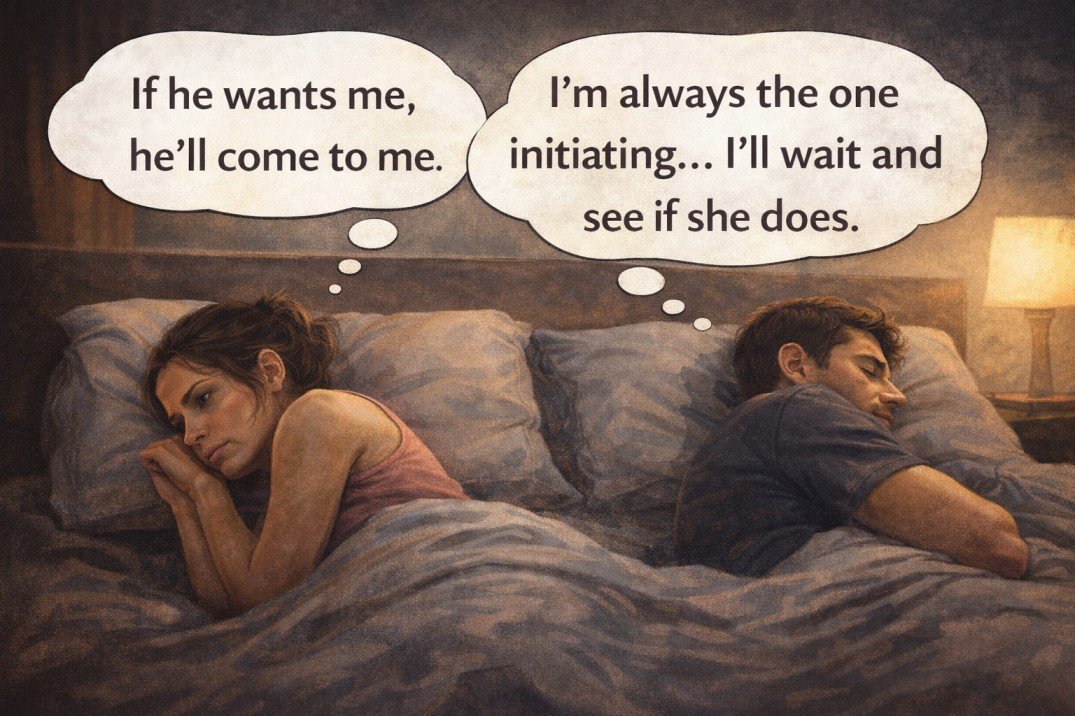
- “If they really want it, they’ll initiate.”
- “I don’t want to look needy.”
- “I’ll wait and see if they come to me.”
Both partners may be desiring each other while both are hesitating.
Instead of waiting, speak clearly. Avoid blame language like, “You never initiate.”
Use impact language:
“I’m starting to feel discouraged always being the one to start intimacy. I don’t want to test each other. I want it to feel mutual.”
Clarity replaces guessing. Guessing creates distance.
Shared Responsibility Model
Initiation does not need to be spontaneous to be meaningful.
Some partners think, “If she wants it, she’ll start it.” Others think, “If he desires me, he’ll make a move.” This turns intimacy into a proof test rather than shared connection.
A shared responsibility model removes that pressure. The partner who wants intimacy in that moment should feel free to initiate — without worrying about looking desperate, dominant, or needy.
When both people understand their sex initiation style, whether verbal, physical, emotional, or subtle, the question of “who should initiate more” becomes less important.
What matters is that neither partner feels solely responsible.
Emotional Safety Building
If rejection fear exists, initiation will always feel risky.
One partner may hesitate because they fear looking needy. The other may hesitate because they fear being rejected again. Both may be thinking silently instead of expressing openly.
Reducing rejection sensitivity requires emotional safety:
- Make it safe to say yes.
- Make it safe to say no without withdrawal.
- Make it safe to express desire without embarrassment.
When partners know that initiation will not lead to criticism, shame, or punishment, hesitation decreases naturally.
Therapy-Based Tools
If the pattern feels stuck, especially when both partners are misreading each other’s desire, structured support helps.
- Attachment work helps uncover anxious pursuit or avoidant hesitation.
- Conflict cycle mapping reveals how waiting, testing, and withdrawal reinforce each other.
- Structured intimacy scheduling removes the “prove you want me” dynamic and balances effort.
- Couples therapy frameworks focus on emotional validation and shared vulnerability.
When both partners understand their initiation patterns and emotional triggers, intimacy stops being a power struggle.
It becomes a shared expression of desire.
When to Seek Professional Help
Consider professional support if resentment has become chronic, not occasional. When frustration turns into ongoing bitterness, the issue is no longer just about sex.
Emotional shutdown is another warning sign. If one or both of you have stopped trying, stopped talking, or avoid the topic entirely, distance may be replacing connection.
Avoidance of physical affection, repeated unresolved conversations, or a complete drop in initiation on both sides are strong indicators that the pattern is stuck.
Online Couples therapy can help identify attachment dynamics, communication breakdowns, and hidden expectations around intimacy. Seeking help is not a sign of failure; it is an early intervention to protect the relationship.
FAQs
Why am I tired of always initiating intimacy?
Being tired of always initiating intimacy usually means you feel emotionally drained from carrying the responsibility of starting connection alone. Over time, one-sided initiation can create resentment, rejection sensitivity, and self-doubt.
Is it normal to feel resentful about initiating sex?
Feeling resentful about initiating sex is normal when the effort feels one-sided. Resentment often reflects imbalance in vulnerability, not excessive sexual need.
Does this mean my partner is not attracted to me?
Tiredness around initiating intimacy does not automatically mean your partner is not attracted to you. Reduced initiation often relates to stress, attachment style, or desire differences rather than loss of attraction.
What happens if I stop initiating sex completely?
If you stop initiating sex completely without communication, emotional distance may increase. If you explain why you are stepping back, it can lead to a clearer conversation about shared responsibility.
How do I overcome fear of initiating intimacy?
To overcome fear of initiating intimacy, reduce rejection anxiety by building emotional safety. When initiation is welcomed without criticism or pressure, confidence increases naturally.