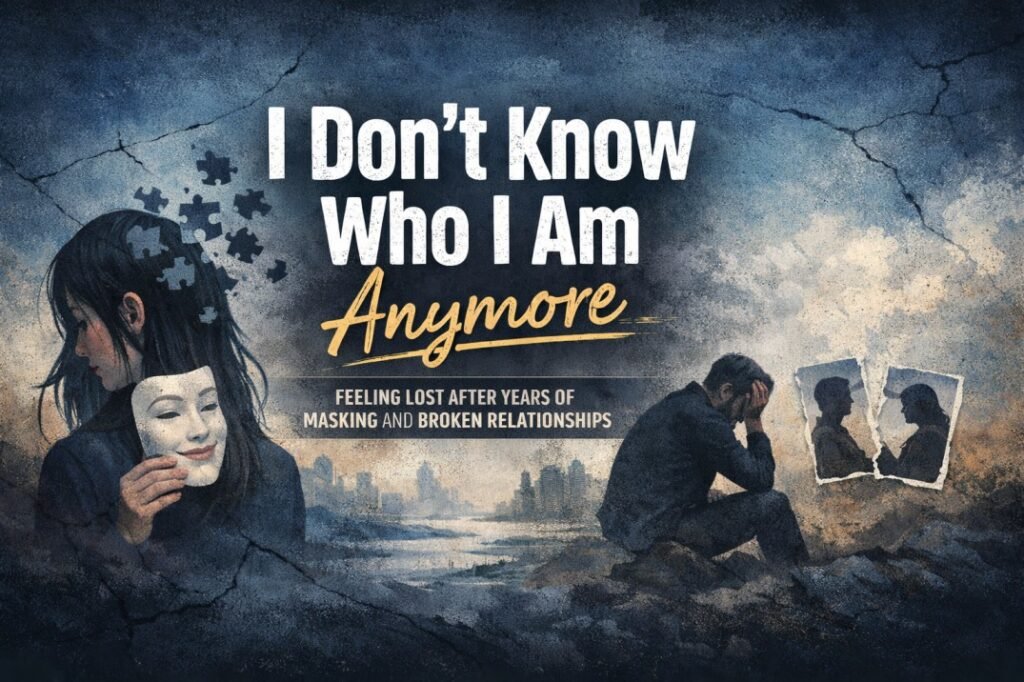
At LeapHope, many people come for online counselling with one common concern:
“I don’t know who I am anymore.”
Others describe it differently:
“I’ve changed and I don’t know why”
“I feel lost”
“I don’t feel like myself”
This experience can come from different situations, but one pattern we see often, especially in people in their 20s, is this:
👉 Years of masking, adjusting to others, and going through relationships that slowly change how you think, feel, and behave.
On the outside, life may still be functioning.
But inside, there’s a lack of clarity:
- your feelings feel unclear
- your preferences don’t feel certain
- nothing feels fully “you” anymore
This article focuses on that specific experience, understanding why it happens and how to rebuild a clear sense of self again.
What Does “I Don’t Know Who I Am Anymore” Actually Mean?
This isn’t dramatic or abstract. It’s a real internal experience.
When people say “I don’t know who I am anymore,” they usually mean:
- their feelings feel unclear
- their preferences don’t feel certain
- their reactions don’t feel natural
- they can’t clearly say what is truly “them”
It often feels like there’s a gap between who you used to be and how you feel now.
There’s no solid inner reference to rely on. Even if life is functioning on the outside, internally things feel mixed, inconsistent, or unsure.
In simple terms:
👉 “I don’t know who I am anymore” means nothing inside feels clearly “me” anymore.
Before vs Now – What Actually Changed Inside a Person
To understand this feeling of being lost or disconnected from yourself, it helps to see what has actually shifted internally over time. The contrast below shows how your experience may have changed from feeling clear and stable to feeling unclear and uncertain.
Check the comparison below for better clarity.
Before
Now
Signs You May Be Experiencing an Identity Crisis in Your 20s
In your 20s, this can feel even more confusing because you’re expected to figure out your career, relationships, and direction at the same time. But inside, it can feel like this:
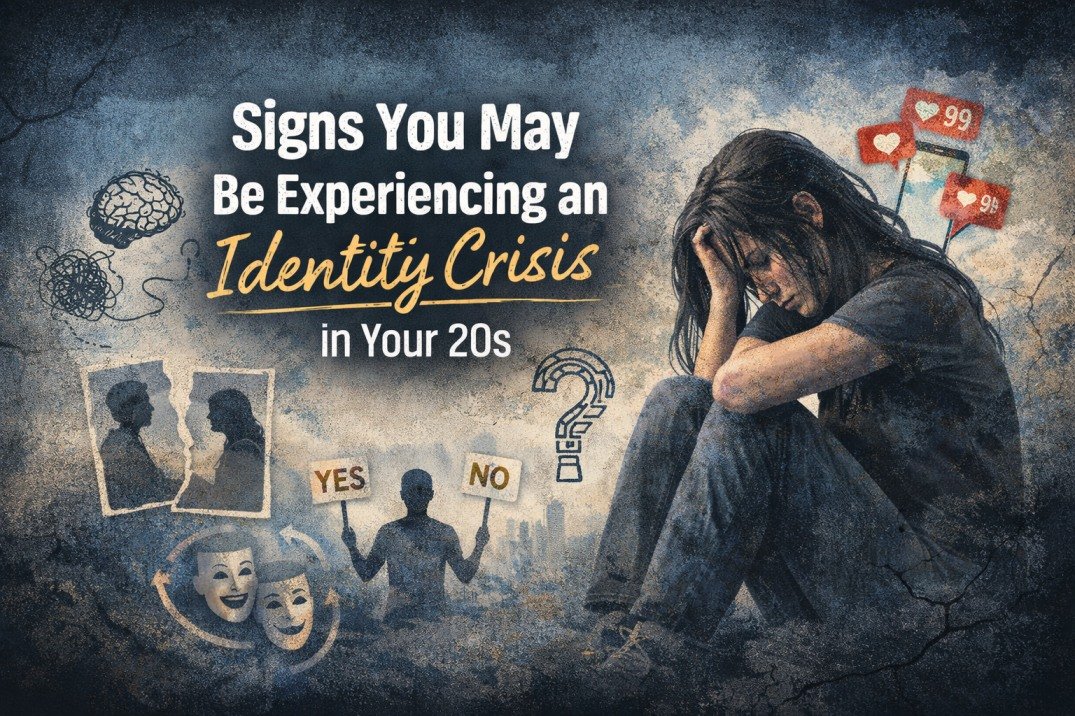
- you don’t know what you actually want anymore, even in simple things
- you feel confused about your career or direction, like nothing really fits
- you’re doing your daily work, but it doesn’t feel connected to you
- your relationship doesn’t feel right internally, or you feel like avoiding relationships altogether
- you want to be alone to figure things out, but being alone also feels uncomfortable
- you feel like you act differently with different people, and none of it feels fully real
- even small decisions feel tiring because you’re not sure what’s right for you
- your emotions stay inside for a long time and then come out suddenly
- you feel hard to understand, even to yourself
- you’re functioning normally, but something feels off in the background
An identity crisis is not always loud or dramatic. It often shows up quietly, while everything on the outside looks like it’s moving forward, but inside, you don’t feel clear or aligned with yourself anymore.
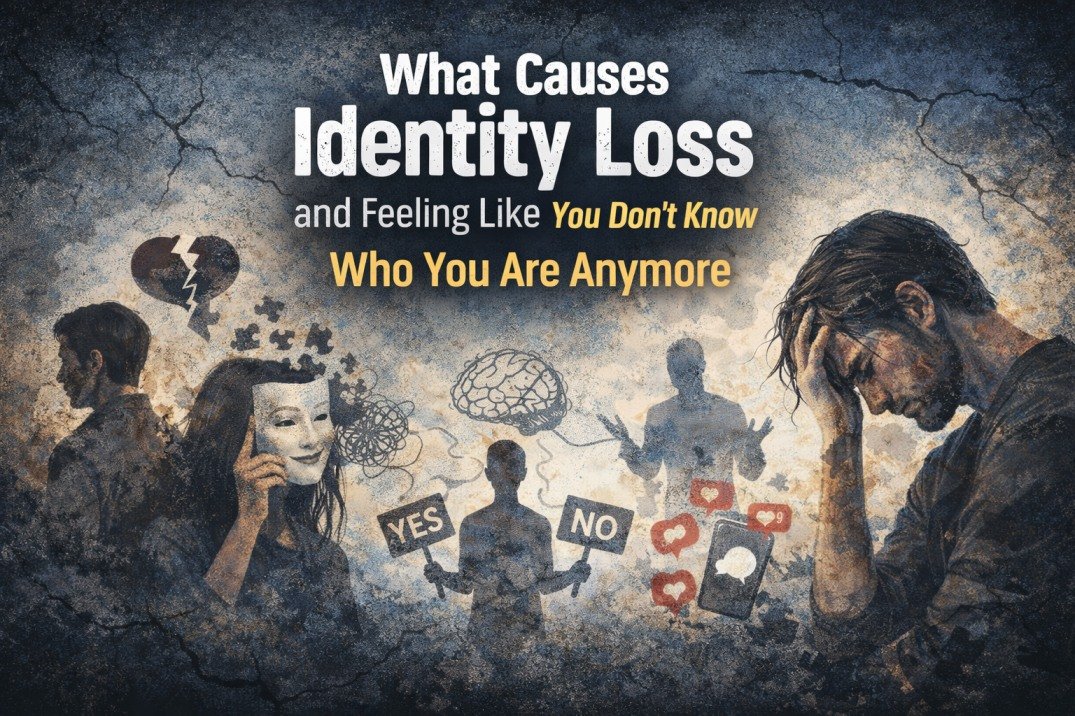
What Causes Identity Loss and Feeling Like You Don’t Know Who You Are Anymore
This feeling doesn’t happen suddenly. It builds slowly through patterns, habits, and experiences, especially in your 20s when you’re trying to find connection, stability, and a sense of belonging.
Constantly Adjusting Yourself to Be Accepted
This usually starts with a need to feel liked, accepted, or avoid rejection.
You begin adjusting how you speak, react, or behave based on what works in a situation. Over time, this becomes a habit. Instead of responding naturally, you start responding in ways that maintain approval or avoid conflict.
Gradually, your focus shifts from what you actually feel to what keeps things stable with others. As this pattern continues, your natural preferences and reactions become less clear.
Eventually, this leads to internal confusion, where you can’t clearly recognise what feels genuinely “you” anymore.
Building Your Identity Around Relationships
This often comes from a genuine need for connection, love, and emotional security.
Some people share in counselling that earlier, they were clear about their boundaries. They knew what to accept, what to reject, and when to walk away. There was confidence in how they handled relationships.
Over time, this clarity shifts. You start prioritising the relationship over your own internal signals. Decisions become more about keeping the connection stable than what feels right to you.
Your sense of self slowly becomes tied to the relationship, as a partner or someone who holds things together. When it changes or ends, it creates a gap internally.
👉 You no longer feel clear about what you want or who you are without that connection.
Masking Becomes Your Default Behaviour
This often shows up in everyday situations.
You may feel uncomfortable with certain behaviours, but instead of expressing it clearly, you tell yourself you’re okay with it to avoid conflict or keep the relationship stable.
At first, it feels manageable. But over time, it starts bothering you more, creating an internal conflict between what you feel and what you show.
When you finally bring it up, it feels confusing because earlier you didn’t express it clearly. This can make you question yourself and continue adjusting.
Over time, your own values and boundaries become less clear because you haven’t been acting from them.
👉 You’re no longer sure what you truly accept or reject.
Emotional Suppression Over Time
You may keep accepting things that don’t feel right in studies, work, family, or friendships, often without expressing it early, just to avoid conflict or keep things smooth.
It feels easier in the moment. But this keeps happening again and again.
Over time, this repeated emotional suppression starts changing your internal world. You stop clearly recognising what you feel because you’ve been ignoring those signals for too long.
Later, it shows up as:
- confusion about your own emotions
- feeling disconnected from what you feel
- sudden emotional reactions without clear reasons
Over time, this can also leave you feeling emotionally drained or numb.
👉 Your emotions are not gone, they’ve just been pushed aside for so long that they no longer feel clear or familiar.
Depending on External Validation
Some people share in counselling that it started in small ways, often in a relationship, seeking approval from a partner for how they look, behave, or make choices.
Over time, this pattern extends into bigger areas like decisions, career, and daily choices. Instead of trusting their own judgment, they begin to look outside for reassurance.
This often comes from a need to feel accepted, valued, or not make mistakes. External validation gives temporary clarity, but slowly weakens internal trust.
👉 You don’t trust your own choices anymore, because you’ve been relying on others to confirm them for too long.
Major Life Transitions in Your 20s
Your 20s bring multiple changes at once, career decisions, relationships, moving places, and pressure to figure things out.
Many choices are made to feel stable or meet expectations, not always from a clear internal sense of what feels right.
Later, this creates confusion:
- “Is this what I really want?”
- “Did I choose this for myself?”
👉 With so many changes, your sense of self can feel unclear while it’s still forming.
Losing Role-Based Identity
You may have earlier understood yourself through different identities, like your work, relationships, financial independence, physical self, or your beliefs. These gave you a clear sense of who you are.
In some cases, people slowly compromise parts of these identities to keep a relationship stable, adjusting career choices, limiting independence, changing routines, or stepping away from what once mattered to them.
At the time, it feels like a necessary adjustment.
But over time, you may realise you no longer fully fit into any of those identities. What once felt like “this is me” now feels distant or unclear.
👉 You’re not able to clearly place yourself in any identity anymore, because parts of it were gradually set aside.
How Social Media Quietly Fuels Identity Crisis
Today, a large part of how you think is influenced by what you consume daily.
Algorithms keep showing you content that tells you how to live, how to behave, what works, what doesn’t, how to build a career, how to think, and even how to feel. Every scroll brings a new version of “this is the right way.”
At the same time, you’re constantly exposed to people who seem ahead in life, stable careers, successful relationships, clear direction. This creates a quiet comparison:
👉 “Am I behind?”
👉 “Why don’t I feel like that?”
Different influencers give different advice, often completely opposite. One tells you to be confident and bold, another tells you to stay calm and detached. Over time, this creates confusion instead of clarity.
Because these videos have high likes, views, and comments, they start feeling trustworthy. You begin to question your own thinking and lean more towards what you see online.
Constant scrolling from morning to night leaves very little space for your own thoughts. Even when you try to think for yourself, it can feel like overthinking or start conflicting with what you’ve consumed.
👉 Your sense of self slowly gets shaped by comparison, content, and external voices, making your own inner clarity weaker.
Is Identity Crisis Permanent?
No, identity crisis is not permanent.
What you’re experiencing is a phase of disconnection, not a permanent loss of who you are. Your sense of self hasn’t disappeared, it has just become unclear due to how you’ve been adapting, suppressing, and going through changes.
With time and the right awareness, clarity can be rebuilt gradually. As you start noticing your own thoughts, feelings, and choices again, your sense of self begins to become more stable and clear.
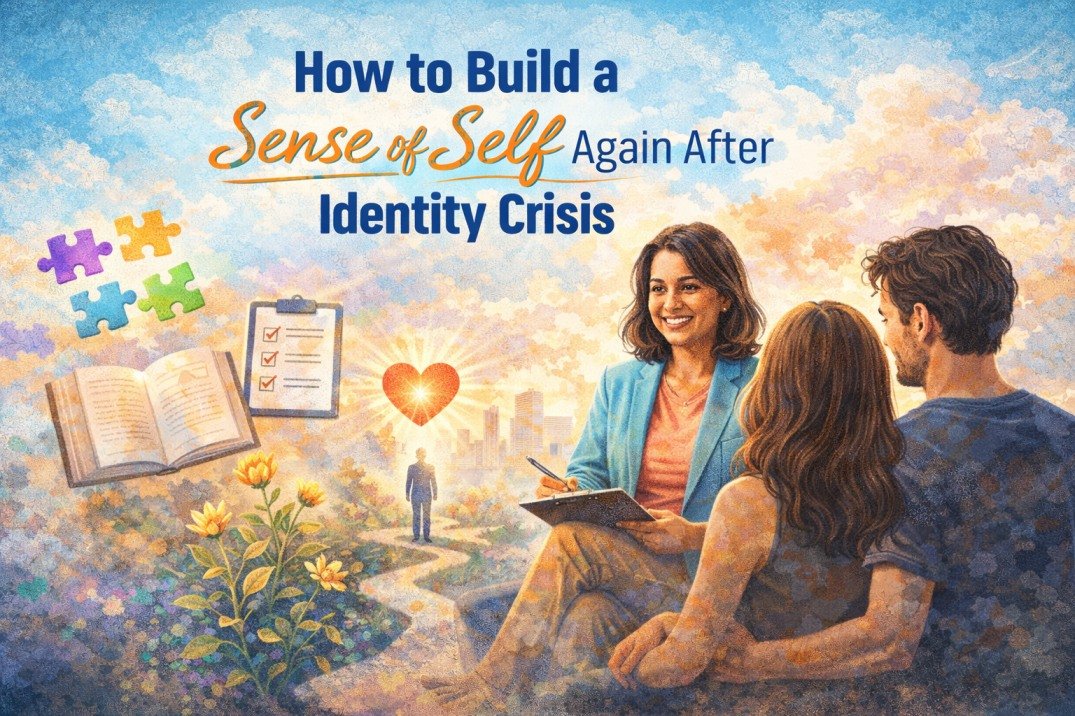
How to Build a Sense of Self Again After Identity Crisis
Rebuilding your sense of self is not about finding one big answer. It’s about slowly becoming clear again through what you notice, feel, and choose.
Start Noticing and Documenting Your Inner World
Instead of trying to “figure yourself out,” start observing yourself.
Notice:
- what feels good
- what feels off
- what drains you
- what feels natural
Write it down regularly. Not perfectly, just honestly.
👉 Clarity comes from observing patterns over time, not one-time thinking.
Don’t Expect Clarity in One Go
You won’t suddenly understand everything about yourself.
Your sense of self rebuilds gradually. Keep observing, noticing, and adjusting. What feels unclear today may become clearer with time.
Create Non-Negotiable Boundaries
Start identifying what you genuinely don’t feel okay with.
These can be in:
- relationships
- work
- daily interactions
Be clear about them, even if it feels uncomfortable at first.
👉 Discomfort here is temporary, but clarity is long-term.
Learn to Communicate What You Accept and What You Don’t
Earlier, you may have adjusted silently. Now, you need to express clearly.
Say:
- what works for you
- what doesn’t
- what you’re not comfortable with
👉 You’re not just understanding yourself, you’re teaching others how to treat you.
Be Ready for Temporary Discomfort
When you stop over-adjusting, things may feel uncomfortable:
- in relationships
- at work
- in conversations
This doesn’t mean something is wrong.
👉 It means you’re no longer ignoring yourself.
Check Your Assumptions Before Reacting
Sometimes, others are not the problem.
You may have assumed:
- “they won’t understand”
- “this will create conflict”
So you adjusted without even communicating.
Start checking:
👉 “Did I actually express this, or just assume?”
Start Making Small Decisions for Yourself
Don’t wait for full clarity. Start small.
- choose what you want
- decide without over-checking
- trust small choices
👉 Self-trust builds through action, not thinking.
Reduce External Noise
Limit constant input, social media, opinions, advice.
You need space to hear your own thoughts again.
Accept That You’re Rebuilding, Not Going Back
You’re not returning to an old version of yourself.
You’re building a clearer one, with better awareness of what feels right and what doesn’t.
When to Seek Professional Help
You may consider professional help if:
- you feel persistently disconnected from yourself
- emotional overwhelm or confusion is frequent
- decisions feel difficult even in small things
- your relationships or daily life are getting affected
Working with an online clinical psychologist at LeapHope can help you understand your patterns and rebuild clarity in a structured way.
👉 You don’t have to figure this out alone.
The Bottom Line
Feeling like you don’t know who you are anymore doesn’t mean you’ve lost yourself completely.
It usually means you’ve been adjusting, suppressing, and going through changes for a long time without checking in with yourself.
This creates a lack of clarity, not a lack of identity.
👉 Your sense of self is still there, it just needs to be understood and rebuilt gradually.
FAQs
Why do I feel like I don’t know who I am anymore?
“I don’t know who I am anymore” usually reflects a loss of clarity in identity, purpose, or connection to oneself. It often develops after prolonged people-pleasing, life changes, or emotional strain, where earlier ways of defining yourself no longer feel accurate.
Is this an identity crisis or something else?
This can be understood as an identity crisis, a phase where there is a gap between your previous sense of self and your current internal experience, leading to confusion about values, roles, and direction.
Can relationships make you lose your identity?
Yes, identity can become unclear in relationships when a person consistently prioritises the relationship over their own boundaries, values, and preferences, gradually shaping their sense of self around the connection.
Why do I feel like different people in different situations?
Feeling like different people across situations often reflects adaptive behaviour patterns. Over time, frequent adjustment to different environments can weaken a consistent internal sense of self.
How long does an identity crisis last?
An identity crisis is not permanent. Its duration varies depending on awareness and changes made, but it generally resolves gradually as clarity about values, preferences, and self-definition is rebuilt.
Can you rebuild your sense of self?
Yes, a sense of self can be rebuilt through consistent self-observation, clearer boundaries, independent decision-making, and reconnecting with internal preferences rather than external validation.