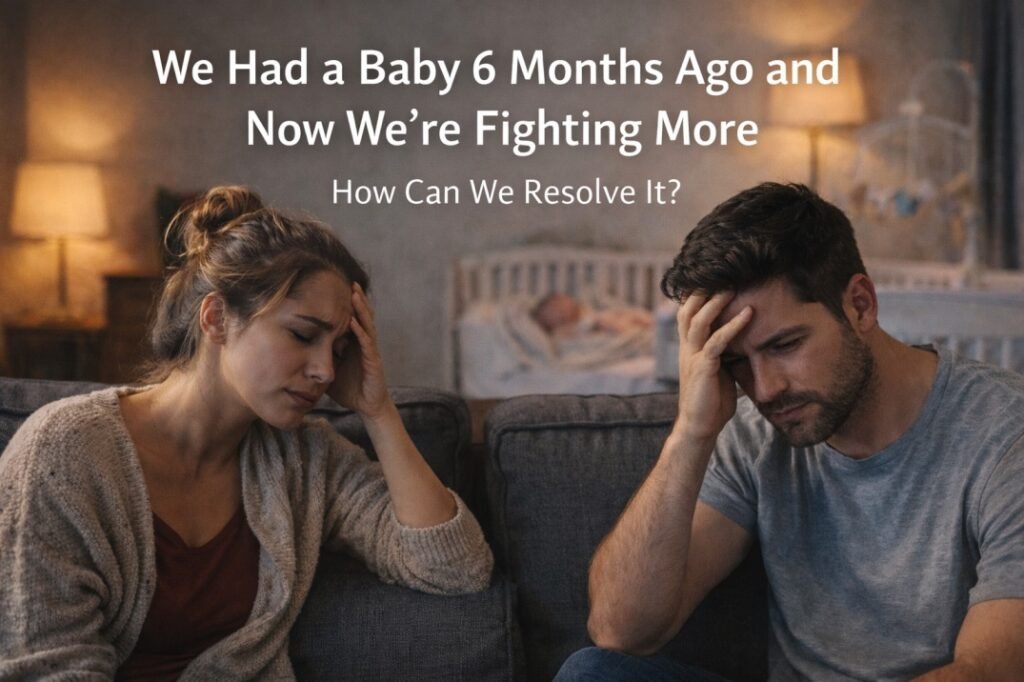
A client recently told me something that many new parents quietly experience. She had a baby six months ago, and since then she and her partner seem to fight over almost everything. Before the baby, disagreements were small and occasional. Now even minor things turn into arguments.
What worried her most was that they haven’t been married very long. She asked me, “Is this what happens after a baby, or are we doing something wrong?”
The arrival of a baby brings joy, but many couples are surprised by how much their relationship changes in the months that follow. Small frustrations can grow into bigger conflicts, and partners may begin to feel emotionally distant from each other.
This stage is more common than people realise. Understanding why these conflicts happen can help couples reduce tension and reconnect.
Is It Normal for Couples to Fight More After Having a Baby?
Yes, it is more common than many couples expect. Research on relationships consistently shows that satisfaction often drops after the arrival of the first child. This doesn’t mean couples stop loving each other, but the sudden changes in daily life can place pressure on the relationship.
Several factors contribute to this shift. New parents are often dealing with severe sleep deprivation, disrupted routines, and the constant demands of caring for a baby. At the same time, both partners are adjusting to new roles and responsibilities as parents, which can create stress and misunderstandings.
Because of these changes, couples may find themselves arguing more often or feeling emotionally distant for a while. Experiencing conflict during this stage does not necessarily mean the relationship is failing. In many cases, it reflects the intense adjustment that comes with becoming parents. Understanding the reasons behind these arguments can help couples respond with more patience and support.
9 Reasons Couples Fight More After a Baby Arrives
Research shows that about 67% of couples experience a drop in relationship satisfaction after their first child is born, often due to sleep disruption, stress, and new responsibilities. Here are 9 common reasons couples start fighting more after a baby arrives.
Sleep Deprivation and Emotional Exhaustion
In the early months after a baby arrives, sleep often becomes irregular for both parents. The mother may be caring for the baby throughout the day and night, especially with feeding and soothing. At the same time, the father or partner may come home tired from work and still help with the baby at night so the mother can rest.
In this process, both partners can experience deep sleep deprivation and emotional exhaustion. When people are constantly tired, patience drops and frustration builds up. Even small issues can turn into arguments because both partners may respond from exhaustion rather than calm understanding.
Unequal Parenting Responsibilities
Tension can grow when one partner feels they are carrying most of the childcare, household tasks, or the mental load of parenting. This often happens when one parent is constantly planning feedings, doctor visits, sleep routines, and daily needs while the other may not realise how much responsibility is involved.
Over time, feeling unsupported or overwhelmed can turn into resentment. When this frustration builds up, even small issues can trigger arguments because one partner feels they are handling more than their fair share.
Loss of Couple Time and Emotional Connection
After a baby arrives, most of the couple’s time and energy naturally shift toward caring for the child. Conversations often revolve around feeding, sleep schedules, and daily responsibilities, leaving very little space for personal connection.
Over time, this lack of couple time can create emotional distance. When partners stop sharing small moments, talking openly, or simply spending time together, they may start feeling disconnected, which can make arguments more likely.
Changes in Physical Intimacy
After childbirth, physical intimacy often changes. The body needs time to recover, especially after stitches or a C-section, and hormonal shifts, breastfeeding, and body image changes can affect desire. Sex may not feel the same for a while, and when both partners are already exhausted, intimacy can start to feel like a task rather than connection.
At the same time, one partner may expect intimacy sooner while the other may not feel physically or emotionally ready. When these expectations don’t match, it can lead to frustration and arguments.
Changing Expectations of Each Other as Parents
Many couples enter parenthood with quiet expectations about how things will work. One partner may imagine that the other will naturally step in to help with night feedings, diaper changes, or household work. The other may believe that working long hours or helping occasionally is already enough support.
When the baby arrives, reality often looks different from what either partner imagined. One person may feel overwhelmed and think, “Why am I doing everything?” while the other may feel criticised and think, “Nothing I do seems to be enough.” When these expectations remain unspoken, the disappointment can slowly build into frustration and frequent arguments.
Financial and Lifestyle Stress
A new baby brings many unexpected expenses, from medical visits and diapers to childcare and daily supplies. At the same time, work routines may change, and one partner may even take time off or reduce working hours. These financial adjustments can create pressure, especially if the family budget suddenly feels tighter.
Lifestyle changes can also be difficult to adjust to. Things that once felt simple, like going out, travelling, or even getting enough rest, now require planning. When both partners feel stressed about money, time, or personal freedom, small disagreements can easily turn into arguments.
Maternal Gatekeeping and Feeling Pushed Out of Parenting
Sometimes one parent, often the mother who spends more time with the baby in the early months, may begin to take control of most caregiving decisions. She may correct how the baby is held, fed, or soothed because she believes there is a “right” way to do it. Often this comes from worry, exhaustion, or feeling responsible for the baby’s wellbeing.
Over time, the other partner may start feeling criticised or pushed out of parenting. When someone feels that whatever they do is wrong, they may withdraw or stop trying to help. This can leave one parent feeling overwhelmed and the other feeling unappreciated, creating frustration on both sides.
Grieving the Life You Had Before Becoming Parents
Becoming a parent brings joy, but it also changes daily life in ways many couples don’t fully expect. Before the baby, there may have been more freedom, spontaneous plans, personal time, and uninterrupted moments together. After a baby arrives, much of that flexibility disappears.
Many parents quietly miss parts of their old life but feel guilty admitting it. When these feelings stay unspoken, they can show up as irritability, frustration, or arguments, even though the real struggle is adjusting to a completely new phase of life.
In-Laws’ Involvement and External Pressures
After a baby arrives, in-laws and family members often start giving advice or directing how things should be done. Sometimes the mother may be criticised for small things or made to feel she is not doing enough, even though she is still learning and adjusting.
If the mother was working earlier, there may also be pressure to leave her job and focus only on the baby. Losing that independence or part of her identity can be emotionally difficult, and the stress from these external pressures can easily spill into the couple’s relationship.
How Ongoing Conflict Can Affect a Relationship
When arguments happen repeatedly, the brain starts reacting in protective ways. Partners may begin interpreting comments or actions as criticism or rejection, even when that was not the intention. This makes people more defensive and emotionally reactive.
Over time, small triggers like tone of voice, unmet expectations, or feeling unheard can quickly lead to conflict. When someone repeatedly feels unappreciated or criticised, it can create emotional distance, resentment, and reduced affection in the relationship.
How Couples Can Reduce Conflict and Support Each Other
Talk About What Is Actually Hard
Instead of only arguing about the small issue, talk about the real stress behind it. One partner may be feeling exhausted from night care, while the other may be feeling pressure from work and responsibility. Honest conversations about what feels overwhelming can reduce misunderstanding.
Notice and Acknowledge Each Other’s Efforts
In the middle of sleepless nights and constant baby care, partners often forget to notice what the other person is doing. Saying things like “I know you’re tired too” or “Thanks for helping last night” can soften tension and prevent resentment from building.
Share the Load in Practical Ways
Conflict often reduces when responsibilities become clearer. For example, one partner might handle the baby early in the morning while the other takes the night shift, or one focuses on baby care while the other manages meals or household tasks.
Protect Small Moments as a Couple
Even short moments together matter. Sitting together for a few minutes after the baby sleeps, talking about the day, or sharing a meal without distractions can help partners feel connected again.
Approach Problems as a Team
Instead of thinking “you are not helping enough,” it helps to think “how can we make this easier for both of us?” When couples shift their mindset from blaming each other to solving problems together, conflicts often become easier to manage.
How Long Do Relationship Problems After a Baby Usually Last?
The adjustment period after a baby arrives is different for every couple. For some, the tension eases within a few months, while for others it may take longer as they learn how to balance parenting, work, and their relationship.
For many families, conflicts begin to reduce once the baby starts sleeping better, daily routines become more predictable, and both parents gain confidence in their roles. As the constant exhaustion slowly improves, couples often find it easier to communicate and support each other again.
Most relationships begin to feel more stable once partners adjust to their new life as parents and rebuild small moments of connection in their everyday routine.
When It May Help to Seek Professional Support
Sometimes the stress of new parenthood can push a relationship into patterns that feel difficult to break on your own. If arguments become constant, resentment keeps building, or one or both partners begin withdrawing emotionally, it may be a sign that the relationship needs outside support.
Some couples also start feeling disconnected for long periods, struggle to talk without arguing, or feel more like roommates than partners. In these situations, speaking with a marriage counsellor can help both partners understand each other’s stress and rebuild healthier communication.
If you feel your relationship needs guidance, you can also consult an online marriage therapist through LeapHope, where professional therapists help couples work through relationship stress, communication problems, and emotional disconnection.
Conclusion
The transition to parenthood is one of the biggest adjustments a couple goes through. Sleepless nights, new responsibilities, and emotional changes can place pressure on even strong relationships. Many arguments during this stage are less about the relationship itself and more about the stress and exhaustion both partners are experiencing.
With time, better communication, and mutual understanding, many couples find their balance again. As routines stabilise and both partners grow into their roles as parents, the relationship can become stronger and more supportive than before.
FAQs
Is it normal for couples to fight more after having a baby?
Yes, it is normal for couples to fight more after having a baby. Sleep deprivation, new responsibilities, and emotional stress can make both partners more sensitive and reactive. Many couples experience more arguments during the first year while adjusting to life with a newborn.
Why do couples argue so much after their first baby?
Couples argue more after their first baby because daily life changes suddenly. Broken sleep, childcare responsibilities, financial pressure, and less couple time can create stress. When both partners feel tired and overwhelmed, even small frustrations can easily turn into arguments.
How long do relationship problems after a baby usually last?
Relationship problems after a baby usually last during the early adjustment period. For many couples, tension improves once the baby sleeps better, routines become stable, and both parents feel more confident in their roles. This often happens within the first year.
Can having a baby damage a relationship?
Having a baby can put pressure on a relationship, but it does not automatically damage it. Stress, exhaustion, and changing roles can increase conflict. With communication, patience, and support, many couples strengthen their relationship while adapting to parenthood.
When should couples seek counselling after having a baby?
Couples should seek counselling after having a baby if arguments become constant, resentment grows, or partners feel emotionally disconnected for a long time. A marriage therapist can help couples improve communication, understand each other’s stress, and rebuild emotional connection.
Author

The LeapHope Editorial Team creates and reviews content on relationships, intimacy, sexual health, and emotional wellbeing. Articles are developed with input from licensed sexologists, psychologists, and relationship experts to ensure accuracy, clarity, and real-world relevance.
View all posts