Last Updated on March 16, 2026
When a child is overweight and falling behind in studies, many parents try harder with stricter routines, healthier food, or extra academic support, yet the child may still seem tired, distracted, or unmotivated. This struggle is rarely about effort alone. Excess weight in children is often linked with poor sleep, low stamina, reduced physical activity, body discomfort, teasing at school, or stress-related eating, all of which can quietly affect attention, memory, and confidence.
Some children stop participating because they feel slower than others. Some avoid schoolwork to escape embarrassment. Others become irritable, defensive, or withdrawn. Boys may show disinterest or resistance, while girls may become self-critical or anxious, although either pattern can appear in any child. What looks like laziness is often discouragement.
Weight gain and academic decline usually come from shared underlying factors, not separate problems. When a child feels physically better, emotionally safer, and more confident, learning often improves as well. Understanding this connection helps parents support the child in a way that actually works.
Why Weight Problems Often Affect School Performance
Excess weight can influence how a child learns through several physical and neurological pathways. Academic struggles in this situation are usually not due to lack of ability, but because the child’s body and brain are working under strain throughout the school day.
Low Energy and Fatigue Affecting Attention
Many overweight children feel tired even after routine activities. Sitting through long classes, carrying school bags, or moving between periods can drain energy quickly. By the time academic tasks require focus, the child may already be fatigued. This often shows up as daydreaming, slow work pace, or frequent breaks, which teachers may interpret as poor concentration.
Poor Sleep Quality and Daytime Sleepiness
Sleep disturbances are common. Some children snore, breathe shallowly, or wake repeatedly at night without fully realising it. Even with adequate hours in bed, the sleep may not be restorative. Morning grogginess, difficulty waking, headaches, and irritability can follow, all of which reduce alertness and learning efficiency during school hours.
Reduced Participation in Physical Activity
Children who feel self-conscious, easily tired, or uncomfortable in sports settings may avoid physical play. However, regular movement supports blood flow to the brain, improves mood, and strengthens attention control. When activity levels drop, these cognitive benefits are lost, which can gradually affect classroom performance and stamina for mental work.
Brain Fog From Irregular Nutrition Patterns
Eating patterns also matter. Diets high in refined carbohydrates and sugary snacks can lead to rapid spikes and crashes in blood sugar. After a brief burst of energy, the child may feel sluggish, unfocused, or sleepy. Skipping balanced meals or relying on processed foods can worsen this cycle, making sustained concentration difficult.
How Emotional Factors Linked to Weight Affect Learning
Physical fatigue is only part of the picture. Emotional experiences related to weight often have an even stronger impact on how a child participates, concentrates, and performs in school.
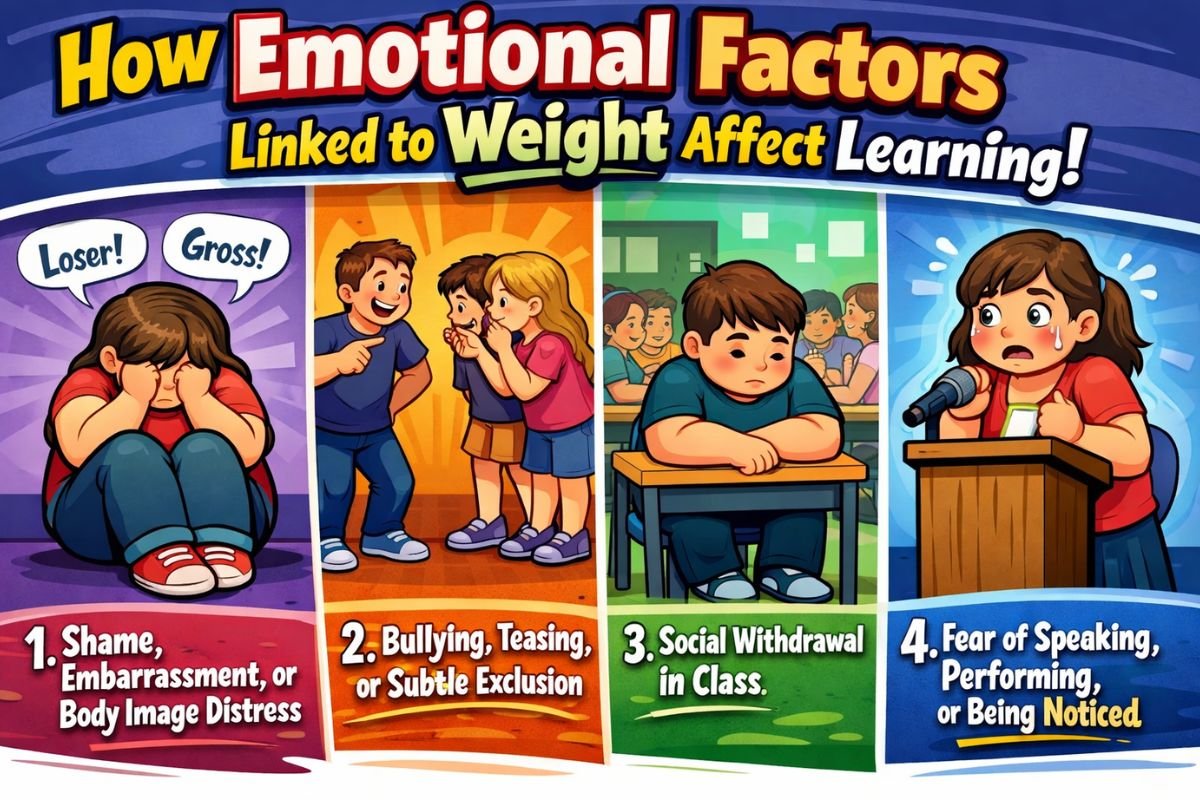
Shame, Embarrassment, or Body Image Distress
Many overweight children become highly aware of how they look compared to peers. They may worry about being watched while walking, answering in class, or participating in activities. This constant self-consciousness consumes mental energy that would otherwise be used for learning. A child who is preoccupied with how they appear cannot fully focus on what is being taught.
Bullying, Teasing, or Subtle Exclusion
Not all bullying is obvious. Some children face direct teasing about their weight, while others experience quieter forms of exclusion, such as not being chosen for teams, being left out of group work, or receiving insensitive comments. Even occasional incidents can create a sense that school is emotionally unsafe, leading to avoidance of participation and reduced academic engagement.
Social Withdrawal in Class
To protect themselves, some children try to become invisible. They avoid raising their hand, volunteering answers, or joining discussions. Over time, this reduces practice opportunities, feedback from teachers, and confidence in their abilities. The child may know the material but still perform poorly because they are disengaged.
Fear of Speaking, Performing, or Being Noticed
Activities that draw attention, such as presentations, reading aloud, or physical education, can trigger intense anxiety. The child may procrastinate, complain of feeling unwell, or refuse to participate. Repeated avoidance can lead to falling behind academically, which then reinforces feelings of inadequacy.
Some children appear fine on the outside but struggle with silent anxiety that affects eating, sleep, and school functioning.
How It May Look Different in Boys vs Girls
Children do not all express distress in the same way. When weight concerns and academic struggles occur together, boys and girls may show different outward behaviours, even if the underlying feelings are similar.
How Boys May Show Their Struggle
Some boys respond to discomfort or embarrassment by acting uninterested in school. They may avoid homework, rush through tasks, or say studies are “boring” or “useless.” Irritability, defiance, or frequent arguments about schoolwork can also appear. In some cases, boys channel frustration into gaming, excessive screen use, or withdrawal from structured activities. This can be misunderstood as laziness, when it is often discouragement or low confidence.
Boys may also avoid situations where physical ability is visible, such as sports or group activities, which can further reduce engagement with school life overall.
How Girls May Show Their Struggle
Some girls internalise distress more quietly. They may become self-critical, anxious about performance, or overly sensitive to feedback. A girl who once did well may start doubting herself, spending excessive time worrying about mistakes, or giving up quickly if she feels she cannot meet expectations. Social comparison with peers can intensify feelings of inadequacy, especially if friendships feel unstable.
Girls may also withdraw socially, participate less in class discussions, or appear compliant while internally feeling overwhelmed.
Important to Remember
These patterns are not strict rules. Many boys internalise emotions, and many girls express frustration outwardly. The key point is that behavioural changes often reflect emotional strain rather than attitude problems. Recognising the child’s individual pattern helps parents respond in a way that supports confidence instead of escalating conflict.
What Health Issues Could Be Contributing?
In some cases, underlying health factors make both weight management and academic functioning more difficult. These issues are often subtle and may go unnoticed because the child does not appear “sick,” yet they can significantly affect energy, mood, and concentration.
Sleep Disorders Including Snoring or Poor Breathing at Night
Children who snore loudly, breathe through the mouth, or toss and turn may not be getting deep, restorative sleep. Poor sleep affects memory consolidation, attention span, emotional regulation, and daytime alertness. A child who seems constantly tired, slow in the morning, or prone to headaches may be experiencing sleep disruption.
Hormonal or Metabolic Concerns
Conditions such as thyroid imbalance, insulin resistance, or early metabolic changes can contribute to weight gain, fatigue, and reduced mental clarity. These issues do not always produce obvious symptoms but can lower stamina and motivation over time. Medical evaluation can help rule out or address such factors.
Nutritional Imbalance Despite High Calorie Intake
Some children consume plenty of calories but lack essential nutrients needed for brain function, such as iron, vitamin D, protein, and omega fatty acids. Diets dominated by processed foods can leave the brain undernourished, leading to poor concentration, irritability, and low endurance for cognitive tasks.
Emotional Eating Cycles
Stress, boredom, loneliness, or anxiety can trigger overeating, especially of comfort foods high in sugar and fat. This pattern may temporarily soothe emotions but often leads to guilt, sluggishness, and unstable energy levels afterward. The cycle can repeat daily, affecting both mood and school performance.
Signs Your Child Is Struggling Emotionally, Not Just Academically
When school performance drops, the focus often stays on marks, homework, or discipline. However, many children who are overweight and falling behind are actually dealing with emotional strain that affects their ability to function, not just their willingness to study.
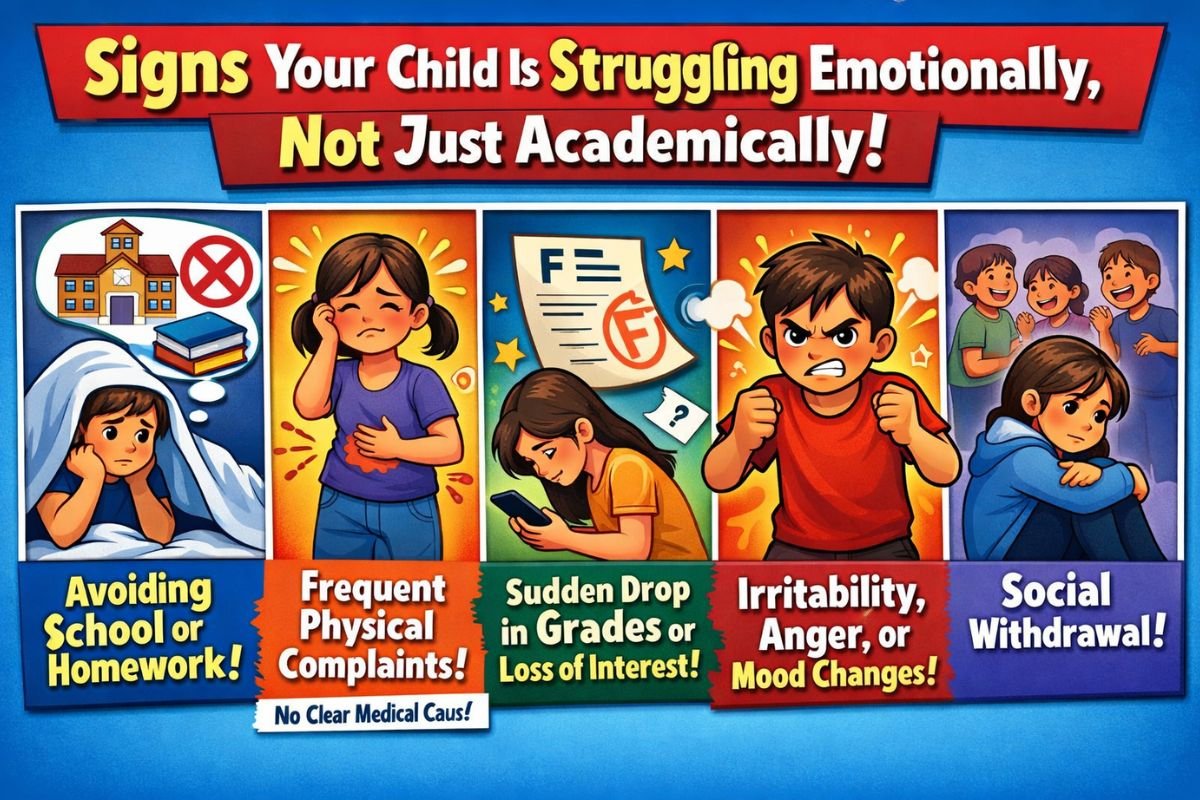
Avoiding School or Homework
A child may delay starting work, forget assignments, or complain excessively about school. This avoidance is often driven by fear of failure, embarrassment, or feeling unable to cope, rather than lack of responsibility.
Frequent Physical Complaints Without Clear Medical Cause
Headaches, stomach aches, nausea, or sudden tiredness before school or study time can be signs of anxiety or stress. These symptoms are real to the child, even when medical tests are normal.
Some children show stress through the body rather than words. Learn how emotional distress can appear as real physical symptoms in children.
Sudden Drop in Grades or Loss of Interest
Children who once performed adequately may begin submitting incomplete work, rushing through tasks, or showing little concern about results. This often reflects discouragement or emotional shutdown after repeated struggles.
Irritability, Anger, or Mood Changes
Some children express distress outwardly. They may snap easily, argue about schoolwork, or react strongly to small frustrations. Irritability is a common sign of chronic stress or exhaustion.
Social Withdrawal
The child may spend more time alone, avoid friends, or stop participating in activities they previously enjoyed. Feeling different from peers, whether due to weight, confidence, or school struggles, can lead to isolation.
Is It Laziness or Something Else?
When a child is overweight and not keeping up with studies, it is easy to assume they are being lazy or careless. However, in most cases, what looks like laziness is actually a sign that something is making effort feel overwhelming or pointless.
Executive Functioning Difficulties
Executive functions are the brain skills that help with planning, organising, starting tasks, and staying focused. Fatigue, poor sleep, stress, or low mood can weaken these abilities. The child may want to do the work but struggle to begin, stay on track, or complete tasks without guidance.
Fear of Failure or Embarrassment
If a child has experienced repeated academic struggles or negative feedback, they may avoid work to protect themselves from feeling incompetent. Not trying can feel safer than trying and failing. This avoidance often appears as procrastination or indifference.
Low Confidence From Repeated Setbacks
Children who believe they are “not good at studies” stop investing effort because they do not expect success. Over time, this learned helplessness reduces motivation, even when support is available.
Emotional Overload and Burnout
Balancing school demands, social pressures, body discomfort, and internal stress can exhaust a child’s coping capacity. When overwhelmed, the brain prioritises relief rather than productivity. The child may withdraw, seek distractions, or become irritable when pushed.
What looks like defiance or lack of effort is often a child communicating distress through behaviour.
Reduced Reward From Achievement
Some children stop feeling proud of their accomplishments because they compare themselves unfavourably with peers. If success does not bring satisfaction, motivation declines. This can be especially true when the child feels defined by their struggles rather than their strengths.
What Should Parents Avoid Doing?
When a child is overweight and struggling in school, parents naturally feel worried and may try to push for quick improvement. However, certain well-intentioned responses can unintentionally increase stress, shame, or resistance, making both weight and academic problems worse.
Shaming or Criticising About Weight or Marks
Comments about appearance, eating, or poor performance can deeply affect self-esteem. Even subtle remarks may reinforce the child’s fear that they are disappointing or “not good enough.” Shame rarely motivates positive change. It more often leads to secrecy, emotional eating, or withdrawal from effort.
Comparing With Siblings or Other Children
Statements like “Look how well others are doing” can increase feelings of inadequacy. Instead of motivating, comparison often convinces the child that improvement is impossible, which reduces willingness to try.
Over-Restricting Food
Strict food control without emotional support can backfire. Children may start hiding food, overeating when unsupervised, or becoming preoccupied with eating. A balanced approach works better than punishment-based restrictions.
Focusing Only on Weight Loss or Only on Grades
Treating weight and academics as separate problems misses the connection between physical wellbeing and learning capacity. Pressure to “fix” one area quickly can overwhelm the child and reduce cooperation.
Interpreting Struggle as Laziness or Defiance
Assuming the child simply does not care can damage trust. Many children already feel guilty about their difficulties. When parents respond with anger or disappointment, the child may shut down further.
Ignoring Emotional Signals
Mood changes, avoidance, irritability, or loss of confidence are important clues. If these are overlooked while focusing only on behaviour or results, the root causes remain unaddressed.
Children improve most when they feel understood rather than judged. A supportive environment lowers stress, increases openness, and makes it easier for them to accept guidance and build healthier habits.
What Should Parents Do to Support Both Health and Learning?
Helping a child who is overweight and struggling academically requires a balanced approach that improves daily functioning without making the child feel pressured or criticised. Small, consistent changes are far more effective than strict rules or sudden overhauls.
Improve Sleep First
Restorative sleep is the foundation for energy, mood, and concentration. Establish a consistent bedtime, reduce screens before sleep, and create a calm nighttime routine. When sleep improves, parents often notice better attention, fewer emotional outbursts, and more willingness to engage with schoolwork.
Create Predictable Daily Routines
Children function better when they know what to expect. Regular times for waking, meals, homework, activity, and relaxation reduce decision fatigue and anxiety. Predictability helps the brain conserve energy for learning instead of constantly adjusting to change.
Encourage Movement Without Pressure
Physical activity should feel enjoyable, not like punishment for weight. Walking, cycling, dancing, swimming, or playing outdoors with family can improve stamina, mood, and brain function. When movement is associated with fun rather than criticism, children are more likely to participate willingly.
Provide Structured Study Support
Break tasks into manageable steps and offer guidance at the start rather than waiting until the child is overwhelmed. A quiet, organised study space and short work intervals with breaks can improve productivity for children who fatigue easily.
Build Confidence Through Small Successes
Focus on achievable goals so the child experiences progress. Completing a short assignment, improving handwriting, or staying focused for a set time can rebuild belief in their abilities. Confidence grows from repeated experiences of success, not from pressure to perform perfectly.
Praise Effort, Not Just Results
Acknowledging persistence, responsibility, or improvement encourages continued effort. When children feel valued for trying, they are less afraid of mistakes and more willing to engage with challenging tasks.
Supporting both health and learning is not about pushing harder. It is about reducing barriers so the child’s natural abilities can re-emerge. With consistent support, many children show gradual but meaningful improvement in both wellbeing and academic performance.
Should You Speak to Teachers or School Staff?
Yes, involving the school can be very helpful, especially if your child’s struggles are affecting daily classroom functioning. Teachers often see patterns that parents may not notice, such as attention difficulties, social isolation, avoidance behaviours, or signs of bullying.
To Understand What Is Happening in Class
Your child may behave differently at school than at home. Some children appear quiet and compliant in class but exhausted afterward. Others may be restless, distracted, or disengaged only in certain subjects. Teacher feedback helps clarify whether the difficulty is academic, behavioural, social, or a combination.
To Check for Bullying or Exclusion
Weight-related teasing or subtle exclusion can go unnoticed unless specifically discussed. Children may hesitate to report it out of embarrassment or fear of making things worse. Schools can monitor peer interactions and intervene if needed.
To Identify Attention or Learning Concerns
If the child struggles to follow instructions, complete work on time, or stay organised, teachers can share observations that may indicate attention difficulties or learning gaps. Early identification allows for support before problems escalate.
To Explore Available Support Services
Many schools offer counselling, learning support, or adjustments such as extra time, seating changes, or structured guidance. These supports can reduce stress and help the child experience success in the classroom.
To Build a Collaborative Approach
When parents and teachers communicate regularly, the child receives consistent expectations and encouragement across home and school. This reduces confusion and helps the child feel supported rather than judged.
When Professional Help May Be Needed
Many children improve with supportive changes at home and school, but in some situations professional guidance can make a significant difference. Seeking help is not a sign of failure. It is a proactive step to understand what your child needs and to prevent problems from becoming more serious.
Parents often wonder when normal struggles cross into something that needs professional support.

Rapid or Ongoing Weight Gain
If weight is increasing quickly despite reasonable eating habits, a paediatrician can assess for medical, hormonal, or metabolic factors. Early evaluation helps rule out underlying conditions and provides guidance tailored to the child’s needs.
Significant Decline in Academic Performance
When grades drop sharply, assignments are consistently incomplete, or the child seems unable to keep up despite effort, a psychologist or educational specialist can evaluate attention, learning skills, and emotional barriers to performance.
Signs of Anxiety, Low Mood, or Withdrawal
Persistent sadness, irritability, excessive worry, loss of interest in activities, or isolation from friends may indicate emotional distress that requires support. Therapy can help children develop coping skills and rebuild confidence.
Disordered Eating Patterns
Secret eating, binge episodes, intense guilt about food, or strong preoccupation with weight should be addressed early. These patterns can escalate if ignored and are best managed with professional guidance.
Sleep Problems That Do Not Improve
Chronic snoring, difficulty falling asleep, frequent night waking, or extreme daytime sleepiness warrant medical evaluation. Improving sleep often leads to noticeable improvements in behaviour and school functioning.
School Refusal or Severe Avoidance
If the child frequently refuses to attend school, complains of physical symptoms daily, or becomes highly distressed about academic tasks, professional support can help identify the underlying cause and develop a structured plan. Many parents find online counselling for children and teens helpful. It provides a safe space for children to express themselves while giving parents guidance to support them through transitions.
Final Thoughts for Parents
Struggling with both weight and studies does not mean your child is lazy, careless, or incapable. It usually means the child is dealing with challenges that are not immediately visible, such as low energy, poor sleep, stress, discouragement, or loss of confidence. When these underlying factors improve, academic engagement often improves as well.
Avoid rushing for quick fixes or drastic changes. Children respond better to steady, predictable support than to pressure or constant correction. Small improvements in sleep, routine, physical comfort, and emotional security can gradually restore motivation and focus.
Most importantly, your understanding and relationship with your child are powerful protective factors. When children feel accepted at home, they are better able to face academic challenges outside. With patience and consistent support, many children regain both wellbeing and learning capacity over time.
FAQs
Is my child overweight because of junk food or something else?
Weight gain can result from many factors including sleep problems, low activity, stress eating, genetics, or hormonal issues, not just diet alone.
Can obesity affect a child’s brain or learning ability?
Obesity does not reduce intelligence, but fatigue, poor sleep, and low confidence can make learning and concentration harder.
Why does my child avoid schoolwork even though they are smart?
Many children avoid tasks due to fear of failure, embarrassment, low energy, or feeling overwhelmed, not because they lack ability.
Should I force my child to exercise more?
Forced exercise often increases resistance. Gentle, enjoyable activity works better and is more sustainable.
My child eats when stressed. Is this normal?
Stress eating is common in children who lack other ways to cope with emotions, but it should be addressed with support, not punishment.
Will my child grow out of this phase on their own?
Some improvement can happen with age, but without support, emotional and academic difficulties may continue or worsen.