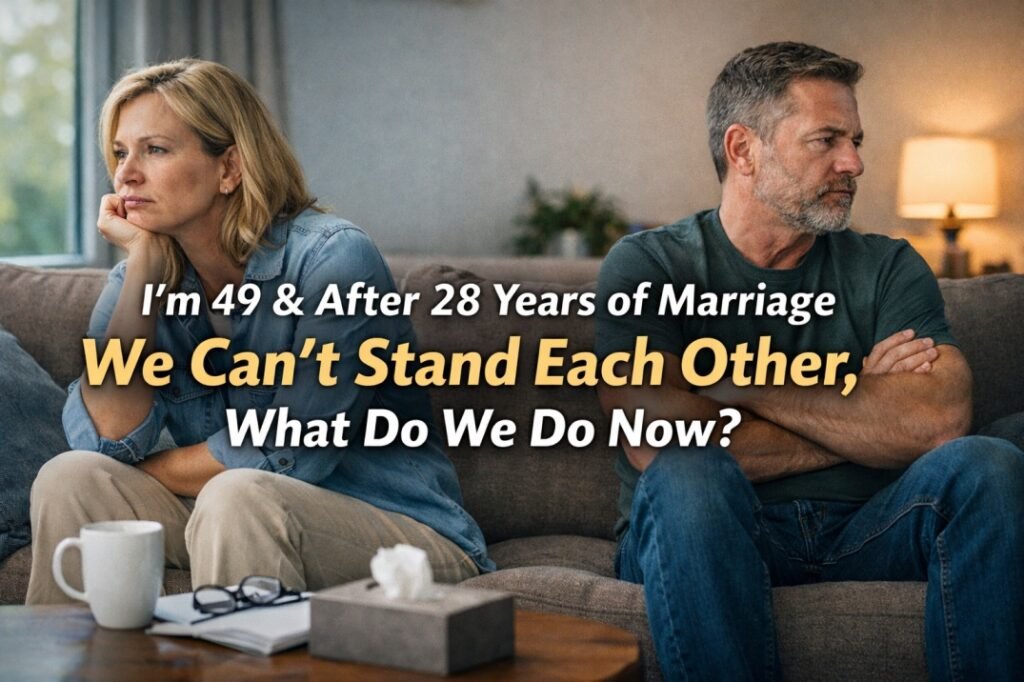
A 49-year-old woman recently came to counselling and said:
“We’ve been married for 28 years. We’ve been together since we were 16. Our relationship has hit a brick wall. We just can’t stand each other anymore.”
She said it quietly, like someone who had stopped expecting things to improve.
And she is not alone.
We hear similar words from husbands and wives in their late 40s, 50s, and beyond, people who have spent most of their adult lives together and now feel tense, distant, or emotionally drained.
A 52-year-old husband, married for 30 years, said:
“There wasn’t one big event. I just realised I don’t enjoy being around my wife anymore. Everything turns into tension.”
A 47-year-old wife, together since college, shared:
“My wife has emotionally checked out of our marriage. It feels like living with a stranger.”
A 55-year-old man with grown children said:
“We stayed together for the kids. Now the kids are gone, and we don’t know what’s left.”
A 50-year-old woman put it this way:
“I don’t hate him. I just don’t feel anything anymore. And that scares me more than anger.”
Some couples argue constantly. Others barely speak. But the underlying feeling is often the same:
The person who once felt like home now feels like a source of stress.
Today, Many long marriages reach a point where resentment, distance, or emotional fatigue become impossible to ignore, especially once the busy years of raising children and building a life settle down.
“I Can’t Stand My Wife Anymore” – A Husband’s Perspective
For many men in their late 40s or 50s, this feeling builds quietly over time. Home can start to feel tense rather than supportive. Psychologically, it often feels like a loss of respect, influence, and emotional safety. When concerns lead to arguments or taunts, some men withdraw, feeling there is no point speaking up.
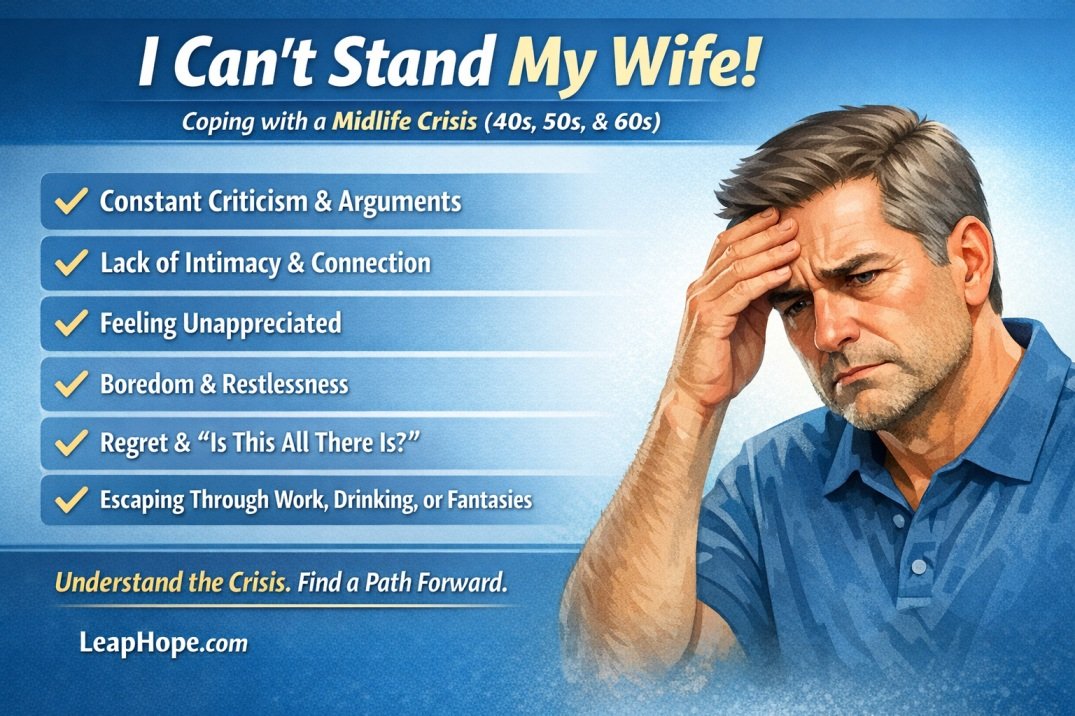
Midlife also brings a stronger awareness of time, so what was once tolerated now feels harder to live with. Social media can intensify this, especially when a husband feels compared to others, ignored in favour of online interactions, or sidelined in his own home.
Behaviours husbands commonly experience as painful include:
- Constant criticism, arguing, or taunting
- Sarcasm, disrespect, or public belittling
- Comparing him to others on social media
- Spending more time with phone or online friends
- Ignoring or dismissing his wishes
- Making decisions unilaterally
- Lack of affection or intimacy
Over time, this can leave a man feeling powerless, disrespected, or invisible.
Often, it’s less “I hate her” and more:
“I don’t feel valued anymore.”
“I Can’t Stand My Husband Anymore” – A Wife’s Perspective
For many women in their late 40s or 50s, this feeling comes from years of feeling controlled, unsupported, or alone rather than one sudden issue. Earlier in life, many had little awareness or backing to question things. They focused on home and children while their own needs were sidelined.
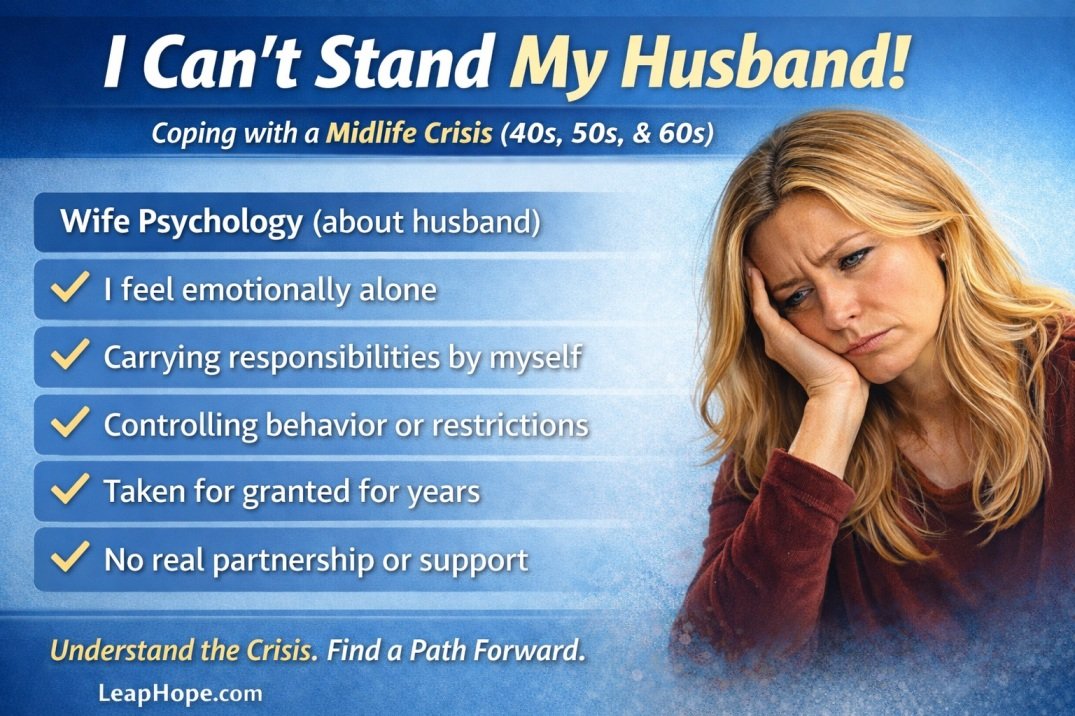
Midlife often brings a shift. Children grow up, awareness increases, and many women begin thinking about themselves for the first time in decades. Seeing other women travel, socialise, or pursue interests can highlight what they missed. If the husband still dismisses her wishes or shows little warmth, resentment can surface quickly.
Behaviours wives commonly experience as painful include:
- Controlling decisions or limiting independence
- Ignoring her wishes or preferences
- Lack of emotional support or appreciation
- Expecting her to manage everything alone
- Continuing old power dynamics
- Little affection or partnership
- Criticism when she asserts herself
After years of suppression, it is not unusual for anger or dislike to emerge once she no longer wants to live the same way.
Often, it’s less “I hate him” and more:
“I feel alone in this marriage.”
Why Couples After Spending 25+ Years Say Things Like This
Most couples at this stage are in their late 40s to late 50s and built their relationship in a very different era, long before today’s hyper-connected, comparison-driven world.
Now, with children grown and responsibilities easing, attention shifts from survival to quality of life. Many start thinking about peace, companionship, freedom, and how they want to spend the years ahead.
Common underlying factors include:
- Loss of shared purpose after children become independent
- Personal changes during midlife that don’t happen together
- Old issues resurfacing once life slows down
- Feeling stuck while the world around them evolves
- Greater awareness of limited time ahead
- Exposure to new lifestyles through media and society
What surfaces is often restlessness, disappointment, or a sense of being out of sync with each other.
This is typically long-term drift becoming visible, not a sudden breakdown.
How Couples Start Behaving When They “Can’t Stand Each Other” in Their 50s
By this stage, the tension usually shows up in everyday interactions, not just major fights. Small issues trigger outsized reactions because goodwill is already low, and both partners feel hurt, defensive, or fed up.
Common patterns include:
- Constant irritation over minor things
- Sarcasm, contempt, or a dismissive tone
- Using personal weaknesses during arguments
- Comparisons to family members or other spouses
- Emotional neglect or lack of concern
- Withdrawal, silence, or living separate lives in the same house
- Criticism or disrespect in front of others
- Bringing up old mistakes and keeping score
Over time, even neutral moments feel tense because both expect conflict or discomfort.
Home stops feeling like a refuge and starts feeling like a stressor.
The Four Real Paths Couples Take at This Stage
When a long marriage reaches this point, there is rarely one clear answer. Most couples end up moving, consciously or not, into one of these paths, each with its own emotional and practical realities.
Staying Together Unhappily Out of Habit or Fear
Some couples remain together because leaving feels too disruptive, financially, socially, or emotionally. The stability of routine can feel safer than the uncertainty of change, even if the relationship itself is unsatisfying. Over time, this can lead to quiet resentment, loneliness, or a sense of life being endured rather than enjoyed.
Living Separate Lives Under One Roof
Many couples shift into a roommate-style arrangement. They share a home, finances, and family identity but lead largely independent daily lives. This can reduce open conflict and provide practical stability, but emotional distance often remains, and loneliness can persist despite not being physically alone.
Trying to Rebuild the Marriage
Some couples actively attempt to repair the relationship through honest conversations, new boundaries, or professional help. This path can be difficult because it requires confronting years of hurt, but it also offers the possibility of renewed connection or a “second phase” of the marriage. Success depends on both partners being willing to change patterns, not just talk about them.
Separating or Divorcing
Others decide that the relationship has run its course. Separation or divorce can bring relief, personal freedom, and a chance to redefine life. It can also bring grief, loneliness, financial adjustments, and family ripple effects. The outcome varies widely depending on circumstances and support systems.
None of these paths is inherently right or wrong;Signs Your Marriage May Still Be Repairable
Even if you argue daily, certain behaviours show the bond isn’t completely gone. Many long-married couples fight intensely but still act like a team in quiet ways.
Signs repair may be possible include:
- You still worry when the other is sick, late, or upset
- Practical support continues (meals, errands, responsibilities)
- Arguments happen, but silence doesn’t last forever
- You still inform each other about important decisions
- There are occasional calm conversations or shared laughs
- You show up for family events together despite tension
- One or both make small peace gestures after fights
- There is still some physical comfort in crisis
These everyday actions suggest the relationship hasn’t turned into pure indifference.
Conflict often means the emotional tie is strained, not severed. They reflect different priorities, fears, and hopes about the future.
Signs Your Marriage May Still Be Repairable
Even if you argue daily, certain behaviours show the bond isn’t completely gone. Many long-married couples fight intensely but still act like a team in quiet ways.
Signs repair may be possible include:
- You still worry when the other is sick, late, or upset
- Practical support continues (meals, errands, responsibilities)
- Arguments happen, but silence doesn’t last forever
- You still inform each other about important decisions
- There are occasional calm conversations or shared laughs
- You show up for family events together despite tension
- One or both make small peace gestures after fights
- There is still some physical comfort in crisis
These everyday actions suggest the relationship hasn’t turned into pure indifference.
Conflict often means the emotional tie is strained, not severed.
Signs the Relationship May Be Running on History Alone
In some long marriages, the connection is sustained mainly by shared past – children, memories, finances, or social ties – rather than present closeness. Daily life continues, but the emotional bond feels largely absent.
Common signs include:
- Minimal conversation beyond logistics
- Persistent contempt, coldness, or cruelty
- Little interest in each other’s thoughts or feelings
- Avoiding time together whenever possible
- Noticeable relief when the other person is away
- No plans, dreams, or vision for the future as a couple
- Acting more like co-managers than partners
- No effort to repair after conflicts
When this pattern persists, the relationship can feel empty rather than tense, stable on the surface but disconnected underneath.
Shared history can hold people together, but by itself it cannot sustain emotional closeness indefinitely.
What to Do If Only One of You Wants Change
This is one of the most common situations in long marriages. One partner feels urgent distress, while the other may feel resigned, defensive, or unwilling to engage. Pushing harder often backfires and increases resistance.
Helpful approaches include:
- Focus on your own behaviour first, not convincing them
- Speak more calmly and specifically, less critically
- Reduce escalation by pausing heated exchanges
- Create safer moments for conversation, not ambushes
- Avoid forcing discussions when emotions are high
- Seek individual therapy or support for clarity
- Model respect, listening, and steadiness consistently
A change in one partner can shift patterns over time, even if slowly.
You cannot force transformation, but you can change the dynamic.
Is Divorce After Decades a Relief or a Regret?
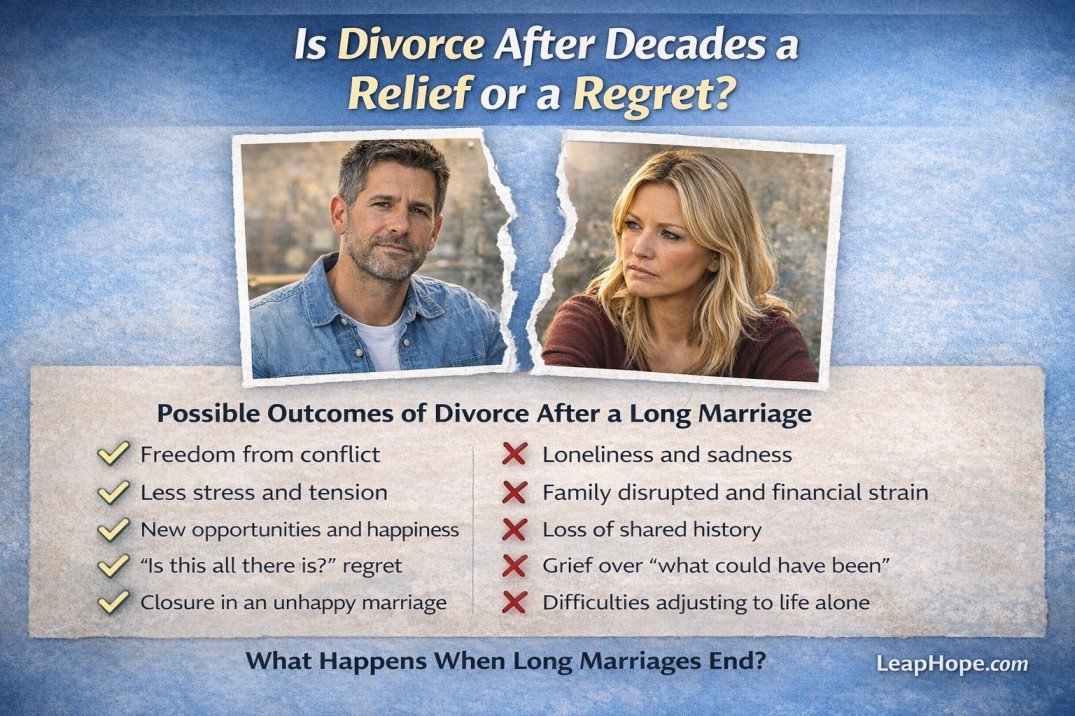
After 25–30 years of marriage, divorce can feel both liberating and devastating. For some, the end of constant tension brings immediate relief, peace, and a sense of personal freedom. For others, the loss of familiarity, companionship, and shared history can lead to grief, loneliness, or second thoughts.
Experiences vary widely and may include:
- Relief from daily conflict and emotional strain
- A renewed sense of independence or self-discovery
- Loneliness after the initial adjustment period
- Grief for the life and identity built together
- Mixed reactions from adult children
- Financial changes and lifestyle adjustments
- Shifts in friendships and social circles
- The challenges of dating or remaining single later in life
Some people feel both relief and sadness at the same time. There is rarely a simple emotional outcome.
Whether divorce feels like freedom or regret depends less on the decision itself and more on personal circumstances, support systems, and expectations for the future.
How Some Couples Build a “Second Marriage” With the Same Person
Not all long marriages end when they hit this stage. Some couples decide to start over, not by pretending the past didn’t happen, but by creating a new relationship between the two people they are now, not who they were decades ago.
This often involves:
- Getting to know each other as changed individuals
- Letting go of rigid roles formed during earlier life stages
- Renegotiating expectations around time, space, and responsibilities
- Rebuilding friendship and basic goodwill first
- Creating new routines, activities, or goals together
- Stopping the habit of revisiting old grievances
- Making a conscious choice to stay, not just continuing by default
This process can be uncomfortable because it requires both partners to change patterns that once felt normal. But it can also bring a surprising sense of renewal when both are willing to engage.
Long marriages sometimes don’t need repair as much as reinvention.
Questions to Ask Yourself Before Making Any Major Decision
When emotions run high, it’s easy to want quick relief. But decisions made in exhaustion or anger can have long-lasting consequences. Taking time to reflect can bring clarity about what is really driving your distress.
Questions worth sitting with include:
- Am I unhappy with the marriage, my life situation, or both?
- Have we genuinely tried to improve things, or just endured them?
- What am I most afraid of, staying the same or starting over?
- What would a tolerable, realistic future look like for me?
- What do I need in order to feel calmer and at peace day to day?
Honest answers may reveal options that aren’t obvious in the heat of the moment.
You’re Not Alone, This Is a Common Midlife Crossroads
Many long marriages pass through a period like this, especially in the late 40s and 50s. As life circumstances change, people often reassess who they are, what they want, and how they want to live going forward. When partners evolve in different ways, tension can surface that was previously buried.
This stage can be deeply painful, but it can also bring clarity. It does not mean the marriage was a mistake or that you failed. More often, it signals that something in the relationship or in your life needs to change.
What feels like a breaking point can also be a decision point, not necessarily an ending.
This moment can lead to an ending, a transformation, or a new beginning.
Conclusion
Reaching this stage after decades together can feel overwhelming, but you still have time to shape what comes next. There is no single right choice; some couples rebuild, some redefine the relationship, and some move forward separately.
If you feel stuck, professional support can help bring clarity. Online marriage counselling allows you to talk openly from home, and you can speak with a certified online marriage therapist at LeapHope for guidance tailored to long-term relationship challenges.
Peace is possible, even if the path to it looks different than you once imagined.