
At LeapHope, we counsel men and women from worldwide locations dealing with infidelity and betrayal trauma, and one painful question we hear often is:
“Why am I obsessing over the girl my boyfriend cheated on me with?”
“Why can’t I stop thinking about the other man?”
“Anyone else hyper-fixate on the person their partner cheated with?”
Many betrayed partners become mentally consumed by the affair partner after cheating. They compare themselves constantly, stalk social media profiles, replay details in their head, and wonder:
“What did they have that I didn’t?”
What makes this experience so confusing is that logically, you may know your partner made the choice to cheat, yet emotionally, your mind keeps focusing on the other person instead.
Psychologically, this is more common than most people realize. In many cases, the obsession is not really about the affair partner themselves. It is about the betrayal making you question your own worth, desirability, and emotional security.
The Real Reasons You Feel Obsessed With the Person Your Partner Cheated With
Your Brain Is Trying to Make Sense of the Betrayal
One of the biggest reasons people become obsessed with the person their partner cheated with is because the brain desperately tries to make sense of the betrayal. Infidelity creates emotional shock, and after that shock, the mind starts searching for answers almost nonstop.
Many betrayed partners become trapped in questions like:
- “Why them?”
- “What did they have that I didn’t?”
- “Was my partner more attracted to them?”
- “Did they mean more to my partner than I do?”
Psychologically, the brain struggles with uncertainty after betrayal because emotional safety suddenly feels broken. Your mind starts treating the affair partner like a missing piece of the puzzle, believing that if you fully understand this person, the pain might finally make sense.
This is why many people repeatedly analyze the affair partner’s appearance, personality, social media, lifestyle, or relationship with their partner. The brain falsely believes:
“If I can understand why this happened, maybe I can regain control and stop hurting.”
Over time, “Why them?” stops being a simple question and becomes an emotionally obsessive loop. Even when you know your partner made the choice to cheat, your mind may still keep returning to the affair partner because the betrayal remains psychologically unresolved.
The Betrayal Damaged Your Sense of Self-Worth
Infidelity does not only damage trust in a relationship. For many people, it also damages the way they see themselves. After being cheated on, many betrayed partners start questioning their attractiveness, desirability, personality, sexuality, age, success, or overall worth.
This is one of the main reasons the obsession with the affair partner becomes so intense.
Instead of seeing the cheating as a reflection of their partner’s unhealthy choices, many people internalize it personally. The mind starts asking:
- “Was she prettier than me?”
- “Was he more successful?”
- “Did they satisfy my partner better?”
- “What did they have that I lacked?”
The affair partner slowly becomes someone you measure yourself against. Every photo, social media post, personality trait, or physical detail can start feeling emotionally loaded because the betrayal made you question your own value.
This is where comparison obsession usually begins. Your brain starts treating the affair partner like proof of what you believe you are missing or lacking, even when that perception is not fully grounded in reality.
In many cases, the obsession becomes less about the affair itself and more about the painful fear of being “not enough.”
Your Brain Has Entered a Hypervigilant Trauma State
After discovering infidelity, many people enter a state of emotional hypervigilance. Betrayal can shock the nervous system, especially when the relationship once felt emotionally safe and secure.
This is why many betrayed partners experience:
- intrusive thoughts
- constant mental replaying
- emotional hyper-alertness
- inability to mentally “switch off”
Your brain starts treating the betrayal like unresolved emotional danger. It keeps returning to the affair partner because the situation still feels psychologically unfinished and unsafe.
This is also why people repeatedly analyze details, replay conversations, stalk social media, and compare themselves obsessively. The mind believes staying mentally alert may somehow prevent more pain or help regain control.
You Are Looking for Answers Your Partner Cannot Fully Give
Many betrayed partners become obsessed with the affair partner because they feel the full truth is still missing. Even when the cheating partner explains what happened, the mind may continue feeling confused, unconvinced, or emotionally unsatisfied.
This creates constant questions like:
- “What was so special about them?”
- “Did my partner love them?”
- “What really happened between them?”
As a result, people often start analyzing the affair partner for hidden meaning. They look at photos, personality traits, social media posts, and lifestyle details, hoping to finally understand the betrayal.
Psychologically, the affair partner can start feeling like a source of “truth” or closure, especially when the betrayed person no longer fully trusts their partner’s explanations.
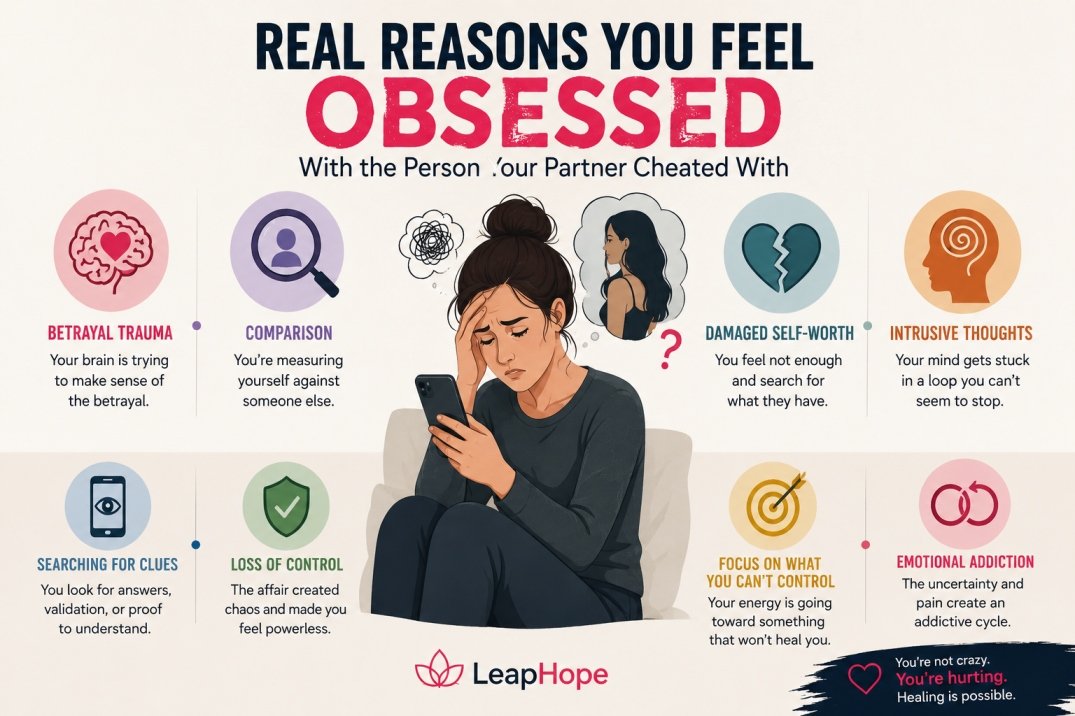
Social Media Is Reinforcing the Obsession
For many people, social media keeps the obsession alive after infidelity. What starts as “just checking once” can slowly become a compulsive emotional cycle.
Usually, the pattern looks like this:
- anxiety or curiosity rises
- you check the affair partner’s profile
- your brain feels temporary relief from uncertainty
- the obsession returns again later, often even stronger
Over time, this creates a behavioral reinforcement loop. The brain starts associating checking behaviors with emotional relief, even when the experience is painful afterward.
This is why many betrayed partners repeatedly stalk social media profiles, analyze photos, compare lifestyles, or search for hidden clues. In reality, the checking rarely brings closure. Instead, it often deepens rumination, comparison, and emotional distress.
The Affair Partner Has Become a Symbol, Not Just a Person
After betrayal, the affair partner often stops feeling like just another person. Instead, they start symbolizing the emotional pain the cheating created.
For many betrayed partners, this person begins representing:
- rejection
- humiliation
- abandonment
- aging fears
- fear of not being enough
That is why the obsession can feel so emotionally overwhelming. You are not only reacting to who the affair partner is, but also to what the betrayal made you feel about yourself.
This is also why people sometimes become obsessed even when they do not actually admire the affair partner. The mind attaches deeper emotional meaning to them because they now feel connected to one of the most painful experiences in the relationship.
How to Stop Obsessing Over the Person Your Partner Cheated With
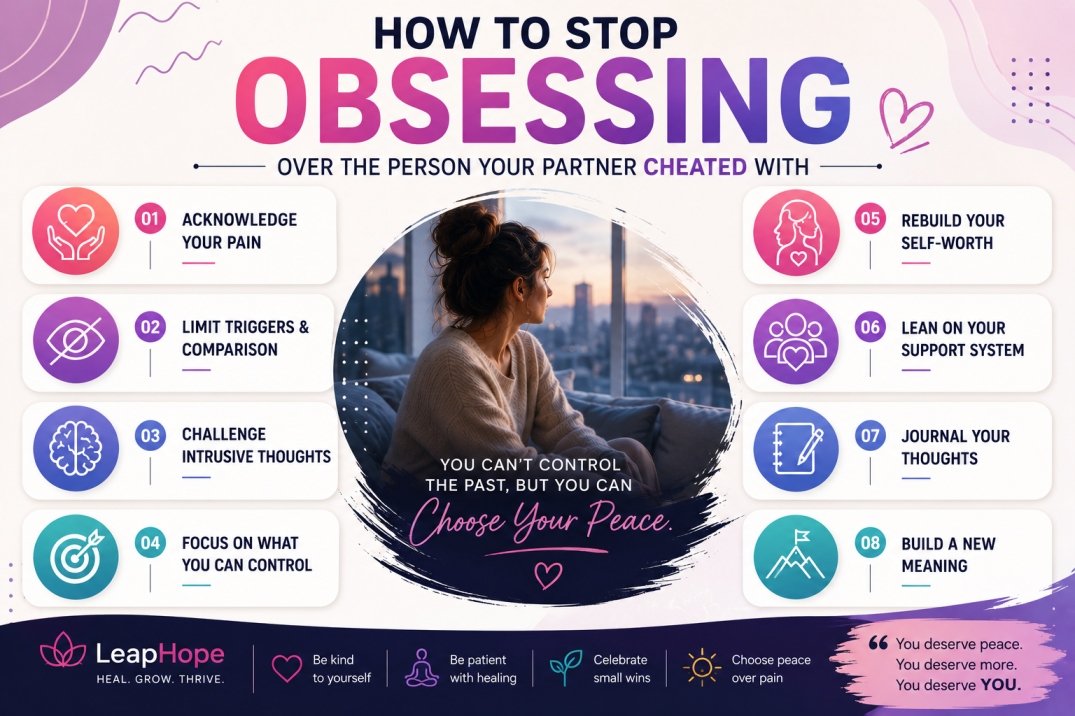
Stop Feeding the Trauma Loop
One of the hardest but most important steps is stopping the behaviors that keep reopening the emotional wound. Many betrayed partners unknowingly keep the obsession alive through repetitive checking, comparison, and mental replaying.
This may include:
- constantly checking the affair partner’s social media
- searching for new updates or photos
- comparing your appearance, body, or lifestyle to theirs
- replaying details of the betrayal repeatedly
Although these behaviors may temporarily feel relieving or emotionally necessary, they usually strengthen the obsession over time. Each new check tells the brain:
“This person is still emotionally important and needs monitoring.”
Reducing compulsive checking and limiting trigger exposure helps break the trauma loop gradually. The goal is not to suppress your emotions, but to stop repeatedly feeding the cycle that keeps your mind emotionally attached to the betrayal.
Separate the Affair Partner From Your Self-Worth
One of the biggest emotional traps after infidelity is believing the affair partner is proof that you were not enough. Many betrayed partners start measuring their worth against this person and slowly begin linking the cheating to their own value.
But the existence of the affair partner is not proof of your inadequacy.
Cheating usually reflects personal choices, emotional immaturity, unresolved relationship problems, poor boundaries, or unhealthy coping patterns within the relationship. It is not a final judgment of your attractiveness, worth, intelligence, or lovability as a person.
When betrayal damages self-esteem, the mind often starts treating the affair partner like “evidence” that someone else was better. Over time, this creates painful comparison patterns that can deeply affect confidence and identity.
Healing begins when you slowly separate your self-worth from the betrayal and stop viewing the affair partner as a measurement of your value.
Focus on Processing the Betrayal Itself
Many people become so focused on the affair partner that they lose sight of the deeper emotional wound underneath the obsession. In reality, the pain is usually coming from:
- broken trust
- emotional shock
- rejection
- loss of safety within the relationship
The affair partner often becomes the visible “face” of the betrayal, but they are not usually the true source of the emotional damage.
This is why some people continue obsessing even after the affair ends or contact stops. The nervous system is still trying to process the hurt, confusion, and instability the betrayal created.
Healing often begins when the focus slowly shifts away from analyzing the affair partner and toward processing the actual emotional impact of the infidelity itself.
Rebuild the Parts of Yourself the Betrayal Shook
Infidelity can deeply affect the way you see yourself. Many betrayed partners notice changes in their confidence, identity, emotional security, body image, and self-esteem after cheating.
This is why healing is not only about “getting over” the affair. It is also about rebuilding the parts of yourself that the betrayal emotionally destabilized.
For some people, this means reconnecting with their identity outside the relationship. For others, it means rebuilding confidence, restoring emotional safety, improving self-worth, or learning to stop viewing themselves through the lens of the betrayal.
The more you reconnect with your own sense of value and stability, the less emotionally powerful the affair partner usually becomes in your mind.
When to Seek Professional Help
If the obsession starts affecting your mental health, relationships, or daily functioning, professional support may help. Betrayal trauma can sometimes become emotionally overwhelming, especially when symptoms continue for weeks or months.
Some common signs include:
- compulsive stalking or checking behaviors
- intrusive thoughts and constant mental replaying
- obsessive rumination about the affair
- severe anxiety or emotional spiraling
- inability to focus on daily life
- sleep disruption or panic symptoms
- constant comparison fixation
- depression symptoms or emotional numbness
- feeling emotionally “stuck” after the betrayal
Online therapy for psychological issues can help process betrayal trauma, rebuild self-worth, and reduce obsessive thought patterns. If the relationship is continuing after infidelity, online marriage counseling for infidelity may also help couples work through broken trust, emotional pain, and communication difficulties in a healthier way.
Final Thoughts
In many cases, you are not truly obsessed with the affair partner themselves. You are obsessed with what the betrayal made you feel about yourself. The cheating may have triggered deep questions about your worth, attractiveness, emotional safety, or fear of not being enough.
That is why the obsession can feel so emotionally intense and difficult to stop. Your mind keeps searching for answers, comparisons, and meaning, hoping it will somehow reduce the pain.
Healing usually begins when the focus slowly shifts away from the affair partner and back toward your own emotional recovery. The more you process the betrayal itself and rebuild your sense of self-worth, the less power this person often holds over your mind.
FAQs
Is it normal to obsess over the person my partner cheated with?
Yes, it is normal to obsess over the person your partner cheated with after infidelity. Betrayal trauma, damaged self-worth, intrusive thoughts, and unanswered questions often make betrayed partners mentally fixate on the affair partner while trying to emotionally process the cheating.
Why do I keep comparing myself to the affair partner?
People keep comparing themselves to the affair partner because cheating often damages confidence and creates feelings of inadequacy. Many betrayed partners start questioning their attractiveness, desirability, personality, or worth after infidelity, even when the cheating was not caused by their shortcomings.
Why can’t I stop stalking the affair partner online?
You may keep stalking the affair partner online because social media checking temporarily reduces anxiety and uncertainty after betrayal. However, repeated checking strengthens obsessive thinking, emotional comparison, and rumination, which often keeps the betrayal trauma emotionally active for longer.
Does cheating always damage self-esteem?
Cheating does not always damage self-esteem, but infidelity commonly affects confidence, emotional security, and self-worth. Many betrayed partners internalize the betrayal personally and begin questioning their attractiveness, value, or desirability after being cheated on by someone they trusted deeply.
Can betrayal trauma cause obsessive thoughts?
Yes, betrayal trauma can cause obsessive thoughts after infidelity. Many people experience intrusive thinking, emotional hypervigilance, constant mental replaying, and obsessive rumination because the brain continues treating the betrayal as unresolved emotional danger that still requires psychological processing.
How long does obsession after infidelity last?
Obsession after infidelity can last weeks, months, or longer depending on emotional attachment, betrayal trauma severity, unresolved trust issues, and repeated triggers. Social media stalking, lack of closure, and ongoing contact with the affair partner can also prolong the obsession significantly.
Why do I feel inferior after being cheated on?
Many people feel inferior after being cheated on because infidelity often triggers rejection, comparison, and fears of not being enough. Betrayed partners may wrongly view the affair partner as “better,” even though cheating usually reflects unhealthy choices rather than personal inadequacy.
Should I contact the person my partner cheated with?
Some people want to contact the person their partner cheated with for answers, closure, or validation. However, contacting the affair partner can sometimes increase obsession, emotional confusion, and distress instead of providing the relief or understanding the betrayed partner expected.