

Last Updated on September 3, 2026
Why is sex important? Is it mainly about pleasure, or does it change how you feel about someone? And why does it matter so much to some people while others have little interest?
You may be asking out of curiosity, trying to understand your own desire or wondering why someone else sees sex differently. You do not need to be married, dating or sexually experienced to have these questions.
Sex can offer pleasure, affection, excitement and emotional closeness. But those experiences are not guaranteed, and sex is not something everyone needs to feel happy or complete.
Why Sex Can Matter Physically and Emotionally
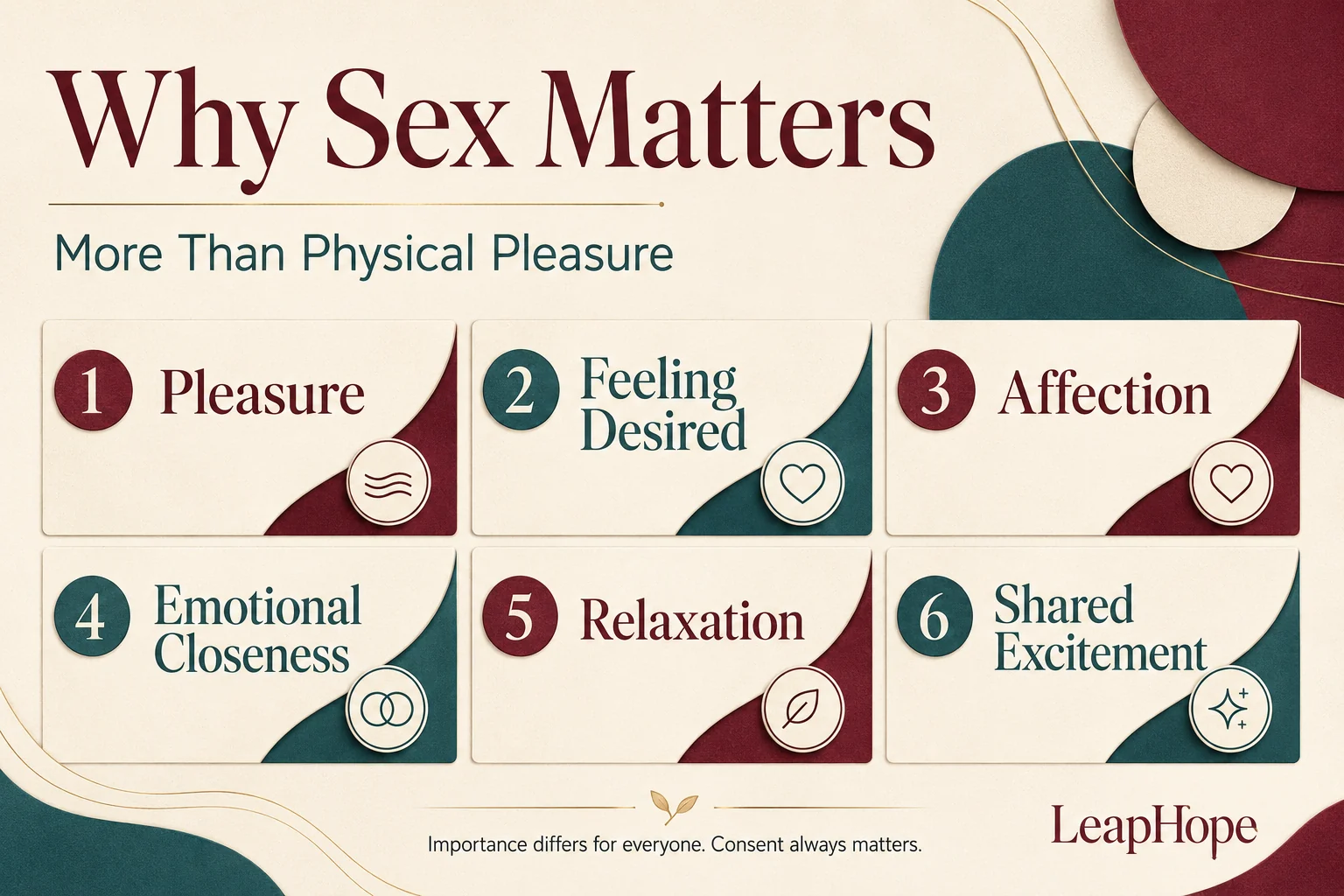
1. Sex Can Feel Physically Pleasurable
Pleasure is a reason in itself. Sexual arousal and wanted touch can feel enjoyable, and some people value sex simply because they like the experience.
It does not always need to mean love, commitment or a deeper emotional connection. People can enjoy sex for different reasons. What matters is that everyone involved freely agrees and feels comfortable with what is happening.
2. It Gives Sexual Desire a Form of Expression
You may feel attracted to someone, think about sexual closeness or want to express desire through physical contact. For some people, sex is one way to experience that attraction.
Having desire does not mean you must act on it. Arousal is not an instruction, and another person is never responsible for satisfying it. You can want sex and still choose to wait or not have it.
3. Orgasm Can Bring a Sense of Release
Orgasm is a peak in sexual pleasure that may be followed by relaxation or a feeling of release. This is part of what some people enjoy about sex.
But orgasm is not guaranteed, and it is not the only measure of a good experience. Someone can enjoy sexual contact without reaching orgasm. It is also possible to experience orgasm without a partner, so this benefit is not exclusive to partnered sex.
4. Sex Can Make You Feel Desired
Being wanted by someone you are attracted to may feel different from receiving a compliment. Their interest, attention and enthusiasm can make you feel physically desirable.
That feeling can matter even when you already know someone cares about you. Still, sexual interest does not prove love or commitment, and another person’s level of desire does not determine your worth.
5. It Can Be a Way to Give and Receive Affection
For some people, sex is closely connected with tenderness, being held, touched with care and given someone’s attention. The affection around the experience may matter as much as the sexual pleasure.
Others enjoy sex without strong emotional attachment. Neither experience tells you what another person feels. If affection or commitment matters to you, it is better to discuss that than assume sex means the same thing to both people.
6. You May Feel Emotionally Closer Afterwards
Sex can involve sharing a private side of yourself, being physically close and paying attention to another person’s comfort. When the experience is wanted and caring, you may feel closer afterwards.
Research involving newlyweds found that a stronger positive feeling after sex was associated with greater marital satisfaction. This study of sexual satisfaction and relationship quality supports a possible connection, not a promise that sex will create love or repair a relationship.
7. Enjoyable Sex May Help You Relax
Some people describe feeling calmer, less tense or more settled after sex. Enjoyment and closeness may offer a break from everyday worries.
But the experience matters. Pain, pressure, fear of pregnancy or worry about someone’s reaction can make sex stressful instead. Sex is not a treatment for anxiety, and nobody should feel they need to have it to manage another person’s mood.
8. You May Find It Easier to Sleep Afterwards
Feeling sleepy after sex is something some people experience, particularly after orgasm. A diary study on sexual activity and sleep found that partnered sex with orgasm was associated with better reported sleep quality and taking less time to fall asleep.
This does not establish that sex improves deep sleep or treats insomnia. It is a possible effect, not a reason to have sex when you do not want it.
9. Sex Can Include Excitement, Curiosity and Play
Anticipation, attraction and discovering what you enjoy can make sex interesting. Some people value the fun and shared enjoyment as much as the physical release.
Curiosity does not mean you have to try something. You can ask questions, learn about your body and decide what you are comfortable with without becoming sexually active. You can also change your mind about something you previously wanted.
10. Sexual Satisfaction Can Matter to Overall Relationship Satisfaction
For someone who values sexual contact, feeling satisfied with that part of a relationship can contribute to feeling happy overall. Satisfaction may involve pleasure, mutual interest, comfort and being able to say what feels good or does not.
This is why “How often?” does not answer everything. Frequent sex can still feel unwanted or unsatisfying. Less frequent sex may work well when both people are comfortable with it.
How Important Is Sex in a Relationship?
The importance of sex in a relationship depends on the person. For some, it is a central part of attraction and closeness. For others, affection, companionship and emotional connection matter much more.
Even when sex is important, the concern may not be frequency. Someone who is tired of always initiating intimacy may mainly miss feeling wanted. Another person may enjoy sex but feel pressured by how often it is expected.
There is no single amount that proves a relationship is healthy. You can have sex and still feel lonely in a relationship. You can also feel close without having sex.
Is Sex More Important to Men Than Women?
Men and women can both value pleasure, attraction, affection and emotional closeness. You cannot know how important sex is to someone from their gender alone.
A woman may want sex more often than a man. A man may have little interest or need emotional closeness before wanting sexual contact. Desire can also change with stress, health, medication, life circumstances and personal experiences.
Statements such as “men need sex” or “women only want emotional connection” leave too much out. Ask what matters to the individual.
Is Sex Necessary for Everyone?
No. You can live a healthy, meaningful life without sex. Some people have little or no sexual interest, some choose not to have it, and others want it but are not ready or do not have a suitable partner.
Some asexual people experience little or no sexual attraction, although their attitudes towards sex vary. Lack of sexual interest is not automatically a problem that needs fixing.
If desire changes suddenly or causes you distress, you can seek advice. But not wanting sex does not, on its own, mean something is wrong.
Does Having Sex Mean You Are Ready?
Wanting sex, feeling aroused and being ready are not the same thing. You may be curious but unsure, attracted to someone but not comfortable, or worried that saying no will make them leave.
Readiness includes being able to choose freely, discuss limits and understand possible consequences. Nobody needs to have sex to prove maturity, love or that they are keeping up with friends.
Consent must be freely given and can be withdrawn. Depending on the activity, sex can also carry risks of sexually transmitted infections and pregnancy.
What Sex Cannot Prove or Fix
The benefits of sex should not be turned into promises. Sex cannot reliably:
- Prove that someone loves you or will stay.
- Fix disrespect, dishonesty or unresolved hurt.
- Make you more mature or valuable.
- Cure anxiety, depression or low self-worth.
- Guarantee satisfaction simply because it happens often.
If you feel pressured, frightened or in pain, that matters more than any claimed benefit. You do not need to continue an experience to protect someone else’s feelings.
When Can Professional Support Help?
Support may be useful if sexual concerns cause distress such as pain, a sudden change in desire, performance worries, shame or difficulty discussing boundaries.
A doctor can assess physical symptoms and possible medication or health-related causes. A suitably qualified therapist can help with the emotional and behavioural side.
For adults, LeapHope’s online sex therapy offers psychological support with desire, sexual anxiety and intimacy concerns. Younger readers can seek age-appropriate advice from a healthcare professional, school counsellor or trusted adult.
Final Thoughts
Sex can matter because it feels good, expresses desire or helps you feel close to someone. Those are valid reasons, but they are not rules everyone has to follow.
Understanding why sex is important does not mean deciding you should have it. Your comfort, consent, readiness and safety matter more than someone else’s expectations.
FAQs
Why is sex important in a relationship?
Sex can be important in a relationship because it offers pleasure, affection and a way to express attraction. Its importance depends on the people involved. It does not prove love or become an obligation because a relationship exists.
What are the emotional benefits of sex?
The emotional benefits of sex may include feeling desired, affectionate, relaxed or closer to someone. These depend on the experience being wanted and comfortable. Sex can also bring difficult feelings, so positive effects should never be assumed.
Why is sex important in marriage?
Sex may be important in marriage for pleasure, affection and sexual connection, just as it can be outside marriage. Marriage does not create consent or a duty to have sex. What matters is each person’s needs and comfort.
Is sex a need or a want?
Sex can feel deeply important, but it is not required for survival. Someone may consider sexual connection necessary for a satisfying relationship. That personal need does not create an entitlement to another person’s body or consent.
Can you love someone without wanting sex?
Yes, you can love someone without wanting sex. Love, sexual attraction and desire are related for some people but are not identical. Low desire does not automatically mean a lack of love, and sexual interest does not prove love.
Does not having sex harm your health?
Not having sex does not inherently harm your health. You do not need sexual activity to stay physically or mentally well. If its absence causes distress, consider what you miss- pleasure, touch, affection or feeling wanted and seek support if needed.