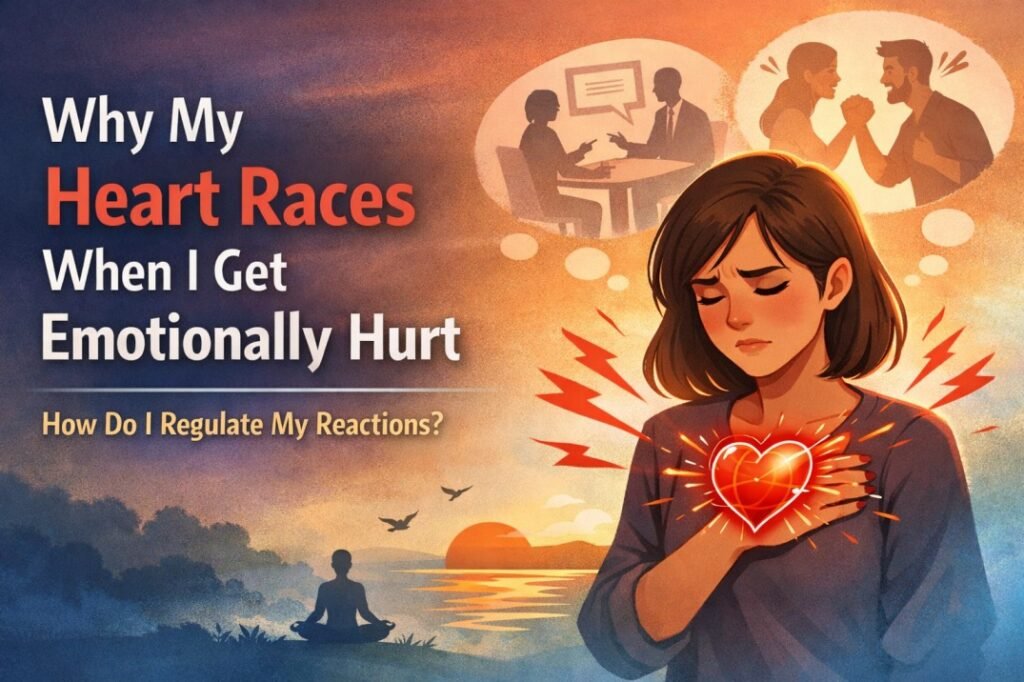
A 30-year-old woman said in counselling, “I struggle to control my emotions. When I get hurt, my heart starts pounding so fast it scares me.” She was not talking about a medical problem or a big emergency. She meant normal life moments, an argument, hurtful words, feeling rejected, or thinking about someone who upset her.
This happens to many people, especially those in their late teens to mid-40s, who are sensitive, stressed, or tend to overthink. It is reported more often by women, but men experience it too. The feeling can be very physical: a racing or pounding heart, tight chest, fast breathing, shaking, weakness, or feeling overwhelmed and unable to think clearly.
These reactions can happen during everyday situations, not just trauma. Conflict, rejection, guilt, shame, or fear of losing someone can all trigger it. Many people then worry that something is wrong with their heart.
In most cases, the heart is not the problem. Your body is reacting to emotional pain as if you are in danger. Your brain sends a signal to protect you, stress hormones rise, and your heart beats faster to prepare your body to act. It happens automatically, before you can control it. Understanding this can help you learn how to calm both your heart and your emotions.
Why Your Heart Races Like Crazy When You’re Emotionally Hurt or Overwhelmed
When you’re emotionally hurt, heartbroken, or deeply sad, your brain can read it as danger. Rejection, loss, or feeling unsafe with someone important can trigger the same alarm system as physical threat.
For many people, this reaction is shaped by past experiences, including childhood. Growing up around conflict, criticism, unpredictability, or fear of losing love can train the brain to stay on alert. So even normal arguments or hurt feelings can switch the alarm on quickly. This does not mean anything is wrong with you. It means your nervous system learned to protect you.
Once danger is sensed, stress hormones like adrenaline are released and your heart beats faster. This is not your heart failing. It is simply pumping more blood and oxygen to your brain and muscles so you can react and cope.
In simple terms, your brain is trying to protect you. A racing heart during emotional pain usually means your body is on high alert, not that something dangerous is happening to your heart.
My Brain Is Protecting Me But Why Is My Heart Reacting?
Your brain does not clearly separate emotional danger from physical danger. When you feel deeply hurt, scared, or overwhelmed, it simply decides that you are in danger and turns on the body’s alarm system.
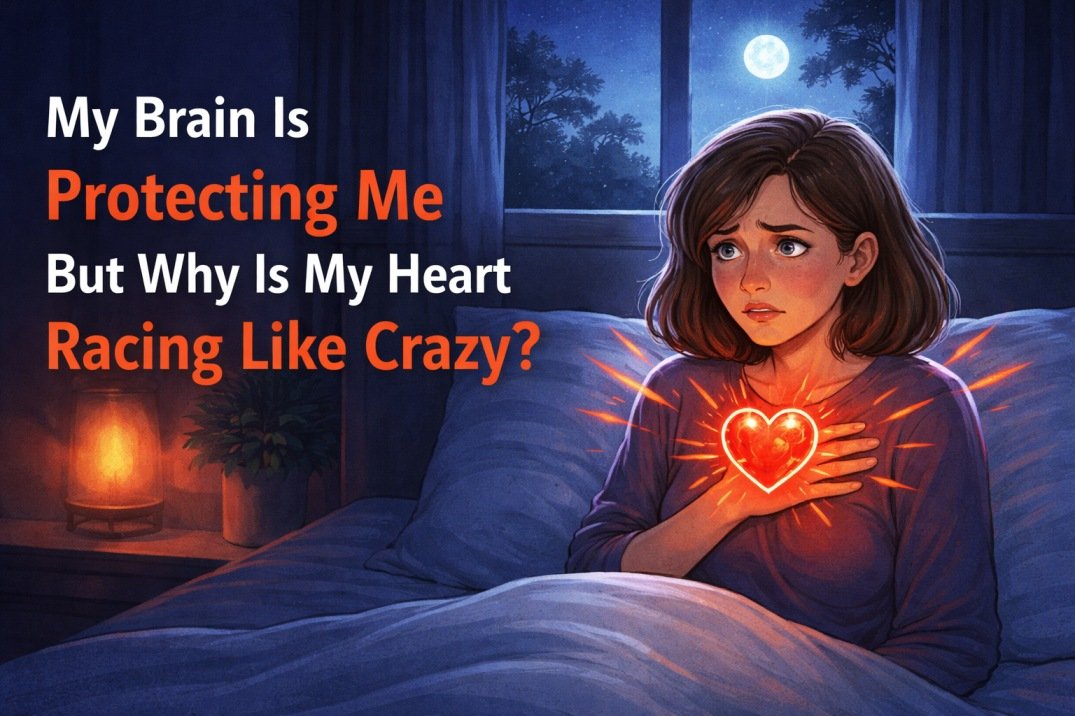
Stress hormones are released so you can prepare to handle the situation. Your heart starts beating faster to pump more blood and oxygen to your brain and muscles. This helps you stay alert, think, and cope.
Past experiences can make this reaction stronger. Childhood stress, trauma, heartbreak, or painful events can leave “triggers” in your nervous system. When something even slightly similar happens, your brain may connect it to the past and react as if the danger has returned, even if the current situation is not severe.
Overthinking or intense emotions can also keep the alarm active. When your mind is working hard or feeling overwhelmed, the brain signals the body to stay on high alert, which can make your heart race.
In simple terms, your heart is reacting because your brain believes you need extra support to handle a threat. Most of the time, this response is protective, not dangerous.
Are You Experiencing Anxiety or Chronic Stress?
We hear this often from college students in their 20s to professionals in their 30s: “My heart starts racing due to anxiety, especially at night.” But heart racing does not automatically mean you have an anxiety disorder.
Many people are simply emotionally responsive, especially in situations that matter to them. Your body reacts strongly because you care, not because something is wrong.
You might lean toward anxiety if you overthink most things, feel tense or worried frequently, and notice strong physical reactions in many situations. That pattern is closer to chronic anxiety.
But if it mostly happens around a specific person, conflict, or emotional topic, and you are otherwise calm in daily life, it is more likely due to emotional attachment, stress, or vulnerability, not a disorder.
Poor sleep, burnout, and ongoing pressure can also make your body more reactive. When you are exhausted, it becomes harder for your system to stay calm.
Psychological Reasons Why Your Heart Races When You’re Emotionally Hurt
The reasons below come from how the mind and body really react to emotional pain, not just simple tips. Everyone is different, so some may fit you more than others. Read them and see which ones feel true for your experience.
Your Brain Thinks You’re in Danger (Fight-or-Flight Response)
When something hurts you deeply, like rejection, harsh words, or fear of losing someone, your brain can treat it as a threat. It reacts instantly, before you have time to think.
Adrenaline is released, and your heart begins to beat faster and stronger. This sends extra oxygen and energy through your body so you can handle the moment.
Even though the pain is emotional, your body prepares as if you need to protect yourself.
Stress Hormones Flood Your Body
When your brain senses distress, it releases stress hormones like adrenaline and cortisol. These chemicals put your body on high alert within seconds.
Your muscles tighten, your breathing becomes faster or shallow, and you feel keyed up or restless. All of this is meant to prepare you to respond quickly, even if you are just standing still.
Anxiety or Panic Activation
Some people experience anxiety or panic attacks, and during these episodes the heart can race very fast. This often happens when they are alone, at night, or stuck in constant worrying and overthinking.
The body becomes highly alert, and the heartbeat can feel so strong that it is noticeable in the chest, neck, or even the veins. Because there is no clear physical cause, the sensation itself can feel frightening, which can make the heart beat even faster.
Fear of Rejection, Loss, or Abandonment
If you love someone, have a one-sided crush, or deeply care about a person, even thinking about them can make your heart race. When you feel vulnerable or unsure about where you stand, your brain fills in the gaps with many possible outcomes, including rejection, distance, or losing them to someone else. Because this person feels important to your happiness and sense of safety, the fear of losing that connection can trigger a strong physical reaction.
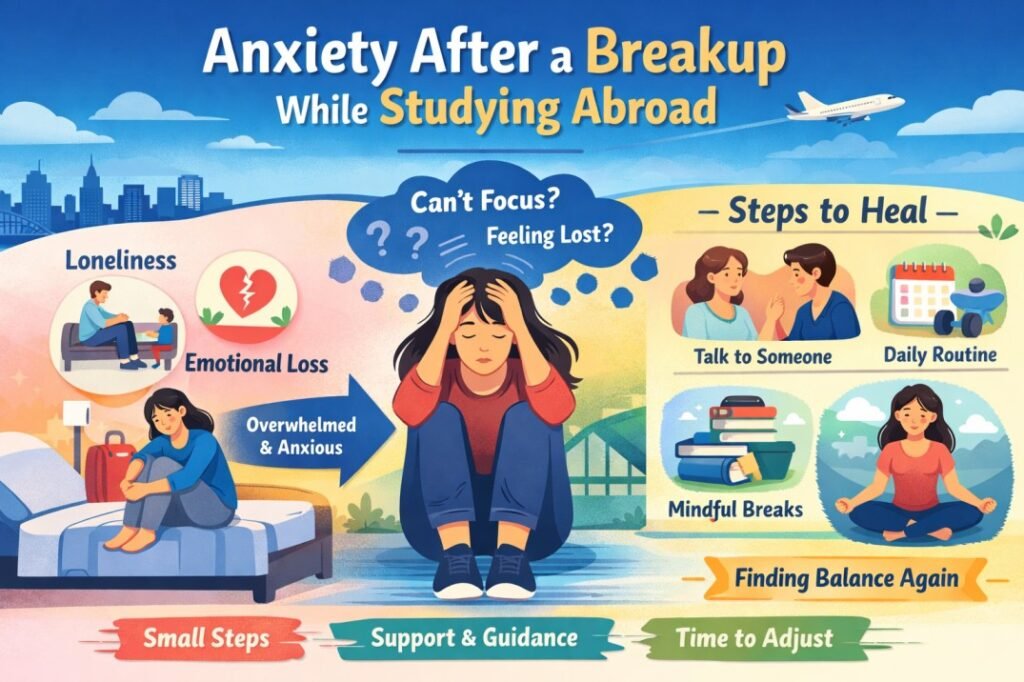
Some people also experience intense heart racing after a breakup or heartbreak. That person may have become part of their identity, self-worth, daily life, or future plans. Losing them can feel like losing a piece of your life, not just a relationship.
In these moments, the brain senses emotional overload and shifts the body into high alert. Your heart beats faster to pump more oxygen and energy so you can cope with the distress, even though the pain is emotional rather than physical.
Overthinking Keeps the Alarm System Active
Some people start overthinking at night, when everything is quiet and they are finally alone with their thoughts. Others notice it during free moments, when the mind has nothing else to focus on.
As they replay conversations, imagine scenarios, or worry about what might happen, the brain reacts as if the situation is happening right now. This keeps the stress response switched on, so the body stays tense and alert, and the heart may continue to race even though nothing is actually happening.
Conditioned Responses From Past Experiences
Past emotional pain can make you more sensitive to similar situations later. Your brain remembers what hurt you before, even if you are not thinking about it on purpose.
So when something even slightly similar happens, like the same kind of argument, tone, or behavior, your body may react faster and more strongly. The alarm system turns on quickly because it has learned to expect danger from that pattern.
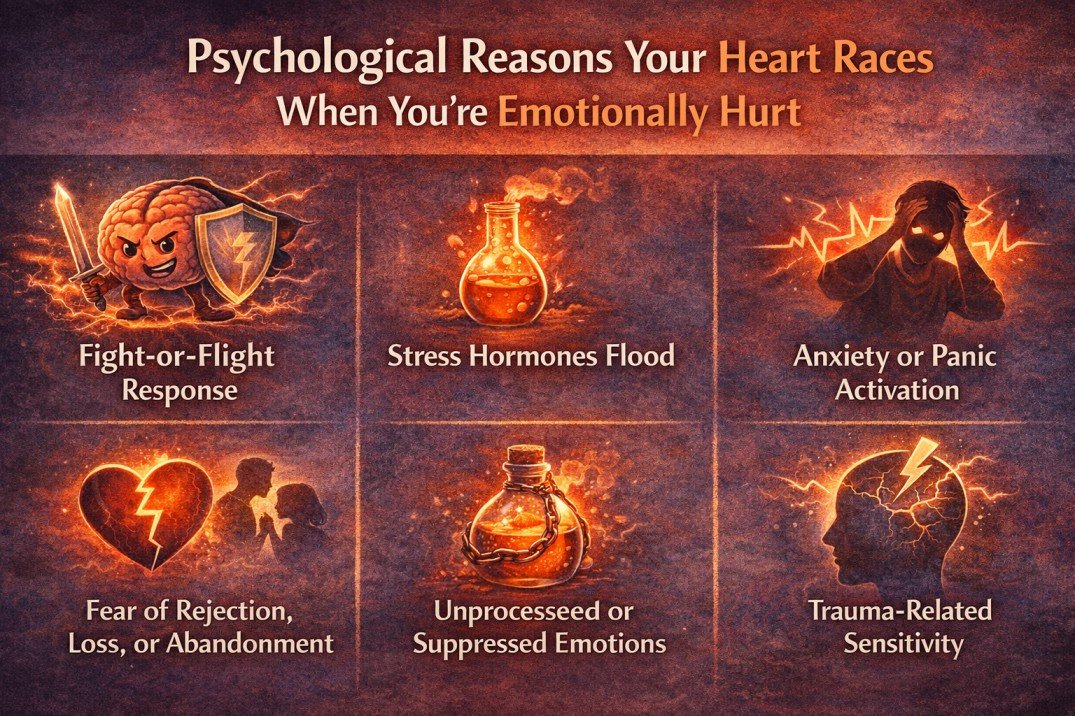
Unprocessed or Suppressed Emotions
When feelings are pushed down or never fully expressed, they do not simply disappear. They stay in the body as tension.
Over time, this built-up emotional pressure can make reactions stronger. When something finally triggers those feelings, the body may respond intensely, causing symptoms like a racing heart, tight chest, or shaking.
Loss of Control Intensifies the Response
When you don’t know what will happen next or feel powerless to change the situation, your stress level rises quickly. Uncertainty and helplessness make the brain stay on alert, which can push the heart rate even higher.
Low Emotional Safety or Self-Worth
If a situation makes you feel unvalued, rejected, or not “enough,” it can hit very deeply. Threats to your sense of belonging or identity often trigger stronger reactions because they feel personal, not just situational.
Trauma-Related Sensitivity
Past trauma, whether recent or long ago, can make the nervous system extra alert to danger. The brain scans for signs that something bad might happen again, so even small triggers can cause a big physical response.
High Emotional Sensitivity
Some people naturally feel emotions more intensely than others. They may care deeply, empathise strongly, and react quickly. This heightened sensitivity can also show up in the body as stronger physical responses, including a racing heart.
Why Your Body May Feel Weak, Shaky, or Like It’s “Giving Up”
Whether you’re a man or a woman, strong emotional distress can leave your body suddenly drained. When your brain senses danger, your heart beats faster to keep you alert and able to cope. Blood flow is prioritised for vital organs, which can make the rest of your body feel weak, shaky, or lightheaded.
Once your brain senses that the danger has passed, your system gradually settles and circulation balances again. This is why the weakness or heaviness often fades after some time.
Common sensations include:
- Weak or shaky legs
- Dizziness or lightheadedness
- Chest discomfort
- Heavy, drained body
- Loss of appetite
- Urge to sit or lie down
- Emotional numbness
- Extreme fatigue afterward
Your body is not a machine that switches on and off instantly. It has its own protective system and adjusts as needed. These feelings usually mean your body is responding to stress and then recovering, not that it is failing.
How to Calm Your Racing Heart in the Moment: 4 Quick Steps
When your heart starts racing, remind yourself: you are not in danger, your body has switched into survival mode. The goal is to signal safety so it can switch off.
How to Calm Your Racing Heart in the Moment: 4 Quick Steps
- Slow, deep breathing
Breathe in slowly through your nose, then breathe out longer than you breathed in. Long exhales tell your body to calm down. - Bring yourself into the present
Focus only on right now, not the past, not the future. Notice what you can see, hear, or feel around you. - Move your body gently
Stand up, walk slowly, or stretch, even if you feel weak. Light movement helps release stress hormones. - Touch real objects around you
Hold something solid, touch a wall, feel the floor under your feet, or splash cool water on your face. Physical sensation signals safety to the brain.
You are not calming thoughts first, you are calming the nervous system.
Body → Brain → Calm – (not Brain → Body)
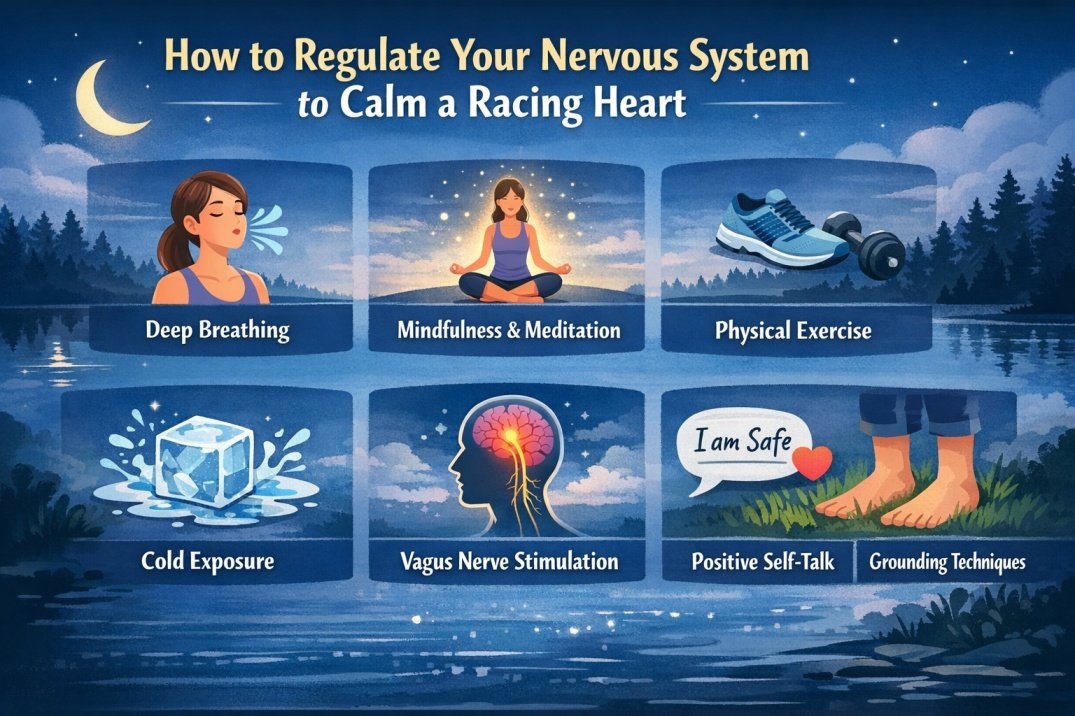
How to Regulate Your Nervous System to Calm a Racing Heart Long-Term
In your 20s, you may see this as normal emotional ups and downs. But in your 30s, it can start to worry you. You may wonder if something is wrong with your heart or if you will always be this sensitive. It can also affect your confidence.
Many people who feel this way are simply more emotionally responsive. Their brain keeps preparing for the future or replaying the past, which can be exhausting and make it hard to stay present. Not everyone experiences it the same way, and some only notice heart racing in certain moods.
The good news is that this can improve. Below are psychologist-supported ways to calm your nervous system over time so your body becomes less reactive.
1. Start Accepting Reality
A big part of calming your nervous system is accepting what is happening instead of fighting it. When you keep asking “Why is this happening?” or fearing the worst, your body stays in alarm mode.
Gently remind yourself: This is uncomfortable, but not dangerous. It will pass. Accepting the moment reduces fear and helps your brain realise there is no real threat, allowing your body to settle over time.
2. Replace Overthinking Time With Physical Activity
Overthinking often gets worse when you stay in the same place for too long, especially when you are alone or inactive. Your mind keeps looping because your body has nowhere else to put that energy.
Try shifting into physical activity instead. Walk, stretch, exercise, do chores, pursue a hobby, or talk to someone. Activities that involve your body help break the thought cycle and give your nervous system a chance to settle.
Even if you are still thinking, it helps to move while you think. Walking in particular can reduce mental intensity and release built-up stress, making it easier for your mind to calm down over time.
3. Improve Sleep and Daily Recovery
Your nervous system cannot stay calm if you are constantly tired. Poor sleep keeps your body in a stressed, alert state, so emotional triggers hit much harder.
Try to keep a regular sleep time, reduce screens before bed, and give your mind a wind-down period at night. Even small improvements in sleep can make your heart less reactive and your emotions easier to handle during the day.
Rest is not laziness, it is repair. When your body feels safe and restored, it does not need to stay on high alert.
4. Remove or Reduce Stress-Causing Factors
If something keeps triggering you every day, your nervous system never gets a chance to calm down. Ongoing pressure from toxic environments, constant conflict, overload at work, or unhealthy habits can keep your body in a permanent alert state.
You may not be able to remove every stressor, but even small changes help. Set boundaries, reduce unnecessary commitments, limit exposure to draining people or situations, and create pockets of calm in your day.
When the overall stress load goes down, your body stops expecting danger all the time, and emotional reactions become easier to manage.
5. Accept That Things Happen And Will Keep Happening
Life will always include uncertainty, disappointment, and unexpected events. Trying to control everything or mentally prepare for every possible outcome only keeps your body tense.
Acceptance does not mean liking what happens. It means understanding that not everything can be predicted or prevented. When you stop fighting reality, your nervous system no longer needs to stay on constant alert.
Remind yourself that you can handle things as they come. This mindset reduces fear of the future and helps your body stay calmer in the present.
6. Stop Fighting the Sensation
Trying to force your heart to slow down often makes it worse. Fear and resistance tell your body that something is wrong.
Instead, allow the sensation to be there without panic. Remind yourself that it is uncomfortable but not dangerous. When the brain stops sensing fear, the body gradually settles on its own.
7. Process Your Emotions Instead of Bottling Them Up
If you keep pushing feelings down, they don’t disappear. They stay inside as tension. Over time, your body reacts more strongly because nothing ever gets released.
Talk to someone you trust, write things down, cry if you need to, or express what you feel in a safe way. When emotions are processed, your system stops treating them like unfinished danger.
8. Limit Things That Keep Your Body Wired
Too much caffeine, nicotine, energy drinks, or constant screen time can keep your system overstimulated. If your body is already sensitive, these can make heart racing worse.
Reducing these doesn’t mean giving everything up. Even small cuts can help your body settle more easily.
9. Learn to Sit With Feelings Without Panicking
Strong emotions are uncomfortable but not dangerous. The more you fear them, the stronger the body reaction becomes.
Practice reminding yourself: “This feeling will pass. I can handle it.” Over time, your brain stops sounding the alarm for every emotional wave.
Heart Racing Is Not Limited to Hurt, Other Emotions Can Trigger It Too
A racing heart is not only caused by sadness or emotional pain. Sometimes it happens during arguments, fights, or situations where conflict might occur. Your heart may pound, your body may shake, and you may feel tense even before anything actually happens.
Many people also notice it when thinking about stressful events, like an interview, an important meeting, pending work, or any situation where they feel pressure or uncertainty.
Key point: your body reacts to intensity and perceived threat, not just sadness. Any situation that feels important, stressful, or unpredictable can trigger the same response.
When to Seek Medical or Professional Help
Occasional heart racing during emotional stress is common. But if the reactions are frequent, intense, or start affecting your quality of life, it may be time to seek professional support.
Consider speaking with a mental health professional if you notice:
- Your reactions feel overwhelming or hard to control
- Episodes happen often or last a long time
- You avoid situations because you fear your symptoms
- Constant worry about your heart or health
- Trouble sleeping due to racing thoughts or palpitations
- Difficulty focusing on work, studies, or relationships
- Feeling emotionally exhausted, anxious, or on edge most days
Even when medical tests are normal, the distress is real. A psychologist can help you understand your triggers, calm your nervous system, and build healthier ways to cope with strong emotions.
If these experiences are interfering with your daily life, you may consider consulting an online clinical psychologist at LeapHope for supportive, evidence-based guidance from the comfort of your home.
Key Takeaway
A racing heart during emotional distress is a protective survival response, not a personal weakness or a sign that something is “wrong” with you.
Your body is reacting to perceived threat based on your stress level, sensitivity, and past experiences. It is trying to protect you, even if the situation is not actually dangerous.
With time, regulation, and the right support, these reactions can become milder, less frequent, and much easier to manage. You can train your system to feel safer again.