Last Updated on March 20, 2026
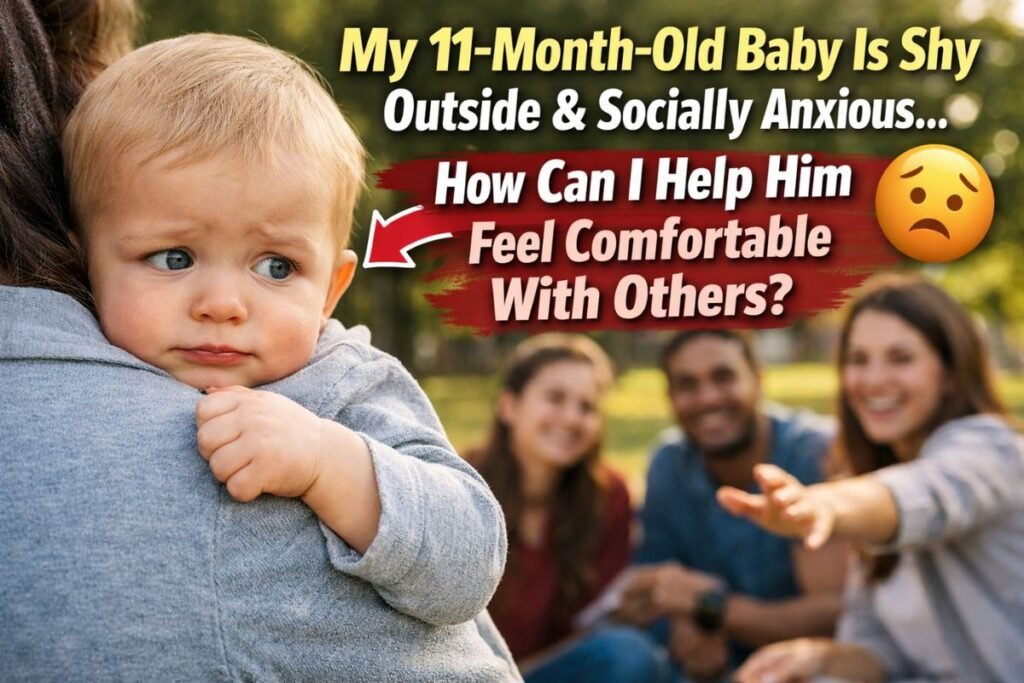
Many parents feel worried when their 11-month-old baby is cheerful at home but becomes upset the moment they step outside or meet new people. The baby may cling tightly, hide their face, or cry when someone comes close. This sudden change can be confusing, especially when relatives say the baby should be more social.
One parent described her 11-month-old son like this:
“He plays normally at home and smiles with us. But outside, he holds me tightly and cries if anyone talks to him. He won’t go to anyone else.”
The baby was not sick, delayed, or unfriendly. He simply felt safest with his parent and did not yet trust unfamiliar people.
At 11 months, babies can clearly recognise familiar faces and notice when someone is new. They want to stay close to the person who makes them feel secure. Loud places, new surroundings, and many faces at once can feel overwhelming, so the baby reacts by holding on, turning away, or crying.
If your 10-11 -month-old behaves this way, it usually means they are strongly attached to you, not that something is wrong. Most babies become more comfortable gradually as they grow, gain mobility, and have repeated calm experiences with new people.
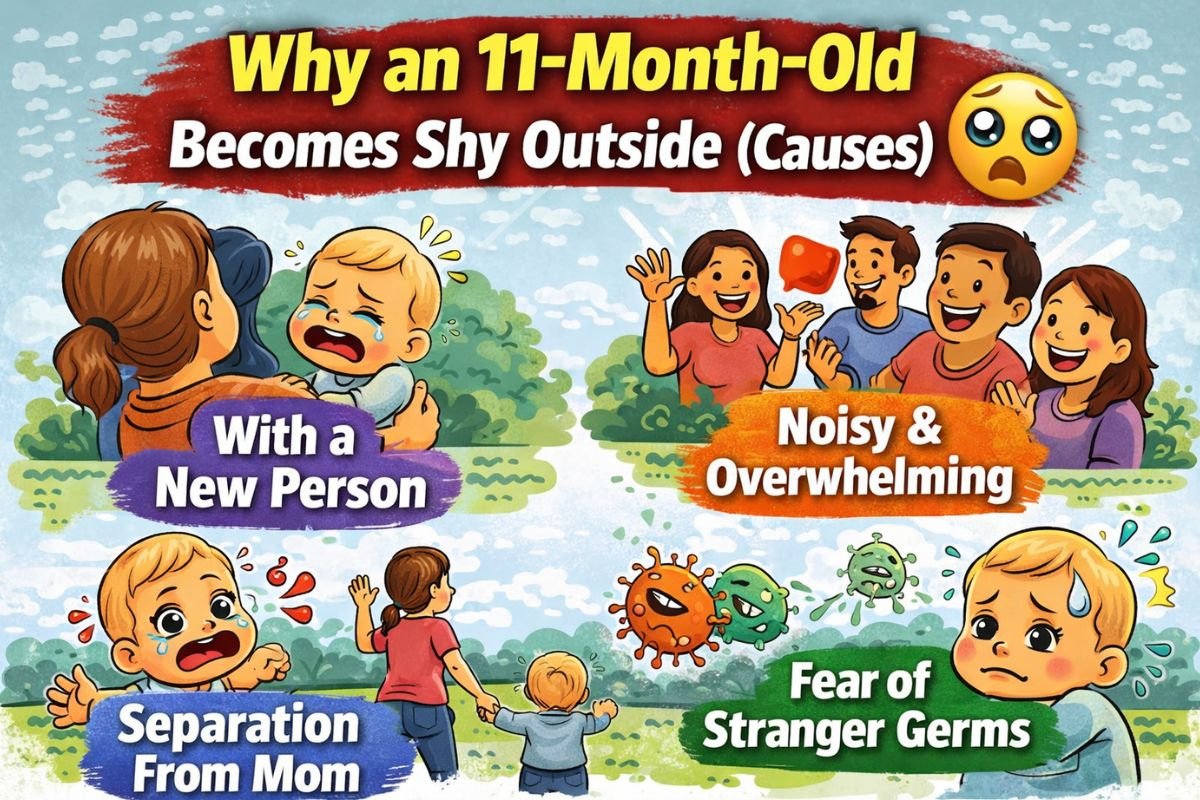
Why an 11-Month-Old Becomes Shy Outside (Causes)
Shyness outside the home usually appears at 11 months because babies become much more aware of who is familiar and who is not. This awareness is a normal part of development, not a problem.
- Recognises strangers clearly
An 11-month-old can remember faces and quickly notice when someone is new. Earlier, babies might smile at anyone. Now they prefer known people. - Strong attachment to the parent
At this age, the parent is the main source of safety. When unsure, the baby moves closer, clings, or cries to stay protected. - Fear of separation
If someone else tries to hold the baby, it can feel like being taken away from the safe person, even if only for a moment. - Overstimulation outside the home
Public places bring loud sounds, bright lights, movement, and many faces at once. An 11-month-old cannot filter all this, so stress builds quickly. - Sensitive or cautious temperament
Some babies are naturally more alert and careful in new situations. They need extra time to feel comfortable. Much of what a baby needs emotionally at this age cannot be spoken but is shown through closeness-seeking.
These causes often combine. A baby may tolerate one new person in a quiet setting but become distressed in a noisy crowd. The behaviour reflects a need for safety, not dislike of people.
Signs of Stranger Anxiety in an 11-Month-Old
At 11 months, babies show discomfort through clear body signals rather than words. These reactions usually appear suddenly when someone unfamiliar approaches or when the environment feels overwhelming.
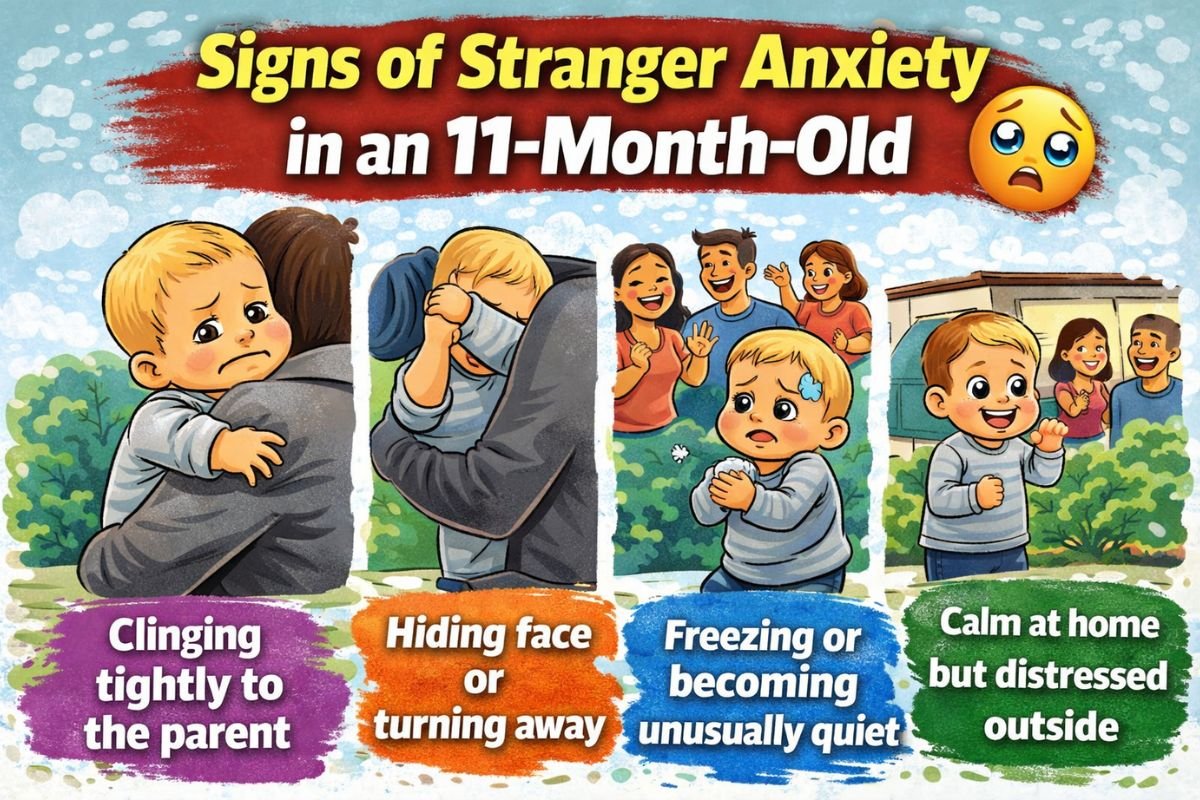
- Clinging tightly to the parent
The baby may grip your clothes, neck, or arms and refuse to loosen the hold. Babies cannot explain fear in words, so they express distress through behaviour. - Crying when strangers come close
Even friendly voices or smiles can trigger tears if the person is unfamiliar. - Hiding the face or turning away
Burying the face in your shoulder or looking in the opposite direction helps block stimulation. - Refusing to be held by others
The baby may stiffen, push away, or reach back toward you immediately. - Freezing or becoming unusually quiet
Some babies stop moving or making sounds instead of crying. This still signals discomfort. - Calm at home but distressed outside
A baby who laughs and explores at home may stay glued to you in public places.
These signs show that the baby feels safer staying close rather than engaging. Once the unfamiliar person or situation moves away, many babies settle quickly, which confirms that the reaction is about safety, not general unhappiness.
How to Help Your Baby Feel Comfortable
An 11-month-old does not need to be pushed to become social. He needs to feel safe first. When safety is present, curiosity and interaction follow naturally.
- Stay close and hold your baby
Physical contact is the fastest way to calm fear. From your arms, the baby can watch without feeling exposed. - Let your baby observe before interacting
Give him time to look at new people from a distance. Observation helps him decide that the situation is safe. - Ask others to approach slowly
Soft voices, gentle movements, and a little space make strangers less threatening. - Do not force holding or eye contact
Pushing interaction usually increases distress and makes future encounters harder. - Use familiar items for comfort
A favourite toy or blanket can make unfamiliar places feel less strange. - Keep outings short and calm
Brief positive experiences are more helpful than long overwhelming ones. - Repeat gentle exposure over time
Seeing the same people regularly helps them become familiar instead of frightening.
Most babies relax gradually when they realise they can stay close to their parent and nothing bad happens. Confidence builds step by step, not all at once.
When to Seek a Professional’s Advice
Shyness around strangers is very common at 11 months, but parents should look at the baby’s overall behaviour, especially at home with familiar people.
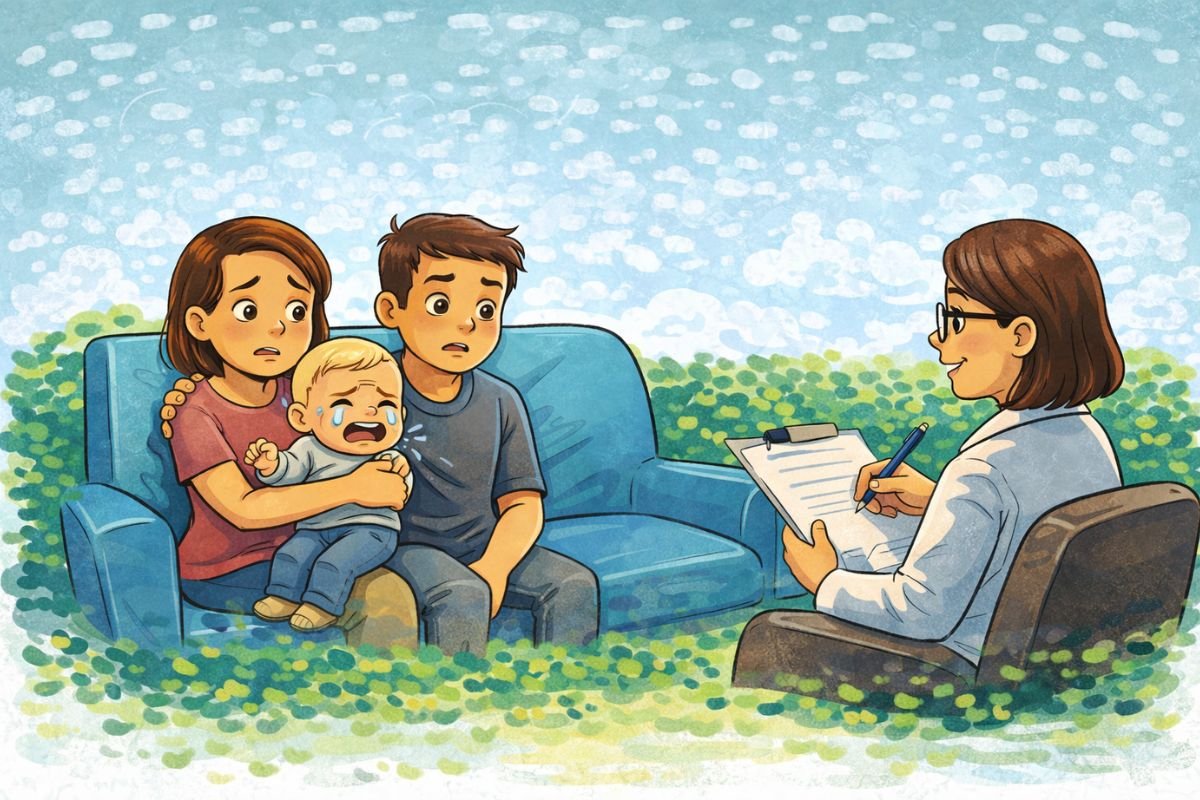
Parents often wonder when normal behaviour crosses into something that needs professional attention. Consider speaking to a paediatrician if:
- Your baby shows little interest in interacting even with parents
An 11-month-old should smile, respond, or try to connect with familiar caregivers. - Eye contact is very limited
Avoiding strangers is normal, but lack of eye contact with trusted adults is not typical. - Communication seems delayed
Most babies at this age babble, respond to their name, and use gestures like reaching or pointing. - Distress is extreme and does not settle
If crying continues even when held and comforted, further evaluation may help. - You have concerns about overall development
Trust your instincts if something feels different from your baby’s usual pattern.
In most cases, reassurance is all that is needed. Early guidance simply helps confirm that development is on track and provides practical support if required.
Final Thought
If your 11-month-old baby is shy outside but happy and interactive at home, this is usually a normal stage of development. Your baby is not antisocial or spoiled. He is simply choosing the person who feels safest when the situation is unfamiliar.
Stranger anxiety often becomes strongest between 8 and 12 months and then gradually reduces as the baby grows. As mobility, understanding, and communication improve, new people feel less threatening.
Many cautious babies grow into confident toddlers once they can explore on their own and return to a parent when needed. The key factor is not how social the baby is now, but whether he feels secure with you. Many normal developmental behaviours are mistaken for problems by well-meaning adults.
There is no need to rush or force change. With patience, gentle exposure, and a calm caregiver presence, most babies become comfortable at their own pace.
FAQs
Why does my 11-month-old cry when strangers talk to him?
At this age, babies can clearly recognise unfamiliar people and may feel unsafe when someone approaches. Crying is their way of asking to stay close to a trusted caregiver.
Is it normal for my 11-month-old to cling only to me outside?
Yes. Strong preference for a parent in new places is very common at 11 months and shows secure attachment.
Should I force my baby to go to relatives to get used to them?
No. Forced interaction usually increases fear. Gradual exposure while you stay close works better.
Why is my baby friendly at home but upset in public?
Home is familiar and predictable. Outside environments involve new sounds, faces, and stimulation that can overwhelm a young baby.
Will my baby always be shy?
Most babies become more comfortable over time as they grow, gain mobility, and have repeated calm experiences with new people.
Is this a sign of autism or a developmental problem?
Stranger anxiety alone is not a sign of autism. Concern is usually only raised if there are additional issues such as poor eye contact with caregivers or delayed communication.