Last Updated on March 14, 2026
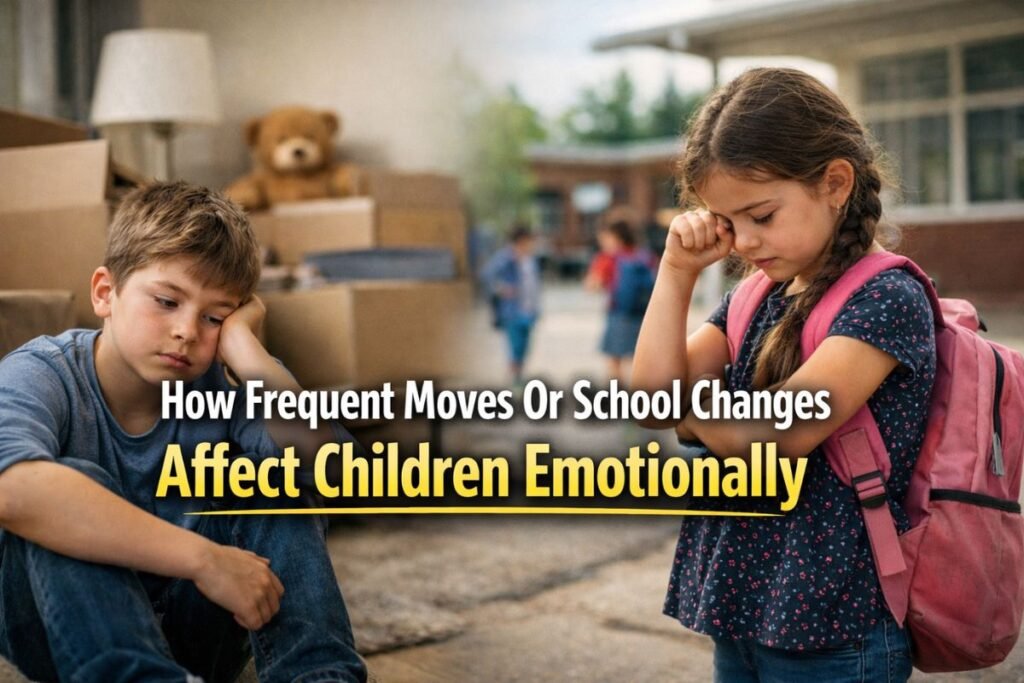
Moving often or changing schools can be exciting but also challenging for children. Even in a loving home, they may feel nervous, stressed, or withdrawn as they adjust to new routines, teachers, and friends.
You might notice them being clingy, quiet, or moody. They may avoid social activities or seem hesitant to try new things. When they say “I’m fine,” it might hide the stress they are feeling inside.
This is not rebellion or a lack of love. It is their way of coping with constant change, leaving old friends, adjusting to new classmates, and trying to feel comfortable in unfamiliar surroundings.
This article explores how frequent moves and school changes affect children emotionally, the signs parents should watch for, and ways to support children so they feel safe, understood, and confident during transitions.
Understanding the Emotional Impact of Moves
Frequent moves or school changes affect children in ways that aren’t always obvious. Even in a loving and stable home, the repeated adjustments can create stress, anxiety, and emotional strain. Understanding these impacts helps parents respond with empathy rather than frustration.
Loss of Friends and Familiarity
Every move means leaving friends behind and saying goodbye to familiar places. Children may experience grief or sadness even if they don’t talk about it. Younger children may show this through clinginess, tantrums, or increased dependence, while older children may withdraw, seem moody, or avoid sharing their feelings.
Parents can help by acknowledging these losses and giving children space to talk about them when they’re ready. Recognizing that these feelings are normal helps children feel validated.
Anxiety About the Unknown
New schools, teachers, and neighborhoods bring uncertainty. Children may worry about fitting in, making friends, or keeping up academically. This anxiety can show as irritability, trouble concentrating, reluctance to participate, or physical symptoms like stomachaches or headaches.
Supporting children means giving them time to adjust, explaining new routines clearly, and reassuring them that it’s okay to feel nervous about changes.
Children moving frequently or changing schools often face similar emotional challenges as expat children. Reading about emotional struggles children face during transitions helps parents understand the stressors and coping patterns that can appear in any child adjusting to new environments.
Challenges with Identity and Belonging
Adjusting to different social and cultural environments can leave children feeling like they don’t fully belong anywhere. They may feel torn between old friends and new ones or struggle to navigate different cultural expectations.
This can result in withdrawal, low confidence, or trying very hard to fit in. Parents can help by listening, encouraging discussions about feelings, and validating their experiences rather than pushing them to “adapt immediately.”
Academic Pressure and School Adaptation
Each school may have different curricula, teaching methods, or language requirements. Children often feel pressure to catch up or perform at the same level as their peers. Struggling academically can increase stress and contribute to emotional withdrawal or frustration.
Parents can provide support by checking in gently, offering help when needed, and celebrating small achievements. Encouragement without pressure is key.
Social Skills and Peer Adjustment
Making new friends repeatedly can be exhausting. Children may hesitate to participate in social activities, avoid interacting with classmates, or feel insecure in new peer groups.
Parents can support social adjustment by helping children identify activities they enjoy, facilitating opportunities to meet peers, and modeling patience with social mistakes or awkward moments.
Cumulative Stress and Emotional Fatigue
Frequent changes accumulate over time. Even small moves or transitions can gradually build stress, leaving children emotionally tired. Signs may include irritability, mood swings, low energy, or withdrawing from activities they previously enjoyed.
Parents can mitigate cumulative stress by maintaining consistent routines at home, creating stability in daily life, and providing outlets for expression like journaling, drawing, or casual conversations.
Signs Children Are Struggling Emotionally
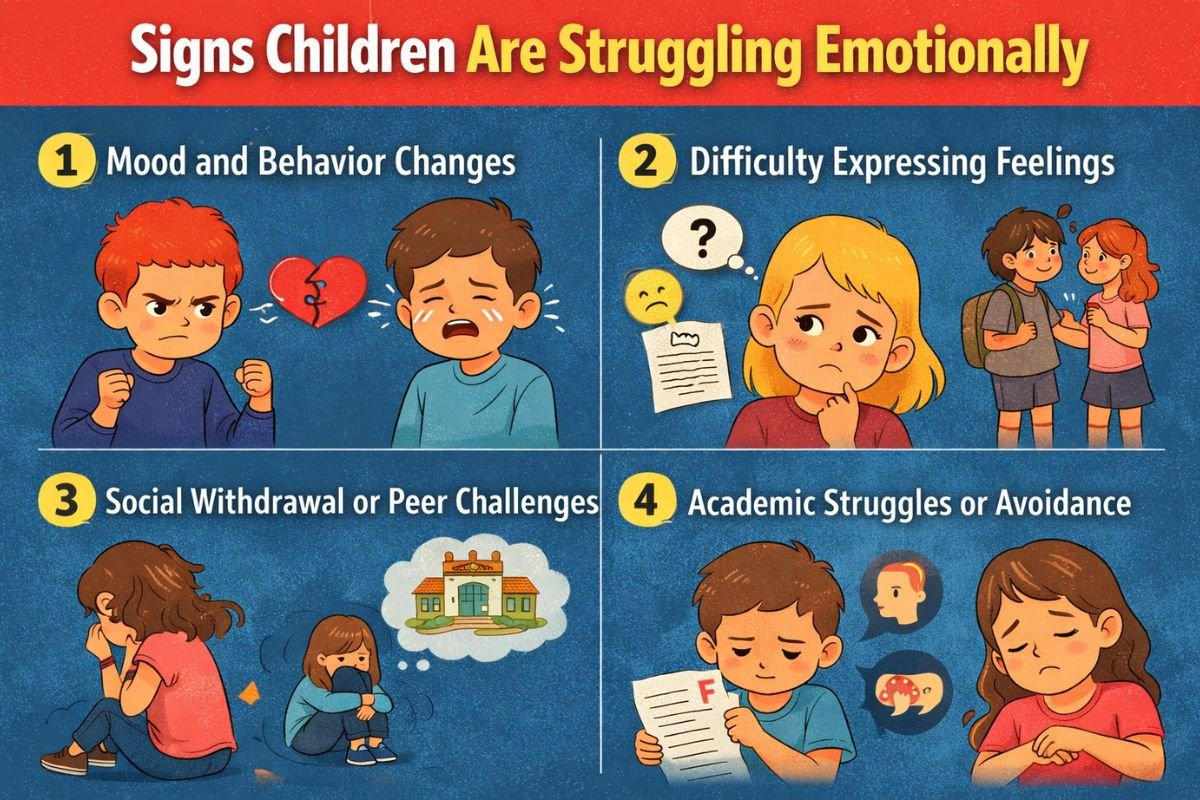
Frequent moves or school changes can affect children in ways that are subtle and easy to miss. Even children who seem fine on the surface may be experiencing stress or emotional strain. Recognizing these signs early helps parents provide the support their children need.
Mood and Behavior Changes
Children may become irritable, unusually quiet, or more withdrawn than usual. Younger children might throw tantrums or become clingy, while older children may seem sullen or distant. Mood swings or frustration over minor issues can also indicate that your child is processing stress internally.
Even children who seem confident can carry hidden anxiety when facing frequent school or home changes. Learning about hidden anxiety children may carry quietly helps parents recognize stress that is not immediately visible.
Difficulty Expressing Feelings
Some children cope by saying “I’m fine” or avoiding conversations altogether. This doesn’t mean they are not struggling it often means they are unsure how to explain their emotions or fear being misunderstood.
Parents can encourage expression by offering gentle opportunities to share feelings, validating emotions without forcing answers, and noticing small cues of stress or sadness.
Social Withdrawal or Peer Challenges
Changing schools frequently can make making friends difficult. Children may isolate themselves, avoid group activities, or show reluctance to participate in social situations.
Parents can help by supporting gradual social engagement, encouraging participation in activities they enjoy, and understanding that social anxiety in new environments is a common and temporary response.
Academic Struggles or Avoidance
Transitions to new curricula, teaching methods, or language requirements can be overwhelming. Children may fall behind academically or show reluctance to complete schoolwork, not due to lack of ability but because of stress and adjustment difficulties.
Parents can support academic adaptation by offering help when needed, maintaining patience, and recognizing effort and small achievements to boost confidence.
Physical or Somatic Complaints
Frequent changes can also affect children physically. Complaints like stomachaches, headaches, or fatigue can signal underlying stress. While these symptoms are not always directly related to emotional challenges, they often accompany adjustment difficulties.
Frequent moves and school changes can affect children physically, showing up as headaches, stomachaches, or fatigue. Learning about physical signs of emotional stress in children helps parents identify stress early and offer support.
By observing patterns in mood, behavior, social engagement, academic performance, and physical wellbeing, parents can better understand how frequent moves or school changes are affecting their child. This awareness is the first step toward offering support and creating a stable, nurturing environment.
Parent Reactions That Can Increase Stress
Even caring parents can unintentionally make children feel more anxious or distant during frequent moves or school changes. Understanding these common reactions helps maintain trust and emotional connection.
Pressuring Children to Adjust Quickly
It’s natural to want your child to settle in at a new school or environment. However, pushing them to make friends immediately or excel academically can create unnecessary stress.
Children need time to process changes at their own pace. Pressuring them often leads to withdrawal, frustration, or loss of confidence. Instead, parents can provide encouragement and reassurance while letting children adjust gradually.
Taking Withdrawal Personally
When children become quiet or distant, it’s easy for parents to feel rejected or blame themselves. In reality, emotional distance usually reflects stress or uncertainty, not a lack of love or trust.
Parents who take a step back and respond with calm understanding, rather than reacting emotionally, help children feel safer to open up.
Children often respond with “I don’t know” when asked about emotions, especially during repeated transitions. Recognizing when a child says “I don’t know” about their feelings helps parents respond patiently without pressuring them.
Overreacting Emotionally
Raising voices, showing frustration, or expressing worry in a strong way can unintentionally make children feel responsible for managing your emotions along with their own.
This can deepen their withdrawal or cause them to hide feelings even more. A calm, steady presence reassures children that they don’t have to carry extra emotional weight.
Ignoring Subtle Signs of Stress
Children often give small cues before more obvious signs of struggle appear. Low energy, quiet behavior, irritability, or reluctance to participate in activities are all signals that adaptation is difficult.
Ignoring these subtle signals allows stress to accumulate, making it harder for children to process changes and communicate their needs.
Comparing to Peers or Siblings
Comparing your child to classmates, siblings, or friends can make them feel inadequate. Statements like “Why can’t you make friends like your old school?” or “Look how quickly your sibling adjusted” can increase pressure and anxiety.
Children may respond by withdrawing further, avoiding challenges, or hiding their true feelings. Encouragement without comparison is far more effective.
Reacting Without Offering Support
Sometimes parents notice the stress but respond only with discipline or correction. Children need empathy and understanding first. Ignoring the need for support can make them feel isolated and misunderstood.
Simple gestures like listening, acknowledging emotions, or providing reassurance can reduce stress and build trust.
How Parents Can Support Children Through Frequent Moves
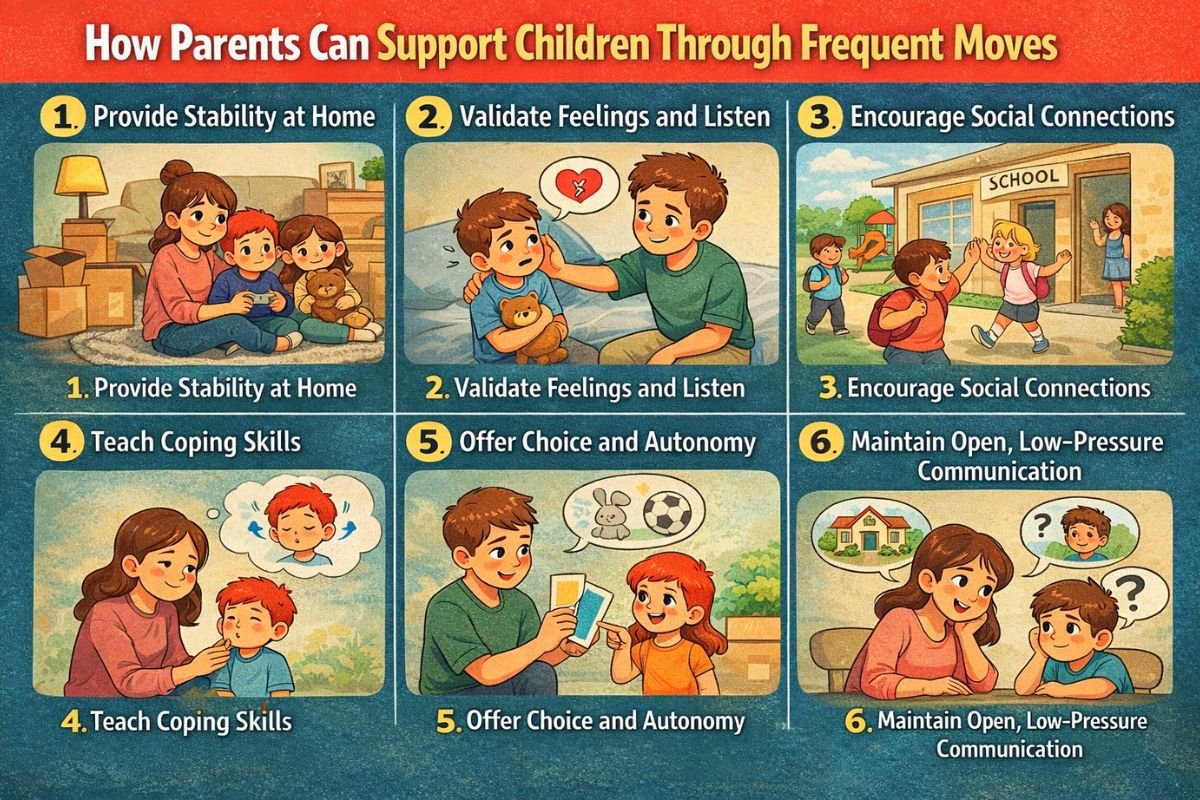
Frequent moves and school changes can be overwhelming for children, but parents can help them feel secure and supported. Small, consistent actions build trust, reduce anxiety, and help children adjust emotionally.
Provide Stability at Home
Even when everything outside changes, routines at home offer a sense of safety. Regular mealtimes, bedtime rituals, or weekly family activities give children something predictable to hold onto. Consistent rules and expectations help them feel secure despite external changes.
Validate Feelings and Listen
Children may experience sadness, frustration, or anxiety without expressing it verbally. Listening actively and acknowledging their feelings shows that you understand and care. Simple phrases like, “I can see this move is hard for you” or “It’s okay to feel nervous about the new school” make children feel seen and validated.
Encourage Social Connections
Making friends in a new environment can be intimidating. Help children find social opportunities that align with their interests, such as clubs, sports, or hobby groups. Small, gradual social interactions build confidence and reduce isolation.
Teach Coping Skills
Children benefit from tools to manage stress and uncertainty. Creative outlets like drawing, journaling, or music can help them process emotions. Encourage children to express themselves safely and model calm responses to change yourself.
Offer Choice and Autonomy
Giving children control over small decisions helps reduce anxiety. Let them choose which activities to join, when to unpack personal items, or how to spend free time. Autonomy helps them feel more in control during frequent changes.
Maintain Open, Low-Pressure Communication
Check-ins don’t have to be long conversations. Casual questions or spending time together without expecting them to talk can provide a safe environment. Over time, these consistent gestures encourage children to share their thoughts and feelings naturally.
By combining stability, validation, social support, coping tools, autonomy, and calm presence, parents can help children navigate frequent moves or school changes without feeling overwhelmed, building resilience and confidence along the way.
When Professional Support Can Help
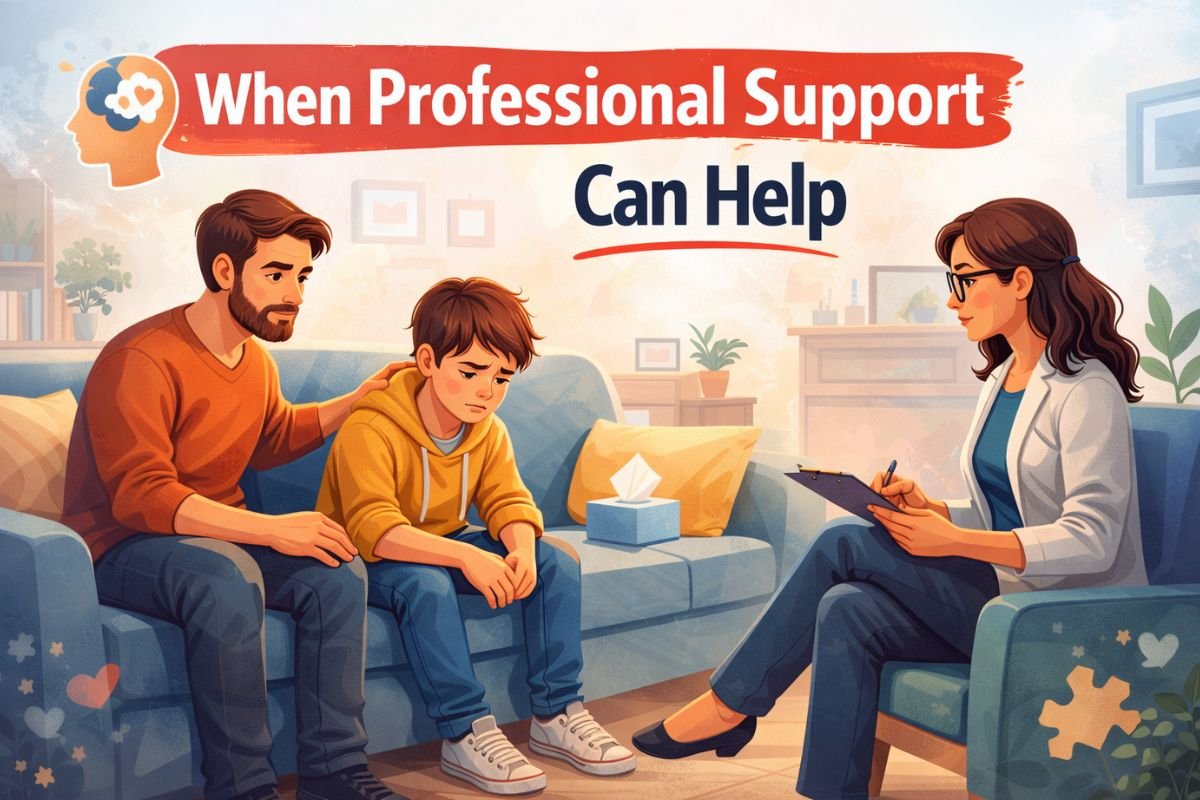
Even with attentive parenting, frequent moves or school changes can leave children feeling stressed, anxious, or emotionally overwhelmed. Professional support provides a neutral space for children to express feelings safely and helps parents respond effectively.
Safe and Neutral Space for Children
Children may feel more comfortable sharing their thoughts and worries outside the family. In a neutral setting, such as a counselor’s office or an online session, they can talk freely about the stress of new schools, friendships, or environments without fear of judgment.
This safe space allows them to process emotions like anxiety, sadness, or uncertainty in a structured and supportive way. Over time, it can make children feel more confident and open when discussing feelings at home.
Guidance for Parents
Professional support is not only for children; it helps parents understand how to respond effectively. Parents can learn:
- How to recognize subtle signs of stress or withdrawal
- Strategies to respond calmly without pressuring or overreacting
- Ways to maintain routines and emotional support during transitions
- Techniques to foster resilience and connection
This guidance reduces uncertainty and helps parents avoid unintentional reactions that might increase stress or distance.
When to Consider Professional Support
Parents might consider seeking help if:
- Emotional distance or withdrawal persists across multiple moves or school changes
- Children show consistent mood changes, irritability, or anxiety
- Parents feel unsure how to support their child effectively
Many parents find online counselling for children and teens helpful. It provides a safe space for children to express themselves while giving parents guidance to support them through transitions.
Final Thought
Frequent moves and school changes can be challenging for children, even in loving homes. Emotional struggles such as anxiety, withdrawal, or mood swings are often their way of coping with constant change. These behaviors are signals, not signs of rebellion or lack of love.
Parents can support their children by providing stability at home, validating feelings, maintaining routines, and offering safe opportunities for social connection. Small, consistent actions like listening without judgment, encouraging hobbies, and allowing choice and autonomy help children feel secure and understood.
Recognizing patterns in mood, behavior, and social interaction is more helpful than reacting to single incidents. With patience, empathy, and calm presence, parents can help children navigate transitions, reduce stress, and build resilience. Over time, children learn to adjust emotionally, maintain connections, and thrive despite the challenges of frequent moves or school changes.
Frequently Asked Questions
1. How do frequent moves affect children emotionally?
Moving often can create stress, anxiety, and feelings of instability. Children may withdraw, act moody, or struggle with school and friendships as they adjust to new environments.
2. Is it normal for children to be anxious after every move?
Yes, some stress and anxiety are normal. It becomes concerning when withdrawal, irritability, or behavioral changes persist over weeks or months.
3. How can I tell if my child is struggling or just being shy?
Look for patterns across different areas home, school, and social situations. Persistent mood changes, difficulty making friends, or avoidance of activities indicate deeper emotional strain.
4. My child says “I’m fine,” but I can tell they are stressed. What should I do?
Avoid pressuring them for answers. Offer a calm presence, gentle listening, and opportunities for expression through words, play, or creative activities.
5. Can frequent school changes affect academic performance?
Yes. Adjusting to new curricula, teachers, and language requirements can be challenging. Children may need extra support to catch up without feeling pressured.
6. How can parents reduce stress during transitions?
Maintaining routines, validating emotions, providing social opportunities, and encouraging autonomy help children feel secure and manage change better.
7. What are signs that emotional challenges are serious?
Persistent withdrawal, mood swings, loss of interest in activities, physical complaints like headaches or stomachaches, and repeated avoidance of social or academic tasks can indicate deeper issues.
8. How can parents help children make friends after a move?
Encourage participation in activities they enjoy, introduce them to peers gradually, and create opportunities for small social interactions. Patience and support are key.
9. Can creative outlets help children cope with frequent moves?
Yes. Journaling, drawing, music, or play can provide a safe way for children to express and process emotions, reducing stress and supporting adjustment.
10. When should parents consider professional support?
If emotional distance, anxiety, or behavioral challenges persist and interfere with daily life, professional support, such as child counseling or online sessions, can provide guidance and safe space for children to share their feelings.