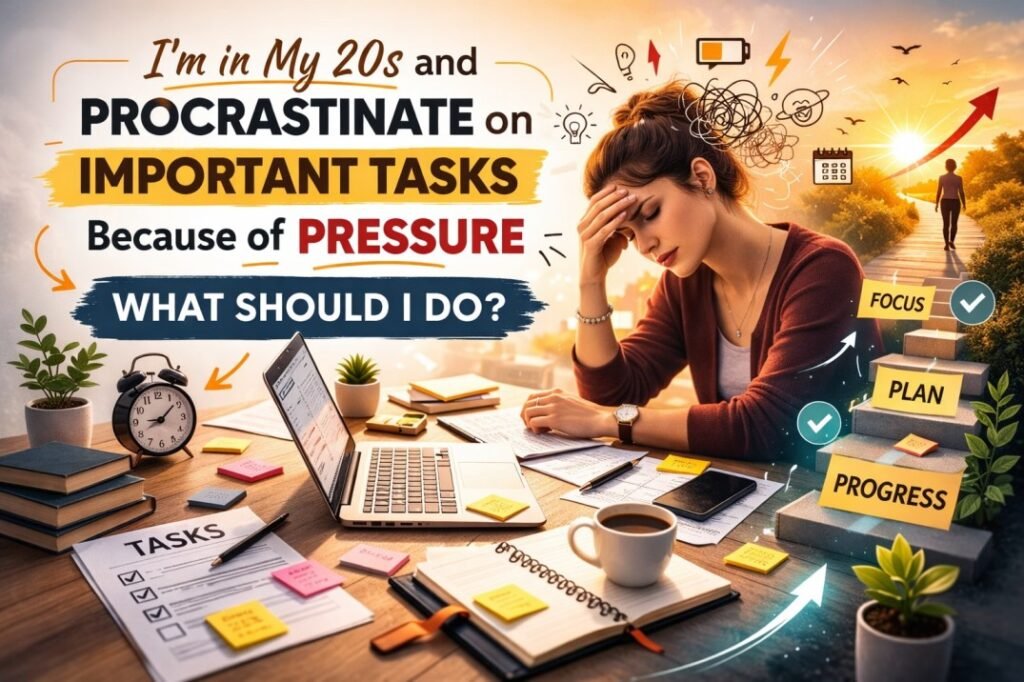
If you mostly delay important tasks, not small or easy ones, it can feel very confusing. You may stay busy all day doing little things, helping others, or scrolling, while the one task that truly matters remains undone. It’s not that you don’t care. In fact, you may care too much.
For many people in their 20s, pressure does not motivate; it freezes them. When a task feels tied to your future or your worth, starting can feel scary. Thoughts like “What if I fail?” “What if I can’t keep this up?” “What if people expect more from me?” can make avoidance feel safer than trying.
You may also get stuck in a painful cycle. You delay the task, then feel ashamed for delaying it. You rush at the last minute or do the bare minimum, then feel guilty and stressed. Sometimes you become very disciplined for a while, but soon the pressure builds and you crash again.
If this sounds like you, it does not mean you are lazy or weak. Many capable young adults struggle with pressure-based procrastination, especially if they learned to link approval with performance. Doing well can even feel scary, because success often brings higher expectations.
The good news is that this can change. You don’t need more pressure or harsh self-talk. You need a way to work that feels safe and steady. In this article, you’ll learn why pressure makes important tasks hard to start, and how to become consistent without feeling overwhelmed, guilty, or trapped.
Why Procrastination Is So Common in Your Mid-20s (Especially for Women)
Your mid-20s can feel like a time when everyone expects big decisions from you, even if you’re still figuring things out. You may feel pressure to get your career, finances, and personal life “on track” all at once.
Many women at this age face real, everyday worries:
- Career confusion – You might be in a job with low growth, poor pay, or burnout, but changing paths feels risky. What if you choose wrong or fall behind?
- Financial pressure – Wanting independence while dealing with rising expenses can feel stressful.
- Comparison with others – Friends getting promotions, moving abroad, or reaching milestones can make you question your own progress.
- Marriage and relationship pressure – Family or society may expect you to settle down soon, even if you’re unsure.
- Fear of career disruption after marriage – Some women worry they may need to relocate, leave their job, or restart their career later.
- Fear of falling behind – It can feel like everyone else has a plan except you.
Because of all this, important tasks don’t feel simple. They can feel like decisions that will shape your entire future. When the pressure feels that high, it’s natural to freeze or delay, even if you truly want to move forward.
Signs Your Procrastination Is Driven by Pressure, Not Laziness
If you were truly lazy, you wouldn’t care. But pressure-based procrastination usually shows up in very specific ways. You can work hard, just not when the stakes feel too high.
You may notice these patterns:
- You finish small or low-pressure tasks easily
- You avoid work that could truly change your future
- Praise makes you tense because expectations go up
- You perform well in last-minute crises but feel exhausted afterward
- You feel guilty even when you are resting
- You do “just enough” to avoid failure, not your full potential
- You overthink so much that starting feels overwhelming
- You worry a lot about disappointing people
- Your productivity comes in intense bursts, then drops suddenly
If several of these sound familiar, your problem is likely not laziness. It’s pressure overload. When something feels too important, your brain may freeze or delay to protect you from stress, failure, or judgment.
How to Stop Procrastinating and Start Finishing Work on Time Without Feeling Pressure or Guilt
If pressure is what makes you procrastinate, then adding more pressure will not fix it. Many people try to force discipline with harsh self-talk, strict schedules, or fear, but that usually works only for a short time before exhaustion or avoidance returns.
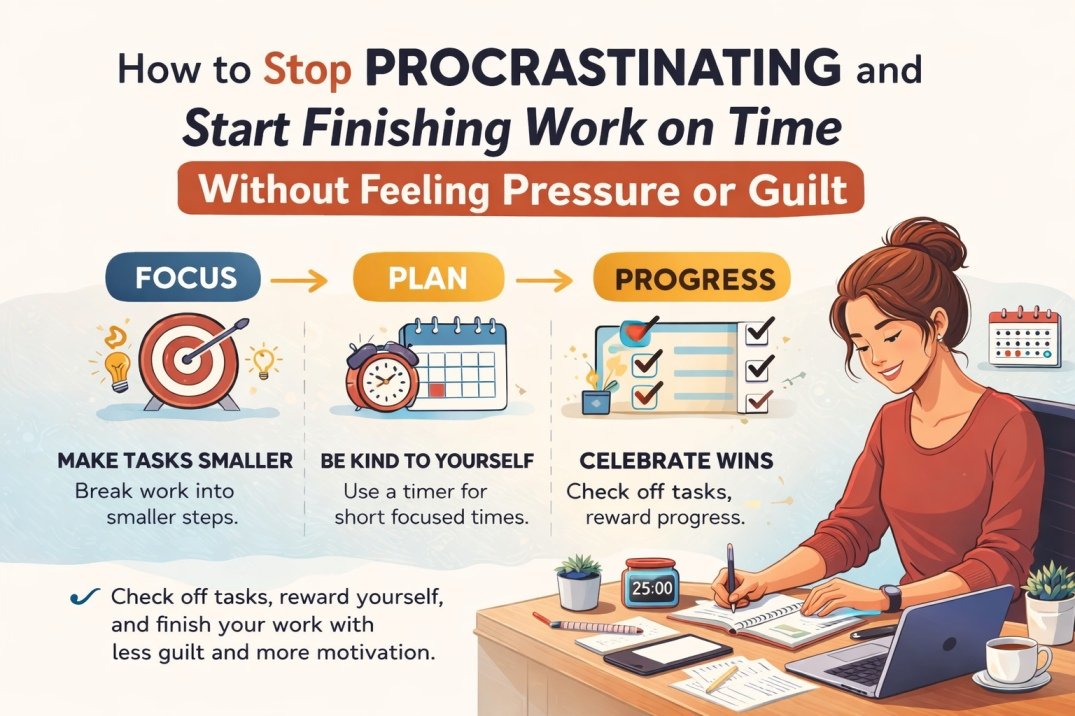
To become consistent, you don’t need to push yourself harder. You need to make working feel safer, lighter, and more manageable. This means changing not just your habits, but also your thinking patterns, environment, and daily routine.
Below are practical ways to reduce pressure while still getting important things done.
Understand What’s Really Driving Your Avoidance
If you mainly delay important tasks, the issue is usually not laziness, it’s pressure. The work itself isn’t the problem. It’s what the work represents.
- Fear of higher expectations if you do well
- Self-worth tied to performance
- Perfectionism that makes starting feel risky
- Worry that success will bring more responsibility
- Anxiety about maintaining results
- Stress response that causes freeze or avoidance
When something feels too important, your brain may shut down to protect you from overwhelm.
👉 You’re not sabotaging yourself. Your brain is trying to protect you from pressure.
Lower Internal Pressure Without Lowering Your Goals
You don’t have to give up your ambitions. You just need to remove the pressure that makes starting feel scary.
- Separate your work from your self-worth
- Decide what “good enough” looks like before you begin
- Avoid all-or-nothing thinking (perfect or useless)
- Accept that some days will be more productive than others
- Focus on steady progress, not flawless results
Lower pressure makes it easier to start and starting is what creates consistency.
Make Starting Safe and Manageable
Most resistance happens before you begin. The goal is to make starting feel small and safe, not overwhelming.
- Use micro-tasks (work for just 5–10 minutes)
- Focus on “start,” not “finish”
- Break work into small steps you can stop anytime
- Track small progress so you can see movement
- Remove barriers (keep materials ready, reduce distractions)
Once you start, the pressure usually drops and momentum builds naturally.
Build Gentle, Sustainable Discipline Instead of Intense Bursts
Working in extreme bursts may feel productive at first, but it often leads to exhaustion and long crashes. This cycle makes consistency hard to maintain.
Instead, aim for discipline that you can repeat every day:
- Use short, manageable work sessions
- Create simple, predictable routines
- Work at roughly the same time each day
- Set realistic expectations for what you can sustain
- Stop before you are completely exhausted
Steady effort may feel slow, but it prevents burnout and helps you stay consistent long-term.
Change Your Relationship With Expectations
Success does not have to lock you into higher and higher demands. You are allowed to adjust what you can handle.
- Not every success has to become your new normal
- You can review or renegotiate commitments
- Saying no protects your time and energy
- Responsibility does not have to keep increasing
Healthy limits make it easier to perform well without feeling trapped or overwhelmed.
Replace Self-Criticism With Constructive Self-Guidance
Harsh self-talk may seem motivating, but it usually increases stress and avoidance. Shame makes the task feel heavier, not easier.
Try guiding yourself in a calmer, more supportive way:
- Use neutral self-talk instead of insults or panic
- Speak to yourself the way you would encourage a friend
- Acknowledge effort, not just results
- Treat yourself like a capable adult, not a failing student
Supportive guidance reduces fear, making it easier to start and keep going.
Make Rest Guilt-Free and Strategic
Rest is not a reward you earn after exhaustion. It is what keeps you consistent. Without enough recovery, pressure builds until avoidance or burnout takes over.
Think of rest as part of productivity:
- It prevents crash-and-burn cycles
- It restores focus and mental energy
- It lowers stress, making tasks feel less overwhelming
- It improves your ability to work well over time
When you rest on purpose, you return to work clearer, calmer, and more capable.
Lifestyle Changes That Support Consistency
Small daily changes can lower background stress and make it easier to follow through on important work.
Daily Life
- Keep a stable sleep schedule so your energy is more predictable
- Move your body regularly to release tension
- Plan your day with structure, but leave room for flexibility
- Reduce constant phone use and digital overload
Work Style
- Break big projects into smaller, doable parts
- Avoid saying yes to too many commitments
- Add buffer time so delays don’t create panic
- Focus on one task at a time instead of multitasking
Emotional Environment
- Spend time with people who support rather than pressure you
- Limit exposure to comparison triggers (especially online)
- Practise setting boundaries to protect your energy
A calmer environment makes consistent action feel possible instead of overwhelming.
Practical Techniques You Can Use Immediately
These simple tools can help you take action even when you feel pressure or resistance.
- Minimum Viable Effort – Decide the smallest useful action you can complete today and count that as success
- Flexible time-blocking – Set a work window, but allow breaks or adjustments instead of forcing nonstop focus
- Two-list system (Must / Optional) – Separate essential tasks from extra ones to reduce overwhelm
- Pressure check-in – Pause before starting and notice your stress level; calm yourself first if needed
- Reward effort, not just results – Acknowledge showing up, even if progress is small
Small, doable actions build momentum and confidence over time.
Why Discipline Often Works for a While, Then Falls Apart
Many women can stay highly disciplined for a few weeks or months, then suddenly lose energy and motivation. This is often not because they lack willpower, but because they are juggling too many demands at once.
Today, you may be expected to perform at work, stay socially active, support family, maintain relationships, and still appear relaxed and happy. Your environment may pull you away from routine rather than support it.
A common pattern looks like this:
- Strict effort phase – You push yourself hard to improve everything quickly
- Rising expectations – High performance starts to feel like the new normal
- External pressures – Late meetings, office culture, social events, parties, or friends encouraging a carefree lifestyle disrupt your schedule
- Family responsibilities and future worries – Ongoing expectations and emotional load drain your energy
- Burnout and fatigue – Stress builds until even simple tasks feel difficult
- Avoidance and loss of momentum – You struggle to continue at the same pace
- Guilt and restart – After resting, you feel bad and try to push hard again
Discipline is hard to maintain when your time, energy, and attention are constantly pulled in different directions.
👉 Sustainable consistency requires sustainable pressure levels. When your pace and environment support your goals, you don’t need to burn out just to keep going.
When to Consider Professional Support
Self-help strategies can make a big difference, but sometimes procrastination is linked to deeper stress, anxiety, or burnout that is hard to manage alone.
You may benefit from professional support if:
- Avoidance is affecting your work, studies, or daily functioning
- You feel constantly anxious, overwhelmed, or exhausted
- You suspect ADHD, depression, or severe burnout
- Shame and self-criticism feel deeply ingrained
- You cannot regulate pressure even when you try
Working with a qualified psychologist can help you understand the root causes, build healthier coping skills, and create realistic routines that suit your life.
If you prefer privacy and flexibility, you can also consult an online clinical psychologist at LeapHope, where trained professionals provide supportive, confidential guidance from home. You don’t have to struggle alone, and getting help early can prevent long-term stress and burnout.
Final Thoughts
Procrastinating on important tasks does not mean you are lazy. Often, your mind is trying to protect you from stress or overwhelming expectations.
Consistency does not come from force. It grows from stability, realistic goals, and self-trust. You can be productive without exhausting yourself or losing your freedom.
Change also does not have to be fast. Small, steady steps are enough. You can move forward at your own pace and start again without shame.
With the right approach, discipline can feel calm and sustainable, not stressful.
FAQs
Why do I procrastinate only on important tasks but not on easy daily tasks?
You procrastinate on important tasks because they carry higher pressure and risk. Important tasks affect your future, reputation, or self-worth, so your brain treats them as threatening. Easy daily tasks feel safe, so you can complete them without anxiety.
How can I stay consistent on important work without burning out or losing motivation?
You can stay consistent on important work by using small, steady effort instead of intense bursts. Short work sessions, realistic goals, and regular rest prevent exhaustion and help you maintain motivation over time.
Is my procrastination caused by anxiety, perfectionism, or fear of failure?
Your procrastination can be caused by anxiety, perfectionism, and fear of failure together. High standards make starting feel risky, anxiety increases pressure, and fear of failure makes avoidance feel safer than trying.
Why does success or doing well make me feel more pressure instead of relief?
Success can make you feel more pressure because it raises expectations. You may worry about maintaining the same performance or disappointing others in the future, so new tasks feel heavier instead of easier.
How can I stop feeling guilty when I rest or take breaks from work?
You can stop feeling guilty when you rest by recognising that rest supports productivity. Breaks reduce stress, restore focus, and prevent burnout, making it easier to complete important tasks later.
Can therapy help if I procrastinate because of pressure and high expectations?
Therapy can help if you procrastinate because of pressure and high expectations. A therapist can help you manage anxiety, reduce self-criticism, build healthier coping skills, and create routines that feel sustainable.