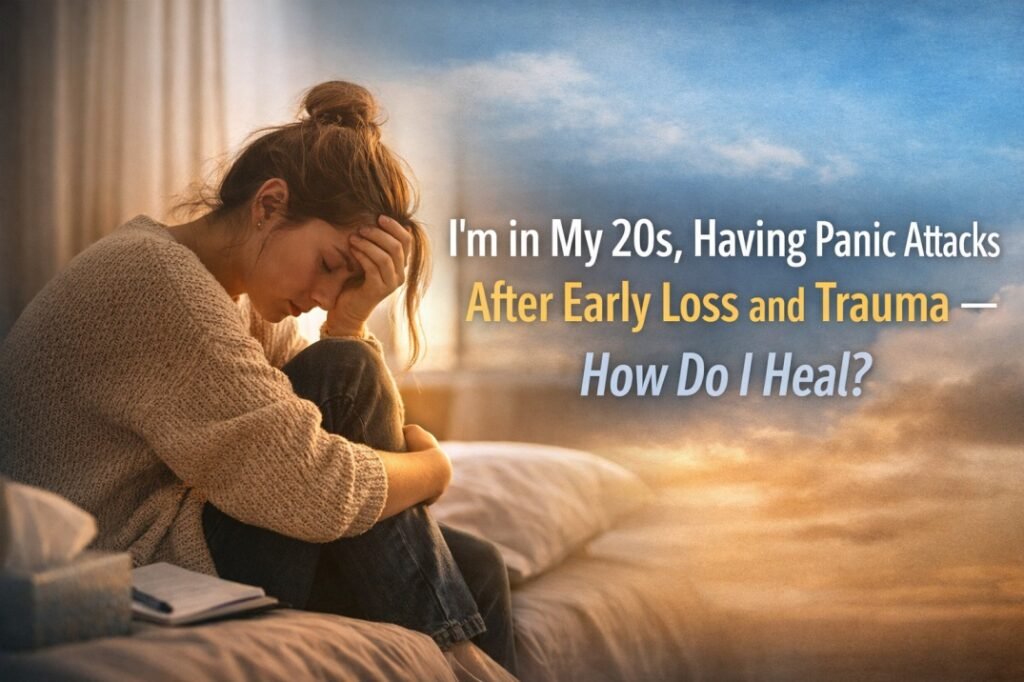
A 25-year-old girl came to counselling at LeapHope and said, “I’ve been having panic attacks. I lost a family member when I was young, went through some other difficult things too, and now I feel like everything is hitting me at once. I don’t feel like myself anymore.”
Many people in their 20s say similar things. One woman said, “I’m not even a very stressed person, but I’ve had several panic attacks in the past few months with no clear trigger.” Another said, “I constantly feel like I might faint from stress. What do I do?” A young man shared, “I’ve had anxiety for years, but why am I suddenly having frequent panic attacks now?”
Panic attacks at this age often don’t have one simple cause. Past loss, difficult experiences, long-term stress, or major life changes can all play a role. But whatever the reason, it can make you feel unsafe, exhausted, and unlike yourself.
In this article, a psychologist explains why panic attacks can begin in your 20s, why they can appear even when nothing is obviously wrong, and what can help you feel calmer and more in control again.
How Panic Attacks Can Feel in Your 20s
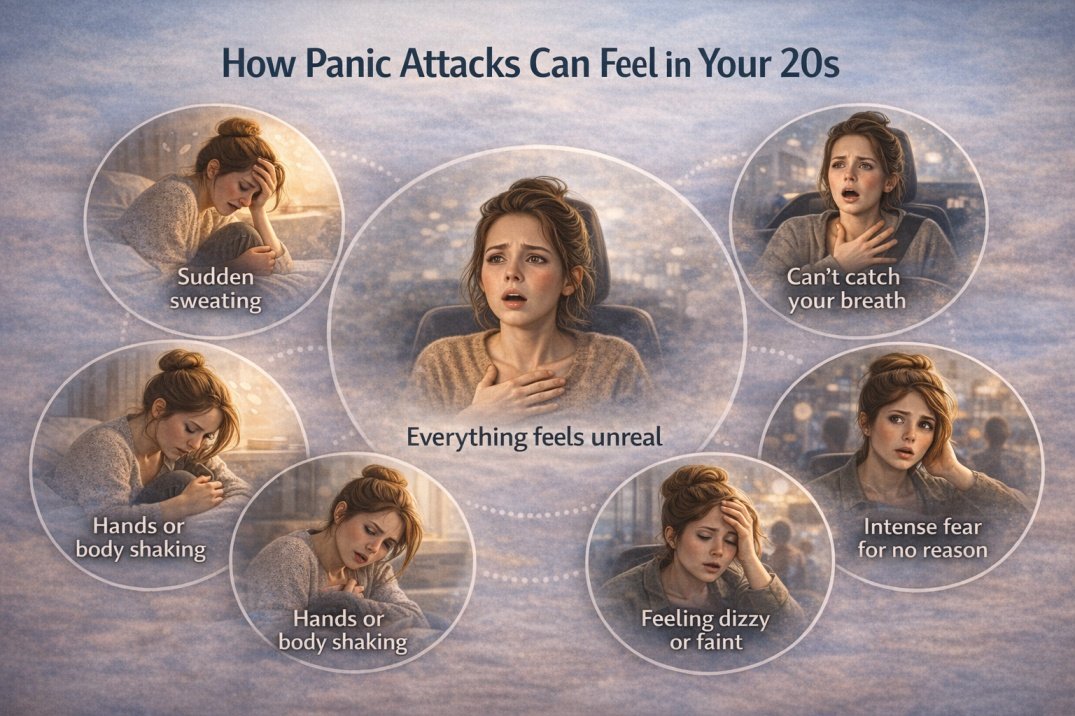
A panic attack doesn’t always look dramatic from the outside, but inside it can feel terrifying. Many people describe a sudden rush in the body, like a wave of adrenaline hitting for no clear reason. Your heart may start racing, your chest can feel tight, and you might feel dizzy, shaky, or sick.
Some people feel an intense fear that something terrible is about to happen, even though they don’t know what. Others worry they might faint, lose control, or even die. It can also feel unreal, like you’re detached from your body or the world around you.
Panic can happen at any time, during a normal day, while relaxing, or even in the middle of the night. Many people wake up suddenly in fear without understanding why. Most panic attacks peak within a few minutes and fade within about 10 to 30 minutes, but the after-effects can last much longer. You may feel shaky, weak, drained, or on edge for hours afterward.
What makes panic attacks especially confusing in your 20s is that they often seem to come out of nowhere, even when life looks normal on the surface.
Why Panic Attacks Can Start in Your 20s, Especially After Stress, Trauma, or Earlier Loss
Many people are confused because they handled difficult things earlier in life, yet panic attacks only start in their 20s. Your body can stay in “coping mode” for years and react later when the pressure builds up or life changes.
In this stage of life, responsibilities usually increase. You may be working, studying, living independently, managing relationships, or worrying about the future. Even positive changes can feel stressful. Over time, this constant pressure can overwhelm your system.
Earlier difficult experiences, loss, or long periods of stress can also play a role for some people. Some women may have gone through deeply distressing experiences, including violations of personal boundaries, harassment, or unsafe relationships, and tried to move on without fully processing what happened. Others may have faced emotional neglect, instability at home, or long-term insecurity.
Some young men also carry heavy burdens from an early age. They may have experienced harsh expectations, disrespect at home, pressure to provide financially, or responsibilities far beyond what they were prepared for. Many learn to suppress emotions and “push through,” which can cause stress to build silently over time.
Major life transitions such as starting a career, moving away from home, relationship changes, heartbreak, or loneliness can make you feel more vulnerable. Burnout and lack of support can add to this, keeping your body on high alert.
Most importantly, panic attacks usually don’t come from one single cause. They often develop from a mix of past strain and present pressure, not just one event.
How Panic Attacks Can Affect Your Emotions, Confidence, and Sense of Self
Repeated panic attacks don’t just happen in private; they start affecting how you move through everyday life. In your 20s, you may be building a career, maintaining friendships, dating, or trying to appear “put together.” Panic can make even normal situations feel unpredictable, leaving you feeling more vulnerable, less confident, and unsure if you can rely on yourself.
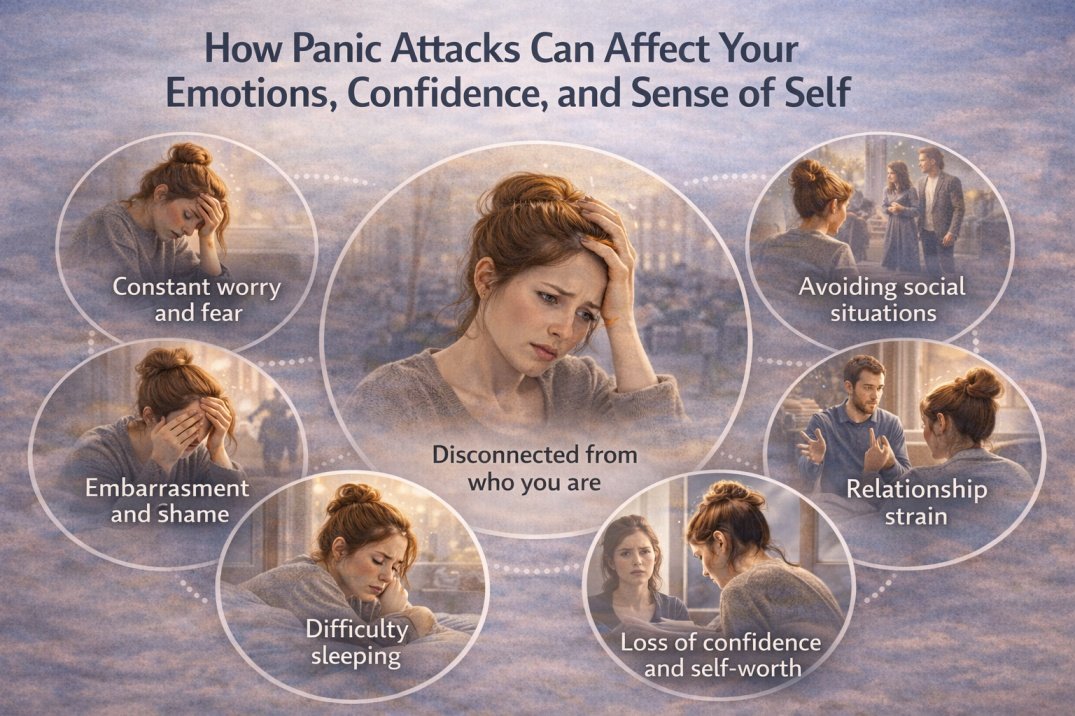
Many people describe a quiet fear of breaking down in public or being seen as unstable, which can make them withdraw even more.
• You sit in meetings worrying you might panic and everyone will notice
• Commuting alone or being stuck in traffic feels unsettling
• Social gatherings feel draining because you are monitoring yourself the whole time
• You choose seats near exits in cafés, theatres, or events “just in case”
• Dating feels stressful because you don’t want to panic in front of someone new
• You cancel plans with friends because you don’t trust how you will feel that day
• Crowded places like malls, parties, or concerts become uncomfortable
• Important moments like presentations or interviews feel harder than before
• Staying overnight away from home or familiar spaces feels risky
• You feel embarrassed having to leave early or explain why you said no
• You compare yourself to friends who seem confident and carefree
• You worry that people will see you as weak or “not coping”
• You start wondering if this anxious version of you is permanent
Why You May Have Panic Attacks Even When Nothing Is Wrong Right Now
Many girls in their 20s say the same thing: “Everything in my life is actually okay, so why am I still having panic attacks?” This can feel especially scary because there is no clear problem to point to.
Panic often shows up during quiet moments at night, while resting, or when you’re alone because your mind is no longer distracted. If stressful things happened in the past at home, in school, college, relationships, or work, your body can still react in similar situations even when life is calm now.
Small triggers can also set it off. A video, a reel, a quote, a memory, or even a random thought can activate your stress response without you realising it. Sometimes you don’t even remember what started it.
So you can feel anxious or panicked even when everything seems fine on the outside. It doesn’t mean you are in danger or losing control; it means your body is reacting to stored stress, not current reality.
How To Calm Your Body, Mind, and Nervous System – A Psychologist’s Advice
Stop Interpreting Panic as a Sign You’re “Not Coping”
Many people in their 20s feel pressure to be independent, capable, and emotionally stable. When panic attacks start, it can feel like proof that you are failing or “falling behind.” This belief itself increases anxiety. Panic is not a character flaw; it is a stress response.
Try to separate what is happening from what you think it means. A racing heart does not mean you are weak. Feeling overwhelmed does not mean you cannot handle adulthood.
Remind yourself that your body is reacting to strain, not exposing your inadequacy. This shift reduces shame, which is one of the biggest drivers of ongoing panic.
Create Predictability in an Otherwise Uncertain Phase
Your mid-20s often come with unstable schedules, changing jobs, irregular work hours, social commitments, travel, or late nights. The nervous system settles when life has rhythm.
Aim for consistent basics: wake time, meals, movement, and sleep window. Even small anchors, like morning sunlight, a regular breakfast, or a nightly wind-down routine, signal safety to the body.
Predictability does not make life boring; it makes your system less reactive so you can handle challenges without tipping into panic.
Reduce Constant Overload From Work and Digital Life
Many young professionals are “on” all day, with emails, deadlines, performance pressure, notifications, and social comparison online. Your brain rarely gets true downtime. Scrolling is not rest; it often keeps your mind stimulated and emotionally activated.
Build real recovery into your day. Short breaks without screens, stepping outside, stretching, or quiet time can reset your nervous system. Limit heavy content at night, especially news, distressing stories, or emotionally intense videos, which can trigger anxiety before sleep.
Make Your Living Space Feel Safe and Calming
If you live alone, your home environment matters more than you realise. A harsh, cluttered, or overstimulating space can keep your body alert. A calm space helps your system power down.
Soft lighting in the evening, a consistent bedtime routine, comfortable bedding, and reducing noise or bright screens before sleep can lower nighttime panic risk.
Some people find comfort in predictable sounds (fan, white noise) or small rituals like tea or reading. The goal is to teach your body that nighttime is for rest, not danger.
Rebuild Confidence in Public Situations Gradually
After panic attacks, many women start avoiding places where escape might feel difficult, traffic, meetings, public transport, crowded venues. Avoidance brings short-term relief but long-term fear.
Start small. Go out for brief, manageable trips: a short walk, a quick errand, a familiar café. Stay long enough to realise you can cope, even if discomfort rises. Confidence returns through experience, not waiting to feel 100% calm first. Each successful outing rewires your brain’s expectation of danger.
Approach Dating and Relationships at Your Own Pace
Dating in your mid-20s can be emotionally intense, with uncertainty, vulnerability, fear of judgment, and pressure to appear “normal.” If your system is already overloaded, forcing yourself into high-stress interactions can worsen panic.
Choose situations that feel safe and respectful. It is okay to take things slowly, suggest low-pressure settings, or pause dating while you stabilise. A supportive partner reduces anxiety; an unpredictable one increases it.
Protect your emotional energy as you would protect your physical health.
Stay Connected Even When You Want to Withdraw
Panic often creates the urge to isolate, especially if you feel embarrassed or misunderstood. Unfortunately, isolation amplifies anxiety. Humans regulate emotions through safe connection.
You do not need large social gatherings. Gentle contact is enough, texting a friend, brief calls, sitting with family, or spending time with people who do not demand explanations. Feeling “not alone” reduces the brain’s threat response significantly.
Learn to Calm Your Body Before Trying to Control Your Thoughts
During panic, logical thinking is difficult because your body is in survival mode. Trying to reason your way out can increase frustration. Physical calming works faster.
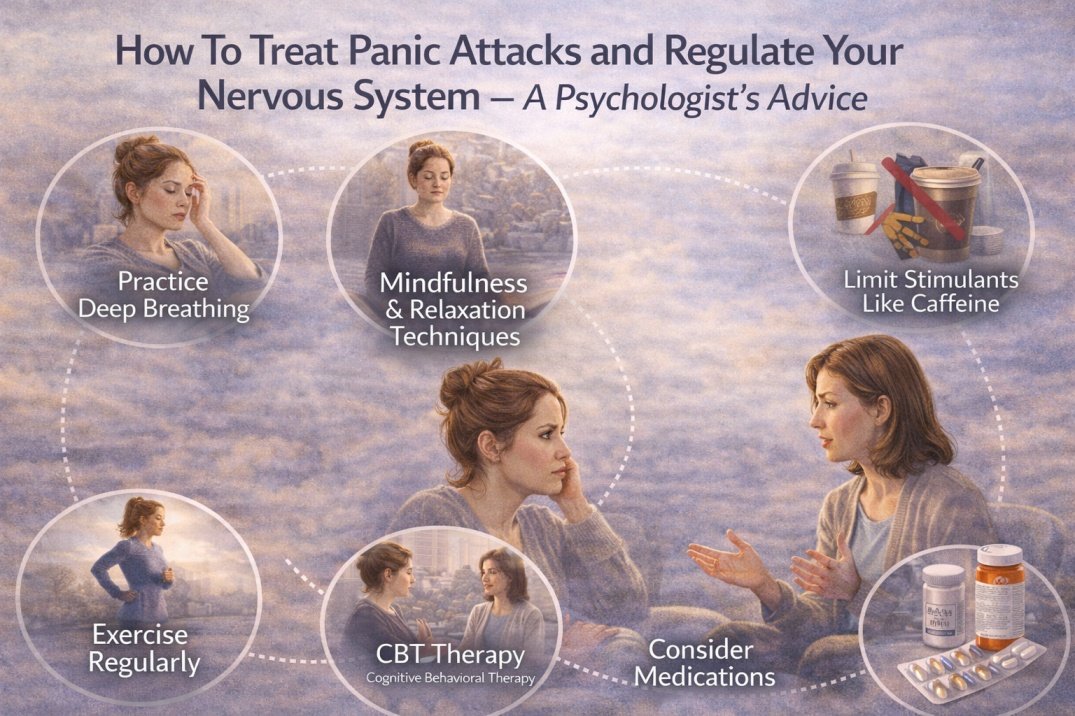
Slow breathing, grounding through the senses, holding something cold, or gentle movement can signal safety to your nervous system. Once your body settles, your thoughts naturally become clearer. Body first, mind second.
Consider Professional Support as a Strength, Not a Failure
Therapy for panic attacks is practical, not just talking. A clinical psychologist helps you understand why panic happens and teaches skills to regain control.
You may learn Cognitive Behavioural Therapy (CBT) techniques to reduce catastrophic thinking, exposure methods to overcome avoidance, and grounding or breathing skills to calm the body during attacks. If past stress or trauma plays a role, trauma-informed approaches can help your nervous system process it safely.
Online sessions with a qualified clinical psychologist at LeapHope can be a comfortable option if travelling feels difficult or you prefer privacy. You receive structured, evidence-based support from your own home.
Seeking help is not a sign of weakness. It is often the fastest way to reduce panic, rebuild confidence, and return to a stable routine.
When to Seek Professional Help
Consider professional help if panic attacks are frequent, worsening, or not improving on their own. You do not have to wait until things become severe; early support can stop the problem from spreading into more areas of your life.
It is especially important to seek help if you are avoiding daily activities, missing work or classes, withdrawing from people, or feeling constantly distressed. Support is also needed if panic comes with ongoing sadness, hopelessness, or major sleep problems.
Effective treatments are available, and many people improve significantly with the right therapy. Seeking help is a practical step toward feeling stable and in control again.
Final Thoughts – You Can Feel Like Yourself Again
Panic attacks can make you feel scared, exhausted, and unlike yourself, but they are common and very treatable. Many people go through this phase in their 20s and recover fully with time, understanding, and the right support.
Improvement usually happens gradually, not overnight. You may notice small changes first, fewer attacks, less intensity, quicker recovery, or more confidence going about your day.
Most importantly, this does not mean your life is over or permanently damaged. Your body and mind can stabilise again. With patience and consistent care, it is possible to feel calm, in control, and like yourself again.
FAQs
Can panic attacks start suddenly in your 20s?
Panic attacks can start suddenly in your 20s even if you never had them before. This stage of life often brings major changes, pressure, and uncertainty, which can overload your stress system. For some people, earlier strain or unresolved stress shows up later as panic, even when life seems manageable on the surface.
Can past trauma cause panic attacks later in life?
Yes, past trauma can cause panic attacks later in life because the body remembers stress even after the event is over. You may feel fine for years and then develop panic when new pressure, reminders, or major transitions occur. This does not mean you are weak, it means your nervous system is reacting to stored stress.
Are panic attacks dangerous?
Panic attacks are not dangerous, although they feel frightening. Symptoms like a racing heart, dizziness, chest tightness, or shortness of breath come from your body’s fight-or-flight response, not from actual harm. Panic attacks cannot make you lose control, go crazy, or die, even though it may feel that way in the moment.
Why do panic attacks happen when I’m calm?
Panic attacks can happen when you’re calm because your body is reacting to internal stress signals, not current danger. Quiet moments, resting, sitting alone, or trying to sleep, make you more aware of sensations and thoughts, which can trigger the alarm response. Stored stress, fatigue, or subtle reminders can activate panic even when nothing is wrong right now.
How long does it take to recover from panic attacks?
Recovery from panic attacks varies from person to person, but most people improve with the right support and coping strategies. Some notice relief within weeks, while for others it may take a few months to feel consistently stable. Progress usually happens gradually, with attacks becoming less frequent, less intense, and easier to manage over time.