Last Updated on March 14, 2026
Your child is growing up in a family that moves between countries. They go to new schools, meet different people, and face customs that can feel confusing or unfamiliar. Even though home is loving and stable, you may notice them acting quieter, more irritable, or withdrawn than usual.
They might say they’re fine, but you can sense something is off. It isn’t about rebellion or a lack of love it’s often the stress of adjusting to a new environment, making friends, or figuring out where they belong.
As a parent, it can be hard to know how to help. You may worry if you’re doing something wrong, or feel frustrated that your child isn’t opening up. This article will look at the emotional challenges children in expat families face, what signs to notice, and ways to support them while keeping the connection strong.
Understanding the Emotional Challenges
Children in expat families often face pressures that aren’t always visible. Even in a supportive home, the constant adjustments of new schools, new friends, and different cultural expectations can create emotional stress that shows up in small ways. Understanding these challenges helps parents respond with empathy instead of frustration.
Culture Shock and Adaptation
Moving to a new country or living between cultures can make children feel out of place. They may struggle with language differences, social norms, or even small day-to-day routines that feel unfamiliar. This can lead to confusion about where they fit in and make them pull back emotionally.
Children may appear hesitant, unsure, or overly cautious. They might overcompensate to fit in with peers or become withdrawn when things feel overwhelming. These reactions are normal responses to trying to adapt to a world that feels both exciting and confusing.
Social Isolation and Friendship Struggles
Making friends in a new country can be difficult. Children may feel left out, misunderstood, or unsure how to join social groups. Even if they appear confident at school, they may feel lonely inside.
This social stress can make them quiet at home, as they process feelings of isolation or uncertainty. They might avoid talking about school or friends to protect themselves or even to avoid worrying you.
Academic Pressure in a New System
Adjusting to a new school system can be stressful. Children might need to catch up on lessons, learn in a new language, or adapt to teaching styles that are different from what they’re used to.
The stress of performing academically while trying to fit in socially can be overwhelming. Children may become withdrawn, frustrated, or easily irritated as a result of this pressure.
Family Stress and Relocation Anxiety
Even in a loving home, the family itself can carry stress. Parents may be busy with work, navigating legal or logistical challenges, or managing uncertainty about the future. Children are often aware of this stress and may absorb some of it, which can contribute to emotional distance.
Frequent moves, packing, or leaving familiar friends and surroundings behind can also create anxiety. Children may retreat into themselves as a way of coping with these constant changes.
This section shows that the emotional challenges of expat life are real and multifaceted. They are not caused by poor parenting but by the complexity of living between cultures, adjusting to new environments, and managing multiple pressures at once.
Even confident children can struggle silently, especially in new environments. Learning about hidden anxiety children may carry quietly helps parents understand why children in expat families may appear fine outwardly but feel stressed internally.
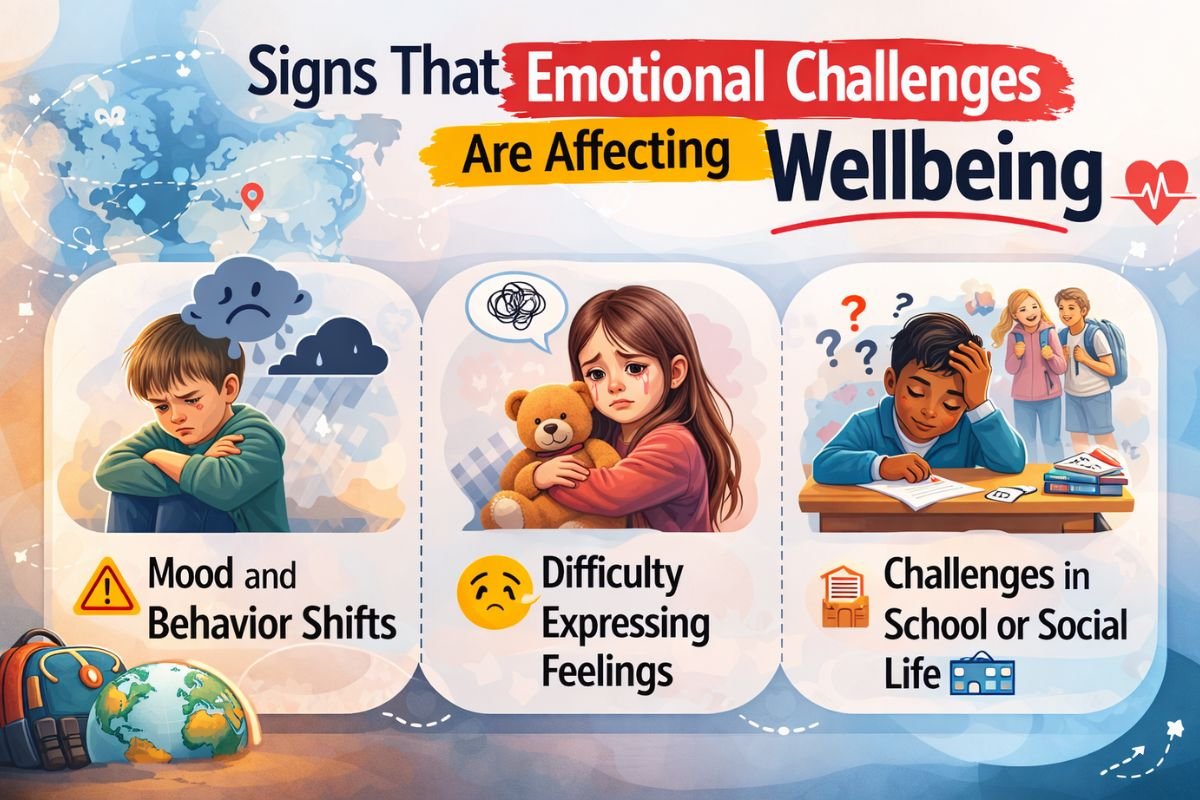
Signs That Emotional Challenges Are Affecting Wellbeing
Children in expat families often cope silently, so emotional struggles can be hard to spot. Even when they seem to adjust outwardly, subtle signs can indicate that stress is affecting their wellbeing.
Mood and Behavior Shifts
You may notice sudden irritability, frequent frustration, or withdrawal from usual activities. Children might seem quieter than usual, avoid interaction with family, or get upset over small things. These mood changes are often a response to the pressure of adjusting to a new environment, school, or culture.
Changes in sleep, appetite, or energy levels can also be signs. Even small shifts over time can indicate that your child is experiencing emotional strain.
Difficulty Expressing Feelings
Children may say “I’m fine” even when they are struggling. They may avoid conversations or isolate themselves because they don’t yet know how to explain their feelings or fear being misunderstood.
This can make it hard for parents to know what’s happening internally. Silence often isn’t defiance it’s a way for children to process emotions without adding stress to the household.
Children often respond with “I don’t know” when adjusting to new cultures or schools. Recognizing when a child says “I don’t know” about their feelings allows parents to respond patiently without pushing, encouraging gradual expression.
Challenges in School or Social Life
Academic performance may drop, or children may hesitate to participate in class or extracurricular activities. Socially, they may avoid making new friends or engaging with peers.
These behaviors can be subtle and sometimes go unnoticed by parents. Watching for patterns, rather than reacting to single incidents, helps identify when emotional challenges are affecting a child’s wellbeing.
Recognizing these signs early allows parents to provide gentle support, empathy, and understanding, helping children navigate the complexities of expat life while maintaining emotional balance.
Expat life can intensify unexpressed emotions. Understanding emotional needs children cannot express helps parents provide support that feels safe, helping children manage stress and build resilience.
Parent Responses That Can Increase Distance
Even in loving homes, parents can unintentionally make children feel more distant. Recognizing common reactions that may backfire helps maintain trust and emotional connection.
Pressuring for Quick Adjustment
It is natural to want your child to adapt quickly to a new school, culture, or routine. Forcing them to adjust too fast, such as insisting they make friends immediately or master a new language, can create stress. Children may feel misunderstood and withdraw further.
Taking Distance Personally
When a child pulls back, it can be easy to think it is a reflection of your parenting or that they do not love you. Most of the time, emotional distance is about the child coping with stress, not about the parent. Viewing it this way helps you respond calmly and avoid escalating tension.
Ignoring Subtle Emotional Cues
Small signs, like less eye contact, quieter voice, or reluctance to participate, may indicate that your child is struggling. Overlooking these signals allows stress to build, making emotional distance more pronounced.
Overreacting Emotionally
Showing visible frustration, guilt, or worry can make children feel responsible for your emotions in addition to their own. This can reinforce withdrawal and reduce their willingness to communicate.
Comparing to Other Children
Comparing your child to peers or siblings, whether in school, socially, or culturally, can create pressure. Children may feel they are failing to meet expectations, which increases emotional distance rather than motivating connection.
Assuming Silence Means Rebellion
Sometimes parents interpret quiet or withdrawn behavior as defiance. In expat situations, this is often not the case. Distance is usually about internal stress, identity, and adaptation rather than intentional defiance.
By being aware of these common missteps and responding with patience, understanding, and consistency, parents can reduce emotional tension and foster a sense of safety. This helps children navigate the challenges of expat life without further increasing emotional distance.
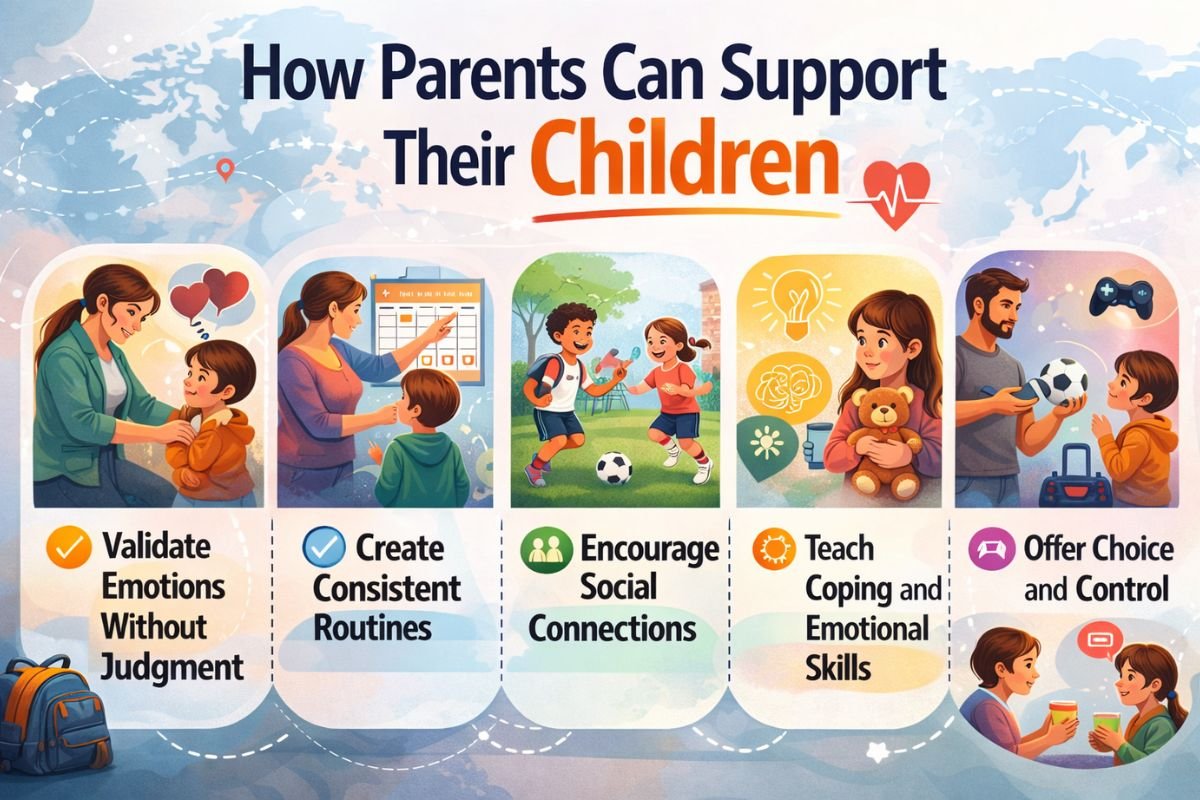
How Parents Can Support Their Children
Supporting children in expat families requires a balance of empathy, stability, and gentle guidance. Small, consistent actions can make children feel safe to express their emotions without pressure.
Validate Emotions Without Judgment
Acknowledge what your child may be feeling without immediately trying to fix it. Simple statements like, “I can see this is hard for you,” or “It’s normal to feel unsure when things change” help children feel understood. Validation shows that their feelings matter and encourages them to open up over time.
Withdrawal, irritability, or frustration may be children’s way of expressing stress in a new environment. Learning how children express emotions through behaviour helps parents interpret signs of distress without misunderstanding their intentions.
Create Consistent Routines
Stability at home provides a sense of security when so much is changing externally. Regular family meals, bedtime rituals, or weekly activities can anchor children and reduce stress from new environments. Consistency reassures them that at least one part of their life remains predictable and safe.
Encourage Social Connections
Help your child build friendships and engage with peers in the new environment. Encourage participation in extracurricular activities, community groups, or online social spaces that align with their interests. Feeling included socially can reduce isolation and improve emotional wellbeing.
Teach Coping and Emotional Skills
Children may struggle to express feelings verbally. Encourage creative outlets like drawing, journaling, music, or play to process emotions. Modeling calm responses to stress and discussing emotions in simple terms helps children learn healthy ways to manage and express their feelings.
Offer Choice and Control
Give your child a sense of control over small decisions, like which activity to join or when to discuss their day. Autonomy can reduce anxiety and build confidence, making them more likely to share feelings voluntarily.
Maintain Open, Low-Pressure Communication
Let your child know you are available without forcing conversation. Casual check-ins, brief comments during shared activities, or simply spending time together without expectation to talk can slowly encourage them to open up.
By combining validation, routine, social support, coping tools, autonomy, and calm presence, parents create a nurturing environment that helps children adjust emotionally to expat life and gradually bridge emotional distance.
When Professional Support Can Help
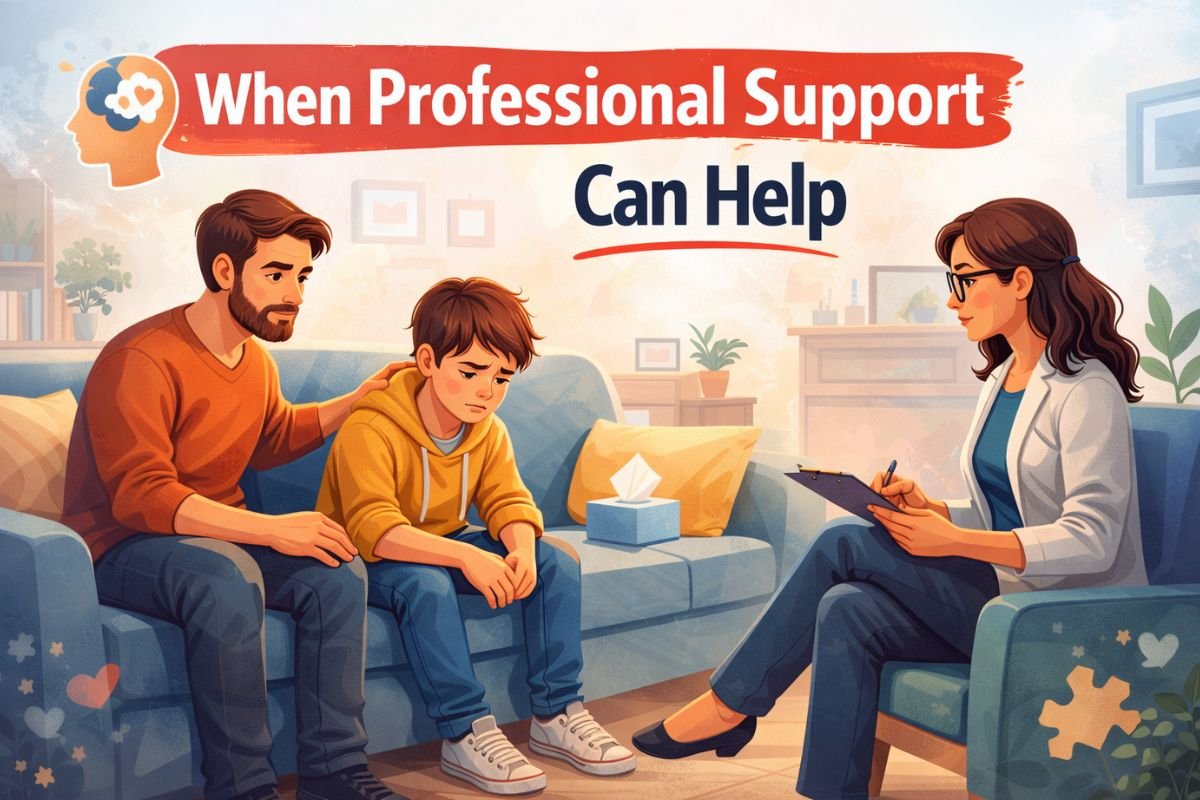
Even with the most attentive parenting, children in expat families may struggle with emotions they cannot fully express. Professional support provides a neutral space where children can explore their feelings safely and parents can gain guidance on responding effectively.
Neutral, Safe Spaces for Children
Children may find it easier to talk to someone outside the family. In a neutral environment, such as a counselor’s office or an online session, they can share their experiences without fear of judgment or worrying their parents.
This space allows children to process cultural stress, academic pressures, and social challenges in a safe way. Over time, this can help them feel more comfortable opening up at home.
Guidance for Parents
Professional support also helps parents understand how relocation, cultural adjustment, and other stresses affect their child’s emotions. Parents can learn:
- How to notice subtle signs of stress or withdrawal
- Ways to respond calmly without pressuring or overreacting
- Strategies to strengthen connection and trust
- How to support emotional expression in daily life
This guidance reduces uncertainty, helps parents avoid unintentional missteps, and provides practical tools for supporting children through the unique challenges of expat life.
When to Seek Support
Parents might consider professional support if:
- Emotional distance or withdrawal persists over time
- Children show consistent mood or behavioral changes
- Parents feel unsure how to respond effectively
Many parents find it helpful to explore online counselling for children and teens. A neutral space can allow children to open up while parents gain guidance on supporting them in everyday life.
Final Thought
Living in an expat family brings exciting opportunities but also unique emotional challenges for children. Even in loving homes, children may feel stress, confusion, or uncertainty as they adapt to new cultures, schools, and social environments. Emotional distance is often a signal that they are processing these feelings, not a sign of rejection or lack of love.
Parents can help by staying calm, consistent, and present. Small actions, like validating feelings, maintaining routines, encouraging friendships, and offering safe outlets for expression, make children feel secure. Respecting their need for autonomy while providing gentle support helps bridge emotional gaps over time.
Recognizing subtle cues, patterns of withdrawal, and the effects of stress allows parents to respond thoughtfully rather than reacting emotionally. Over time, consistent care and understanding help children adjust, feel more confident, and gradually reconnect emotionally with their parents.
In expat life, emotional distance is not a barrier but a signal. With patience, empathy, and guidance, parents can help their children navigate challenges and thrive emotionally while growing up between worlds.
Frequently Asked Questions
1. Why does my child seem anxious or withdrawn in a new country?
Adjusting to a new culture, school, and social environment can be stressful. Emotional withdrawal is often a way for children to cope while figuring out how to fit in.
2. Is it normal for children in expat families to act distant at home?
Some distance is normal, especially during periods of adjustment. It becomes concerning when withdrawal persists, affects daily routines, or is accompanied by mood changes.
3. How can I tell if my child’s behavior is serious or just a temporary phase?
Look for patterns over weeks or months, not single instances. Consistent withdrawal, irritability, or avoidance of social and school activities may indicate deeper emotional challenges.
4. My child says “I’m fine,” but I can sense stress. Should I push?
Pressuring children to explain can backfire. Gentle observation, calm presence, and offering opportunities to talk on their terms usually works better.
5. Can school or social pressures make children emotionally distant?
Yes. Academic stress, new curricula, and challenges in forming friendships can affect emotional wellbeing, leading to quietness or withdrawal at home.
6. How can parents avoid making emotional distance worse?
Avoid forcing adaptation, taking silence personally, overreacting, or ignoring subtle cues. Calm presence, validation, and consistent routines help children feel safe to reconnect.
7. How can I help my child make friends in a new country?
Encourage participation in activities that match their interests, facilitate small social interactions, and model openness to meeting new people. Small, consistent support helps reduce feelings of isolation.
8. Are there ways children can express emotions without talking?
Yes. Creative outlets like drawing, journaling, music, or play can help children process emotions safely while building confidence in expressing themselves.
9. When should parents consider professional support?
Professional support is useful if emotional distance is prolonged, affecting school, social life, or family relationships. Neutral spaces allow children to share feelings safely while parents gain guidance.
10. Can online counselling help expat children adjust emotionally?
Yes. Online counselling provides a safe, neutral environment where children can discuss feelings about cultural changes, social challenges, and relocation anxiety, while parents receive guidance on supporting them effectively.