Many men in their 20s experience a confusing situation during sex, their erection is fine, attraction is there, but ejaculation simply does not happen. You may feel close to climax, yet it never arrives, even after a long time. This can create worry, frustration, or the fear that something is wrong with your body.
In most cases, difficulty ejaculating during sex in your 20s is not caused by a serious medical condition. It is often linked to things like performance pressure, stress, certain masturbation habits, or the way the mind responds during intimacy. Sometimes a person can ejaculate easily during masturbation but struggle to do so with a partner, which can feel confusing but is actually more common than people realise.
Understanding what may be affecting your body is the first step toward improving the situation. In this article, we’ll look at the common reasons for delayed ejaculation in your 20s and simple ways to address it without panic or shame.
Is It Normal to Struggle With Ejaculation in Your 20s?
Yes, it can happen. Many men in their 20s go through this at some point, even if everything else during sex seems normal.
You may have a good erection, feel attracted to your partner, and enjoy the moment, but ejaculation simply doesn’t happen. When this occurs, it can feel confusing or even embarrassing.
In most cases, the body itself is not the problem. The issue is often related to stress, pressure during sex, or habits your body has developed over time.
Another situation many men notice is this: ejaculation happens easily during masturbation, but becomes difficult during sex with a partner. This difference is more common than people realise.
Your mind plays a big role in sexual response. When you start worrying about performance, timing, or whether your partner is satisfied, the body can struggle to reach climax.
The important thing to remember is that this experience does not mean something is seriously wrong. Understanding what might be influencing your body is the first step toward improving the situation.
Common Reasons Why Ejaculation Doesn’t Happen During Sex in Your 20s
There isn’t usually just one reason behind this. For many men, it’s a combination of habits, stress, and what’s happening mentally during sex.
Here are some of the most common causes.
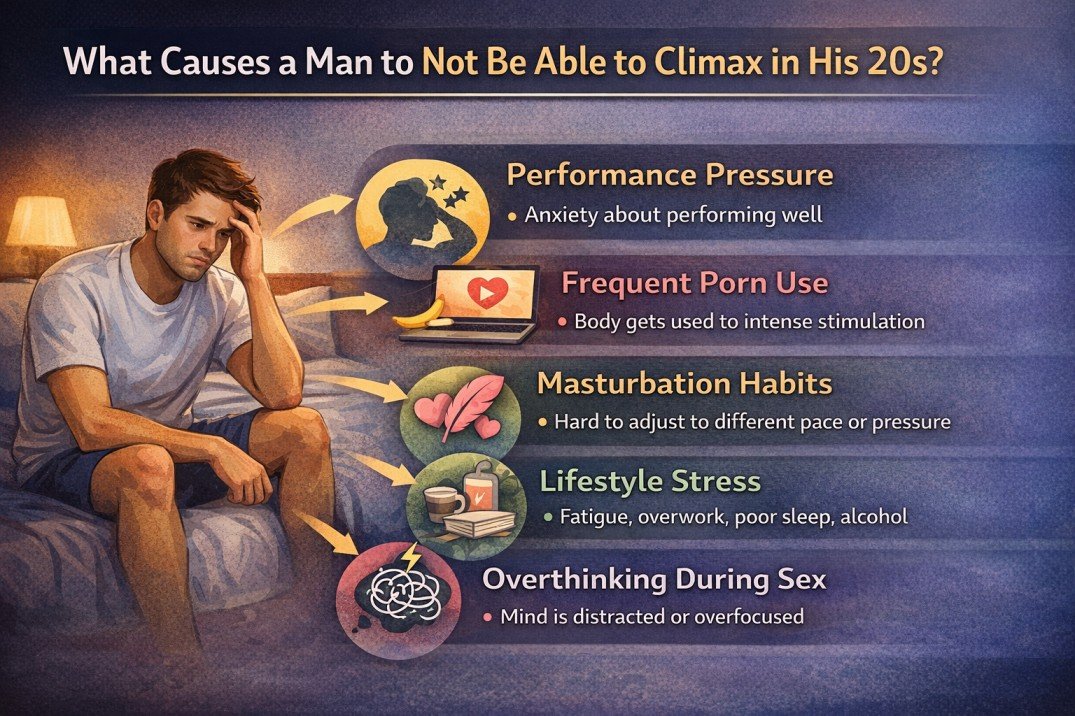
Performance Pressure
Sometimes the mind becomes too focused on “performing well”.
You may start thinking:
- Am I lasting too long?
- Is my partner enjoying this?
- Why haven’t I finished yet?
When the brain goes into this evaluation mode, it becomes harder for the body to relax enough to reach climax.
Stress and Mental Overload
Your body needs a relaxed state to reach ejaculation.
If your mind is busy with work stress, relationship worries, or daily pressure, sexual response can slow down.
Even small distractions can break the rhythm your body needs.
Porn and Masturbation Habits
For some men, the body becomes used to very specific stimulation patterns during masturbation.
Things like:
- stronger grip
- faster rhythm
- certain visual stimulation
During partnered sex, stimulation feels different, and the body may take longer to respond.
Overthinking During Sex
Sometimes the difficulty starts in the mind, not the body.
Many men begin treating sex like something they have to perform, instead of simply experiencing it. The mind starts observing and judging the situation rather than staying present.
Another modern influence is constant digital stimulation. Spending hours on social media exposes the brain to endless sexualised images, idealised bodies, and even AI-generated visuals. Over time, the brain becomes used to very fast and intense visual stimulation.
During real intimacy, the experience is slower and more natural. The mind may start comparing or drifting into imagined images instead of staying focused on the partner.
When attention is divided like this, it becomes harder for the body to reach climax naturally.

Alcohol, Medication, or Substances
Some medications can delay ejaculation, especially certain antidepressants.
Alcohol and recreational drugs can also reduce sensitivity and slow down sexual response.
Feeling Emotionally Disconnected
Sexual response is not only physical.
If there is tension, lack of comfort, or emotional distance with a partner, it can sometimes affect the body’s ability to reach climax.
Feeling relaxed and connected often makes a big difference.
Why You Can Ejaculate During Masturbation but Not During Sex
This situation is more common than many people realise.
During masturbation, you control everything:
- pressure
- speed
- rhythm
- mental focus
Your body becomes used to that specific pattern of stimulation.
During sex, those conditions change. The pressure, movement, and pace are different, and you are also responding to another person.
Because of this change, the brain and body may take time to adjust, which can make ejaculation slower or sometimes difficult during intercourse.
When Ejaculation Takes Longer During Sex
Sometimes ejaculation simply takes longer than expected, and that is not necessarily a problem.
Every person’s sexual response is different. For some men, climax happens quickly, while others naturally take more time. As long as you and your partner are comfortable and enjoying the experience, a longer duration during sex can actually be positive.
In many cases, taking more time allows couples to focus more on connection, touch, and shared pleasure rather than rushing toward the finish.
The important thing is not how fast ejaculation happens, but whether both partners feel relaxed, satisfied, and connected during intimacy.
What Can Help Improve Ejaculation During Sex in Your 20s
What helps often depends on how your lifestyle and habits look during different phases of your 20s. The solutions are not always complicated, but they do require being honest about how your body and mind have been conditioned.
Early 20s (20–23)
At this stage many men have spent years learning about sex, mostly through porn and masturbation rather than real intimacy.
Because of this, the body may become used to:
- very tight grip
- very fast stimulation
- constant visual stimulation
Real sex feels different, so the body may take longer to respond.
What often helps is resetting stimulation patterns:
- reduce porn frequency for a few weeks
- masturbate with lighter pressure
- slow down the rhythm so the body adapts to more natural stimulation
This gradually trains the body to respond better during partnered sex.
Mid-20s (24–26)
By the mid-20s, many people start balancing career stress, social life, and relationships. Mental fatigue becomes a common reason sexual response slows down.
One practical change that helps is giving the mind time to shift into intimacy mode.
For example:
- avoid jumping straight into sex after hours of work or screen time
- spend more time in touch, kissing, and relaxed foreplay
- allow your body to warm up instead of rushing the moment
When the nervous system slows down, ejaculation often becomes easier.
Late 20s (27–29)
In the later 20s, the biggest factor is often relationship pressure.
Many men start worrying about whether their partner is satisfied or whether they are “taking too long”. That pressure can interrupt the natural sexual rhythm.
What helps here is changing the goal of sex.
Instead of focusing on ejaculation as the finish line, focus on shared pleasure and connection. When both partners feel relaxed and there is no pressure to climax quickly, the body usually responds more naturally.
Across all stages of your 20s, one thing matters most: reducing pressure and retraining your body to respond to real intimacy instead of performance or artificial stimulation. When the mind and body feel relaxed, ejaculation usually becomes easier.
When to Consider Talking to a Professional
Occasional difficulty ejaculating during sex is quite common and usually not something to worry about. Many people experience it from time to time, especially during stressful periods or when adjusting to new sexual experiences.
However, it may be helpful to speak with a professional if the situation starts happening regularly or begins affecting your confidence and relationship.
For example, consider seeking guidance if:
- ejaculation rarely or never happens during sex
- the situation causes frustration or anxiety for you or your partner
- you start avoiding intimacy because of the pressure
A doctor or online sex therapist can help look at both physical and psychological factors that might be influencing your sexual response. Often, small changes in habits, stress levels, or communication can make a significant difference.
FAQs
Is it normal if I can’t ejaculate during sex in my 20s?
Yes, it can be normal if you can’t ejaculate during sex in your 20s. Many young men experience this at some point. Stress, performance pressure, masturbation habits, or mental distraction during sex can delay ejaculation. In most cases, it does not mean there is a serious health problem.
Why can I ejaculate during masturbation but not during sex?
You can ejaculate during masturbation but not during sex because the stimulation is different. During masturbation you control the pressure, speed, and rhythm. Your body becomes used to that pattern. During sex the stimulation changes, so the body may take longer to reach climax.
Can porn affect ejaculation during sex in your 20s?
Yes, porn can affect ejaculation during sex in your 20s. Frequent exposure to highly stimulating content can condition the brain to respond to intense visual stimulation. During real intimacy the stimulation is different, so ejaculation may take longer.
Why do I stay hard but still can’t finish during sex?
You can stay hard but still not finish during sex because erection and ejaculation are controlled by different responses in the body. Anxiety, overthinking, or pressure to perform can interrupt the natural process that leads to climax.
Can stress or lifestyle affect ejaculation in your 20s?
Yes, stress and lifestyle can affect ejaculation in your 20s. Lack of sleep, work pressure, alcohol use, heavy screen time, and mental fatigue can make it harder for the body to reach climax during sex.
When should I see a doctor about delayed ejaculation?
You should consider seeing a doctor about delayed ejaculation if ejaculation rarely happens during sex, if it causes frustration in your relationship, or if the problem continues for a long time. A professional can help identify physical or psychological causes.
The LeapHope Editorial Team creates and reviews content on relationships, intimacy, sexual health, and emotional wellbeing. Articles are developed with input from licensed sexologists, psychologists, and relationship experts to ensure accuracy, clarity, and real-world relevance.
View all posts