
Last Updated on February 27, 2026
At LeapHope, we regularly work with women who say their boyfriend no longer wants sex as much as they do. Many arrive feeling rejected, unattractive, or confused, especially when the relationship itself still feels loving and stable.
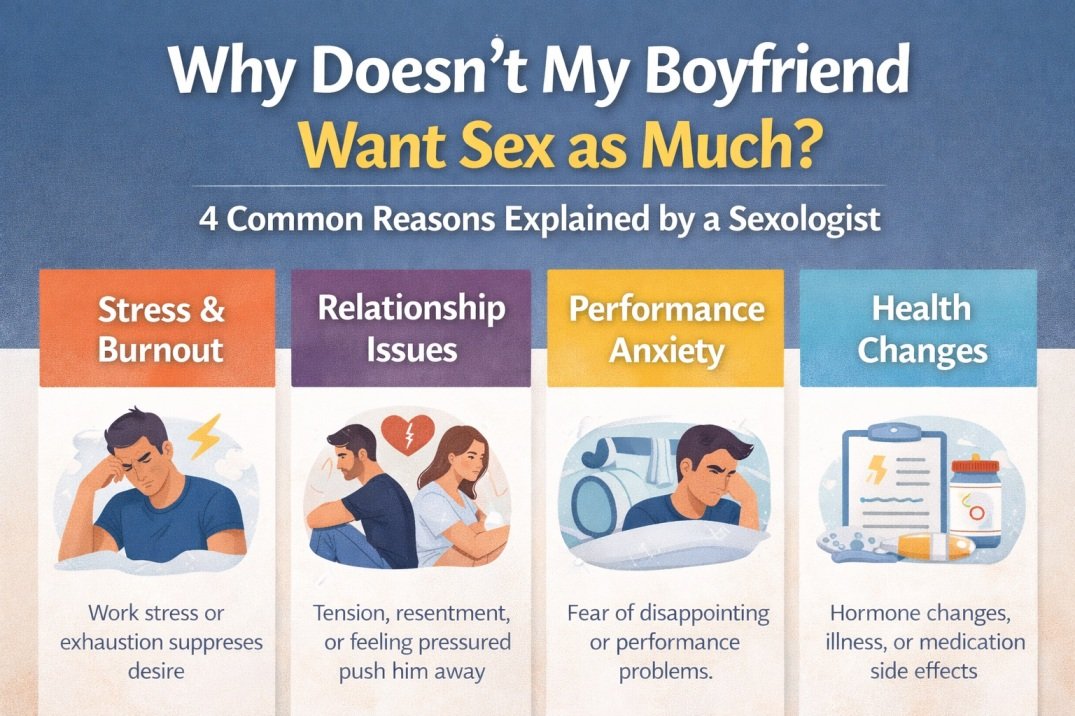
In clinical practice, a drop in male sexual desire is rarely about suddenly not finding a partner attractive. More often, it is linked to stress, anxiety, burnout, performance pressure, sleep disruption, hormonal shifts, or emotional withdrawal. Male libido is highly sensitive to psychological overload.
When a boyfriend’s sex drive decreases, the cause is usually internal, not a silent judgment about your desirability. Understanding the difference between loss of attraction and loss of sexual drive is the first step toward clarity.
In this article, we break down real therapy case patterns to explain what may actually be happening.
Case 1: “My Boyfriend No Longer Wants to Have Sex With Me. Does He Not Like Me Anymore?”
A 29-year-old woman from London said during an online session,
“We used to have sex constantly. Now when I initiate, he pauses. I feel like he doesn’t want me anymore.”
Her relationship was still affectionate and emotionally stable. What had changed was his workload. He had taken on a high-pressure job, was sleeping less, and felt mentally drained most evenings.
Here is the clinical distinction:
A decrease in male sexual initiation is more often linked to stress, burnout, anxiety, or performance pressure than to a sudden loss of attraction.
Male libido is highly sensitive to psychological overload. When mental bandwidth drops, sexual desire often drops with it, even in loving relationships.
In her case, the hesitation she interpreted as rejection was actually exhaustion and internal pressure.
Case 2: “My Boyfriend Is Always Too Tired to Have Sex and I Feel Like He’s Not Attracted to Me.”
A 25-year-old woman said:
“My boyfriend is always too tired to have sex. I feel like he’s not attracted to me anymore.”
They had been together four years. Sex used to be regular. Then it reduced.
When she tried to bring it up, she would say things like:
“We used to have sex constantly.”
“Why did you stop having sex with me?”
“Are you not attracted to me anymore?”
She didn’t realise that every time sex came up, it became emotionally charged.
From his side, sex started to feel like:
- A test of attraction
- A measure of performance
- Something he could fail
After a few uncomfortable experiences, he began avoiding sex altogether. When he said “I’m tired,” it was easier than explaining that he felt pressure.
Low male sexual desire can develop when sex becomes linked to anxiety and evaluation. Repeated pressure, even unintentional, can reduce arousal.
He wasn’t necessarily less attracted.
He had started to associate sex with stress.
Case 3: “My Boyfriend Can’t Keep Up With My Sex Drive and I Feel Rejected.”
A 26-year-old woman from Chicago said:
“I get rejected half the time. Not having sex makes me cranky and irritable. Why do I feel angry when he doesn’t want sex?”
They were still having sex. He wasn’t avoiding her. He simply didn’t want it as often as she did.
Here is what made this case different:
Her boyfriend did not experience spontaneous desire frequently. He experienced responsive desire.
That means he rarely felt “randomly horny.” His desire increased only after physical closeness began. When she initiated sex directly and frequently, he often wasn’t mentally there yet.
Over time, their mismatch became predictable:
- She felt desire first.
- He needed context first.
- She experienced delay as rejection.
- He experienced pressure to match her pace.
Here is the clinical distinction:
Low frequency does not always mean low attraction. It can mean a different arousal pattern.
Some men have lower spontaneous sexual desire and require emotional or physical build-up before feeling ready for sex. When this difference is misunderstood, the higher-desire partner often feels unwanted.
In this case, he wasn’t “failing to keep up.”
His baseline and activation style were simply different.
Case 4: “He Says I’m Pressuring Him When I Try to Be Sexy.”
A 27-year-old woman from Dublin spoke about her 30-year-old boyfriend.
“He says I’m pressuring him. I try to be sexy and he shuts down. He won’t listen when I say it’s okay.”
A few months earlier, he had difficulty staying hard during sex. She reassured him, but after that, he began avoiding sex. When she initiated, he became tense. When she tried to talk about it, he withdrew.
Here is what was happening:
After erectile difficulty, many men develop fear of repeat failure. That fear activates anxiety, which directly reduces arousal. Desire decreases when sex feels like a performance test.
The pattern often becomes:
- One bad experience
- Fear of it happening again
- Partner initiates more
- Pressure increases
- He avoids sex
In these cases, the issue is not attraction.
It is performance anxiety shutting down libido.
Case 5: “We Haven’t Had Sex in Months. Is This Normal?”
A 28-year-old woman from Toronto spoke about her 31-year-old boyfriend.
“We haven’t had sex in almost five months. My boyfriend doesn’t have a sex drive anymore. Is this normal?”
They were still living together. No major fights. No breakup talk. But sex had stopped completely.
When we explored further, the issue was not attraction and not performance anxiety.
He had been experiencing low mood, low motivation, and reduced interest in multiple areas of life, not just sex. He described feeling flat and disconnected from his body.
Here is the clinical reality:
When sexual desire drops for several months, especially alongside low energy and emotional withdrawal, depression or medical factors should be considered.
Sustained low libido in men can be linked to:
- Depressive symptoms
- Hormonal imbalance
- Medication side effects
- Chronic health changes
A temporary drop in sex is common. A complete stop for months often signals a broader issue.
In this case, it was not about her.
It was about untreated mental health symptoms.
Does This Mean He Is Cheating?
When sex decreases, many women immediately think:
“If he’s not having sex with me, is he getting it somewhere else?”
Low sexual frequency alone is not evidence of cheating.
In clinical practice, most cases of reduced male libido are linked to stress, anxiety, depression, hormonal factors, or relational tension, not infidelity.
Cheating usually presents with broader behavioural changes, such as secrecy, sudden emotional distance, unexplained schedule shifts, or defensive reactions around phones and privacy.
A drop in sex without other red flags is more often about internal or relational issues than external affairs.
Before assuming betrayal, it is important to look at patterns, not just frequency.
What You Can Do If Your Boyfriend Doesn’t Want Sex as Much as You Do
If your boyfriend doesn’t want sex as often as you do, the goal is not to force frequency. The goal is to understand the pattern and reduce pressure. Low male libido can be influenced by stress, depression, sleep disruption, hormonal imbalance, or certain medications, as outlined by the Mayo Clinic.
Here’s what actually helps:
- Separate attraction from sex frequency.
A lower sex drive does not automatically mean he finds you less attractive. - Stop turning “not tonight” into a bigger meaning.
If every refusal becomes a discussion about love or desire, sex becomes emotionally heavy. - Ask direct but neutral questions.
Instead of “Why don’t you want me?” try, “Has something changed for you around sex?” - Notice the pattern, not just the emotion.
Is the drop linked to mood, health, performance anxiety, or long-term distance? - Regulate your reaction before confronting him.
If you feel cranky, angry, or rejected, pause. Anger often masks hurt. - Address performance issues calmly.
If erectile difficulty has occurred, reducing pressure is more effective than increasing reassurance. - Seek professional help if the issue lasts months.
Ongoing low libido, emotional withdrawal, or avoidance may require structured support.
A difference in sex drive is manageable.
Unspoken resentment is not.
Final Thought
A boyfriend not wanting sex as often as you do does not automatically mean he is no longer attracted to you. In clinical practice, differences in sexual desire are more common than couples realise. Low male libido is frequently linked to psychological factors, emotional dynamics, performance anxiety, or health changes rather than loss of love.
The real issue is rarely just frequency. It is how both partners interpret and react to that difference.
If this situation is leaving you feeling rejected, confused, angry, or insecure, structured guidance can help you understand what is actually happening beneath the surface. Performance anxiety, emotional avoidance, hormonal concerns, and desire mismatches are treatable.
If you would like professional support, you can explore confidential online sex therapy at LeapHope. Working with a licensed psychologist or sexologist can help you address mismatched libido without blame, pressure, or shame.
Frequently Asked Questions
Is it normal for my boyfriend to want sex less than me?
Yes, it is normal for a boyfriend to want sex less than you. Differences in libido are common. Male sexual desire can fluctuate due to psychological stress, hormonal variation, emotional dynamics, or performance anxiety, not necessarily loss of attraction.
Why did my boyfriend stop having sex with me suddenly?
If your boyfriend stopped having sex suddenly, common causes include performance anxiety, depressive symptoms, emotional withdrawal, or hormonal shifts. A sudden drop in libido does not automatically mean he is no longer attracted to you.
Does my boyfriend not wanting sex mean he is cheating?
No, reduced sexual frequency alone does not indicate cheating. Infidelity usually involves secrecy, emotional distance, or behavioural changes. Low libido is more commonly linked to stress, anxiety, health concerns, or relational tension.
Why do I feel angry when my boyfriend says no to sex?
Feeling angry when your boyfriend says no to sex often reflects hurt or insecurity. Sexual rejection can activate fears of being unwanted. The emotional response is typically about perceived rejection, not just physical desire.
Can a relationship work if we have different sex drives?
Yes, a relationship can work with different sex drives if both partners understand the mismatch and reduce pressure. Mismatched libido becomes problematic only when it creates resentment, avoidance, or unresolved emotional conflict.