Last Updated on March 8, 2026
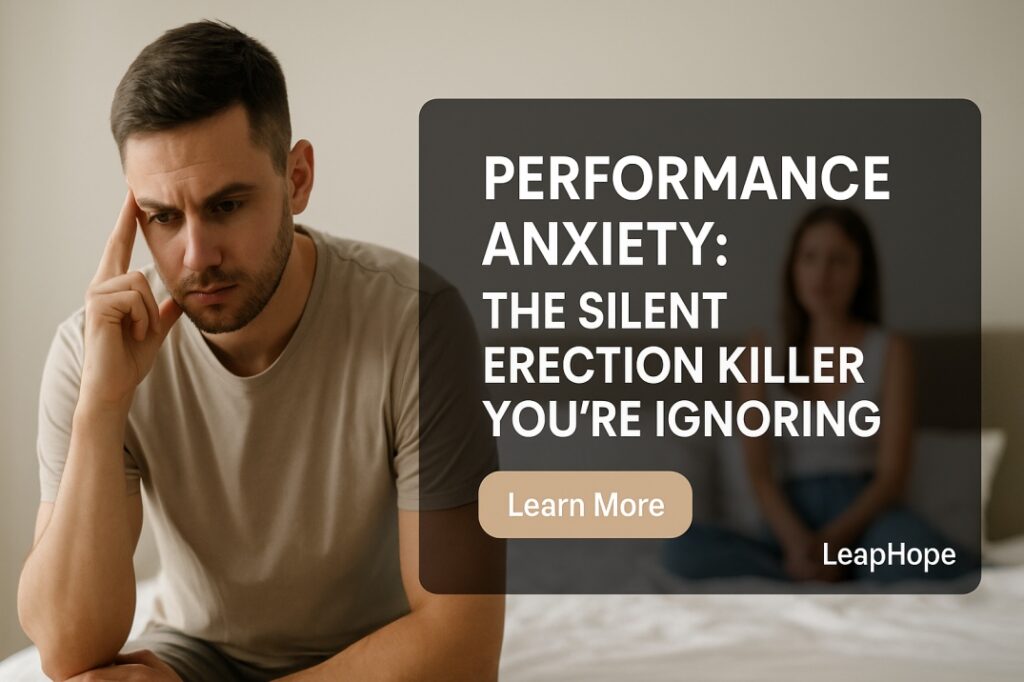
You’re in bed, finally about to have sex.
You want it, you’re turned on. But then the thought creeps in: “What if I can’t stay hard?” Within seconds, your erection starts to fade. The more you panic, the softer you get.
If this sounds familiar, you’re not alone. A study found that up to 30% of men under 40 report erection loss linked to anxiety, not medical problems. In today’s world of porn, dating apps, and TikTok body standards, the pressure to “perform” is higher than ever.
Performance anxiety erectile dysfunction happens when worry activates your body’s stress system. Stress hormones like adrenaline and cortisol shift blood flow away from the penis, making it hard to get or maintain an erection during sex. This cycle of fear and failure can repeat itself, until you learn to calm your body and rewire your thoughts.
This doesn’t mean you’re weak, broken, or unworthy of love. It means your brain and body are stuck in fight-or-flight mode during sex, a problem that’s common and fixable.
What It Actually Feels Like When Performance Anxiety Hits
1. The Thought That Changes Everything
Performance anxiety usually begins with a single intrusive thought. You are turned on, things feel natural, and then your mind asks, “What if I can’t stay hard?” That question shifts your focus away from pleasure and toward performance. Instead of experiencing touch and connection, you begin checking your erection. The moment you start evaluating yourself, anxiety enters the room.
2. The Monitoring Trap
Once you start monitoring, the experience changes. You wonder whether you are firm enough, whether you are fading, and whether your partner has noticed. This mental self-checking pulls you out of the moment. Psychologists call this “spectatoring,” where you observe yourself instead of feeling what is happening. Erections require immersion in sensation, not self-surveillance.
3. The Condom or Penetration Trigger
Many men report a specific trigger point. It often happens when putting on a condom or right before penetration. There is a pause, a glance downward, and a spike of pressure. The thought “Don’t lose it now” creates immediate stress. Within seconds, firmness drops. The more you try to force the erection back, the more distant it feels. Anxiety interrupts the very process you are trying to control.
4. Interpreting Your Partner’s Reactions
Performance anxiety also heightens sensitivity to your partner’s behavior. A neutral glance or a simple “Are you okay?” can feel like criticism. Anxiety fills in the blanks with negative assumptions. Your heart rate increases, your breathing shortens, and your body tightens. Erections depend on relaxation, but anxiety creates tension and vigilance.
5. The Mental Spiral During Sex
If penetration begins, the internal dialogue may intensify. You start calculating how hard you are, how long you have lasted, and whether your partner is satisfied. Sex becomes a performance to manage rather than an experience to enjoy. This shift activates stress hormones, which directly interfere with blood flow to the penis.
6. The Emotional Aftermath
The emotional response afterward can be heavier than the physical loss. Many men withdraw, avoid eye contact, or blame fatigue. Internally, however, there is often shame, fear of comparison, and worry that it will happen again. That emotional memory reinforces the anxiety for the next encounter.
Performance anxiety feels physical, but it is driven by fear of judgment and fear of failure. The erection loss is real, yet it is a stress response, not proof of permanent dysfunction. Recognizing this pattern is the first step toward breaking it.
How Anxiety Physically Shuts Down Erections
When you’re anxious about sex, it’s not “in your head.” Anxiety sends real signals through your body that make erections collapse. Here’s how it happens:
The Stress Hormone Spike That Kills Arousal
The moment you think “What if I can’t stay hard?” your body floods with adrenaline and cortisol. These hormones are designed for survival, not sex. They increase your heart rate, tense your muscles, and shift blood away from the penis.
Why Fight-or-Flight Steals Blood From Your Penis
Erections rely on the parasympathetic system, the part of your body that works when you’re calm and safe. Anxiety flips the switch to fight-or-flight mode. Your body literally reroutes blood to your arms and legs because it thinks you need to fight or escape, not penetrate.
Overthinking Erections = Losing Erections
Erections don’t like being watched. The more you check if you’re “hard enough,” the more your brain pulls focus away from pleasure and into pressure. This “spectatoring” (psychology term) shuts down arousal almost instantly.
Clear takeaway: Anxiety isn’t just a thought, it’s a full-body reaction. Erections need calm, slow breathing and focus on touch. Anxiety does the opposite, hijacking your body into survival mode and pulling the plug on sex.
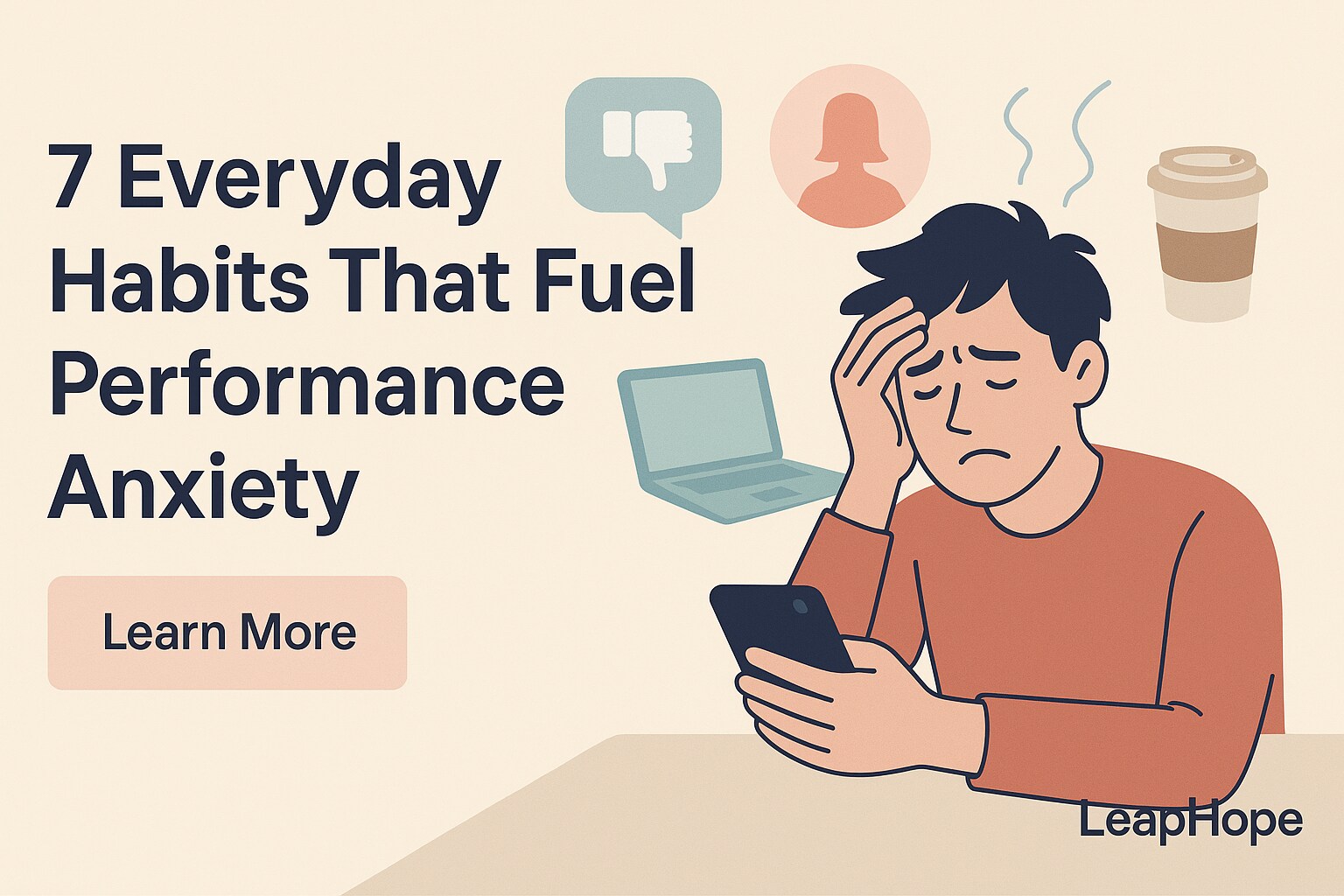
Modern Triggers Making Performance Anxiety Worse in 2026
Anxiety around erections doesn’t happen in a vacuum. Today’s culture adds extra pressure that previous generations didn’t face. Here are the biggest culprits:
Porn and Masturbation Habits
- High-speed porn trains the brain to expect instant, intense stimulation.
- Fast, tight masturbation conditions erections to one style of arousal.
- With a real partner, arousal is slower, bodies move differently, your brain panics and erection fades.
Dating App Pressure Cooker
- First-time sex after a Tinder or Hinge match often feels like an “audition.”
- Fear of being ghosted if penetration doesn’t last long enough or doesn’t happen at all.
- “One shot” pressure makes anxiety spike.
Social Media Body Comparisons
- TikTok, Instagram, OnlyFans: endless images of big, fit, “perfect” men.
- Anxiety creeps in: “Am I big enough? Do I last long enough? Do I look good naked?”
- The brain focuses on comparison, not sensation, killing arousal.
Early and Unrealistic Exposure to Sex Online
- Many men saw porn at 12 or younger. Those images become the baseline of what sex “should” look like.
- Deepfake porn now pushes even more impossible standards.
- Real-life sex feels “less,” triggering worry and erection loss.
Mental Health and Loneliness
- Anxiety and depression are at all-time highs for Gen Z and Millennials.
- Post-COVID isolation left many people out of practice with intimacy.
- Erections don’t thrive in a brain wired with chronic stress or loneliness.
Clear takeaway: It’s not just biology, it’s culture. These days, porn, dating apps, body comparison, and mental health struggles all add fuel to performance anxiety.If you’re losing erections, it’s not just you; it’s the environment you’re living in.
The Fear–Failure Cycle That Triggers Performance Anxiety
One of the hardest parts of erection anxiety is how fast it becomes a cycle. A single bad experience can plant a seed of fear that grows stronger every time.
Here’s how it plays out:
- First time going soft
Maybe it happened during penetration, maybe halfway through sex. You panic, feel embarrassed, and try to force an erection. It doesn’t work. - Fear of it happening again
The next time you’re about to have sex, that memory comes rushing back. Your brain thinks: “What if I lose it again?” Anxiety spikes before you even start. - Anxiety makes it worse
The very fear of losing your erection triggers stress hormones. Blood leaves the penis. You go soft again. - Shame and silence
Instead of talking about it, many men hide it. They avoid sex, make excuses, or pretend it’s not a big deal. But inside, the fear grows louder.
This cycle doesn’t mean you’re broken; it means your brain has linked sex with danger of failure instead of pleasure and safety. The good news? Cycles can be broken once you recognize them.
Is It Performance Anxiety or Erectile Dysfunction?
One of the biggest fears men have is this: “Do I actually have erectile dysfunction, or is this just anxiety?” The distinction matters, and there are patterns that can help you tell the difference.
Signs It’s Likely Performance Anxiety
Performance anxiety is usually situational. Erections work in some settings but fail under pressure.
Common signs include:
- You can get hard during masturbation or while watching porn.
- You wake up with morning erections.
- The problem appears mainly during sex with a partner.
- It started suddenly, often after one difficult experience.
- It feels worse with new partners or someone you deeply care about.
- You notice your thoughts racing during sex.
In these cases, your physical system is functioning. Anxiety is interrupting it.
Signs It May Be Physical Erectile Dysfunction
Physical ED tends to be consistent across situations and develops gradually rather than suddenly.
Possible indicators include:
- Erections are weak or absent in all situations, including alone.
- Morning erections have decreased or disappeared.
- The issue has worsened slowly over time.
- You have other health concerns such as diabetes, high blood pressure, or hormonal issues.
- There is numbness, pain, or noticeable physical changes.
When erections are unreliable everywhere, not just under pressure, a medical evaluation is important.
The Quick Reality Check
If your erection works alone but fails during partnered sex, especially when you feel pressure or worry, the issue is most often performance anxiety rather than permanent erectile dysfunction.
That does not make it “just in your head.” Anxiety creates a real physiological stress response that interferes with arousal. The good news is that anxiety-based erection problems are highly treatable once the cycle is understood.
7 Practical Ways to Break the Anxiety, ED Cycle
Performance anxiety doesn’t disappear by hoping. It breaks when you retrain your brain and body to stop linking sex with fear. Here are proven ways that actually work:
1. Practice Box Breathing Before and During Sex
- Inhale 4 seconds → hold 4 → exhale 4 → hold 4.
- This slows your heart rate, lowers adrenaline, and pulls you out of fight-or-flight.
- Doing this even for one minute before penetration can keep your body in “rest and digest” mode.
2. Shift Focus From Erection to Sensation
- Instead of monitoring if you’re “hard enough,” focus on touch: kissing, skin-to-skin, your partner’s breath.
- Psychologists call this sensate focus, retraining the brain to feel pleasure without pressure.
- Many men regain stronger erections when penetration isn’t the immediate goal.
3. Redefine Sex Beyond Penetration
- When sex = penetration-only, erections become a test you can “fail.”
- Explore oral sex, mutual masturbation, or teasing without penetration.
- By lowering pressure, you rebuild confidence and often find erections return naturally.
4. Talk About It With Your Partner, Before It Happens Again
- Anxiety thrives in silence. Try a script like: “Sometimes I get in my head and lose my erection. It’s not about attraction, it’s just anxiety.”
- Naming it removes shame and creates safety. Many partners feel relieved and supportive.
5. Reset Porn and Masturbation Habits
- If you’re used to daily high-speed porn + fast, tight strokes, your brain adapts to that.
- Try masturbating slower, without porn, focusing on sensation.
- Even a 30-day reset can rewire your arousal patterns to match real sex.
6. Build Confidence Through Gradual Exposure
- Just like phobia treatment, exposure works. Start with non-penetrative sex → then penetration without worrying about orgasm → then full sex.
- Each step teaches your brain: “This is safe. I don’t need to panic.”
7. Get Professional Support Early
- A sex therapist or CBT therapist can help you break thought loops fast.
- Even one or two sessions can give you personalized strategies.
- If anxiety ED persists, combining therapy with meds (Viagra, Cialis) can rebuild confidence while retraining the mind.
Clear takeaway: You don’t have to wait for “confidence” to magically appear. With small daily shifts (breathing, masturbation style) and bigger steps (partner talk, therapy), you can retrain your body to see sex as safe again so erections return naturally.
When Anxiety About Erections Needs Professional Help
Every man loses an erection sometimes. But if anxiety is stealing your sex life again and again, it’s a sign you need support. Here’s how to know:
Signs It’s More Than a One-Off
- You can get hard while masturbating, but not during sex.
- Erections fade almost every time you try penetration.
- You avoid sex because you’re scared it will happen again.
- The thought of sex triggers dread instead of desire.
Why Early Help Matters
- The longer anxiety and ED cycle, the deeper it wires into your brain.
- Avoidance and silence don’t solve it, they make your body expect failure.
- Getting help early prevents this from becoming a long-term pattern.
What Help Actually Looks Like
- Sex therapy or CBT → teaches you how to break anxious thought loops.
- Medical support (Viagra, Cialis) → sometimes useful, especially short-term, but they work best combined with therapy.
- Couples therapy → helps if anxiety is tied to relationship dynamics, communication, or trust.
Seeing a therapist or doctor doesn’t mean something is “wrong” with you. It means you’re breaking the silence and giving yourself the chance to enjoy sex again without fear.
Key Takeaways: Anxiety Doesn’t Define Your Sexuality
Losing an erection during sex feels huge in the moment but in reality, it’s not a big deal. Most men experience it at some point, especially in today’s pressure-heavy world of porn, dating apps, and comparison culture.
Here’s what to remember:
- Anxiety is the cause, not your masculinity. Your body is just hitting fight-or-flight mode instead of arousal mode.
- It’s fixable. With therapy, CBT tools, lifestyle resets, and sometimes short-term medication, performance anxiety ED can be turned around completely.
- Don’t rely on alcohol or just pop Viagra. Booze numbs arousal and can make erections weaker. Viagra may help temporarily, but without tackling the anxiety, you’ll keep chasing pills instead of fixing the root cause.
The truth: strong, reliable erections come back once you retrain your body to see sex as safe, not a test. That means building habits (better sleep, smarter masturbation, breathing control) and sometimes using therapy or meds as tools, not crutches.
Your masculinity isn’t measured by whether you stay hard 100% of the time. It’s measured by how you face challenges and take control. And performance anxiety? It’s one of the most treatable challenges out there.
Final Thoughts
Performance anxiety ED can feel personal, even threatening to your confidence, but it is not a verdict on your masculinity. Erections are regulated by your nervous system. When anxiety pushes you into fight-or-flight mode, arousal shuts down automatically. That response is biological, not a failure of willpower.
The good news is that anxiety-based erection problems are highly treatable. When you calm the nervous system and reduce performance pressure, erections often return naturally. Breathing tools, lifestyle adjustments, and structured support can break the fear–failure cycle.
If this pattern keeps repeating or you find yourself avoiding intimacy, online sex therapy can help you identify triggers, retrain anxious thought loops, and rebuild confidence in a practical, private setting. You do not have to figure this out alone.
Performance anxiety is common, and it is fixable. With the right approach, your body can learn to trust sex again.
FAQs: Performance Anxiety ED
1. Can performance anxiety really cause erectile dysfunction?
Yes. Performance anxiety can cause erectile dysfunction because it activates the fight-or-flight response. Stress hormones like adrenaline redirect blood away from the penis. Erections depend on relaxation, not stress.
2. Why do I lose my erection during penetration?
Many men lose their erection during penetration because pressure increases at that moment. When your mind starts asking, “Am I hard enough?” anxiety rises and blood flow decreases, causing the erection to fade.
3. How do I know if my ED is from anxiety or a medical issue?
If you can get hard during masturbation or wake up with morning erections but lose it during sex, the cause is usually performance anxiety. Physical ED tends to affect erections in all situations, not just during partnered sex.
4. Can porn use make performance anxiety worse?
Yes. High-speed porn and fast masturbation can condition your brain to respond to solo stimulation. Real-life sex feels slower and less predictable, which can increase pressure and trigger erection loss.
5. Does Viagra fix anxiety-related ED?
Viagra improves blood flow, but it does not stop anxious thoughts. If performance anxiety is the root cause, medication alone may not fully solve the problem without addressing the mental component.
6. Is ED from anxiety permanent?
No. Anxiety-related ED is one of the most treatable forms of erection difficulty. With therapy, lifestyle changes, and reduced performance pressure, erections often return to normal.
7. How do I stop overthinking during sex?
Shift your focus from your erection to physical sensations like touch, breathing, and connection. Slowing down and using controlled breathing can help calm the nervous system and reduce anxiety.
8. Why does performance anxiety happen even with a loving partner?
Performance anxiety is not about attraction. Even in a trusting relationship, your brain can treat sex as a test to “pass,” which creates pressure and interferes with arousal.
9. How do I talk to my partner about going soft?
Be direct and simple. You might say, “Sometimes I get in my head and lose my erection. It’s not about attraction, it’s anxiety.” Honest communication usually reduces tension rather than increasing it.
10. I’m 28 and struggling to get or stay erect. What should I do?
If you’re 28 and struggling to get or stay erect, it’s often linked to performance anxiety or overstimulation from porn, not a physical problem. When your mind starts worrying about staying hard, arousal shuts down. Focus on reducing pressure and reconnecting with natural sexual stimulation.