Last Updated on August 26, 2026
Clinical Review: Aradhana Gambhir — Senior Psychologist with 25+ years of counselling experience.
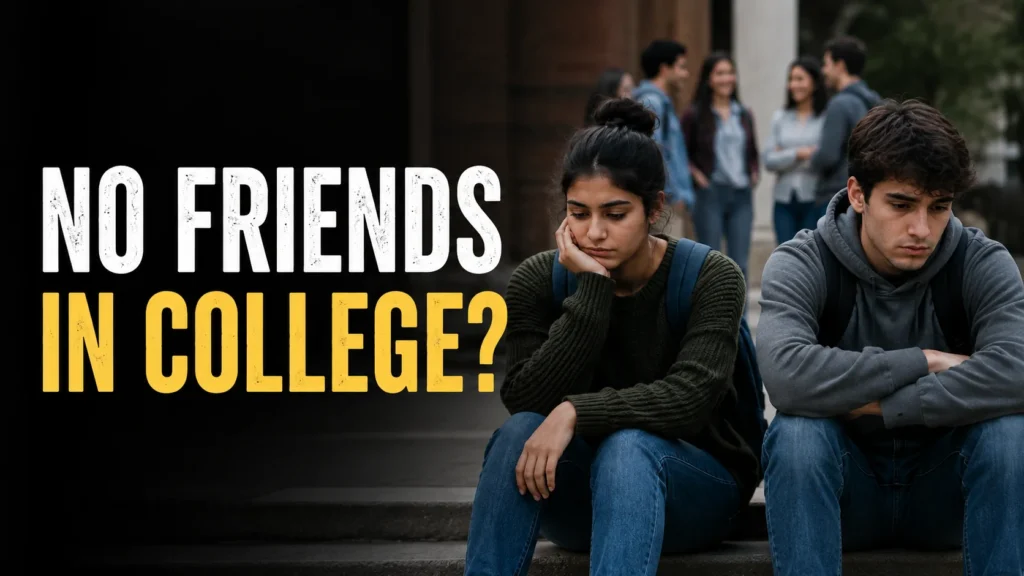
You can spend most of your day in a crowded college and still feel completely alone. You attend lectures, recognise dozens of faces, and speak to classmates when needed, yet there is nobody you naturally call when class ends.
You see girls sitting together in the canteen, boys making weekend plans, and classmates laughing in groups. Then you go home wondering, “Why do I have no friends in college?”
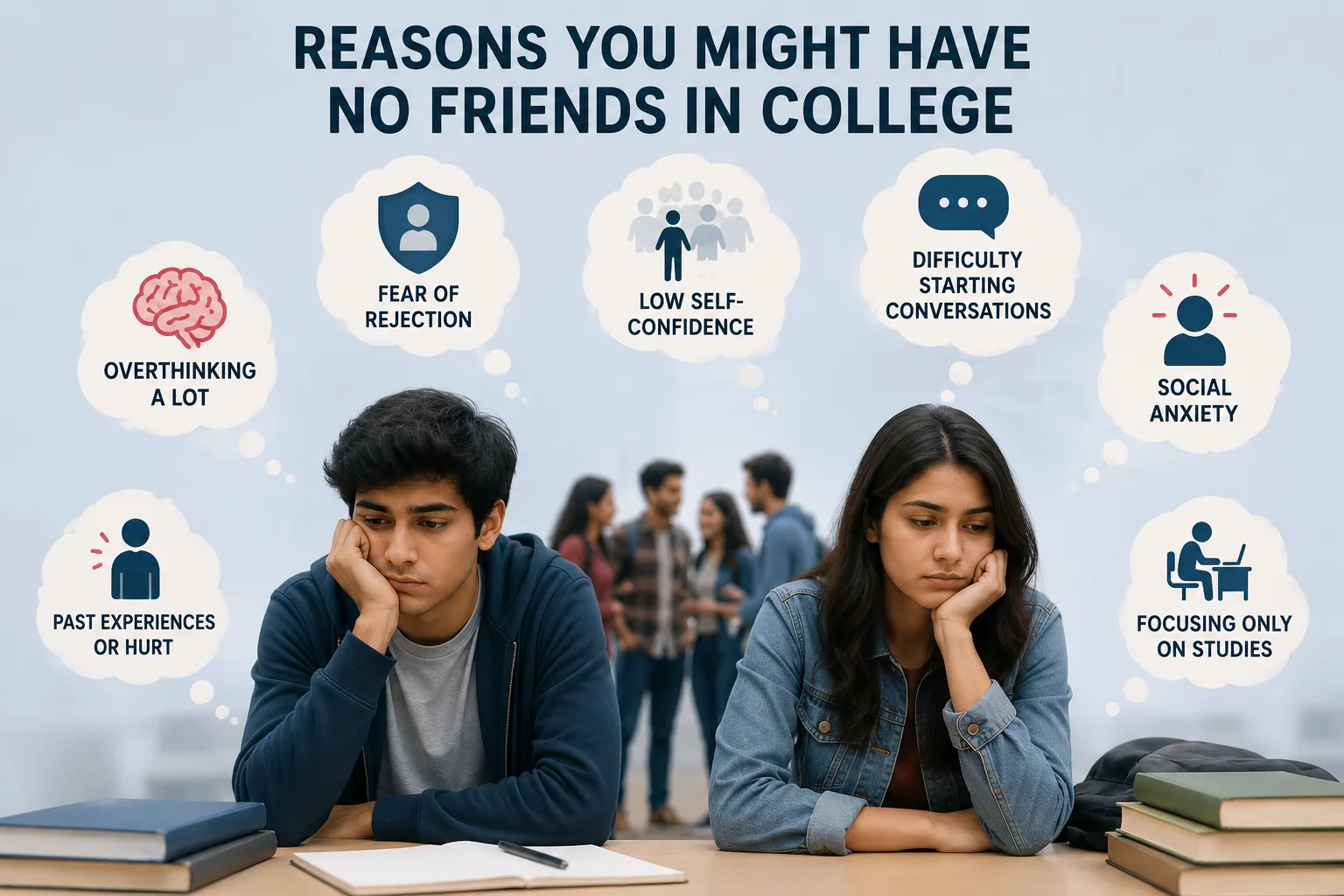
Having no friends in college does not mean you are boring, unlikeable, or incapable of friendship. The difficulty often begins with confidence, fear of rejection, communication, past experiences, or the way you respond when social situations feel uncomfortable.
Sometimes you genuinely want friendship, but the behaviours you use to protect yourself from embarrassment or rejection make that interest difficult for other students to see.
Why Do I Have No Friends in College?
There is rarely one reason. A shy student can struggle for very different reasons from a student who was bullied, excluded, or repeatedly disappointed by earlier friendships.
For many students, several patterns happen together.
1. You May Seem Less Interested Than You Actually Are
You want a classmate to continue talking, but nervousness changes the way you respond. You give short answers, avoid eye contact, rarely start conversations, check your phone during silence, or leave as soon as the lecture ends.
In counselling, this gap between wanting connection and appearing unavailable is important to notice. A student can genuinely want friends while nervousness shows up as short replies, little eye contact, waiting for others to initiate, or leaving quickly.
Classmates respond to the behaviour they can see, not the interest you are feeling internally.
Inside, you are thinking, “I don’t know what to say.” The student beside you can read the same behaviour as, “She doesn’t really want to talk,” or, “He prefers being alone.”
This is one reason shy students can feel ignored even when classmates have not intentionally rejected them. You feel that nobody approaches you, while other students believe they are respecting the distance you are showing.
You do not need to become louder or more outgoing. Your interest simply needs to be visible enough for another student to recognise it.
2. Low Self-Esteem and Comparison Can Make You Hold Back
College creates constant opportunities for comparison. You notice another girl’s confidence, clothes, appearance, social circle, or way of speaking, while another boy seems funnier, more outgoing, richer, fitter, or more comfortable around everyone.
Then comparison becomes personal:
- “She is much more confident than me.”
- “He is more interesting than I am.”
- “Their English is better.”
- “They already have better friends.”
- “I won’t fit into that group.”
- “I’ll look desperate if I try.”
- “Why would they want me around?”
At this point, nobody has rejected you. You have already stepped back because you expect rejection before the interaction has had a chance to happen.
This is how low self-esteem and constant comparison can affect friendships. You start excluding yourself from situations because you believe other students will eventually do it anyway.
Over time, fewer students get to know you. The lack of friendship then starts looking like proof of the original belief: “Nobody wants me.”
3. Overthinking Can Make Conversations Feel Unnatural
A classmate is talking to you, but part of your attention is focused entirely on yourself. You are trying to listen while also analysing every word, expression, and pause.
Your thoughts can sound like:
- “What should I say next?”
- “Was that answer stupid?”
- “Am I boring her?”
- “Why did he look away?”
- “Am I talking too much?”
- “Does she want this conversation to end?”
This level of self-monitoring can make an ordinary conversation exhausting. Instead of responding naturally, you start treating the interaction like a performance that you need to get right.
You can also stay too guarded. You answer questions but rarely ask anything back, avoid sharing anything personal, or finish a good conversation without continuing it another day.
A student can therefore be polite and friendly while still struggling to move from classmate to actual friend. Friendship usually needs curiosity, follow-up, small personal disclosures, and repeated contact.
4. Fear of Rejection Can Make Normal Behaviour Feel Personal
You message a classmate and do not receive a reply for several hours. Your mind immediately says, “They don’t want to talk to me.”
A girl you spoke with yesterday walks past without noticing you. A boy declines one plan, or a classmate sits somewhere else that day, and the situation quickly feels like rejection.
One pattern psychologists often look at is how quickly uncertainty becomes rejection in the student’s mind. When self-esteem is already low, an unanswered message can start feeling like evidence about your worth rather than one incomplete social interaction.
Sometimes rejection is real. Not every student you like will become your friend, and not every friendship will be mutual.
The problem starts when every unclear social situation receives the same meaning: “They don’t like me.”
A genuine rejection can also hurt more when you connect it directly with your value as a person. Instead of thinking, “That friendship didn’t work,” you begin thinking, “There is something wrong with me.”
When social anxiety and fear of judgement are involved, this pattern can become even stronger. Fear begins controlling your behaviour before another student has actually decided what they think about you.
5. Past Rejection Can Make You Protect Yourself Too Much
What happened before college still affects how you approach new classmates. A student who was bullied at school can enter college already expecting judgement, while a girl who was repeatedly excluded by previous friends can find it difficult to trust another group.
A boy who was mocked whenever he opened up can learn to keep every conversation light and impersonal. After enough difficult experiences, emotional distance starts feeling safer.
You begin protecting yourself by:
- waiting for classmates to approach first
- sharing very little about yourself
- avoiding situations where you might feel awkward
- watching closely for gossip or exclusion
- never messaging first
- leaving before anyone can reject you
- acting as though friendship does not matter
These behaviours reduce the immediate chance of embarrassment. They also reduce the opportunity for a new classmate to show you that this friendship could be different.
Sometimes the distance another student gives you is partly a response to the distance that student felt from you first.
6. You May Expect Friendship to Develop Too Quickly
College friendships can look instant from the outside. You see groups eating together, attending events, celebrating birthdays, travelling, and posting photos.
You do not see all the ordinary interactions that happened before that closeness developed.
Most friendships grow gradually:
familiar face → repeated conversation → personal interest → shared time → trust → friendship
A classmate becomes familiar. You speak several times, the conversations become more personal, you sit together more often, and eventually the connection continues outside the original class.
If you expect instant closeness, normal acquaintances can feel disappointing. You can give up after one awkward interaction when the friendship has barely had time to begin.
What to Do If You Have No Friends in College
The answer is not simply to attend more events, join every club, or force yourself to become outgoing. If you keep trying to make friends in college and repeatedly end up in the same situation, understanding the pattern is usually more useful than trying harder without knowing what is going wrong.
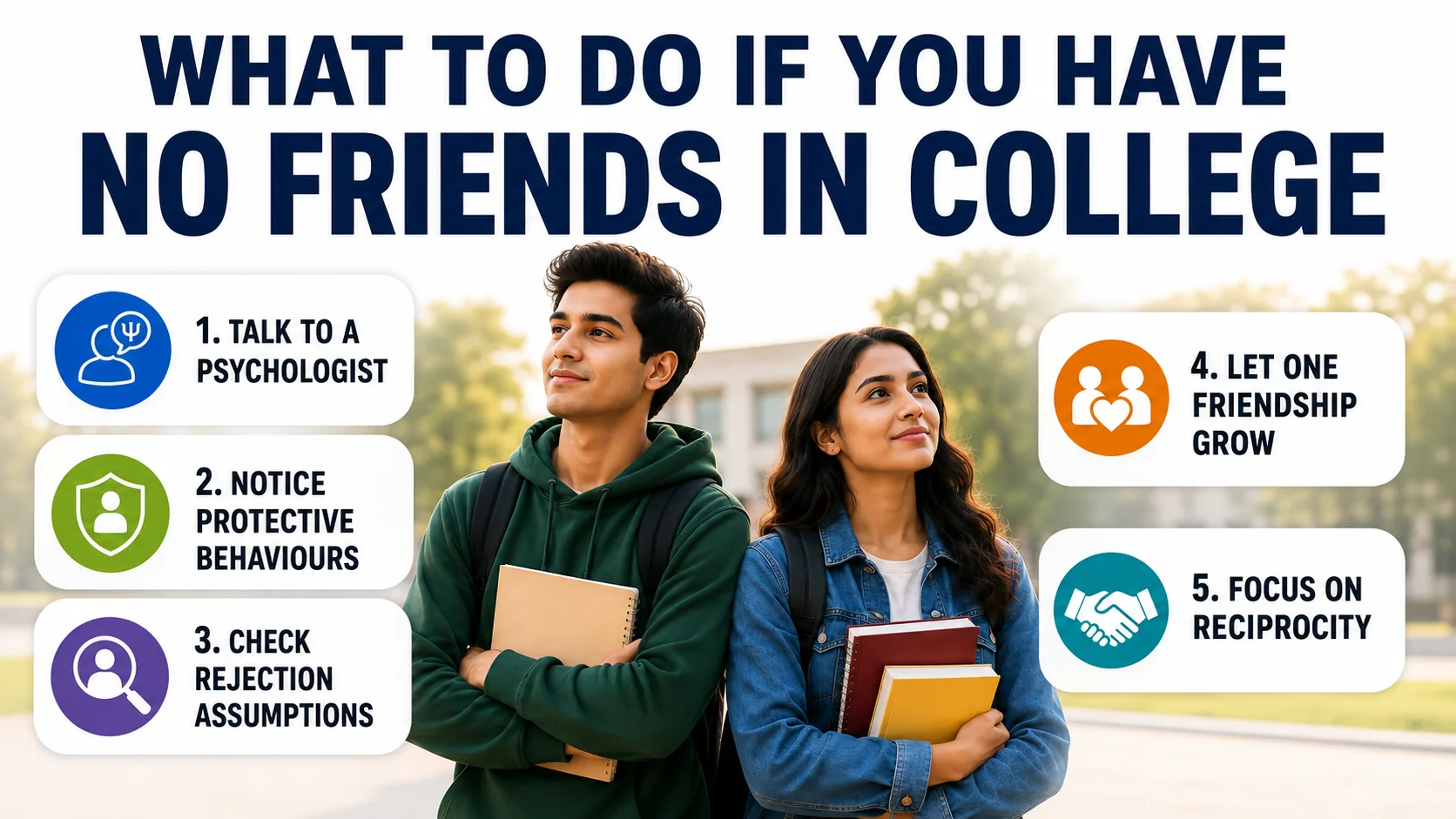
1. Talk to a Psychologist About What Is Actually Getting in the Way
Having no friends does not automatically mean that you need counselling. But when you genuinely want connection and the same problem keeps repeating, speaking with a psychologist can help you understand what is happening.
The difficulty can involve:
- low self-esteem
- fear of rejection
- social anxiety
- previous bullying or exclusion
- communication difficulties
- overthinking
- difficulty trusting classmates
- avoiding situations that feel uncomfortable
The useful question is not simply, “How do I make friends?” It is, “What happens between wanting friendship and actually forming one?”
Once that becomes clearer, the work can focus on the real barrier instead of repeatedly forcing yourself into social situations that feel unsuccessful. LeapHope’s online mental health counselling can help students explore these patterns with a psychologist.
2. Change the Behaviours You Use to Protect Yourself
Notice what you do when you feel socially uncomfortable. Reaching for your phone, avoiding eye contact, giving one-word replies, refusing invitations, or never initiating can reduce anxiety in the moment.
Those behaviours can also tell another student, “I don’t want to interact.”
You do not need to change your personality. Start with one protective behaviour that repeatedly hides your interest from classmates.
If you usually give a short answer, ask one question back. If you always wait for another student to greet you first, try greeting them first the next time.
3. Check Whether Rejection Actually Happened
When your first thought is, “She doesn’t like me,” or, “He doesn’t want me there,” separate the event from your interpretation.
Ask yourself what actually happened. Was there a clear pattern of rejection, or was there one delayed reply, one declined plan, or one awkward conversation?
Look at behaviour over time. A classmate who repeatedly avoids conversation, never responds, and never shows interest is giving you useful information.
One uncomfortable interaction does not tell you the same thing. Learning to distinguish between the two can stop fear from ending a connection too early.
4. Let One Friendship Develop Instead of Chasing a Friend Group
If everybody already seems to have friends in college, trying to enter an entire group can feel overwhelming. Start with one classmate you already see regularly.
A conversation about an assignment can gradually become, “How are you finding this semester?” A few conversations can become sitting together during a break, walking to the canteen, or sending a message that has nothing to do with college work.
This is how many friendships actually develop. Small interactions become familiar interactions, and familiarity creates enough comfort for both students to share more.
You do not need to force closeness. Give a promising connection enough opportunities to grow.
5. Put Your Effort Where There Is Reciprocity
Not every girl or boy you approach will become a friend. Friendship works better when both students are gradually contributing to the connection.
Notice who:
- asks questions about you too
- remembers something you previously mentioned
- continues the conversation
- sometimes approaches you first
- seems comfortable sitting with you
- agrees to spend more time together
- includes you without always being asked
Put more energy into those connections. A healthy friendship should not require one student to constantly prove their worth or chase another student’s attention.
When Having No Friends in College Starts Affecting Your Mental Health
There is a difference between enjoying time alone and feeling painfully isolated. Some students genuinely prefer a small social circle and feel comfortable spending long periods by themselves.
The concern begins when having no friends starts changing how you feel about yourself or how you function in college.
You can start avoiding lectures because sitting alone feels embarrassing. Confidence drops, motivation suffers, and seeing other students together becomes another reminder that your social life does not look the way you wanted it to.
Loneliness can also exist alongside:
- persistent low mood
- anxiety before attending college
- difficulty concentrating
- changes in sleep
- loss of motivation
- worsening self-esteem
- withdrawing from activities you once enjoyed
- feeling hopeless about future friendships
Having no friends in college does not automatically mean that you have depression. Persistent loneliness still deserves attention when it begins affecting your studies, mood, routine, or self-worth.
The World Health Organization has also highlighted social connection as an important part of health and wellbeing, particularly for adolescents and young adults.
You can read more about persistent loneliness and difficulty feeling connected or support when low mood and withdrawal begin affecting daily life.
Final Thoughts
If you have no friends in college, do not judge yourself only by the number of classmates around you. Look at what happens in the smaller moments when a friendship has an opportunity to begin.
Do you compare yourself before speaking to another student? Do you assume rejection before you have enough evidence, hide nervousness behind short replies, or wait for classmates to make every first move?
Look at what happens after an awkward interaction too. If one uncomfortable conversation makes you withdraw completely, a classmate may never get enough time to know you properly.
The more useful question is not only, “Why doesn’t anyone want to be my friend?” It is also, “What happens when I get an opportunity to connect with another student?”
That answer can show whether the bigger barrier is low confidence, fear of rejection, communication, previous experiences, or simply giving a promising friendship enough time to grow.
FAQs
Is it normal to have no friends in college?
Yes, it is normal to have no friends in college for some time, especially during transitions or when groups already seem established. Friendships usually need repeated interaction, familiarity, trust, and enough time to develop naturally.
Is it okay to have no friends in college?
It is okay to have no friends in college if you genuinely enjoy your own company. It deserves attention when you want friendships but fear, low confidence, social anxiety, or avoidance keeps preventing connection.
Why can’t I make friends in college?
If you can’t make friends in college, shyness, low self-esteem, overthinking, fear of rejection, communication difficulties, or past exclusion may be affecting how you connect and how other students interpret your behaviour.
How do I make friends in college when everyone already has friends?
To make friends in college when everyone already has friends, focus on one classmate rather than an entire group. Repeated conversations, shared time, personal interest, and small follow-ups can gradually build familiarity and friendship.
Can you survive college without friends?
Yes, you can survive college without friends, but persistent loneliness can make college emotionally harder. If isolation starts affecting your confidence, motivation, studies, or mood, it is worth understanding what is keeping you disconnected.
What should I do if having no friends in college is making me depressed?
If having no friends in college is making you feel depressed, withdrawn, hopeless, or unable to focus on studies, speak with a psychologist. Persistent loneliness can affect emotional wellbeing even when depression is not present.